
TL;DR: The worst damage I see around Florida comes from skipping the proper pruning types — topping, flush cuts, lion tailing damage, and heavy summer pruning all show up over and over. Those mistakes wreck the way a tree’s CODIT system seals wounds, open the door to decay, and make trees far more likely to fail in storms.
Learn what to never allow, what you can still fix, and when to bring in a certified arborist.
Key Takeaways
- Topping and flush cuts are the two most destructive pruning mistakes. Under modern standards they’re never acceptable for tree health or long‑term structure.
- Trees don’t “heal” like people. They wall off damage using the CODIT compartmentalization model. Bad cuts punch holes through those walls and let decay and pests move deeper.
- On properties, the most common issues I’m called in to fix are over-thinning (“lion tailing”), wrong-season pruning, and crews using climbing spikes on trees that are supposed to stay.
- ANSI A300 and ISA pruning guidelines are the industry standards. Any pro you hire should know and follow them without you having to ask twice.
- A lot of pruning mistakes can be partially corrected over several years with crown restoration, careful reduction cuts, and smart scheduling.
- Some damage, especially heavy topping and major flush cuts, is baked in for life. You can manage the risk, but you can’t put the original structure back.
- in Florida’s climate, bad timing can spike disease risk, wipe out a whole season of flowers, and leave trees stressed heading into hurricane season.
- Hiring a certified arborist who understands Florida arborist best practices and local Florida HOA pruning standards is the surest way to avoid expensive tree failures later.
What Are “Bad Tree Pruning Mistakes”?
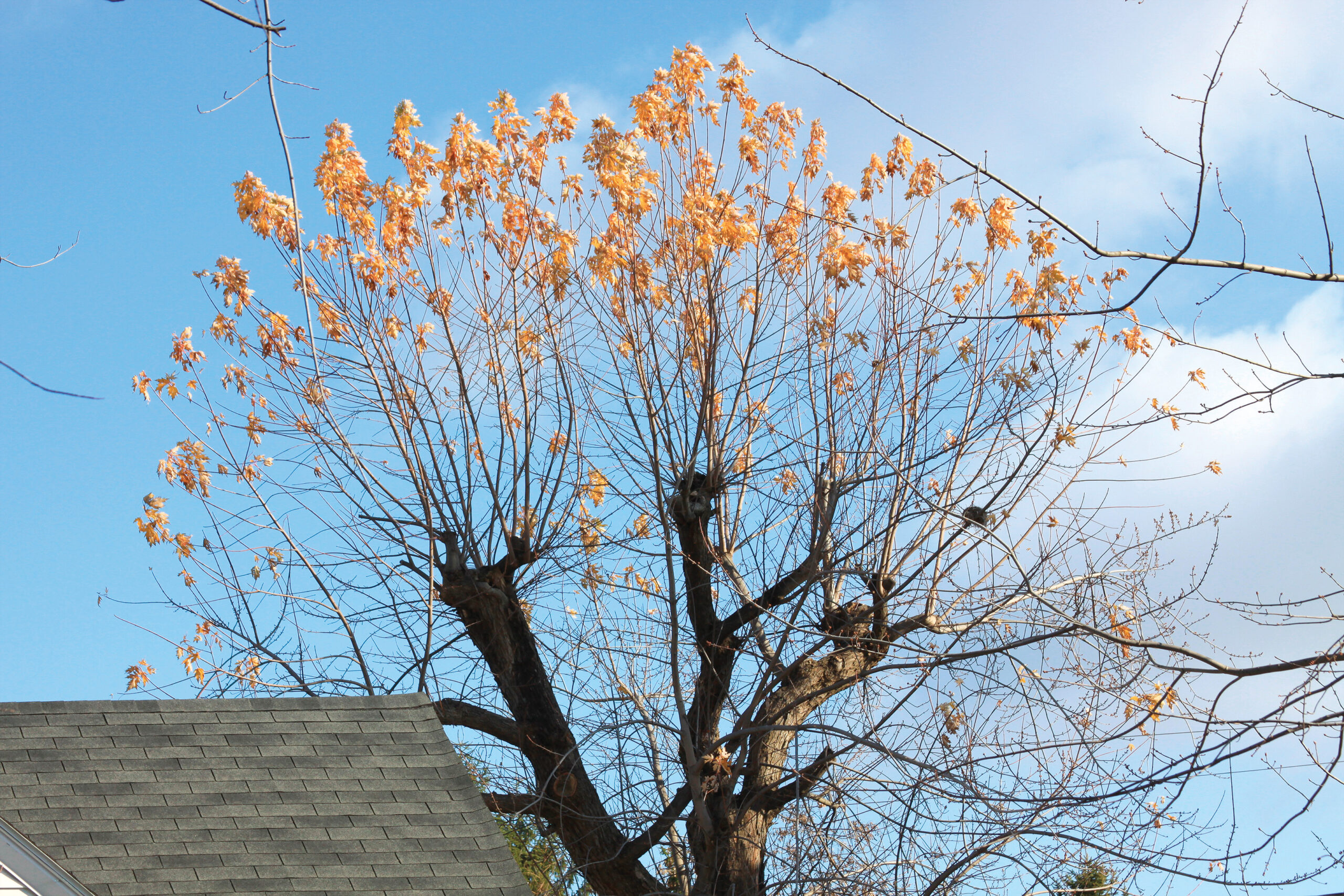
Bad tree pruning mistakes are cuts and techniques that ignore modern standards such as ANSI A300 and ISA pruning guidelines.
They work against a tree’s built-in defense system, called CODIT, instead of with it. That leads to faster decay, weak limb attachments, and shorter tree lifespan.
Typical examples I see all over Florida neighborhoods include topping, flush cuts, lion tailing, long stub cuts, aggressive over-thinning, and pruning at the wrong time for our heat, humidity, and storm cycle.
Many are sold under nice-sounding names like “hurricane pruning” or “cleaning out,” but the damage is very real.
10 Pruning Mistakes Ranked by Damage Severity
Some mistakes are annoying. Others are flat-out structural failures waiting to happen.
in Florida, the worst offenders are topping, flush cutting, lion tailing, general over-thinning, heading cuts on mature wood, wrong-season pruning, stub cuts, using climbing spikes on living trees, slapping on wound sealer, and cutting with dull or dirty tools.
Each one hits your tree in a different way, and some combine to make the damage even worse.
1. Topping Mature Trees (Worst Offender)
What it is: Topping is hacking big branches back to random stubs, usually with flat ends, until the tree looks “hat-racked” or like someone gave it a bad buzz cut. It gets pitched as “height reduction,” “hurricane cutting,” or “making it safe.” In reality, it’s just butchering the crown.
Why it’s so damaging:
- It strips out a massive chunk of the crown in one shot, which guts the tree’s food factory and shocks the root system.
- The tree panics and pushes out a flood of epicormic sprouts. Those are fast, weak shoots that attach shallowly and are prone to snapping later.
- Big topping cuts leave large, flat wounds that the tree often can’t fully compartmentalize with CODIT, especially on older wood.
- Decay sets into those cut ends and works its way back, so years later you have big, heavy limbs with rotten bases going into storm season.
- Plenty of Florida HOA pruning standards and municipal codes specifically call topping out as a violation because of how ugly and unsafe it is long term.
Key EAV facts (tree topping damage):
- After topping, epicormic sprout count often explodes compared with normal branching, which means lots of weak attachments all in one place.
- The regrowth that forms after topping usually has only a fraction of the structural strength of the original limbs it replaced.
- Sudden sun exposure on bark that used to be shaded greatly raises sunscald and bark split risk, especially on older oaks and ornamentals.
- Severe topping doesn’t just “ugly up” a tree. It can chop years, sometimes decades, off the tree’s potential lifespan.
- Many HOAs and local governments treat topping as a code/HOA violation, and they can require removal or corrective pruning at the owner’s expense.
2. Flush Cuts (Cutting Off the Branch Collar)
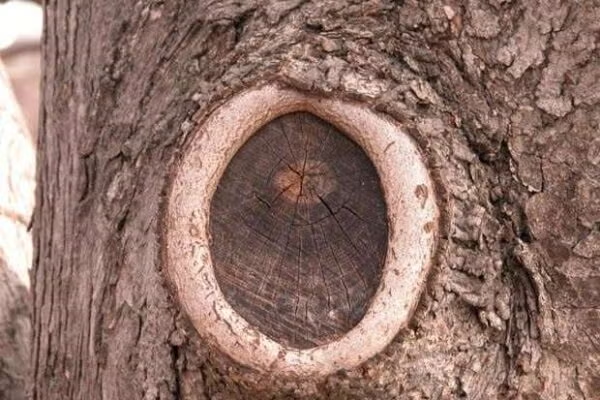
What it is: A flush cut slices a branch off right up against the trunk or parent limb so tight that the branch collar gets shaved off. The collar is that slightly swollen, wrinkled ring at the base of the branch. After a flush cut, you’re left with a flat, smooth-looking surface that might look “neat” but is actually terrible for the tree.
Why it’s so damaging: The branch collar is part of the tree’s strongest natural barrier, one of the key pieces of the CODIT Wall 4 system. When you remove that collar with a flush cut, you wipe out that barrier zone and give decay organisms a straight shot into the trunk wood. The tree has to wall off a much bigger wound and usually loses that race on larger branches.
Flush Cut Damage – EAV Summary
- CODIT wall destroyed: The pre-formed barrier zone at the collar, part of Wall 4, is cut away and can’t be replaced.
- Decay entry rate: Very high compared with a proper collar cut, especially in Florida’s warm, wet conditions.
- Healing time: Often several times longer than a correct cut, and on big limbs the tree may never fully close the wound.
- Visual indicator: Flat, disk-like cut with no raised collar or swelling around the edge, trunk looks sculpted or shaved.
- Correction possibility: None. Once that collar is removed, the damage to the tree’s defenses is permanent.
3. Lion Tailing and Extreme Over-Thinning
What it is: Lion tailing is stripping out almost all of the interior branches and leaves, so you end up with long bare limbs with little pom‑poms of foliage just at the tips. Some crews do it because it “shows the sky” or “lets wind pass through,” but that’s sales talk, not science.
Why it’s so damaging:
- By leaving all the weight at the branch ends and clearing the interior, you raise the tree’s center of gravity and create long levers. In wind, those end-heavy whips have a much higher limb failure risk.
- Most of the energy factory is in that inner canopy. Strip it out and the tree has far fewer leaves making food, so it runs on a deficit and stresses easily.
- Long, whip-like branches with no interior structure are more likely to snap or split where they meet the trunk, especially in our summer storms.
On paper lion tailing sounds like “thinning.” In practice, it knocks out the very structure that helps a tree ride out wind and stay balanced.
4. Over-Thinning the Crown
What it is: Over-thinning is a more general version of the same problem. The crew removes too many branches across the canopy, even if they don’t create the classic lion-tail look. It often gets pitched as “cleaning out the tree,” “opening it up,” or “getting it off the roof,” and then way too much green disappears.
Problems:
- On mature trees, stripping more than about 20–25% of live foliage in a single visit goes against ANSI A300 guidance. The tree just can’t keep up with that kind of sudden loss.
- With less leaf surface, the tree’s ability to photosynthesize, recover from drought, and handle storm damage drops sharply.
- Inner bark and leaves that lived in shade suddenly get hit with full Florida sun. That can cause sunscald on stems, leaf scorch, and extra water stress in the hottest months.
5. Heading Cuts on Mature Wood
What it is: A heading cut chops back a branch to a weak lateral, or worse, some random spot in the middle of the limb, instead of cutting back to a strong lateral of decent size or to the branch collar. Think of it as mini-topping done on individual limbs instead of the whole crown.
Why it’s harmful:
- Heading cuts trigger clusters of weakly attached sprouts at the cut. Those sprouts look leafy quickly, but they’re not well anchored.
- They ignore the natural way branches are supposed to grow and reduce, so every future pruning visit becomes more complicated and expensive.
- They leave larger wounds than needed. That stresses CODIT walls and gives decay more opportunities to get established.
6. Wrong-Season Pruning for Florida
What it is: Cutting trees at times that needlessly increase disease pressure, ruin flowering, or leave the crown at its weakest just as hurricane season shows up.
Consequences:
- Pruning heavily during hot, wet periods invites fungi and insects to fresh, stressed tissue.
- Cutting spring-flowering ornamentals at the wrong moment wipes out flower buds you paid good money to enjoy.
- Taking off major branches right before peak storm months can throw off balance and stability when you most need the tree to be solid.
7. Stub Cuts (Leaving Stubs Too Long)
What it is: Stub cuts leave little “sticks” poking out from the trunk or parent limb. The cut is made too far out, past the branch collar, so there’s a dead length of wood the tree can’t properly close over.
Why it’s bad:
- Those stubs dry out and die back, then act like little chimney flues for decay to march inward over time.
- Because the stub sits outside CODIT’s main barrier zones, the tree struggles to lay callus over the end, so the wound stays open and vulnerable.
- New shoots often pop from dead or dying stub wood. Those sprouts are weakly attached and commonly fail in storms.
8. Climbing Spikes on Living Trees
What it is: Climbing spikes are sharp metal gaffs strapped to a climber’s boots. They’re fine for trees that are being removed. On trees that are supposed to stay, every step is a stab wound through the bark and cambium.
Climbing Spike Damage – EAV Summary
- Wound size per spike: Each puncture is typically several millimeters wide and goes straight to living tissue.
- Wounds per ascent: Expect dozens, sometimes more than a hundred, on the trunk from one climb, especially on tall trees.
- Cambium damage: Yes. Spikes punch through bark into the cambium, which is the layer that adds new wood and bark.
- Pathogen entry risk: High. Every puncture is a fresh opening for decay fungi, bacteria, and insects.
- Acceptable use: Only for removal only. That’s clearly laid out in ISA pruning guidelines and standard industry practice.
9. Misusing Wound Sealers and Paint
What it is: After pruning, someone brushes or sprays tar, latex paint, or a “tree sealer” over the cuts thinking it will “keep bugs out” or help the wound “heal.” That might have been common advice 40 years ago. Our understanding has changed.
Why it’s a mistake:
- Modern ISA pruning guidelines and research show most sealers don’t help. Many actually trap moisture and create a better environment for decay.
- These coatings interfere with normal CODIT processes and callus formation, so the tree can’t wall off the wound the way it’s designed to.
- Thick paint or tar can hide cracks, pockets of decay, and fungal fruiting bodies that an arborist needs to see during inspections.
10. Dull or Dirty Tool Damage
What it is: Using loppers and saws that are dull, rusty, or never disinfected. I see this a lot with budget crews and DIY jobs that haven’t touched a sharpening file in years.
Consequences:
- Blunt tools leave ragged cuts that take CODIT much longer to compartmentalize compared with clean, sharp cuts.
- Branches often rip and peel instead of cutting cleanly, causing tear-out damage down into the trunk or parent limb.
- Dirty blades can move pathogens from one tree to another like a dirty scalpel, spreading disease around the neighborhood.
How Each Mistake Damages Your Tree (Science of CODIT)
Trees don’t heal by replacing damaged wood. They isolate it. The CODIT compartmentalization model explains how they build four “walls” around an injury.
Good pruning works with those walls. Bad cuts like flush cuts, stubs, and heading cuts tear through or bypass them, letting decay spread faster and deeper than the tree can keep up with.
Understanding CODIT: How Trees Defend Themselves
CODIT stands for Compartmentalization Of Decay In Trees. That’s the system trees use to fight damage. Instead of repairing old tissue like our skin, they lock the bad wood in place and then grow new wood around it.
In practice, that means a wound never really “goes away.” It just gets boxed in. If your cuts respect those internal walls, the tree can usually contain the damage. If your cuts ignore them, the decay can outrun the tree’s defenses.
CODIT Compartmentalization Model – EAV Summary
- Wall 1 (vertical spread limit): Slows decay moving up and down the stem by plugging water-conducting vessels above and below the wound.
- Wall 2 (inward spread limit): Resists decay moving toward the center of the trunk using denser, chemistry-rich tissues.
- Wall 3 (lateral spread limit): Reduces sideways spread around the trunk, running along annual growth rings.
- Wall 4 (barrier zone strongest): New wood formed after injury that isolates the damaged area from future growth. This is the tree’s strongest long-term defense.
- Proper cut preservation: Correct collar cuts sit just outside the branch collar, keeping these walls as intact as possible so the tree can close the wound efficiently.
How Specific Mistakes Break CODIT’s Defenses
Flush Cuts
With a flush cut, you carve away the branch collar, which is part of that Wall 4 barrier zone. Doing that:
- Exposes way more internal wood than a proper collar cut ever would.
- Destroys the natural boundary between the branch and trunk, so decay can slide straight into the main stem.
- Sends fungi and other decay organisms past the first line of defense before the tree has time to organize a response.
Stub Cuts
Stub cuts leave dead wood outside the main barrier zone.
- The tree struggles to form a full callus ring over the end, so the stub stays exposed and often cracked.
- As stub wood dies back irregularly, decay columns can creep along fibers in ways that dodge CODIT walls.
- Weak sprouts that pop off stubs are rooted in compromised tissue, so they’re much more likely to fail.
Heading Cuts on Mature Wood and Topping
Heading cuts and topping hit CODIT from multiple angles.
- They create multiple large wounds that have poor natural barriers because they’re not at collars or strong laterals.
- They generate epicormic sprouts attached only to shallow, surface-level wood instead of solid Wall 4 tissue, which means weak unions.
- By multiplying cut surfaces across the crown, they multiply available entry points for decay and pests.
Tear-Out Damage
When someone cuts a branch from the top and lets it rip down, bark and wood tear away below the cut.
- That tearing rips open Walls 1–3 around the wound, letting decay bypass a lot of the tree’s normal containment pattern.
- You’re left with a big, jagged wound that is much harder for the tree to seal. It often becomes a long-term decay pocket.
Climbing Spikes
Each spike wound is small, but the number adds up fast.
- Every puncture breaks through bark and cambium, so CODIT has to react to dozens of scattered injuries up and down the trunk.
- Each little wound becomes a separate entry point for decay and pathogens. Over years, that can translate to scattered rot and structural weakness along the stem.
Florida-Specific Pruning Timing Mistakes
Our climate in Florida changes how you should schedule tree work. Bad timing can do as much damage as a bad cut.
With heat, humidity, and hurricanes, pruning at the wrong moment raises disease risk, ruins your flowering show, and leaves trees off-balance when the big winds show up.
Warm-Season Pruning and Disease Risk
Florida’s hot, humid months are a buffet for fungi and insects. Even though we don’t wrestle with oak wilt like some northern states, warm-season pruning still creates headaches.
- Fresh cuts in steamy weather stay moist longer, making an easier target for fungal spores landing on open wood.
- Stressed trees give off signals that attract boring insects and other pests that can carry diseases.
- Combining pruning stress with heat and potential drought stress stretches CODIT thin, so wounds close slower and defenses lag behind.
Florida arborist best practices usually favor doing bigger structural work on oaks and other shade trees during cooler, drier periods when the tree is under less environmental stress and pathogen activity is lower.
Ruining Flower Displays on Ornamentals
Plenty of Florida ornamentals, like crape myrtle, azalea, camellia, and some magnolias, have specific bloom habits. Some set buds on old wood, some on new wood, and that detail matters a lot for timing your cuts.
- Pruning late winter/early spring on shrubs and trees that bloom on old wood can wipe out nearly all the flower buds formed the previous season.
- Hard summer pruning on new-wood bloomers can remove the current season’s growing tips and developing buds, and it adds extra stress during the hottest months.
If you care about color in your yard, you need to match your pruning schedule to each plant’s blooming cycle, not just prune “when you have time.”
Hurricane Season Pruning Mistakes
Every year, homeowners panic as hurricane forecasts roll in and scramble to “get everything cut back.” That panic work is where a lot of the worst cuts happen.
- Heavy pruning right before peak storm season can actually destabilize crowns by changing weight distribution and leaving trees stressed, not stronger.
- Quick “hurricane cuts” or topping jobs often sold by door-to-door crews increase long-term breakage risk instead of reducing it.
- Fresh wounds created right before a storm haven’t had time to start CODIT responses, so if the tree does get damaged, those weak spots bear the brunt.
A far better approach is to work with a certified arborist on a multi-year pruning plan. That spreads structural work out over time so the tree stays balanced and strong heading into each season.
Simple Florida Seasonal Guide (Generalized)
- Late fall–winter: Often the best window for structural pruning and risk reduction on many large shade trees. Cooler temps, less disease pressure.
- Late winter–early spring: Prune carefully and species-specific. Avoid cutting off flower buds on plants that bloom on old wood.
- Late spring–early summer: Limit work to light pruning, minor corrections, and safety issues. Avoid major canopy reductions in rising heat and humidity.
- Mid-summer–peak hurricane season: Skip aggressive pruning and avoid topping. Focus on previously planned hazard work and small, targeted risk reductions.
How to Fix Pruning Damage (Corrective Pruning Guide)
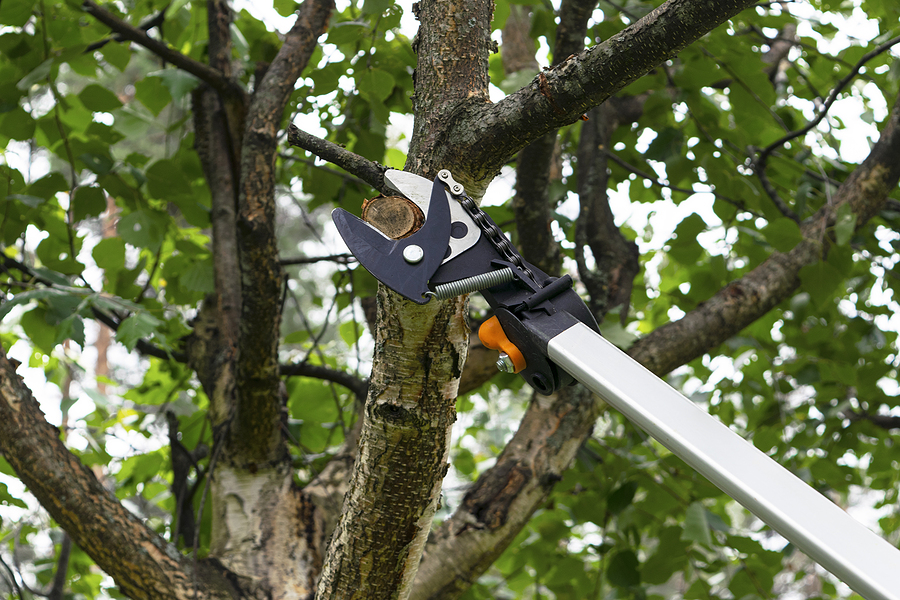
Corrective pruning is about cleaning up old mistakes without shocking the tree again. The work should follow ANSI A300 and ISA pruning guidelines, with a clear plan over several years.
Some trees bounce back surprisingly well. Others have damage you just have to manage and monitor until removal makes more sense.
Companies like Panorama Tree Care and other reputable Florida professionals rarely promise a single-visit miracle. For serious past topping, lion tailing, or flush cutting, they usually lay out a multi-year roadmap aimed at rebuilding structure and reducing failure risk, not pretending the tree was never abused.
Corrective Pruning Service – EAV Summary
- Assessment requirement: A thorough on-site inspection by an ISA Certified Arborist to check structure, decay, and species-specific responses.
- Sessions needed: Heavily damaged trees often need 1–3 visits per year, especially early on, to guide regrowth and remove risk gradually.
- Recovery timeline: You’re usually looking at several years. A full structural improvement, if it can be done, may take 5–10+ years of thoughtful work.
- Cost per session in Florida: Often starts in the low hundreds per visit for a single medium tree, climbing higher for large oaks, tight access, or complex canopy issues.
- Success rate by damage type: High success on minor mistakes and light over-pruning. Moderate improvement possible after topping and lion tailing. Limited results once advanced decay is present.
Fixing Stub Cuts
Goal: Re-cut old stubs back to the branch collar so the tree can finally start closing those wounds properly.
Steps:
- Find the branch collar at the base of each stub. It will look slightly raised or wrinkled where the branch meets the trunk or parent limb.
- Use a sharp, clean saw and remove the stub with a smooth cut just outside the collar, leaving the collar itself intact.
- If the tree is already stressed or over-pruned, don’t fix every single stub in one day. Prioritize the worst offenders and return in later seasons to handle the rest.
Once a stub is corrected, CODIT can begin forming a new callus ring around that proper cut. On strong, vigorous trees, small wounds may close in a couple of years. On larger, older stubs, you might wait several years and still see only partial closure.
Managing Epicormic Sprouts After Topping
Goal: Turn the chaotic mess of weak sprouts into a more stable, layered crown that at least resembles a functional tree.
Approach:
- Do not strip all the sprouts off at once. That just repeats the original stress event and encourages another flush of weak growth.
- On each topped limb, select a handful of well-placed, vigorous sprouts that are angling in good directions to become future branches. Thin out competing sprouts slowly over several visits.
- Use proper reduction cuts back to suitable laterals. Avoid new heading cuts on mature wood or you’ll recreate the same problem.
- Keep an eye on the original topping stubs for signs of decay or cracking. Some trees with severe rot around these points will eventually need removal for safety.
Recovery timeline: For a large topped tree, you’re typically in the 5–10+ year zone. Even with excellent restoration work, that tree will never be as strong as if it were never topped.
Crown Restoration After Over-Thinning and Lion Tailing
Goal: Rebuild interior structure, move some weight back toward the trunk, and restore a crown that handles wind more predictably.
- Let selected interior shoots grow out to re-fill the bare sections. Only thin where shoots are truly crossing, rubbing, or badly placed.
- Shorten those long, end-heavy limbs using proper reduction cuts that step them back to solid laterals of adequate size.
- Resist the urge to “clean it up” again by stripping green. For several cycles, focus on structure and balance, not how airy the tree looks.
Dealing With Flush Cuts and CODIT Wall Damage
Hard truth: Once a flush cut has removed the branch collar, there is no way to undo that. You can’t glue the collar back on or rebuild Wall 4. That section of the trunk will always be more vulnerable.
What you can do:
- Monitor the old flush cut regularly for signs of decay, cracking, and fungal fruiting bodies such as conks or brackets.
- If the area shows structural weakness or hollows, reduce weight above and around it using careful reduction cuts to lower lever forces.
- Work with your arborist on a longer-term plan. If decay progresses into critical load-bearing wood, plan for removal on your terms instead of waiting for a storm failure.
When Damage Is Permanent or Removal Is Safer
Some trees have been abused for so long that you reach a point where pruning is just delaying the inevitable. Safety and risk tolerance need to guide the decision.
- If decay from bad cuts extends into main stems or the trunk, and sound wood is limited, removal may be the responsible choice.
- Severely topped or lion-tailed trees with poor attachment points and heavy decay often remain structurally unsound even with restoration attempts.
- If the tree threatens homes, driveways, play areas, or neighbor’s property and reasonable corrective work can’t lower the risk enough, it’s time to talk removal and replacement.
For folks who want to tackle smaller removals themselves, make sure you’ve read up on broader DIY tree cutting mistakes and safe felling practices before touching a saw.
How to Identify Good vs Bad Pruning Work
You don’t have to be an ISA Certified Arborist to spot the wrong way to prune trees. Once you know what to look for, you can walk your yard and pick out problems from 20 feet away.
The same checklist helps you judge whether a crew you just hired did quality work or cut corners.
Good vs Bad Cuts at the Branch Collar
- Good work: Each cut is slightly angled and sits just outside the branch collar. Over time you’ll see a raised ring of callus closing evenly around the edge.
- Bad work – flush cut: The trunk or main limb looks shaved or carved flat where the branch was. There’s no visible collar swelling left.
- Bad work – stub cut: Short stubs or “nubs” stick out several inches past the collar, often dry, cracked, or already sprouting weak shoots.
Natural Crown Shape vs “Tree Trimming Gone Wrong”
- Healthy crown: The canopy is full and balanced, with foliage distributed along the length of branches and a natural outline for that species.
- Lion-tailed crown: The interior looks stripped and bare. Most of the green is bunched out at the very tips of long, skinny limbs.
- Topped crown: Branches end abruptly with blunt cuts. Dense clusters of sprouts grow around those ends, giving the tree a “poodle” or “hat rack” appearance.
Even Thinning vs Stripped Interior
- Proper thinning: Only select, smaller branches are removed. Light filters through the canopy, but there are still branches and leaves spread throughout the interior.
- Over-thinning: From many angles you can see straight through the tree. The inside looks almost empty, and most remaining foliage hangs on the outside shell.
Tool and Technique Clues
- Good sign: No rows of puncture wounds or gouges up the trunk. Climbers used ropes, saddles, and friction hitches instead of spikes.
- Red flag: You can trace a line of small puncture marks straight up the trunk. That’s clear evidence of climbing spikes on a tree that wasn’t removed.
- Good sign: Cut surfaces are smooth and even, with very little torn bark or shredded fibers.
- Red flag: Multiple cuts have long bark tears running below them, or chunks ripped from the trunk, which points to dull tools and poor cutting technique.
Does the Work Follow Standards?
Ask every company you consider if they follow the ANSI A300 pruning standard and ISA pruning guidelines. You want to hear clear, confident answers, not confusion.
Reputable Florida firms like Panorama Tree Care build their entire pruning programs around these standards and Florida arborist best practices.
To get a better sense of what good pruning techniques actually look like on the ground, review trusted guides, watch ISA-backed videos, and compare those with what you see in your yard.
Common Mistakes Florida Homeowners Make (And How to Avoid Them)
The big ten mistakes cause most of the damage, but there are a few quieter missteps homeowners make that invite trouble down the road, even if the cuts themselves look simple.
- Hiring solely on price: Rock-bottom bids usually mean fast, production-style work. That often leads to topping, lion tailing, climbing spikes, and zero attention to ANSI A300 standards.
- Demanding “more cut out” than recommended: Pressuring a reputable pro to remove extra foliage can push them toward bad practices, or they’ll walk away and someone less qualified will take the job.
- Ignoring small mistakes: Little stubs, small flush cuts, and minor tear-outs seem harmless in year one. After several years, those spots can turn into serious decay cavities or weak branches.
Expert tip: Before you sign anything, ask the estimator directly: “Will you avoid topping, flush cuts, and climbing spikes on my living trees?” Their reaction and their details in answering tell you a lot more than a fancy brochure ever will.
FAQ: Bad Tree Pruning Mistakes in Florida
Here are straight answers to the questions I hear most from homeowners dealing with pruning damage, HOA headaches, and picking the right pro.
Can my tree recover from bad pruning?
Many trees can bounce back from moderate mistakes like light over-thinning or a few stub cuts, especially if they’re otherwise healthy and you follow up with proper corrective pruning at the right time of year.
The tree might look awkward for a few seasons, but structure and vigor can improve.
Severe topping, heavy lion tailing, and major flush cuts are a different story. Those permanently weaken structure and speed up decay. The realistic goal in those cases is to manage risk and stretch the tree’s safe life, not to “make it like it used to be.”
Can I sue a tree service for pruning damage?
Sometimes. It depends on your contract, local Florida laws, and how badly the company deviated from accepted standards like ANSI A300. If they ignored your written instructions, violated HOA rules, or caused clear, documented damage, you may have a case.
If you’re considering legal action, take detailed before-and-after photos, get an independent report from an ISA Certified Arborist describing the damage and standards violated, and then talk with an attorney who handles property damage cases in Florida.
Will my Florida HOA enforce rules against bad pruning?
Many Florida HOAs have explicit language about tree appearance, canopy form, and disfiguring practices like topping. If a homeowner or contractor butchers a tree and it hurts neighborhood appearance or property values, you can usually file a complaint.
The HOA board may require corrective pruning, a restoration plan, or in some cases full removal and replacement at the owner’s cost. Check your specific HOA documents since the details can vary by community.
How much does corrective pruning cost in Florida?
For a single medium-sized shade tree, corrective pruning in Florida typically starts in the low hundreds per visit. Larger live oaks, trees with difficult access, or severe structural issues cost more because they take more time, gear, and expertise.
Contact our Florida arborists for a free assessment and estimate.
Crown restoration after topping or lion tailing isn’t a one-shot job. Expect 1–3 visits per year over several years to really guide regrowth and reduce risk. Even so, that multi-year investment is often far cheaper than losing a large tree early and paying for removal plus a new planting.
How do I choose a qualified pruner in Florida?
Look for an ISA Certified Arborist, active insurance coverage, and written confirmation that they follow ANSI A300 and ISA pruning guidelines. Those three pieces filter out most of the problem outfits.
Avoid any company that advertises “topping,” “lacing out,” or deep “hurricane cuts” as a selling point. Ask for references and photos of jobs on common Florida species like live oak, laurel oak, and palm varieties. And get it in writing that they won’t use climbing spikes on trees that aren’t being removed.
Can wound paint or sealer fix a bad cut?
No. Wound paint can’t rebuild a missing branch collar or undo a flush cut. Modern research and ISA guidance are clear that sealers rarely speed closure and sometimes slow it down by trapping moisture and decay.
The real fix is always the same: make proper cuts in the right place at the right time. If damage is already done, use corrective pruning and monitoring instead of trying to “paint it better.”
Is it safe to prune my own large trees?
For many homeowners, light pruning of small, reachable branches using sharp, clean tools and basic protective gear is reasonable. Removing dead twigs, small suckers, or very low-risk material is usually fine if you work carefully.
Large limbs, anything over roofs or driveways, work near power lines, or jobs on previously damaged or topped trees are a different level of risk.
Those are best left to trained crews. Before you decide to DIY, read up on tree cutting mistakes and be honest about your comfort with ladders, saws, and Florida’s unpredictable weather.
Final Summary & Next Steps
Bad tree trimming examples like topping, flush cuts, lion tailing, and wrong-season pruning are more than cosmetic problems. They break your trees’ CODIT defenses, speed up decay, weaken structure, and increase storm failure risk in Florida’s challenging climate.
Once that damage is done, you can’t get all the way back to “good as new,” but you can usually improve safety and structure with a solid plan.
If you suspect past pruning damage on your property or just want to avoid those common mistakes, bring in an ISA Certified Arborist who follows ANSI A300, ISA pruning guidelines, and Florida arborist best practices.
A careful evaluation now costs a lot less than emergency removals, HOA fines, or roof repairs after a preventable failure.


One Response
Thanks so much for pointing out that pruning cannot be done without the proper knowledge of what you want. My sister planted a few trees in her yard and she’s hoping they’ll get big and fill out her soon-to-be gardens. We’ve been looking into hiring a tree service she can hire to help her trim the trees so they can promote growth.