By Tony Padgett, ISA Certified Arborist FL-9569A
What a Professional Tree Health Diagnostic Actually Involves
A professional tree health diagnostic is a structured assessment of a tree’s vitality, structure, and growing environment, performed by a trained arborist using both visual inspection and specialized instruments. It goes far beyond glancing at a tree from your driveway. At Panorama Tree Care, our ISA Certified Arborists treat every diagnostic as an investigation: we examine the canopy, trunk, root flare, and soil before recommending a single cut.
Beyond the Visual Walk-Around
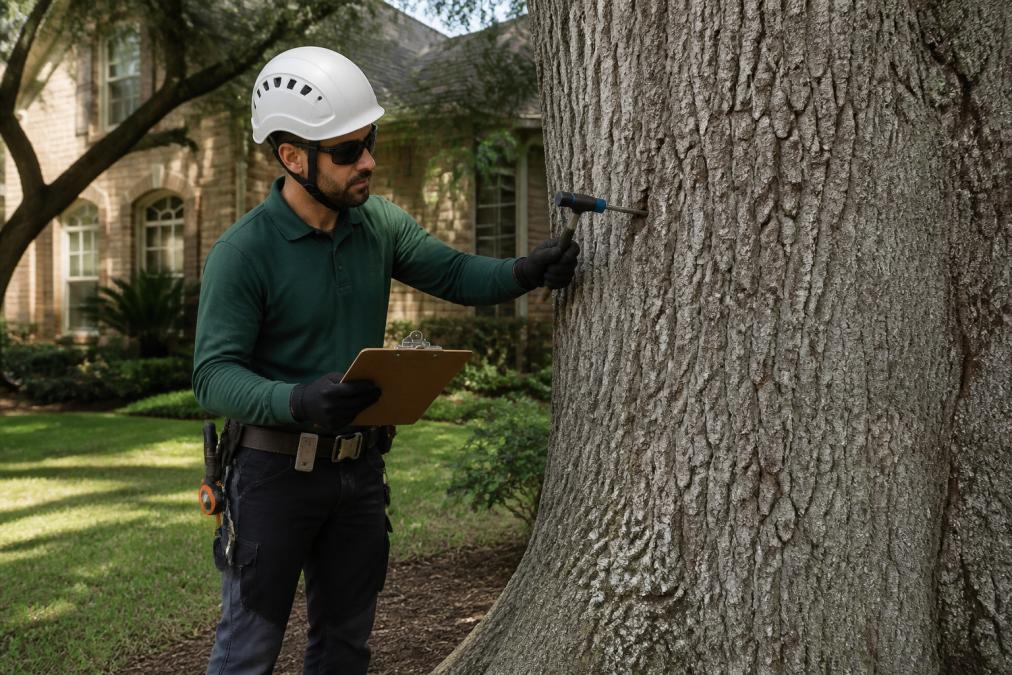
A quick walk-around tells you a tree is standing. A diagnostic identifies health and structural concerns that may need treatment, monitoring or further assessment. Arborists check for subtle cues the untrained eye misses: bark seams, fungal conks, cavity depth, and lean that has shifted since last season.
The Diagnostic Tools Arborists Use
Common tools include a mallet for sounding the trunk, a probe to measure decay pockets, increment borers to sample wood, and resistographs that map internal decay without cutting the tree down. Soil probes and pH meters round out the kit. These tools reveal what a visual check cannot.
Signs of Tree Disease in Residential Landscapes
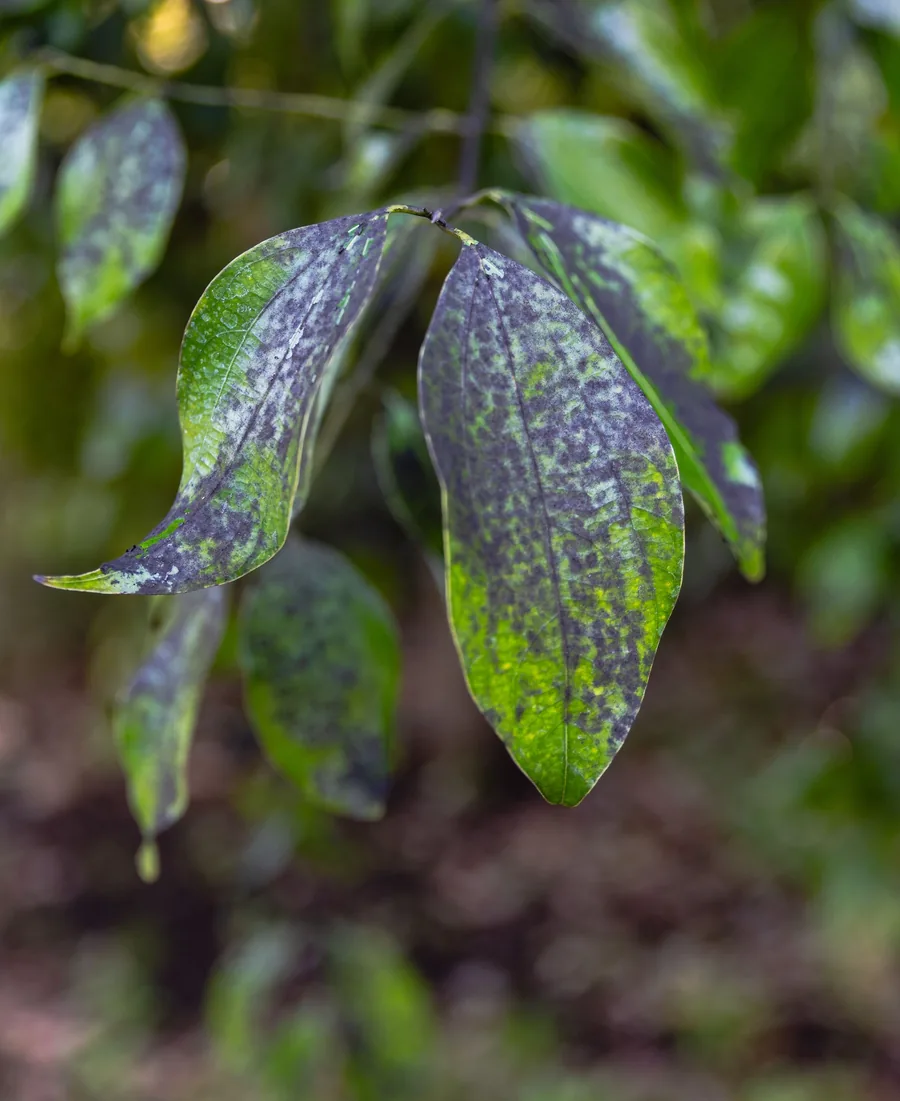
Canopy thinning, unusual leaf loss, fungal growth and new cracks are reasons to have a tree checked. For detailed symptoms, see signs of a dying tree and common tree problems in Florida.
Why Early Disease Identification Saves You Money
Early identification gives you more options. Some problems, such as drought stress, poor mulching or a small structural defect, can be corrected if they’re caught early. Others have no cure. Ganoderma butt rot of palms has no cultural or chemical control (UF/IFAS), and lethal bronzing-positive palms should be removed promptly (UF/IFAS). A correct diagnosis tells you whether to treat, monitor or plan a removal before the tree becomes a hazard.
What an ISA Certified Arborist Tree Assessment Cost Covers
Panorama’s diagnostic visit is $120 (prepaid, verbal findings on site). A Level 2 written risk assessment is $240 and includes photos, prioritized recommendations and the arborist’s credential number. See our consulting arborist page for what each level includes.
What the Report Should Contain
A genuine diagnostic report is a document you can act on and, if needed, hand to an insurer or HOA board. It should include:
- Species identification and the tree’s expected lifespan in your climate
- A risk rating that combines the likelihood of failure, the likelihood of impacting a target, and the consequences, following ISA’s tree risk assessment method.
- Findings by zone: canopy, trunk, root flare and soil
- A treatment timeline with what to do now, what to monitor, and what to revisit next season
- Photos or measurements supporting each finding, not just a verbal summary
Hiring a provider who only quotes removal is a red flag. A genuine diagnostic report should tell you what is wrong, what can be saved, and what the treatment timeline looks like. If the first recommendation is always “take it down,” get a second opinion.
Why the Credential Matters
ISA Certified Arborists maintain training in tree biology, risk assessment and plant health care. Ask who will inspect your tree and whether the appointment includes a written report or only verbal recommendations.
Preventative Tree Maintenance Tips That Pay Off
Preventative tree maintenance tips that pay off are the ones that address tree biology, not just appearance. Mulching correctly, watering deeply but infrequently, and avoiding soil compaction around the root zone do more for tree longevity than any cosmetic trim.
Start with these habits:
- Mulch in a wide ring, 2 to 3 inches deep, keeping mulch off the trunk (UF/IFAS Gardening Solutions)
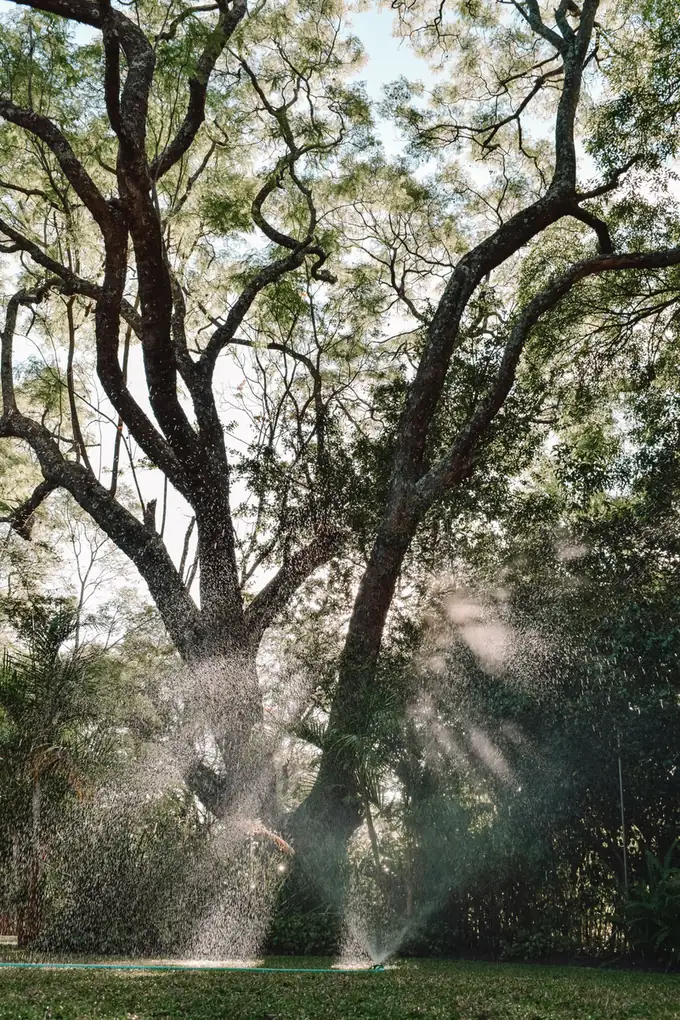
- Water deeply once a week during dry periods rather than light daily sprinkling
- Avoid piling soil or landscaping fabric over the root flare
- Prune deadwood annually before storm season
- Schedule a Level 2 written risk assessment every 3 to 5 years for mature trees, plus an inspection after hurricanes or major storms. Have new symptoms or hazards checked sooner.
A Seasonal Diagnostic Calendar
Use Tampa Bay’s seasons to guide routine observation between professional visits. Seasonal timing varies from year to year, so respond to actual rainfall, soil moisture and storm damage.
- Dry season (November through May): Check soil moisture, mulch and signs of drought stress. Review deadwood and structural concerns before summer storms.
- Rainy season (June through September): Watch for standing water, drainage changes, unusual leaf loss and new fungal growth. Adjust watering to rainfall and soil conditions.
- Hurricane season (June through November): Arrange any needed assessment before storms threaten, keep access routes clear and avoid working under damaged trees.
- After storms: Keep away from hanging limbs, power lines, new cracks or a changed lean. Arrange an arborist inspection once access is safe.
What Technology Adds That Eyes Cannot
A visual inspection is the starting point, not the finish line. Modern diagnostics use instruments that read the inside of a tree without cutting it down:
- Resistographs measure the resistance of wood as a fine drill passes through it, mapping internal decay and hollow pockets.
- Sonic tomography times sound waves across a trunk cross-section to build a picture of where wood is solid and where it is not.
- Soil probes and pH meters measure compaction, moisture, and acidity at the root zone, often where the real problem started.
Photograph your trees from the same angle every few months. Comparing images over a year reveals canopy changes, lean shifts, and bark issues that are nearly impossible to spot day to day.
How Diagnostics Improve Property Safety and Value
Diagnostics improve property safety by identifying hazard trees before they fail. A hazard tree evaluation scores the likelihood of failure against the consequences of that failure, which is documentation that insurers, HOA boards and property managers often ask for.
DIY vs. Professional Diagnostics: Where the Line Is
Homeowners can spot obvious problems, but DIY has hard limits. You can see leaf discoloration. You cannot measure cambium health, sample for pathogens, or assess decay depth inside a trunk. Those require training and instruments.
| What You Can Check | What Requires a Professional |
|---|---|
| Visible leaf discoloration | Pathogen identification |
| Obvious deadwood | Internal decay mapping |
| Mushrooms at the base | Root system assessment |
| Lean or cracks | Hazard tree evaluation |
| Watering and mulch habits | Soil pH and compaction testing |
Common Tree Diseases a Tampa Bay Diagnostic Looks For
- Ganoderma butt rot (palms): A lethal disease of all palm species caused by Ganoderma zonatum. There are currently no cultural or chemical controls to prevent or cure it, and replanting a palm in the same spot is risky (UF/IFAS).
- Lethal bronzing (palms): A phytoplasma disease found in Florida in 2006. Once a palm shows symptoms or tests positive, it’s considered lost and should be removed. Nearby healthy palms can be tested and protected with preventive antibiotic injections (UF/IFAS).
- Laurel wilt: Affects laurel-family trees such as redbay, swampbay, camphor, sassafras and avocado. There’s no approved fungicide to prevent or cure it in home avocados. Report suspicious trees to the FDACS Division of Plant Industry (1-888-397-1517) or your county UF/IFAS Extension office (UF/IFAS).
- Oak wilt: Often suspected when Florida oaks die, but according to the Florida Forest Service, oak wilt has not been detected in Florida, so other causes need to be ruled out.
When a pathogen has to be confirmed, a sample can go to a UF/IFAS Florida Extension Plant Diagnostic Clinic. It’s a fee-based service for Florida residents, and UF/IFAS asks you to contact your county Extension office first (UF/IFAS).
If a nutrient problem is suspected, the arborist may collect soil or leaf samples for a lab soil test or tissue analysis before recommending any fertilizer.
Tree Health Diagnostic FAQs
How much does it cost to have an arborist evaluate the health of a tree?
Panorama’s diagnostic visit is $120 (prepaid, verbal findings on site). A Level 2 written risk assessment is $240 and includes photos, prioritized recommendations and the arborist’s credential number.
What are the early warning signs that a tree needs a professional diagnostic?
Watch for leaf discoloration, crown dieback, fungal growth at the base, cracks in the trunk, and premature leaf drop. These are common signs of tree disease in residential landscapes that warrant a professional tree health diagnostic. Other red flags include soft or spongy wood, oozing sap, and dead branches on one side of the canopy. Catching these symptoms early gives an ISA Certified Arborist the best chance to recommend treatment instead of removal.
Can professional diagnostics prevent the need for tree removal?
In many cases, yes. A tree health diagnostic identifies issues like nutrient deficiency, soil compaction, or early pest infestation before they become irreversible. Preventative tree maintenance tips such as corrective pruning, soil amendments, and integrated pest management can restore tree vitality and extend tree longevity. However, if structural integrity is compromised or a hazard tree evaluation reveals unacceptable risk, removal may still be the safest option.
How often should you have a professional tree health assessment?
Panorama recommends a Level 2 written risk assessment for mature trees every 3 to 5 years, plus an inspection after hurricanes or major storms. New symptoms or hazards should be assessed sooner. See our tree risk assessment guidance.
Prefer to talk first? Call (813) 234-9842 to book a diagnostic visit with an ISA Certified Arborist.