
Performed by an ISA TRAQ-Qualified Arborist
Tree Risk Assessment Qualification (TRAQ) is the International Society of Arboriculture's industry-standard credential for hazard tree assessment. Reports prepared under TRAQ methodology are accepted by insurance carriers, HOA boards, and the City of Tampa for permit and liability documentation.
Credential: ISA TRAQ Qualified · ISA Certified Arborist FL-9569A · Issued by the International Society of Arboriculture
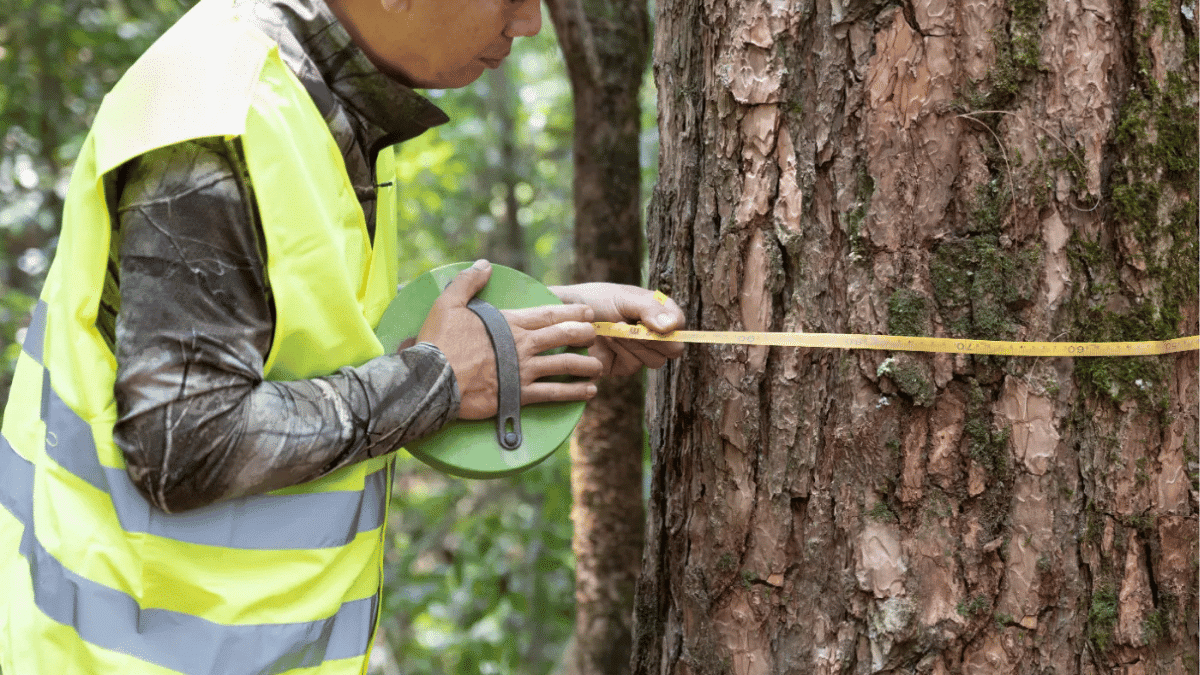
When it comes to protecting your home, family, and landscape, tree risk assessments and health diagnoses are essential. At Panorama Tree Care, we specialize in expert, science-backed evaluations to identify structural hazards, diseases, and declining trees before they become liabilities.
Proudly serving Tampa Bay Area homeowners since 2000, our ISA Certified Arborists (FL-9569A) use cutting-edge diagnostic tools, eco-friendly solutions, and ANSI A300 pruning standards to ensure your trees are safe, stable, and thriving.
As a locally owned, fully insured, A+ BBB Accredited business, Panorama Tree Care offers unmatched expertise in diagnosing and preventing tree failure risks across Hillsborough, Pinellas, Manatee, and Sarasota counties.
Get A Free Quote
Why Choose Panorama Tree Care?
ISA Certified Arborists
Every assessment is conducted by ISA-Certified Arborists, ensuring precise, science-based evaluations that align with the highest industry standards for tree biology, structural safety, and long-term health.
TRAQ Qualified for Tree Risk Assessment
We are Tree Risk Assessment Qualified (TRAQ) by the International Society of Arboriculture—trained to identify hidden hazards like internal decay, root instability, or storm damage before they threaten people, structures, or insurance liabilities.
Fully Licensed & Insured in Florida
Panorama Tree Care carries full General Liability and Workers’ Compensation insurance, and is licensed by the Florida Department of Agriculture. That means zero risk to your HOA, commercial property, or management firm in the event of an accident.
A+ BBB Accredited with 25+ Years of Experience
Our A+ Better Business Bureau rating and 25+ years serving the Tampa Bay area reflect a reputation built on reliability, integrity, and transparent service. With no unresolved complaints, property managers trust us to protect their assets and reputations.
Our Tree Risk Assessment and Health Diagnosis Process in Tampa
Our structured, scientific process ensures complete transparency and accuracy from start to finish:
On-Site Inspection
An ISA-Certified, TRAQ-Qualified Arborist conducts a detailed visual and structural inspection of your trees, looking for decay, leaning, pest damage, or canopy imbalance.
Diagnostic Testing
We use industry-standard tools like resistograph drills, root zone evaluations, and foliage analysis to detect hidden decay, disease, or instability.
Risk Report
You receive a comprehensive risk report for insurance, legal, or HOA use, with clear health grades and recommended actions.
Mitigation Plan
If your tree can be saved, we’ll prescribe treatments such as cabling, fertilization, or pruning. If removal is necessary, we provide safe and legal options.
Follow-Up Care
We offer re-evaluations, permitting support, and maintenance plans to ensure your trees remain healthy long after the assessment.
What Our TRAQ Assessment Examines
A documented, objective evaluation of your tree's structure and health:
Lean & Root Plate
Sudden lean, heaving soil, or lifting roots at the base.
Trunk Decay & Cavities
Hollows, fungal conks, cracks, and included bark.
Canopy & Deadwood
Dead, hanging, or over-extended limbs.
Pests & Disease
Borers, laurel wilt, and fungal pathogens.
Target & Structure Risk
What the tree could strike if it failed.
Soil & Site Conditions
Compaction, construction damage, and drainage.
Why a TRAQ-Qualified Assessment Matters
A tree can look healthy and still be a hazard. Our TRAQ-qualified, ISA-Certified arborists assess structural risk objectively and deliver a documented risk rating and mitigation plan — the standard insurers and HOAs accept. It is the difference between guessing and knowing.
Learn the signs of a dying tree and the hidden hazards of failing trees.
Tree Risk Assessment Cost in Tampa: Three Levels, Three Prices
Panorama Tree Care follows the International Society of Arboriculture's three-tier tree risk assessment framework, so you only pay for the level of inspection your situation actually needs. Level 1 is a fast verbal check for one specific tree, Level 2 is a full written risk report you can hand to an insurance adjuster or HOA board, and Level 3 uses specialized diagnostic equipment for advanced or contested cases. Every assessment is performed by an ISA TRAQ-Qualified Arborist (FL-9569A).
Fast, targeted verbal check with on-site recommendations for a single tree or small property.
- Certified arborist visits your property
- Visual inspection of the tree in question
- Verbal risk opinion delivered on the spot
- Verbal recommendations (prune, cable, treat, or remove)
- Best for a specific concern you already noticed
Full written report with documented findings, photographs, and prioritized mitigation recommendations.
- Everything in Level 1
- Detailed 360-degree visual inspection
- Written findings for each hazard
- Photographic documentation
- Prioritized mitigation plan
- Suitable for insurance, HOA boards, real estate transactions, and permit applications
Specialized equipment for advanced or contested cases where visual inspection isn't enough.
- Everything in Level 2
- Aerial climb inspection when needed
- Resistograph drilling to measure internal decay
- Sonic tomography for hidden hollowing
- Root plate excavation and root inspection
- Full engineering-grade written report
What Level 1 Includes ($120 Verbal Assessment)
A Level 1 tree assessment is our fastest, most affordable inspection — typically 20 to 45 minutes on site. Our ISA-certified arborist walks your property, examines the specific tree you're worried about (or does a general walk-by of multiple trees), and gives you a verbal opinion and recommendations before leaving. You get expert eyes on the problem without paying for a formal written report.
Level 1 is the right call when you already know which tree concerns you and just need a certified arborist to weigh in: "Should this leaning oak worry me?" "Are these mushrooms at the base a problem?" "Do I need to prune this or remove it?" You'll leave the appointment with clear, actionable guidance and a verbal quote if any tree work is recommended.
What Level 2 Includes ($240 Written Assessment)
A Level 2 tree risk assessment is our most-requested service — the arborist performs a detailed 360-degree visual inspection of the target tree(s), documents every finding, takes photographs of hazards, and delivers a written risk assessment report within a few business days.
The written report includes: identified defects (dead limbs, cavities, root plate movement, canopy dieback, structural weaknesses), a risk rating for each defect using standardized TRAQ methodology, prioritized mitigation recommendations (what to do first, second, third), photographs referencing each finding, and the certified arborist's signature and credential number. Level 2 is what you need for insurance claim documentation, HOA board submissions, City of Tampa permit applications, real estate transactions, and any situation where you need paperwork proving a professional evaluated the tree.
When Level 3 Advanced Diagnostic Is Required
Level 3 is reserved for situations where visual inspection alone can't answer the question. A tree with visible decay might be structurally sound if the decay is thin; the same tree might be a serious hazard if the cavity extends through the trunk. Level 3 uses specialized equipment to measure what visual inspection can't see:
- Resistograph drilling — a fine-drill probe that measures wood density inch-by-inch to map the extent of internal decay
- Sonic tomography — sound-wave imaging that produces a cross-section map of trunk hollowing
- Aerial inspection climb — direct hands-on inspection of the upper canopy, unions, and hidden defects
- Root plate excavation — air-spade removal of soil around the root flare to inspect for girdling roots or root plate failure
- Load and lean analysis — instrumented measurement of trunk stability under wind
Level 3 is typically requested when a Level 2 report has flagged a hazard but the tree has value the owner wants to preserve, when insurance or legal proceedings require engineering-grade documentation, or when a Grand Tree (32+ inches DBH under City of Tampa Chapter 13) is being evaluated for variance approval.
When Should I Have a Tree Inspected?
Most Tampa property owners benefit from a professional tree inspection in these situations:
- After a major hurricane, tropical storm, or high-wind event
- When a tree develops a visible lean, cracks, or heaving root plate
- When mushrooms or fungal brackets appear on the trunk or root flare (often a sign of internal decay)
- Before buying or selling a property with mature trees
- Before installing a new pool, fence, addition, or hardscape near existing trees
- When a neighboring tree overhangs your property and you want documentation of its condition
- For any Grand Tree (32+ inches DBH) requiring City of Tampa variance approval
- For insurance coverage disputes involving tree damage
- Every 3 to 5 years for mature specimen trees as preventive maintenance
How Arborists Determine If a Tree Is Hazardous
An ISA-qualified risk assessment isn't guesswork — it follows a structured methodology called TRAQ (Tree Risk Assessment Qualification). The arborist evaluates three variables and combines them into a risk rating:
- Likelihood of failure — how probable is it that the identified defect will cause a limb or the whole tree to come down within the assessment period (typically 1 to 3 years)
- Likelihood of impact — if the failure happens, is there something valuable in the fall zone (house, car, pool, playground, sidewalk)
- Consequences of impact — if it hits, is the damage minor, significant, severe, or catastrophic
Those three factors combine into a matrix that produces a risk rating: Low, Moderate, High, or Extreme. That rating drives the recommendations — a Low-risk tree may just need monitoring, a Moderate-risk tree might need pruning or cabling, a High-risk tree usually needs mitigation before the next storm season, and an Extreme-risk tree typically needs immediate removal.
Can a Tree Risk Assessment Help with Insurance Claims or Permits?
Yes — a Level 2 or Level 3 written tree risk assessment is often the deciding document in three common Tampa situations:
- Insurance disputes: If a tree fell and damaged your home (or your neighbor's), your insurer or their adjuster wants documented evidence that the tree either was or wasn't a foreseeable hazard. A pre-loss risk assessment can prevent coverage denials; a post-loss assessment can support a claim.
- City of Tampa Chapter 13 removal permits: For any tree over 5 inches DBH (32+ for Grand Trees), the city requires documented justification for removal. A written arborist report is the standard supporting document.
- HOA architectural review: HOA boards in Tampa Palms, Hunter's Green, FishHawk, and similar master-planned communities typically require a certified arborist letter before approving removal of any mature tree.
Real estate transactions increasingly require tree assessments as well, especially on properties with mature specimens near the home. A Level 2 report typically satisfies all these documentation requirements at once.
Warning Signs of a Dangerous Tree
Book a professional inspection if you see any of these on a Tampa Bay tree:
- Sudden lean or lean that appears to be increasing
- Heaved or cracked soil on one side of the root plate
- Mushrooms or shelf-fungus (conks) at the base or on the trunk — often a sign of internal decay
- Deep vertical cracks in the trunk or major branch unions
- Hollow sound when the trunk is tapped with a mallet
- Dead limbs in the upper canopy, especially over 3 inches in diameter
- Peeling or missing bark in large patches
- Crown dieback exceeding 25% of the canopy
- Included bark at major branch unions (V-shaped forks that indicate weak attachment)
- Recent grade change, trenching, or construction damage near the root zone
How Often Should Mature Trees Be Professionally Inspected?
For most Tampa Bay mature specimen trees, we recommend a Level 2 written risk assessment every 3 to 5 years, plus additional Level 1 or Level 2 inspections after any of these events:
- Hurricane, tropical storm, or high-wind event (over 50 mph gusts)
- Major nearby construction or excavation
- Visible new damage or symptoms
- Change in ownership or insurance coverage
Between formal inspections, walk your property twice a year (spring and fall) and look for the warning signs above. Catching problems early — a Level 1 inspection today — is far cheaper than emergency response after a limb comes down.
Tree Risk Assessment Frequently Asked Questions
What is a tree risk assessment?
A tree risk assessment is a structured evaluation by a certified arborist that identifies defects in a tree, estimates the likelihood of failure, and rates the risk based on what's in the potential fall zone. In Tampa, professional assessments follow ISA TRAQ (Tree Risk Assessment Qualification) methodology and produce actionable recommendations for pruning, cabling, treatment, or removal.
How much does a tree risk assessment cost?
Panorama Tree Care offers three levels: Level 1 verbal on-site assessment is $120, Level 2 written risk assessment is $240, and Level 3 advanced diagnostic (resistograph, sonic tomography, aerial inspection) is quoted individually based on scope. Every assessment is performed by an ISA TRAQ-Qualified Arborist.
What is included in a Level 1 tree assessment?
Level 1 ($120) includes an on-site visit by an ISA-certified arborist, visual inspection of the tree in question, a verbal risk opinion delivered on the spot, and verbal recommendations for pruning, cabling, treatment, or removal. It's ideal when you have a specific concern about one tree and want expert guidance quickly.
What is included in a Level 2 written tree assessment?
Level 2 ($240) includes everything in Level 1 plus a detailed 360-degree visual inspection, photographic documentation of each defect, written findings with TRAQ risk ratings, and a prioritized mitigation plan. The written report is delivered within a few business days and is suitable for insurance, HOA boards, real estate transactions, and Tampa permit applications.
When is a Level 3 tree assessment required?
Level 3 is required when visual inspection alone can't answer the question — typically for trees with visible decay whose extent is unknown, Grand Trees (32+ inches DBH) being evaluated for City of Tampa variance approval, high-value specimen trees the owner wants to preserve, or trees involved in legal or insurance proceedings that need engineering-grade documentation.
When should I have a tree inspected?
Book an inspection after a hurricane or major wind event, if a tree develops a lean or crack, when mushrooms appear at the base, before pool or hardscape construction near mature trees, before buying or selling a property, for any Grand Tree removal permit, or as preventive maintenance every 3–5 years for mature specimen trees.
How do arborists determine if a tree is hazardous?
TRAQ methodology combines three factors: likelihood of failure (how probable is the defect causing failure), likelihood of impact (is anything valuable in the fall zone), and consequences of impact (how bad would the damage be). Those combine into a risk rating — Low, Moderate, High, or Extreme — which drives the recommendations.
Can a tree risk assessment help with insurance claims or permits?
Yes. A Level 2 or Level 3 written report is often the deciding document for insurance disputes (proving foreseeability of hazard), City of Tampa Chapter 13 removal permits (documented justification for the removal), HOA architectural review submissions, and real estate transaction disclosures. One Level 2 report typically satisfies all four uses.
What are the warning signs of a dangerous tree?
Watch for sudden lean or increasing lean, heaved soil on one side of the root plate, mushrooms or shelf-fungus on trunk or base, deep vertical trunk cracks, hollow sound when tapped, dead limbs over 3" in the upper canopy, peeling bark, crown dieback over 25%, V-shaped included-bark unions, and recent construction or trenching near the roots.
How often should mature trees be professionally inspected?
For mature specimen trees in Tampa Bay, we recommend a Level 2 written risk assessment every 3 to 5 years, plus a Level 1 or Level 2 inspection after any hurricane, major nearby construction, visible new damage, or change in ownership or insurance coverage. Regular inspections catch problems early — far cheaper than emergency response after a failure.
When You Need Tree Risk Assessment and Health Diagnosis
Not sure when to call in an expert? Here are common signs and situations where a tree risk assessment is crucial:
- Visible Leaning or Uprooting
- Large Dead Branches Over Homes or Driveways
- Storm or Hurricane Damage
- Signs of Decay, Fungus, or Root Rot
- Nearby Construction or Soil Disturbance
- Insurance or HOA Requirements
- Unexplained Leaf Drop or Canopy Thinning
Sustainable & Science-Based Tree Care
At Panorama Tree Care, every health diagnosis is grounded in scientific arboriculture and a deep respect for ecosystem. We use eco-friendly treatments to manage pests and disease without harming surrounding flora or soil. All green debris is responsibly recycled, and we strictly adhere to Florida DEP guidelines, especially when working in wetland or mangrove areas.
Our commitment to preservation means we prioritize saving trees when possible, using targeted treatments like deep root fertilization to restore nutrient-depleted or stressed specimens. These sustainable practices not only safeguard your landscape but contribute to the health and resilience of the Tampa Bay urban canopy as a whole.
What Clients Say About Our Tree Risk Assessment
I have been using Panorama for many years, they are always professional, timely and accurate with their service. They prune the trees to keep them healthy and looking great. Have also had them service my very large viburnums, which they also did a great job trimming.

We had a very large old oak tree that died suddenly. Panorama came out and diagnosed oak borers. They removed the dead oak tree and ground down the stump for us. Also, treated the remaining oaks for borers. Trimmed some large branches away from our roof and barn. They came out promptly when initially called for the consultation and arrived promptly when promised for the service call. Crew was professional and left their worksite clean and neat. This is the 2nd time that we have used them with great results. Would highly recommend.
I received an excellent price and workers did a great job and cleaned up the yard well. Also Tony was very knowledgeable about Florida trees and scrubs and gave us good advice on our landscaping.
Request a Tree Risk Assessment Quote
Don’t wait for hidden hazards or declining tree health to become costly liabilities. Contact Panorama Tree Care today for prompt, professional, and fully insured tree risk assessment and health diagnosis services—trusted by property managers, HOAs, and commercial developers throughout our service area.