TL;DR: Tree cutting is near the top of the list of dangerous work in the U.S., and the common tree cutting mistakes are exactly what makes it so risky. OSHA data backs that up, with people killed every year by falling trees and limbs, chainsaw injuries, and electrocution from power lines.
Around Florida, trying to handle big removals yourself can also get you into serious legal and financial trouble if something goes wrong. If the tree is large, close to a house, fence, car, or power line, it belongs in the hands of an ISA‑certified, fully insured arborist, not a weekend DIY project.
Key Takeaways
- OSHA arboriculture fatality data points to struck-by incidents, falls, and electrocution as the three leading killers in tree work, year after year.
- Real‑world hazards show up as chainsaw kickback, widow maker branches, barber chair splits, power line contact, uncontrolled falls, and spring pole tension release that most homeowners never see coming.
- in Florida, TECO (Tampa Electric) has strict rules about how close anyone can work to power lines. Anything near that high‑risk zone must be handled by qualified line‑clearance arborists only.
- DIY mistakes can leave you personally liable for smashed roofs, fences, and vehicles, especially if you brought in an unlicensed or uninsured helper “for cheap.”
- ANSI Z133 is the industry’s main safety standard for tree work. It lays out rules for PPE, fall protection, electrical hazards, communication, and incident reporting.
- Legit Florida tree services carry at least $1,000,000 in general liability and real workers’ compensation coverage for their crews, not just a generic handyman policy.
- ISA-certified arborists stick to serious certified arborist safety training and procedures. They’re the ones most likely to maintain a zero‑incident safety record, as Panorama Tree Care has in Florida.
- If you’re asking “is tree cutting dangerous?” and the tree is big, near a structure, or anywhere close to overhead lines, you should be assuming “yes” and planning for professional help.
Quick Definition: What Are the Common Hazards of Cutting Down Trees?
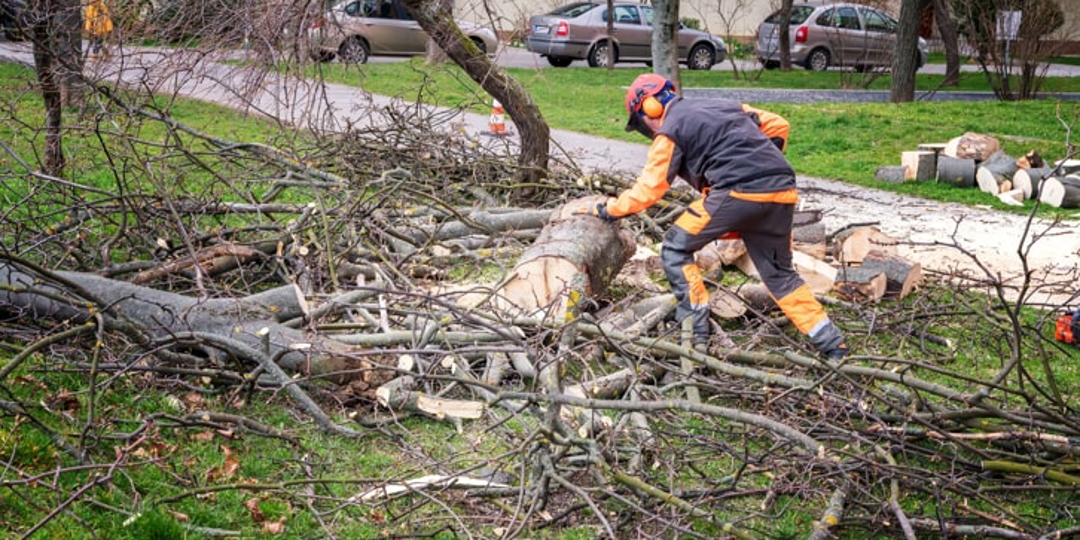
Common hazards of cutting down trees are the physical, electrical, and legal risks that show up during tree removal — and they directly drive the tree removal cost when extra safety gear and crew are required.
In the field, that means chainsaw injuries, falling limb hazards, trunk failures, power line electrocution, damage to homes and vehicles, and homeowner liability when the work is done unsafely or without proper insurance and training on site.
Tree Cutting Fatality Statistics (Why This Is One of the Most Dangerous Jobs)
Tree work looks simple from the ground. You see someone in a hard hat with a chainsaw, wood falls, brush gets chipped, everyone goes home. The numbers tell a different story.
Year after year, tree cutting and removal sit among the most dangerous jobs in the United States, right alongside roofing and commercial fishing.
OSHA arboriculture fatality reports are full of the same patterns. Workers get crushed by falling trees or big limbs. Climbers fall from height. Others get lit up by overhead power lines.
Those are the exact hazards homeowners shrug off when they think, “It’s just one tree, how bad can it be?”
The question is not just “is tree cutting dangerous?” but how dangerous is it even for people who do it every day. Industry data and OSHA reports show:
- Annual deaths (U.S.): Every year, dozens of people in arboriculture and related work are killed nationwide, with many more suffering life‑changing injuries that never make headlines.
- Leading cause – struck-by: The number one killer is being struck by a falling tree, limb, or trunk section. A bad call on the hinge or a missed dead limb can end a life in seconds.
- Second cause – falls: The next big killer is falls from trees, ladders, or aerial lifts. One missed tie‑in or a slipped spur at 40 feet is all it takes.
- Third cause – electrocution: The third major cause is electrocution from direct or indirect contact with power lines. Sometimes the victim never even touches the line itself.
- DIY vs professional comparison ratio: Official stats focus on workers, but if you dig into ER data and local news in Florida, a big chunk of severe injuries and deaths involve homeowners doing DIY tree cutting with no PPE, no training, and no idea what they’re standing under.
Those numbers are why standards like ANSI Z133 exist. They were written in blood, from real accidents. They’re also why homeowners are strongly warned away from cutting large or complicated trees themselves.
If trained professionals get hurt following safety rules, a casual DIY attempt multiplies the odds of something going very wrong.
6 Most Common Tree Cutting Hazards
Most bad incidents in tree removal are not freak accidents. They follow a handful of patterns that seasoned arborists learn to spot right away. Once you understand these tree cutting safety risks, you start to see how quickly a “simple” job can go sideways.
Here are six of the most common tree felling hazards, how they show up in real life, and what pros do differently.
1. Chainsaw Kickback
Chainsaw kickback is the one that makes old‑timers wince, because most of us have seen at least one nasty injury from it. Kickback happens when the moving chain at the kickback zone on the bar tip hits something solid, grabs, or gets pinched.
The nose of the bar rockets up and back toward the operator’s face and upper body, and it happens so fast you don’t even see the motion, just the damage.
- Kickback zone: The danger area is the upper front quadrant of the bar tip. Touch that to solid wood wrong and the saw will try to climb back into you.
- Reaction speed: Kickback happens in milliseconds. You can’t “muscle through it” or react in time. If the saw wins the physics battle, you lose.
- Chain brake requirement: Modern saws come with a chain brake that’s supposed to slam the chain to a stop during kickback. It only works if it’s clean, functioning, and set up right.
- Anti-kickback chain: There are low‑kickback or anti‑kickback chains aimed at casual users. Problem is, a lot of DIY folks buy the hottest, most aggressive chain they can find “for faster cutting,” which is exactly what pros avoid putting on a rookie’s saw.
- Injury severity: Kickback injuries are usually severe or fatal. Deep cuts to the face, neck, or shoulder area are common. I’ve seen helmets cut clean through. Without PPE, the damage is ugly.
Pros manage this by treating a chainsaw like the dangerous cutting tool it is, not a loud toy. They keep the bar and chain sharp, match chain type to the job, keep the chain brake working, and use proper stance and grip.
More important, they wear full chainsaw PPE: chaps, helmet with face shield, hearing protection, gloves, and steel‑toe boots. Homeowners firing up a saw in shorts and sneakers are taking a bet they really don’t understand.
2. Widow Makers & Hangers
Widow makers are the stuff you never see until it’s too late. These are dead or broken limbs wedged high in the canopy, just waiting for the right vibration or gust of wind to shake them loose.
They might look stable from the ground, but they’re barely hooked on a stub or rotted pocket.
The big problems with widow makers and hangers include:
- Branches that look locked in, but are actually barely hung up on a sliver of wood.
- Rotten limb sockets that crumble with the smallest movement, especially in old oaks common around Florida.
- Chainsaw and wedge vibration that shakes a hanging branch over the worker’s head loose at the worst possible moment.
Widow makers are behind a lot of struck‑by fatalities. The worker is focused on the cut in front of them, not the dead limb thirty feet above. Professional crews start by looking up, not down.
They inspect the “gravity zone” above and all around the work area, clear or secure dangerous hangers with ropes or from an aerial lift, and only then do they start serious felling or rigging. That extra hour of prep is what keeps people alive.
3. Barber Chair Split
A barber chair is one of the scariest things that can happen during felling. Instead of the tree hinging forward and laying down in a controlled way, the trunk splits straight up the middle.
A massive slab of wood tears loose and whips backward, sometimes faster than you can step.
You usually see barber chairs when:
- The tree’s lean is miscalculated, especially in forward or back‑lean situations.
- The species is known for splitting, like certain hardwoods or decayed pines that are common after storms.
- The back cut is too high or too deep, or the hinge is the wrong thickness, so the fibers don’t hold and flex the way they should.
The force in a barber chair can be violent enough to snap a saw out of your hands or crush a person instantly. There is no “do‑over” if you’re standing in the kickback path when it goes.
Professional arborists use proper notch and back‑cut sequences, wedges, ropes, and, in many Florida neighborhoods, they simply avoid traditional felling altogether. Instead, they piece the tree down in sections using climbers, rigging, or cranes so the trunk never has a chance to behave unpredictably.
4. Power Line Electrocution
Power line electrocution and power line arc flash are the kind of accidents that end lives in an instant and leave everyone asking why anyone was working that close in the first place.
You don’t have to grab a bare wire with your hand to get killed. Electricity will take any path it can find to ground, including a branch, a pole saw, or you.
- Direct contact: A branch or tool physically touches the energized line and completes the circuit.
- Indirect contact: A ladder, pole pruner, or metal tool becomes energized, and the current flows through whoever is holding it.
- Arc flash: At high voltage, a power line arc flash can jump through several feet of air. No contact needed. The result can be horrific burns, nerve damage, or instant death.
In a lot of OSHA arboriculture fatality cases near power lines, the victim never knowingly touched the wire. The line energized a limb, a rope, or the soil, and that was enough. That’s why TECO keeps a very tight grip on who is allowed to work near their lines in Florida.
Homeowners working near overhead utilities are not just breaking smart practice, they’re gambling with a type of hazard that doesn’t give second chances.
5. Uncontrolled Fall
An uncontrolled fall is exactly what it sounds like. The tree or big trunk section heads somewhere other than where you planned.
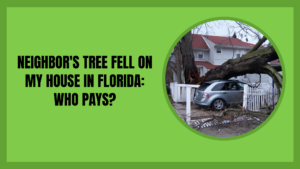
That’s the classic “tree on the house” or “tree across two yards and the driveway” shot you see on the news. It’s also how a lot of neighbor disputes and lawsuits start.
Common reasons trees don’t fall where the cutter thinks they will include:
- Lean miscalculation: The tree’s natural lean, weight distribution, or heavy limb side is judged by eye instead of with real sighting and planning.
- Root plate failure during cut: In saturated soil or decayed roots, the whole root plate can roll or shear as the cut is made, throwing the tree sideways or backward.
- Drop zone miscalculation: People underestimate how far tops and limbs will travel in the drop zone, especially with taller pines and oaks.
- Improper hinge: Cuts that are off‑level, too deep, or too thin snap the hinge too early and kill your steering control.
When a fall gets away from you, it’s not just a dented gutter. You can see caved‑in roofs, smashed AC units, torn service drops, broken vehicles, and injured bystanders.
That’s when insurance companies and attorneys start asking who made the decision to cut that tree and whether a reasonable person would’ve hired a pro instead of trying to wing it.
6. Spring Pole Tension Release
A spring pole is one of those sneaky hazards that shows up a lot after storms. Picture a bent sapling or limb pinned under another tree. It looks harmless. But that bent wood is storing a huge amount of energy, just waiting for you to cut the wrong fiber and let it snap back.
- Source of risk: The danger is the hidden spring pole tension in that bent wood. You can’t always see how loaded it is.
- Injury pattern: When it releases, it whips with serious power. Legs, ribs, and heads get hit. Saws get ripped out of hands and thrown.
Professionals are trained to read tension and compression in wood, especially in storm‑damaged stands. They’ll make a series of small relief cuts in the right places and stand clear of the danger path.
Untrained cutters usually just cut it in half and learn the hard way why that was the wrong move.
Power Line Hazards in Florida (TECO Rules You Must Know)

Power lines and trees don’t mix, and Florida is no exception. You’ve got federal safety rules, Florida regulations, and Tampa Electric (TECO) policies all saying the same thing in slightly different words: stay away from energized lines unless you’re specially trained and authorized.
People who ignore that advice don’t just risk their own lives. They risk fires, outages, and some very serious legal trouble.
Before you fire up a saw anywhere near overhead wires around your property, you need to understand some basics about how TECO and the industry look at clearances and responsibility.
Minimum Safe Distance Around Power Lines
- Typical residential voltage: Most neighborhood distribution lines are running in the 7–15 kV range. That’s not “a little shock.” That’s more than enough to kill at what feels like arm’s length.
- Minimum safe distance: Industry guidelines set a minimum of about 10 feet of clearance from energized lines for anyone who is not a qualified worker. Anything inside that zone belongs only to qualified line‑clearance arborists who have specific electrical hazard training and tools.
- Arc flash distance: At higher voltages, a power line arc flash can jump through air. How far depends on conditions, but staying outside that 10‑foot bubble is a basic survival rule for the public.
Those clearances are based on physics, not opinions. Humidity, rain, tree sap, aluminum ladders, wet sawdust on your clothes, all of it can change how electricity behaves. That’s why the 10‑foot rule isn’t a “best practice.” It’s a hard line.
TECO Trimming Authority vs Homeowner Limits
- TECO trimming authority: TECO is responsible for keeping safe clearances around their primary distribution lines. They send out line‑clearance crews with insulated equipment, aerial lifts, and specific training to prune and remove trees that threaten those lines.
- Homeowner trimming prohibition: Homeowners are not allowed to trim or remove trees within the restricted clearance zone around energized lines. If there’s any chance you, a branch, or a tool could end up inside that distance, the job has to be handled by TECO or a qualified line‑clearance tree service working under their rules.
If you’re even slightly unsure whether a limb is too close to a line, the right move is simple. Call TECO and request an inspection or line‑clearance assessment.
Don’t hire a handyman with a ladder. Don’t try to “just nip that branch” yourself. You don’t want your address showing up in the next electrical safety bulletin.
Emergency Contact for Downed Lines During Tree Work
If a tree you cut, or one that’s already damaged on your property, pulls down a line or ends up resting on one, you’re now in an emergency situation, not a clean‑up project.
- Stay away: Treat every downed line like it’s live and lethal, even if it’s not sparking or humming.
- Keep others back: Keep people and pets at least 30 feet away. If the ground is wet or saturated, give it even more room.
- Call 911 and TECO immediately: Report the downed line, then wait at a safe distance until trained crews say it’s clear.
This is one of the most important safety rules for anyone cutting trees in Florida. A line that looks dead can be re‑energized remotely without anyone on the street knowing. You don’t want to be standing on or near it when that happens.
Property Damage Liability for DIY Tree Cutting in Florida
Most people focus on the personal injury side of tree work, which makes sense. What gets missed a lot is the financial fallout. In Florida and across Hillsborough County, a bad cut with a chainsaw can turn into a five‑figure or six‑figure problem if that tree lands on the wrong thing.
One of the biggest tree-cutting safety risks you take on with DIY work isn’t just physical. It’s the chance you’ll be legally and financially on the hook for a mess that a pro would’ve prevented or been insured to cover.
When You’re Liable for Neighbor Property Damage
Hillsborough County liability law expects property owners to act like reasonable adults with known hazards, including sketchy trees and risky projects.
If your DIY tree job goes sideways and something on the other side of the fence gets crushed, you may be paying for more than just removal.
- Crushed neighbor roofs, broken windows, and damaged soffits from an “oops” felling direction.
- Destroyed fences, sheds, kids’ play sets, or pool enclosures.
- Damaged vehicles in driveways or parked along the street.
- Injuries to bystanders or neighbors walking by or watching from their yard.
Insurance adjusters and courts look at whether a reasonable person, facing the same tree and location, would have hired a professional. If you dropped a 70‑foot oak between houses with no training, no plan, and no PPE, it gets a lot harder to argue you weren’t being negligent.
How Homeowner Insurance Treats DIY Tree Work
Plenty of homeowners assume, “That’s why I have insurance,” and then get a rude surprise. Florida policies can be very specific about what they cover when you start acting like a contractor on your own property.
- Unlicensed work exclusions: Some policies have language that limits or denies coverage if you bring in unlicensed, uninsured people to do hazardous work like tree cutting or crane work on your property.
- Negligence: If the insurer decides your actions were reckless, like dropping a large tree toward a house without any rigging or planning, they may push back hard or try to reduce what they pay out.
- Third‑party injuries: If a buddy, neighbor, or cash‑only “helper” gets hurt while assisting you, and there’s no workers’ compensation in place, you may be treated as their employer. That’s a whole different level of liability.
In big loss situations, uncovered damage can turn into liens, wage garnishment, or long legal battles. That’s a heavy price for saving a few hundred dollars on a professional crew.
Understanding how Florida contractor liability insurance works, and making sure your tree service carries it, is part of protecting yourself long before the saw ever comes out.
Why ISA-Certified Arborists Are Safer (Equipment, Training & Insurance)
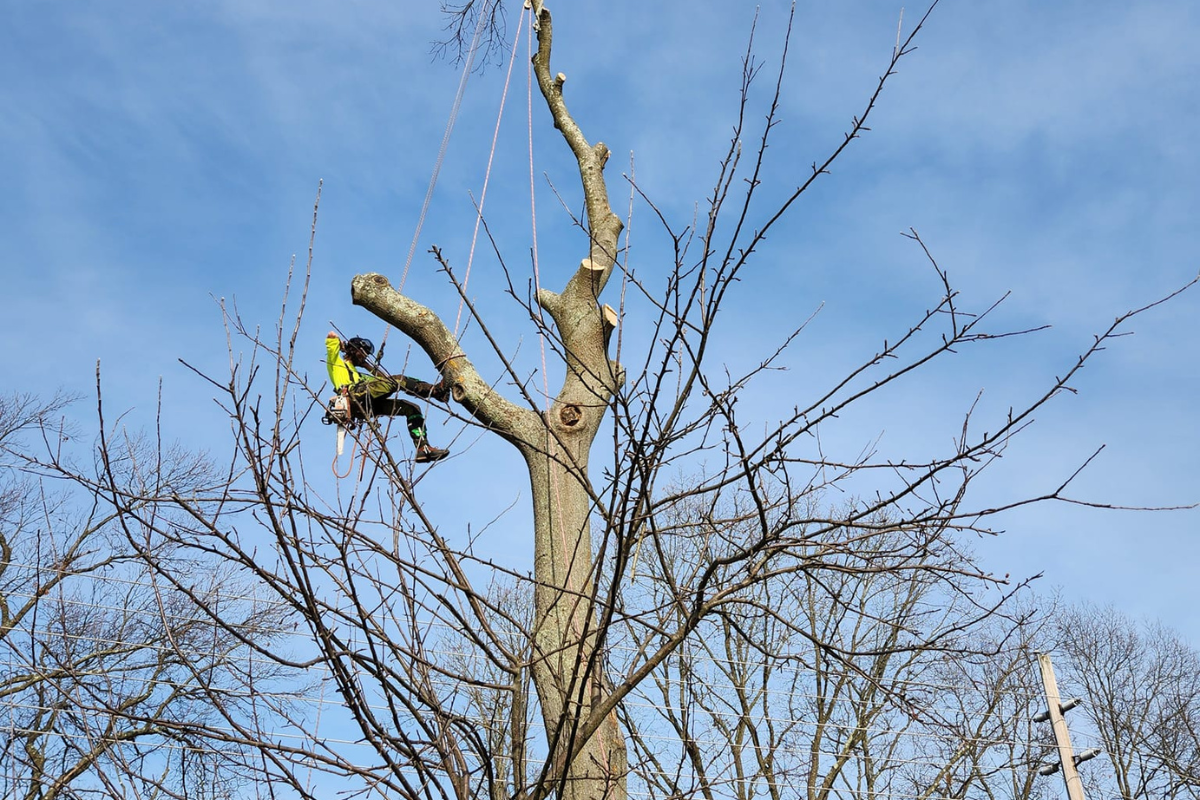
Hiring an experienced, properly insured, ISA‑certified arborist is the single best way to sidestep the worst dangers of tree removal. Certification isn’t just a patch on a shirt.
Contact Panorama Tree Care team for a free assessment and estimate.
It tells you that person has proven knowledge, keeps up with continuing education, and works within standards written by people who’ve studied accidents for decades.
Standards like ANSI Z133 are the backbone of that system. They turn “be careful” into specific rules about gear, techniques, and communication that keep crews, homeowners, and neighbors a lot safer than any DIY setup.
ANSI Z133 Safety Standard: What It Requires
The ANSI Z133 safety standard is the main safety rulebook for tree work in the U.S. Professional crews build their daily routines around it. It covers climbing, rigging, electrical hazards, chainsaw use, aerial lifts, you name it.
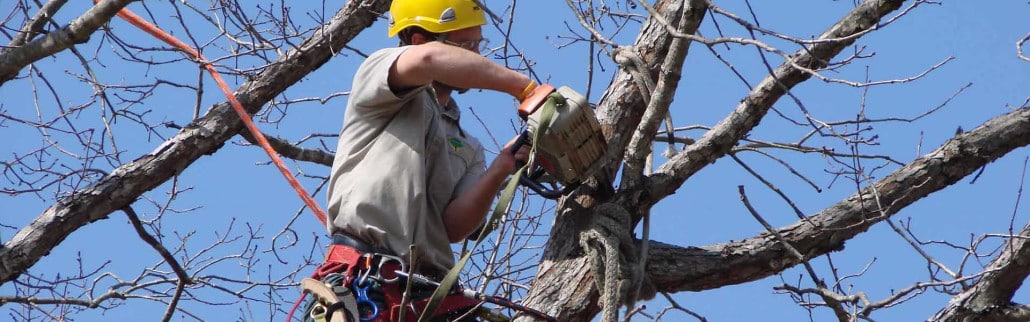
- PPE requirements: For chainsaw and climbing jobs, crews are expected to use:
- A helmet with a face shield or high‑quality safety glasses to guard against falling debris and kickback.
- Hearing protection, because loud saws all day will ruin your hearing faster than you think.
- Cut‑resistant chainsaw chaps or pants designed to jam the chain and save legs.
- Cut‑resistant gloves for grip and protection from nicks, splinters, and hot mufflers.
- High‑visibility clothing and sturdy steel‑toe boots to avoid foot injuries and keep ground workers visible to machine operators.
- Fall protection height trigger: Once a worker is more than roughly 10–15 feet up, depending on the task and local rules, they’re supposed to be on a proper fall protection system with harness, lanyards, and approved climbing lines.
- Communication protocol: Crews use clear, standard commands and radios, and they confirm drop zones before cuts. That way nobody walks under a load or into a fall path because they “didn’t hear” what was being cut.
- Daily inspection requirement: Climbing ropes, saddles, carabiners, rigging hardware, and chainsaws get a daily inspection. Worn gear gets pulled from service before it fails in the air.
- Incident reporting: Any close call or actual injury is documented and reviewed. Incident reporting is used to change procedures so the same mistake doesn’t happen twice.
Every one of these requirements is tied to common tree cutting safety risks we talked about earlier. Uncontrolled falls, struck‑by injuries, and equipment failure all of that shows up in old accident files that ANSI Z133 is designed to prevent.
Florida Contractor Liability Insurance: What to Look For
Good Florida contractor liability insurance is just as important as sharp saws and ropes. You want a tree service that can fix any damage they accidentally cause without dragging you into the mess.
- Minimum coverage: Look for general liability of at least $1,000,000 per occurrence. Serious damage adds up quickly when roofs, vehicles, and utilities are involved.
- Workers compensation requirement: Florida generally requires workers’ compensation once a company hits a certain employee number, often four or more. Smart tree companies carry it even with smaller crews, because injuries are common in this trade.
- Property damage coverage: Make sure their liability coverage is written to handle substantial property damage. A crane mishap or a trunk section that swings wrong can easily hit that million‑dollar mark in a tight neighborhood.
- Certificate of insurance: Ask for a certificate of insurance and don’t be shy about it. Many Florida jurisdictions expect this for permits. It should show current, active policies.
- Uninsured contractor risk: If you hire an uninsured or underinsured crew and something goes bad, that risk slides right back onto you as the homeowner. Your own policy might not cover everything, especially if they see it as you hiring a risky contractor.
Before the first cut, call the insurance agent listed on the certificate and confirm the coverage hasn’t lapsed. It takes five minutes and can save you from a long fight later.
ISA Certification, Safety Record & Panorama Tree Care
ISA‑certified arborists earn that credential by passing exams, staying current with ongoing education, and sticking to a code of ethics. That usually goes hand in hand with tighter job planning, safer rigging, and a lot less guesswork.
Pair that with ANSI Z133 compliance and proper insurance, and you’re looking at a very different risk profile than a casual crew with a pickup and a saw.
Panorama Tree Care in Florida builds their work around those principles:
- Putting ISA‑certified arborists in charge of assessments and leading crews on the ground and in the canopy.
- Following ANSI Z133 procedures on every removal, pruning job, and crane lift, not just the “complicated” ones.
- Using specialized climbing systems, rigging blocks and lines, and cranes where needed to avoid risky free‑fall cuts over homes and driveways.
- Running tight team communication protocols so everyone knows when something is being cut and where it’s going.
- Maintaining a documented zero‑incident safety record on residential tree removals in the Florida area.
For homeowners, that translates into a lot of peace of mind. You’re not just paying for someone to show up with equipment. You’re hiring a system that’s designed to keep people, houses, and neighborhoods out of the accident reports.
Common Mistakes Homeowners Make When Cutting Down Trees (and Safer Alternatives)
After a big storm or during a weekend “yard improvement” push, the same mistakes pop up over and over. From the mechanic’s side of the fence, you start recognizing the pattern: underestimated weight, no clear escape path, YouTube as the only teacher.
The worst tree removal accidents are usually preventable with better judgment up front.
Here are some of the big missteps homeowners make and what a safer approach looks like.
- Mistake 1: Underestimating tree weight and reach
Risk: Uncontrolled fall, crushed roofs or sheds, neighbor property damage.
Fix: Assume the gravity zone stretches farther than it looks. Tops flex, limbs swing, and trunks bounce. If there’s any way that tree could reach a house, fence, pool, vehicle, or power line, treat it as a job for a professional crew, not a hobby project. - Mistake 2: Ignoring widow makers and internal decay
Risk: Struck‑by injury or fatality from dead wood or hidden rot.
Fix: Have an ISA‑certified arborist look for dead branches, hollow sections, cavities, fungal growth, and compromised root plates before you cut. Trees that look “solid” often are not. A quick inspection can change the entire plan. - Mistake 3: Working near power lines without TECO guidance
Risk: Electrocution, structure fires, neighborhood outages, possible fines and liability.
Fix: If any tree or limb is inside that 10 feet of clearance or looks like it could swing into a line in a fall, call TECO or a qualified line‑clearance tree service. Don’t treat a power line like a clothesline you can “work around.” - Mistake 4: Skipping chainsaw PPE
Risk: Severe lacerations from chainsaw kickback, flying chips in the eyes, or leg cuts from slips.
Fix: Bare minimum, wear a helmet, eye/face protection, hearing protection, chainsaw chaps, gloves, and boots whenever that saw is running. If that sounds like overkill for the work you plan to do, that’s usually a sign you should rethink doing it yourself. - Mistake 5: Hiring the cheapest, uninsured crew
Risk: You end up holding the bag for injuries or damage when something goes wrong on your property.
Fix: Verify Florida contractor liability insurance and real workers’ comp, not just a verbal promise. Ask for proof of ISA certification and written confirmation they follow ANSI Z133. If a quote is dramatically cheaper than everyone else, there’s usually a reason. - Mistake 6: Treating online tutorials as a substitute for experience
Risk: Misusing techniques meant for trained pros, especially around barber chairs, spring poles, and root plate failure where a bad cut has huge consequences.
Fix: Use online videos and guides to understand what the risks are, not as a step‑by‑step blueprint. If a tree is large, leaning, decayed, storm‑damaged, or near lines, do not rely on DIY videos instead of professional crews with actual field hours.
FAQ: Safety, Liability & Choosing a Safe Tree Service
What is the most dangerous tree to cut down?
The most dangerous trees to cut down are the ones that look ordinary from the ground but are tall, decayed, storm‑damaged, leaning over structures, or entangled with power lines. Trees with hidden rot in the trunk or root plate are especially nasty. They can pivot, split, or uproot without warning during a cut, and that catches even experienced people off guard if they haven’t inspected properly.
What PPE is required for safe tree cutting?
Chainsaw PPE for any serious cutting should include a helmet with a face shield or impact‑rated safety glasses, hearing protection, chainsaw chaps or cut‑resistant pants, quality gloves with good grip, and steel‑toe or cut‑resistant boots. Crews working in the canopy or using rigging add full fall protection systems and high‑visibility clothing so everyone can see each other clearly around machines and moving loads.
Is tree cutting really that dangerous for homeowners?
Yes, it is. OSHA arboriculture fatality data shows a high rate of deaths from struck‑by incidents, falls, and electrocution even among trained workers with PPE and safety plans. When untrained homeowners step into that same environment with no formal training, limited gear, and no backup system, the odds of chainsaw kickback, uncontrolled falls, and accidental power line contact increase sharply.
Who is liable if my tree falls on a neighbor’s house during DIY cutting?
In many situations, you as the homeowner can be found liable if your DIY tree work crushes a neighbor’s roof, fence, or vehicle. If an adjuster or court decides that a reasonable person would’ve used a professional for that job, your homeowners insurance may still pay, but they might limit coverage or push back on certain costs. Some policies are especially strict if an uninsured helper or casual worker gets hurt during your project.
Does homeowners’ insurance cover tree damage from storms vs DIY work?
Storm damage from a healthy tree is usually treated as an “act of God” under many policies, subject to your limits and deductibles. That’s very different from damage caused while you’re up there with a saw. With DIY tree removal accidents, insurers often look closely at whether you were negligent or used unlicensed workers. If they see you as acting like a contractor, certain exclusions and limitations may kick in.
How can I know if a tree service has a good safety record?
Ask for more than just a business card. Request references, proof of ISA certification, any OSHA training records, and a copy or summary of their safety program. Look for references to ANSI Z133, regular safety meetings, and documented procedures. Companies like Panorama Tree Care are open about their safety record, carry strong insurance, and don’t get offended when you ask those questions. That transparency is a good sign.
What questions should I ask before hiring a tree removal company in Florida?
Ask:
- Are your crew leaders ISA‑certified arborists?
- Do you follow ANSI Z133 safety standards on every job?
- Can you provide a current certificate of liability insurance and proof of workers’ comp from your insurer?
- What is your plan for protecting my home and my neighbor’s property during removal, including roofs, windows, and driveways?
- How do you handle work near TECO power lines and what’s your process for coordinating with them?
When should I absolutely not cut a tree myself?
You should not attempt DIY removal if the tree:
- Can reach a house, power line, public road, or major structure if it falls, even if you “plan” to drop it another way.
- Is rotten, storm‑damaged, hollow, or shows obvious trunk or root plate decay.
- Requires you or anyone else to climb, set rigging, or bring in a crane.
- Is within 10 feet of power lines or looks like it’s touching or leaning into them.
In all those cases, your safest move is to bring in an ISA‑certified, insured tree service and let a trained crew carry the risk on their own insurance and under industry standards.
Final Summary & Next Steps for Florida Homeowners
The common hazards of cutting down trees you’ve seen here are not theoretical. Chainsaw kickback, widow makers, barber chair splits, power line electrocution, uncontrolled falls, and violent spring pole releases are the same hazards that drive OSHA arboriculture fatality statistics every single year.
in Florida, those physical risks are stacked on top of TECO’s power line restrictions and Hillsborough County’s expectations about homeowner responsibility and liability.
If you’re looking at a tree that’s big, leaning, decayed, over a structure, or anywhere near overhead lines, treat it as a professionals‑only job. Don’t guess.
Confirm that any company you bring in follows ANSI Z133, carries strong Florida contractor liability insurance and workers’ comp, and has ISA‑certified leadership and a clean safety history, the way Panorama Tree Care does.
If you’re ready to deal with a hazardous tree the smart way:
- Schedule a safety‑focused tree assessment with an ISA‑certified arborist who can read the tree’s structure and defects properly.
- Get a written removal plan that explains how your home, your neighbor’s property, and utilities will be protected throughout the job.
- Let a trained, fully insured crew manage the risk, equipment, and liability so you don’t end up learning tree safety lessons the hard way.