When to Trim vs. Remove Your Tree
Trimming suits trees showing dead branches, crowded canopies, or encroaching limbs. Removal becomes necessary when structural failure, severe disease, or root damage threatens property. Our ISA-Certified Arborists — serving Tampa Bay and completing over 24,000 projects. Assess both conditions accurately, ensuring homeowners receive the safest, most cost-effective recommendation for their specific situation.
Key Takeaways
Dead, dying, or crossing branches signal trimming needs; structural failure signals full removal.
Trees with significant crown damage require removal rather than corrective pruning.
Trimming restores shape and airflow; removal becomes necessary when roots threaten foundations or utilities.
A certified arborist inspection determines whether 1 service visit saves or replaces your tree.
Dead, dying, or crossing branches signal trimming needs; structural failure signals full removal.
Trees with significant crown damage require removal rather than corrective pruning.
Trimming restores shape and airflow; removal becomes necessary when roots threaten foundations or utilities.
A certified arborist inspection determines whether 1 service visit saves or replaces your tree.
Why Does Tree Care Timing Matter So Much?
Delayed tree care turns manageable problems into costly emergencies. Dead, dying, or damaged branches left unaddressed significantly increase the risk of property damage and compromise the safety of every outdoor space beneath the canopy.
Panorama Tree Care has served Tampa Bay homeowners and commercial properties for many years, completing over 24,000 projects across Hillsborough, Pinellas, Manatee, and Sarasota Counties. That depth of experience makes one pattern unmistakable: the properties that avoid serious storm damage and liability claims are the ones that address tree health proactively — not reactively.
What happens when tree problems are ignored too long?
A weakened branch does not stay weakened indefinitely. Structural decay accelerates, and what begins as a trimming candidate becomes a complete removal situation. A far more involved and expensive outcome. Acting early preserves both the tree and your budget.
Does it matter who performs the work?
Absolutely. Every job Panorama Tree Care handles is performed by ISA-Certified, TRAQ-qualified arborists who are fully insured. Tree Risk Assessment Qualification (TRAQ) is a formal credential that equips arborists to evaluate hazard potential with scientific precision — not guesswork.
Here is a quick look at what timing affects:
Safety: Early removal of compromised branches prevents falling limb injuries
Cost: Trimming costs far less than emergency removal after storm damage
Tree health: Timely pruning stops disease from spreading to healthy tissue
Property value: Well-maintained trees preserve curb appeal and structural integrity
Safety: Early removal of compromised branches prevents falling limb injuries
Cost: Trimming costs far less than emergency removal after storm damage
Tree health: Timely pruning stops disease from spreading to healthy tissue
Property value: Well-maintained trees preserve curb appeal and structural integrity
What Signs Indicate Your Tree Needs Trimming?
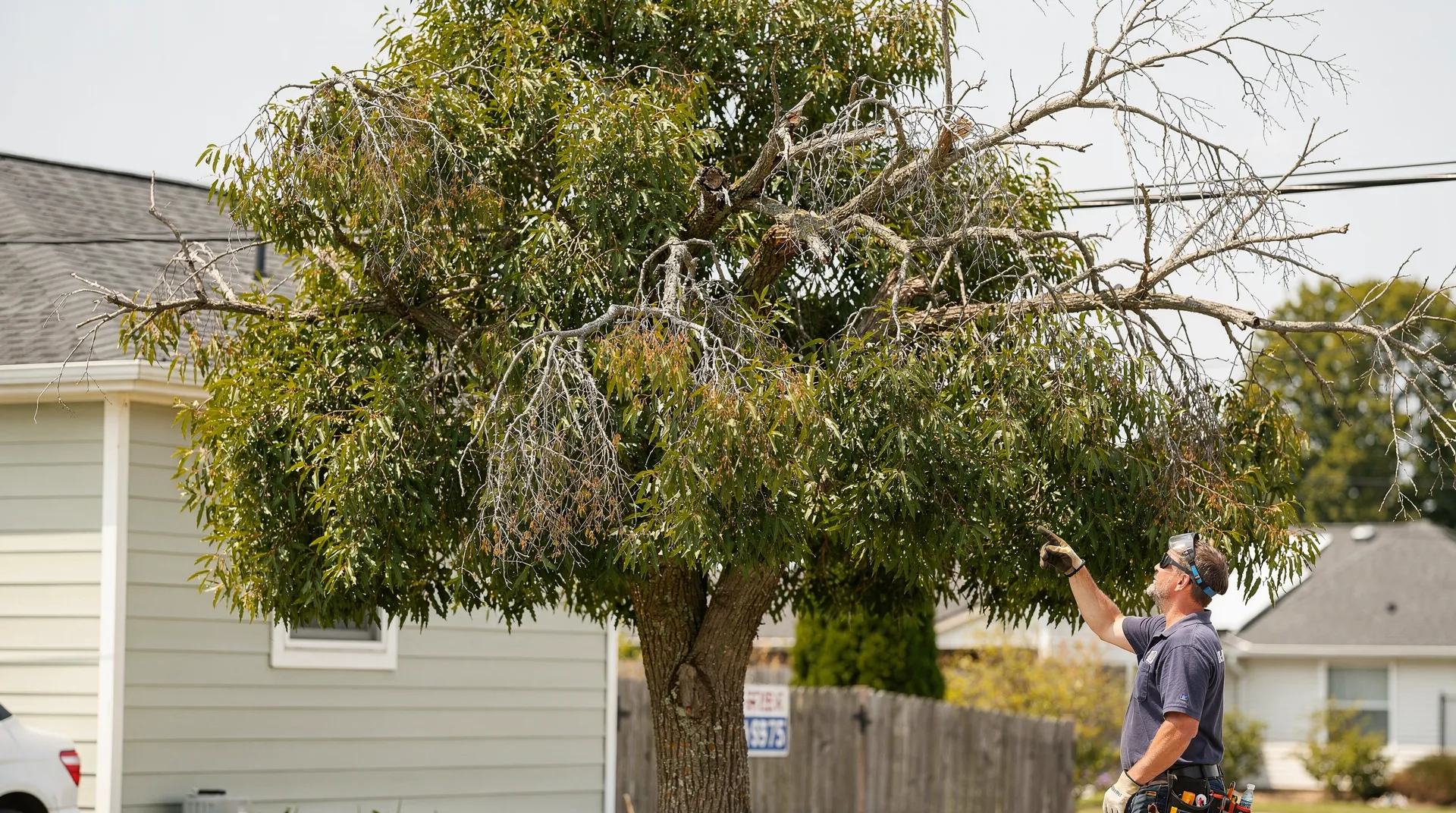
Determining if a tree requires trimming starts with a careful visual inspection of the canopy, branches, and overall structure. Dead limbs, crowded growth, and branches pressing against structures are the clearest signals that professional pruning is overdue — and ignoring those signals puts your property at risk.
What Happens When Branches Rub Against Each Other?
Competing branches that rub against one another wear away the protective bark over time. That exposed wood becomes an open invitation for insects and fungal disease to take hold. Left unaddressed, a single rubbing branch can compromise the health of an otherwise sound tree.
When Do Branches Become a Safety Hazard?
Branches encroaching on power lines or rooflines demand immediate professional attention. Attempting to trim near utility lines without proper training and equipment is extremely dangerous. This is not a DIY task. Our ISA-certified arborists at Panorama Tree Care have the credentials. Company-owned equipment to handle these situations safely and in full compliance with industry standards.
Here are the key warning signs that a tree is ready for trimming:
Rubbing or crossing branches that are visibly wearing away bark
Limbs growing toward power lines, rooflines, or fences
A dense, crowded canopy that blocks airflow and light penetration
Asymmetrical or unbalanced growth that strains the tree’s structure
Rubbing or crossing branches that are visibly wearing away bark
Limbs growing toward power lines, rooflines, or fences
A dense, crowded canopy that blocks airflow and light penetration
Asymmetrical or unbalanced growth that strains the tree’s structure
How often trimming is needed varies. Trimming frequency depends on the tree’s species, age, overall health, and its specific location on the property. A young sabal palm in an open yard has very different needs than a mature live oak overhanging a driveway.
Panorama Tree Care provides professional tree trimming across the entire Tampa Bay region. Our team assesses each tree individually, delivering targeted pruning that protects both the tree and your property.
When Does a Tree Require Complete Removal Instead?
How can I determine if my tree requires trimming or complete removal? A tree requires complete removal when structural damage, disease, or hazardous positioning makes preservation unsafe or impossible. Trimming addresses isolated problems; removal becomes necessary when those problems compromise the entire tree’s integrity.
Some warning signs point clearly toward removal rather than pruning. Recognizing them early protects your property and everyone on it.
What structural conditions make a tree too dangerous to save?
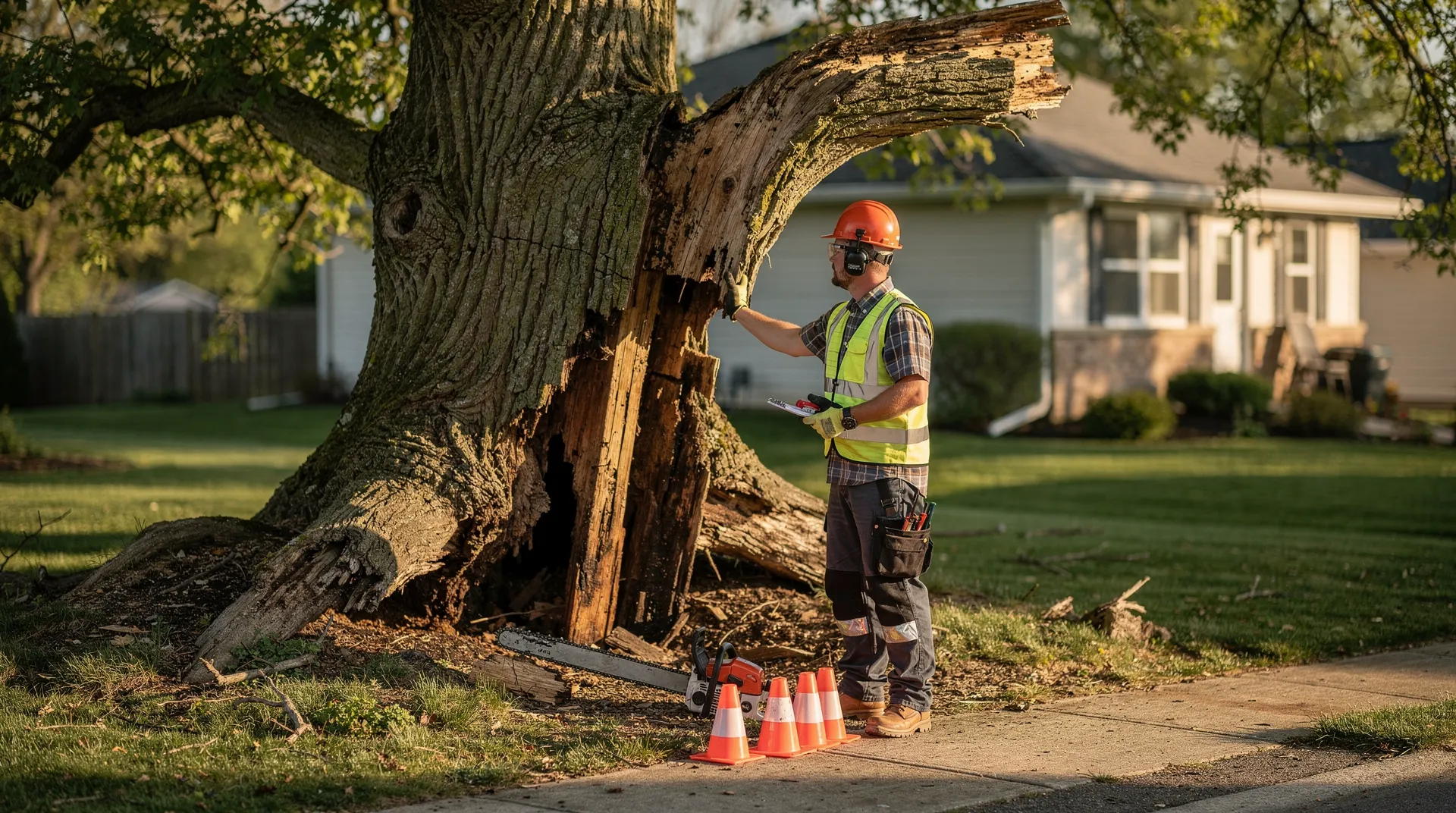
Our ISA-Certified Arborists assess trees for hazards that go beyond what pruning resolves. A severely compromised root system, a trunk with extensive decay. A canopy that has split under storm stress are conditions where trimming provides no lasting solution. Professional pruning does catch structural problems early. But when those problems have already advanced throughout the tree, removal becomes the responsible course of action.
Key indicators that removal outweighs trimming:
Trunk decay extending deep into the heartwood, weakening the tree’s load-bearing core
Root failure or significant soil heaving near the base, signaling instability
Irreversible storm damage — major scaffold limbs split or torn away
Disease or pest infestation that has spread beyond treatable portions of the canopy
Hazardous positioning directly over structures, utilities, or high-traffic areas
Trunk decay extending deep into the heartwood, weakening the tree’s load-bearing core
Root failure or significant soil heaving near the base, signaling instability
Irreversible storm damage — major scaffold limbs split or torn away
Disease or pest infestation that has spread beyond treatable portions of the canopy
Hazardous positioning directly over structures, utilities, or high-traffic areas
How long does tree removal actually take?
The time required to remove a tree varies based on its size, location, and site conditions. A large tree close to a structure demands more planning and precision than a smaller, open-site removal.
Panorama Tree Care specializes in [hazardous tree removal](https://www.panoramatreeservice.com/services/tree-removal-service/), deploying advanced crane technology. Zero-impact removal methods to protect surrounding structures throughout the process. Our team has completed over 24,000 projects across Tampa Bay. Every removal begins with a thorough arborist assessment to confirm that removal. Not trimming — is truly the right call.
How Does Proper Pruning Technique Protect Your Tree?
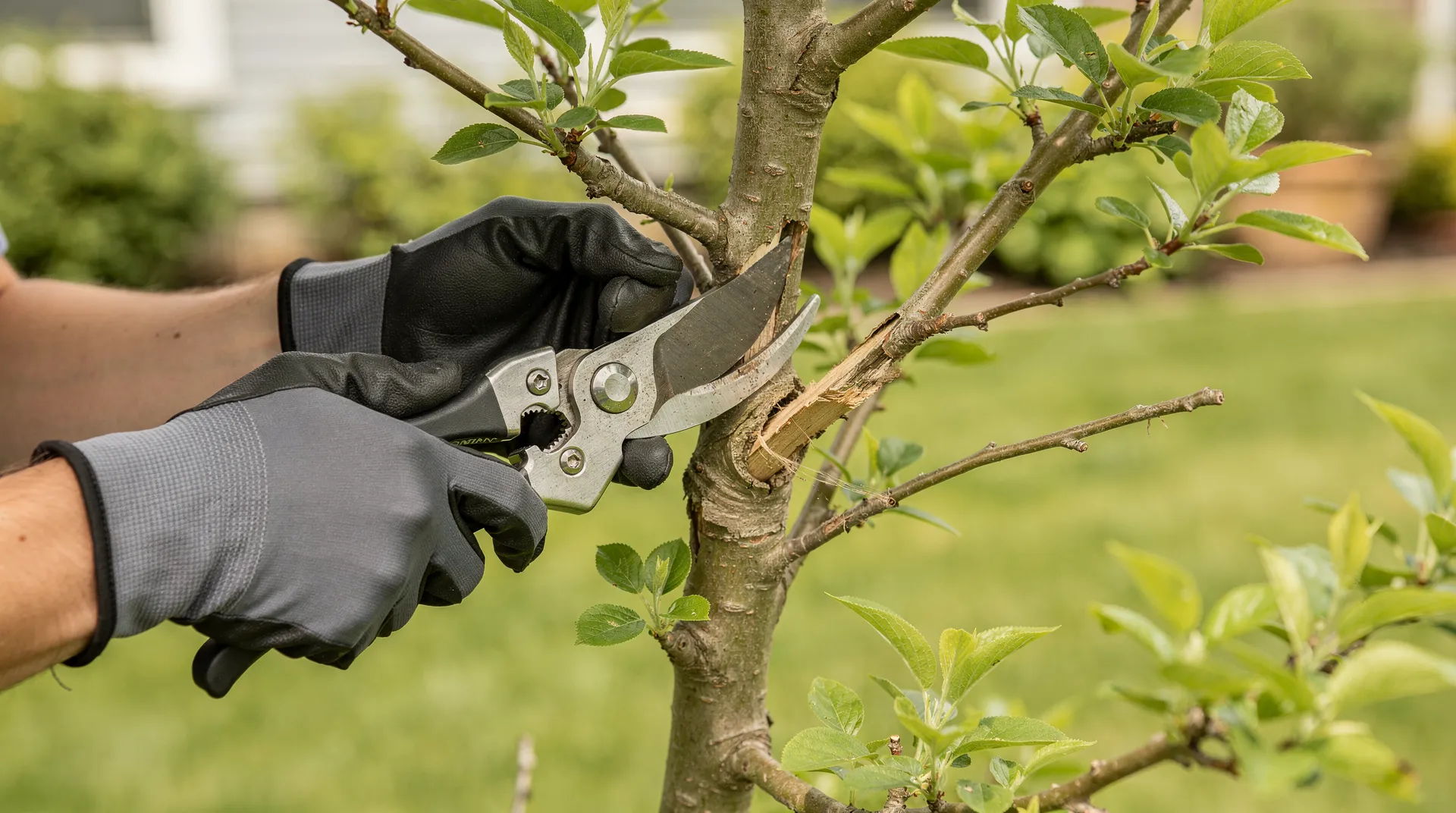
Proper pruning technique protects a tree by removing structurally weak branches while preserving the stronger ones — a method that produces measurably better results than indiscriminate shearing. Cutting without a clear plan causes long-term structural damage that shortens a tree’s lifespan and increases hazard risk to surrounding property.
Why Does Selective Pruning Outperform Shearing?
Selective pruning targets individual weak or compromised branches rather than cutting across the entire canopy at once. Shearing removes strong and weak growth alike, leaving the tree with a compromised framework. Selective pruning takes more time, but the structural outcome is significantly superior — and that investment pays off every storm season in Tampa Bay.
When Should Structural Pruning Begin?
The earlier, the better. During a tree’s early development, structural pruning establishes the shape, size. Load-bearing framework the tree will rely on for decades. A tree pruned correctly in its formative years builds the internal strength needed to withstand high winds and severe weather. Both of which are routine in the Tampa Bay region. Waiting until a tree is mature to address structural deficiencies costs far more to correct and often leads to irreversible damage.
Our approach at Panorama Tree Care combines these principles with rigorous safety standards. Every pruning project our ISA Certified Arborists complete is ANSI A300 compliant, meaning the work meets the arboriculture industry’s established performance standards. Not just local minimums. Our crew members train in all safety protocols. We deploy state-of-the-art equipment on every job to protect both our team and your property.
The right technique, applied at the right time, is the difference between a tree that thrives and one that becomes a liability.
Why Trust a Certified Arborist With This Decision?
**** The answer depends on a trained eye — not a guess. Misreading the signs costs homeowners far more than a professional assessment: a tree trimmed when it should have been removed remains a structural hazard, while a healthy tree removed unnecessarily destroys decades of canopy value.
Panorama Tree Care holds ISA Certification (FL-9569A) and an A+ BBB rating, standards that require ongoing education in tree risk assessment, biomechanics, and species-specific biology. Our arborists apply that knowledge to every evaluation. Distinguishing between a crown that needs corrective pruning and a root system too compromised to save.
What credentials should a tree care company carry before I trust their recommendation?
Look for ISA Certification and verifiable BBB accreditation. These credentials confirm that the arborist follows industry-recognized standards — not guesswork — when recommending trimming versus full removal.
How do I know I won’t be overcharged or upsold on removal I don’t need?
Our binding written estimates itemize every element of the proposed work, from stump grinding depth to debris disposal. The price quoted is the price paid — no hidden fees, no mid-job upsells.
When a hazard demands urgent action, our 24/7 emergency response means assessments happen fast. We aim to respond to all inquiries within 24 hours. Our company-owned fleet — including 75-foot bucket lifts, grapple trucks. Commercial stump grinders — deploys immediately, without waiting on third-party equipment rentals.
Speed, credentials, and transparent pricing: that combination protects your property and your budget.
Recognizing the difference between a tree that needs trimming. One that warrants full removal is one of the most consequential judgments a homeowner makes for their property’s safety and long-term value. The signs covered in this guide — from structural defects and disease progression to root compromise and proximity hazards. Give you a reliable framework for that assessment. When uncertainty remains, trust the evaluation to an ISA Certified Arborist whose expertise transforms a potentially dangerous situation into a confident, informed decision.
FAQ
What branch conditions signal a tree needs trimming?
Dead, dying, or crossing branches that rub together and wear away protective bark signal trimming needs. Exposed wood invites insects and fungal disease into otherwise healthy trees.
How much crown damage requires removal instead of trimming?
Trees with significant crown damage require removal rather than corrective pruning. Structural failure at that level makes trimming an insufficient and unsafe solution.
Who determines whether trimming or full removal is the right choice?
ISA-Certified, TRAQ-qualified arborists assess hazard potential with scientific precision, determining whether one service visit saves or replaces your tree based on structural condition and root damage.