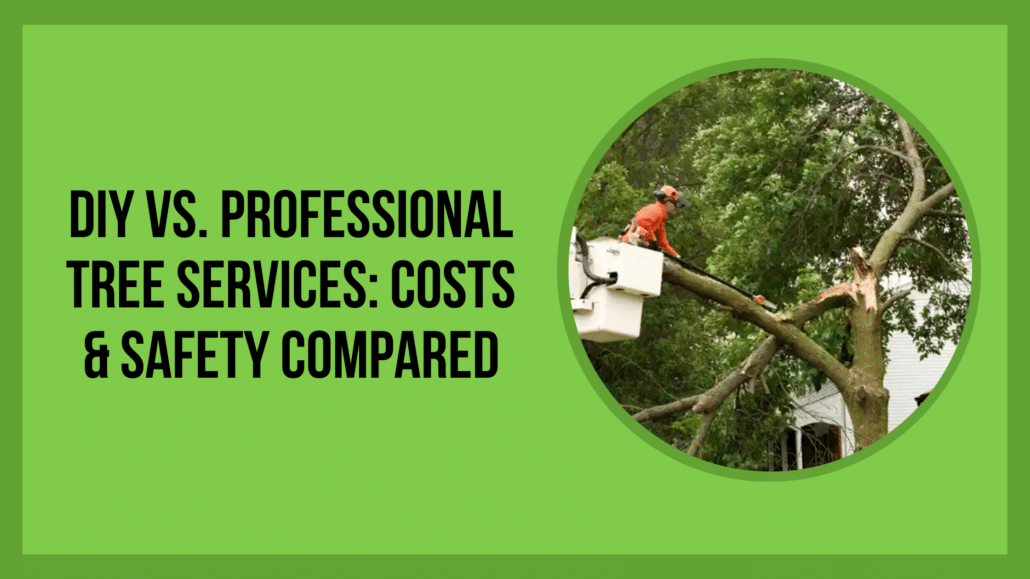
TL;DR: Around Florida, doing your own tree work is only truly smart for very small, easy-to-reach trees where nothing important is nearby. Think under about 10 feet, no buildings, no fences, no power lines.
Once a tree gets into the medium range, is anywhere near your house or a neighbor’s, or falls under Hillsborough County regulations, hiring a licensed, insured ISA arborist from a Florida tree removal service for the certified arborist benefits almost always ends up cheaper on a risk-adjusted basis, and far safer for you and your property.
Key Takeaways
- DIY tree work looks cheap until you factor in equipment rental ($200–$800/day), fuel, debris disposal, possible permit delays, and the full liability if something goes sideways. Once you add that up, the “cheap” job often costs more than a solid professional quote.
- Hillsborough County regulates a lot of trees. If a trunk is over a certain diameter at breast height (DBH), or a tree is in a protected category, you can be fined and required to replant if you remove or butcher it without a permit.
- Plenty of homeowner policies have DIY and unlicensed-work exclusions. If you do tree work that’s considered contractor-level or that should have had a permit, your carrier may decide the mess is yours to pay for.
- OSHA data puts arboriculture in the same league as logging and roofing for danger. Falls, chainsaw accidents, and electrocutions are routine in the stats, not rare outliers.
- DIY work stays reasonably safe if you limit yourself to small trees under ~10 feet, with no targets in range and all cutting done from solid ground using proper PPE and basic tools — and you’ve studied the common tree cutting mistakes first.
- You must hire a professional for trees near power lines, large trunks over permit limits, trees leaning over roofs or pool cages, dead or heavily damaged trees, or any project that realistically needs a bucket, crane, or serious rigging.
- A legitimate Florida tree company should be able to show you a Florida contractor license, proof of liability and workers’ comp insurance, and have at least one ISA Certified Arborist who actually looks at your trees, not just a name on the website.
- Local outfits like Panorama Tree Care usually wrap permits, cleanup, and hauling into the quote. DIYers almost always underestimate how much time, fuel, and sweat those parts really cost.
What Is “DIY vs Professional Tree Service” in Florida?
DIY tree work means you, as the property owner, handle your own tree trimming or removal using your own tools or rentals. No contractor, no crew. You’re responsible for planning the cuts, getting permits if needed, hauling the mess, and accepting all the risk.
Professional tree service means bringing in a licensed, insured tree company. Ideally the outfit is led by an ISA Certified Arborist who inspects the tree, sets a plan, and sends a trained crew with the right gear — see our guide to finding the right professional. They deal with the permits, equipment, labor, and cleanup, and their insurance is on the line if something goes wrong.
in Florida and across Hillsborough County, the choice is not just about the check you write. It’s about legal responsibility, safety, and the long-term health and value of your property.
DIY vs Professional Tree Service: Quick Comparison Table
Here’s a side-by-side look at the total cost of ownership for tree work in Florida. Think beyond the invoice. Include your time, risk, and what happens if one cut doesn’t go the way you pictured.
| Factor | DIY Tree Work | Professional Tree Service (e.g., Panorama Tree Care) |
|---|---|---|
| Typical Out-of-Pocket Cost (Small–Medium Tree) | $250–$900+ in rentals, fuel, dump fees, and basic safety gear. Easy to hit the high end if you need a chipper or multiple dump runs. | $350–$1,200+ as a flat quote. Often includes crew, equipment, clean-up, and hauling so your out-of-pocket starts and ends with the invoice. |
| Time Investment | Anywhere from half a day to a full weekend. That includes picking up and returning rentals, permit errands, cutting, loading, and dump trips. | Typically 2–6 hours on site for the crew. Your time is mostly spent getting quotes, choosing the company, and meeting them once. |
| Safety Risk | High. You’re on the hook for ladder falls, chainsaw kickback, rolling logs, and potential contact with energized lines. | Much lower for you. Risk is carried by a trained crew using PPE, rigging systems, and established safety protocols. |
| Insurance Coverage | Often thin. DIY/unlicensed-work exclusions can bite you if the job looked like contractor work or needed a permit you skipped. | The company’s liability and workers’ comp are usually primary. Your policy becomes backup instead of the first target. |
| Permit Handling | You have to figure out if a permit is required, apply, pay, wait, and schedule any inspections or documentation. | Most reputable Florida pros handle the Hillsborough County permit paperwork and add any fees to the quote. |
| Equipment Needs | Rent or borrow chainsaws, chippers, ladders, ropes, and PPE. Then you need to transport, fuel, and learn to use them safely in a day. | Company shows up with the right gear for your job. Bucket truck, chipper, saws, rigging, PPE, and stump grinder are already in the fleet. |
| Liability Exposure | High: If you or a friend get hurt or a limb crushes a roof, car, or fence, you’re the one explaining it to the neighbor, the insurer, or a lawyer. | Mostly shifted to the contractor as long as they’re properly licensed and insured and you’ve got their paperwork in hand. |
| Quality & Tree Health | Easy to over-prune, top trees, or make bad cuts that invite decay, pests, or future breakage. | Arborist-guided pruning focuses on structure and long-term health, which improves safety and curb appeal. |
If you’re focusing on DIY vs professional cost, it also helps to dig into a detailed price breakdown from a local Florida arborist so you can compare apples to apples instead of guesswork.
The True Cost of DIY Tree Work (Hidden Expenses Most People Miss)
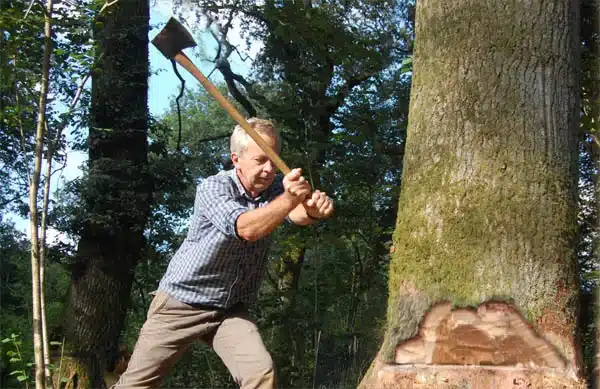
DIY looks cheap when you only compare a $70 tool rental to a $700 tree service quote. That’s where most people stop the math. Once you start stacking equipment rentals, hauling fees, permit time, and the cost of even a minor mistake, the numbers flip fast, especially once trees get into the medium or large category.
For a lot of homeowners, the risk-adjusted cost of DIY is higher than paying a legitimate company, even though the check you write a contractor might sting more upfront. The difference shows up later in saved weekends, avoided injuries, and roofs that don’t need replacing.
Equipment Rental Costs
Very few homeowners own the right mix of tools to safely deal with a full-sized oak or a tall, messy palm. So you end up renting pro-grade equipment designed for people who run it every day. That’s where DIY costs jump.
Here’s a realistic look at common DIY tree equipment costs in the Florida area:
| DIY Equipment / Cost Element | Typical Cost in Florida (USD) |
|---|---|
| Chainsaw rental (per day) | $60–$120 depending on bar length and quality. Bigger saws cost more and are harder to handle safely. |
| Wood chipper rental (per day) | $150–$300 for a tow-behind unit. Some yards require extra for cleaning or insurance. |
| Extension ladder or scaffolding rental | $40–$80/day, and you still have the problem of working overhead with a saw. |
| Ropes, rigging, slings (purchase) | $50–$200+ for basic gear. Professional-grade rigging that actually handles big limbs is more. |
| Personal protective equipment (PPE) set | $100–$250+ for helmet, eye and ear protection, gloves, and chainsaw chaps or pants. |
| Fuel, oil, chains, maintenance | $30–$60 per project. More if you dull a chain on dirt, nails, or embedded metal. |
| Truck or trailer rental (if needed) | $75–$150/day for something big enough to haul branches and logs without multiple trips. |
DIY tree work cost breakdown (typical ranges):
- Total cost small tree (DIY): $250–$450 for a small ornamental or palm once you add a modest saw, PPE, and at least one dump run.
- Total cost medium tree (DIY): $400–$900+ if you need a chainsaw, chipper, some rigging, better PPE, and several dumps or trailer loads.
Now lay that against typical professional tree service cost in Florida for similar jobs:
- Small tree removal: around $300–$600 depending on access, species, and cleanup needs.
- Medium tree removal: about $600–$1,200 for most common yard trees that don’t need a crane.
- Large tree removal: $1,200–$2,500+ once you’re dealing with big oaks, tight spaces, or crane work — and there are clear reasons why crane work requires professionals.
- Trimming/pruning (per tree): $250–$800 depending on tree size, height, and how detailed the pruning needs to be.
- ISA Certified Arborist assessment: roughly $100–$250, often knocked off the bill if you hire them for the work.
By the time you factor in that pros like Panorama Tree Care bring all the equipment, rigging, fuel, and crew you need, that “I’ll save half” expectation usually shrinks to “maybe I’m saving 10–20%,” if that. One mishap can wipe that out entirely.
Disposal & Hauling
Here’s where DIY really surprises people. A tree that looks manageable standing up turns into a huge pile when it’s on the ground. A single medium oak can fill a trailer multiple times if you’re not chipping it.
Typical Florida disposal and hauling numbers look like this:
- Disposal fee per load: $30–$80 at local green waste or landfill facilities, depending on volume, site rules, and whether you’re a regular customer.
- Number of loads for a medium tree: 2–4+ truck or trailer loads if you’re hauling unchipped branches and logs.
- Total disposal/hauling cost per medium tree: $60–$320+ in dump fees alone, plus fuel, possible trailer rental, and several sweaty hours of loading and unloading.
Professional crews nearly always include debris handling in the price:
- On-site chipping and hauling with their equipment. Logs and brush go straight from the yard to the chipper truck.
- Final cleanup of branches and sawdust so your yard looks presentable instead of like a logging landing.
- Optional firewood bucking or log stacking if you tell them you want to keep some wood for personal use.
That “includes haul-off and cleanup” line on a pro estimate is worth more than most people think. It often replaces multiple back-and-forth dump runs, a trashed weekend, and a beat-up pickup.
Medical & Liability Risk
This is the big cost nobody plugs into their spreadsheet. But this is the one I see bite homeowners the hardest.
Based on OSHA arboriculture injury statistics and industry data:
- Tree work and logging consistently rank among the most hazardous occupations in the country.
- Every year, there are dozens of tree-care fatalities nationwide and a long list of life-changing injuries.
- Most deaths trace back to struck-by incidents from falling wood, falls from height, and electrocution when branches or tools hit energized lines.
- Chainsaw injuries are common, measured in dozens per 100,000 workers annually, and the wounds are usually ugly: legs, hands, face.
- On DIY jobs, PPE use is hit-or-miss. Professional crews are required by OSHA to use helmets, gloves, chaps, safety glasses, hearing protection, and fall protection as standard kit.
Some of the most common DIY accident stories I run into:
- Chainsaw kickback to the face or shoulder from cutting overhead or using the tip of the bar in a pinch point.
- Falls from ladders when someone is leaned out too far, holding a running chainsaw instead of maintaining three points of contact.
- Bad felling cuts where the tree splits (barber-chairs), twists off the stump, and lands across a roof, driveway, or fence line.
- Electrocutions from limbs blowing into or brushing energized service drops or nearby higher-voltage lines.
And that’s just the physical side. There’s also the paperwork and financial side:
- If you send a limb through a neighbor’s roof or crush their car, you’ve got property damage liability to contend with.
- If a buddy helps you and gets hurt, you may be facing a personal injury claim and a very awkward conversation with your insurer.
- If the work you did should reasonably have been done by a licensed contractor or needed a permit you skipped, your homeowner insurance DIY exclusion might give the carrier an excuse to reduce or deny coverage.
When you bring in a reputable, properly insured tree company, their workers’ comp and liability policies are intended to absorb that risk. That alone is worth a lot more than the difference between your tool rental and their day rate.
Florida Liability Laws for DIY Tree Work
Tree work around Florida is not a free-for-all. Hillsborough County and the City of Tampa both have rules that affect what you can cut and how. Blow those off, and you can end up with fines, mitigation requirements, and insurance headaches that wash away any DIY savings.
What follows is a working overview from a boots-on-the-ground perspective, not legal advice. Always double-check current rules with county resources and your insurance agent.
Hillsborough County DIY Tree Permit Rules
Both the county and the city regulate removal and heavy pruning of many trees. The details change from time to time, but here’s how it usually shakes out in practice:
- Once a tree hits a certain diameter at breast height (DBH) threshold, commonly somewhere around 6–12 inches for regulated species, you’re often in permit territory for removal or major pruning.
- Some “protected” and “grand” trees are in a different category. Those may need an ISA Certified Arborist report, photos, and review from the county before you touch them.
- Permit fees usually start as modest admin charges, maybe in the $25–$100+ range, but can climb for more complex situations.
- Permit processing time can run from a few business days to a couple of weeks, especially right after storms or during busy spring and summer seasons.
- Penalties for unpermitted work can include:
- Fines that can reach into the hundreds or more per tree
- Required replanting or mitigation, sometimes with specific species and sizes
- Code enforcement actions that follow your property record
Common situations where you might be exempt include:
- Very small trees below the DBH threshold written into the code.
- Certain invasive or prohibited species that the county actually wants removed.
- Emergency removals where the tree is an immediate hazard, backed up with photos, reports, or an arborist’s letter.
For the exact, current Hillsborough standards and forms, always check the county or City of Tampa website or speak directly with someone in permitting instead of relying on old neighbor advice.
Florida Liability for Neighbor Property Damage
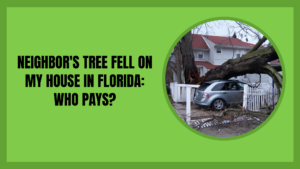
Under Florida law, if your tree or your tree work causes damage to a neighbor’s property, you may be on the hook. It does not matter that it “was an accident” if you were the one cutting.
- You misjudge a back-leaner and it drops onto a neighbor’s shed or privacy fence.
- You roll a big section of trunk, it gets away from you, and crushes a neighbor’s car across the line.
- You over-prune or destabilize a shared boundary tree. Months later it splits and lands on their side.
In all of those, your neighbor can push property damage claims, and your insurer is going to dig into whether what you did was reasonable for a homeowner or looked like you were acting as your own unlicensed tree service.
Utility Line Clearance and TECO Rules
Tree work around power lines is where the job stops being a homeowner project and becomes a life-or-death trade. I’ve seen way too many people underestimate this.
- Tampa Electric (TECO) has formal clearance rules and internal programs to keep vegetation away from their primary and secondary lines.
- Homeowners should never be cutting in a way where branches could swing or drop into energized conductors. That’s not a gray area. That’s a hard no.
- In many cases, TECO will either schedule their own clearing or direct you to a qualified line-clearance tree service trained to work near live wires.
As a practical rule: if a branch is close enough that, if it moves wrong, swings, or falls, it could hit a line, treat that as a non-DIY job. Electrocution from arc contact or indirect contact happens faster than you can react and rarely ends well.
Homeowner Insurance DIY Exclusions
Policy language is boring until you need it. A lot of homeowners never read the parts about unlicensed work, code compliance, and permits, but those are the sections that pop up after a DIY tree mishap.
- Unlicensed work exclusion: Some policies limit or flat-out deny claims if the loss came from work that should have been done by a licensed contractor under state or county rules.
- Neighbor property damage coverage: Usually part of your liability coverage, but often tied to you following local laws and not ignoring permit or safety requirements.
- Personal injury coverage for DIY: Your own injuries may have limited coverage. Injuries to others can trigger a deep dive into whether you were negligent by taking on a job beyond a normal homeowner’s scope.
- Permit violation penalty: If the damage springs from unpermitted tree removal or work that violates local ordinances, your insurer may reduce what they pay or decline the claim entirely.
Florida also expects many contractors to carry proper licensing. If you hire an unlicensed “tree guy” and something goes wrong, there’s a decent chance the mess swings back onto your shoulders under Florida contractor licensing requirements.
Expert tip: Before you start tackling any major tree job, pick up the phone and ask your agent, in plain language:
- “Am I covered if I do this tree work myself?”
- “Am I covered if I hire an unlicensed or uninsured tree guy?”
- “Does my coverage change if I skip a permit that’s required?”
When DIY Tree Work Is Safe and Legal in Florida
You don’t have to call a crew every time a small limb breaks or a shrub needs shaping. There is a realistic DIY zone. It’s just a lot smaller than most folks think before they’ve watched a few real removals up close.
From a practical, boots-on-the-ground standpoint, DIY tree work in Florida is generally reasonable when all of the following are true:
- Tree size: The tree is under about 10 feet tall, and the trunk is small enough that you can easily control the pieces you cut. It’s also well below any local DBH thresholds that might trigger permits.
- Location: The tree or branch is well clear of:
- Any structure like your house, garage, shed, pool cage, or screen enclosure
- Vehicles, driveways, and parking pads
- Fences, property lines, and shared hedges
- Overhead utilities, service drops, or visible power lines of any kind
- Work type: You’re doing ground-level pruning or very minor ladder work. No climbing into the canopy, no leaning from ladders with power saws, and no heavy overhead cuts where the branch can swing unpredictably.
- Legal status: Based on species and trunk size, the tree does not need a Hillsborough County or City of Tampa permit for the level of work you’re planning.
- Conditions: The tree shows no obvious structural red flags, such as:
- Serious cracks or cavities in the main trunk
- Significant, recent lean, especially toward a structure or high-value target
- A mostly dead or dying crown
- Exposed roots, heaving soil, or root plate lifting away from the ground
- Equipment & training: You actually have:
- Appropriate basic tools like a hand saw, loppers, or a pole pruner. Maybe a small chainsaw if you’ve used one before.
- Essential PPE, including a helmet or hard hat, gloves, eye protection, and hearing protection if you’re running a saw.
- At least some chainsaw safety certification or training if you’re going to run a power saw, even at ground level.
If your project falls inside that safe, legal box, DIY can be perfectly reasonable. Just keep the work conservative, avoid large structural cuts, make clean pruning cuts, and know when to stop and call a pro instead of pushing your luck.
When You Must Hire a Professional (Non-Negotiable Scenarios)
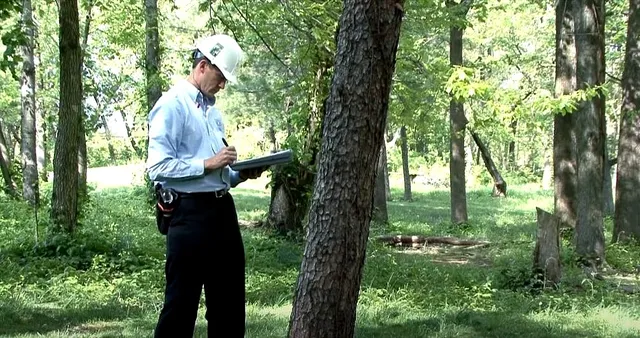
There are some situations where I tell people flat out: “Don’t even think about doing this yourself.” The risk is too high, the legal side is too tight, or both. No amount of YouTube watching replaces a trained crew in these cases.
You should hire a professional—ideally an ISA certified arborist—when:
- Tree is near power lines:
- Any branch you cut could land on or swing into TECO primary or secondary lines.
- Service drop lines to your house run through or right next to the canopy, and any miscut could cause contact.
- Tree exceeds permit diameter thresholds:
- The trunk DBH is at or above the size Hillsborough uses to trigger permits.
- The tree is tagged or documented as a protected or grand tree on your lot or in your neighborhood.
- Tree is over or near structures:
- Branches are hanging over roofs, lanais, pool cages, carports, sheds, or your neighbor’s house.
- Dropping a piece without rigging would realistically mean hitting a structure if you guess wrong even a little.
- Tree is dead, dying, or structurally compromised:
- Dead trees often don’t hinge like live wood. They snap or shatter, which makes DIY felling very unpredictable.
- Visible decay, large cavities, or cracking in the trunk make any type of cutting more hazardous for an amateur.
- Job requires climbing or complex rigging:
- You’d need to climb higher than a solid step ladder to reach the cuts.
- Branches have to be tied off and lowered to avoid patios, roofs, pools, or tight alleyways.
- You’d be running a chainsaw above chest height or in awkward body positions.
- Crane access or bucket truck is needed:
- You’re dealing with a large removal in a tight urban lot where there’s no safe way to drop sections without lifting or heavy rigging.
- Backyard access is limited, and the only realistic approach is from the street with specialized equipment.
- HOA, historic district, or commercial property rules apply:
- Your HOA rules specify professional tree service for removals or heavy pruning, or require pre-approval with an arborist report.
- You’re dealing with a commercial property where liability insurance requirements and visitor safety expectations are higher.
- Neighbor conflict risk is high:
- The tree is right on the property line or shared, and there’s any hint of tension with the neighbor.
- Neighbors are already worried and complaining about the tree’s safety or the shade it casts.
In all of these, the Florida arborist vs DIY decision really is one-sided. The legal and safety stakes are too big to gamble on a weekend project, no matter how confident you are with a saw.
If you want to see exactly how professional credentials protect you in these scenarios, look for detailed explanations of ISA standards and Florida contractor rules from local Florida arborists.
How to Verify a Florida Tree Service Is Legitimate
Once you’ve accepted that a project is bigger than a DIY job, the next trap is hiring the wrong company. Florida has plenty of good, local tree outfits, and it also has guys with a chainsaw and a pickup who disappear when something goes wrong.
Use this checklist to make sure any Florida tree company you’re considering, whether it’s Panorama Tree Care or someone else, is the real deal.
ISA Certification Check
The International Society of Arboriculture (ISA) is the standard many of us in the trade go by. An ISA Certified Arborist has passed exams and has documented experience with:
- Tree biology and how to prune in a way that supports health instead of stressing the tree.
- Risk assessment, structural defects, and how to reduce hazards without over-cutting.
- Local pests, diseases, and environmental stresses common in the Florida climate.
To verify ISA credentials instead of just taking someone’s word:
- Ask for their full name and ISA certification number.
- Go to the ISA “Find an Arborist” search tool and confirm the name comes up as active and local.
- Make sure that certified arborist is actually involved in estimating and planning your job, not just listed on the website with no real role.
Insurance Verification
A legit Florida tree service will not hesitate to prove they’re insured. If they dodge this, that’s your cue to move on.
- General liability insurance is what pays out if they drop a limb through your roof, break your pool cage, or hit a neighbor’s car.
- Workers’ compensation insurance is what covers their employees if they get hurt on your property, so they’re not coming after you to cover medical bills or lost wages.
Here’s how to verify those policies are more than just words on a card:
- Ask for a certificate of insurance (COI) issued by their insurer, not a screenshot. Have it list you as the certificate holder.
- Look at the coverage limits and make sure they’re appropriate for the kinds of structures and values on your property.
- Check the dates to confirm the policy is active on the day the work is scheduled. If the timing is close to an expiration date, ask for an updated COI.
Florida Contractor License & Local Credentials
Florida treats a lot of tree work as contractor-level work, especially removals, land clearing, and any significant commercial work. That means licensing expectations apply.
- Get their Florida contractor license number and punch it into the Florida Department of Business and Professional Regulation (DBPR) lookup to confirm it’s real and active.
- Ask if they hold a Hillsborough County business tax receipt or any required city-level business registration for operating locally.
Verifiable paperwork doesn’t just prove they exist. It gives you recourse if there’s a dispute or problem down the line, instead of them vanishing with a prepaid deposit.
Red Flags to Avoid
There are a few signs I tell homeowners to treat as deal-breakers. If you see these, walk away.
- No written estimate. They just throw out a rough number and push to start “right now” while the truck is already in your driveway.
- They avoid, delay, or refuse to provide insurance certificates or a license number, or they give excuses about “paperwork being at the office.”
- They insist on large cash payments up front, or they only accept cash, no check or card, and no invoice.
- Trucks with out-of-state plates, no company name on the side, and no local address or business info you can verify online.
- They brag that “we never bother with permits” or claim Florida permit requirements are just a scam you can ignore.
- Their quote is dramatically lower than three other reputable companies. That usually means they’re skipping insurance, licenses, or safety measures.
Reputable local companies like Panorama Tree Care will put everything in writing, show you proof of credentials without a fight, and have reviews, photos, and references you can check through Google, the BBB, or local community boards.
Step-by-Step: Decide Between DIY and Hiring a Florida Arborist
If you’re staring up at a tree trying to decide whether to rent a saw or make a phone call, use this simple process. It keeps emotion out and forces a clear look at cost, safety, and legality.
- Measure tree size and location.
- Get a rough height. Is it under or over about 10 feet? A modest 8-foot ornamental is a very different animal than a 25-foot shade tree.
- Measure trunk diameter at breast height (DBH) with a tape about 4.5 feet off the ground. That number matters for permit rules.
- Look at what’s around the tree. Check distance to the house, garages, fences, sheds, driveways, and any overhead lines.
- Check local permit rules.
- Compare your tree’s size and species to Hillsborough County DIY permit thresholds. If you’re close to the line, treat it as regulated.
- If you’re not sure, call the county or have an ISA Certified Arborist review it. Guessing wrong can cost more than any permit fee.
- Evaluate your skills and equipment.
- Ask yourself honestly if you have chainsaw safety training and are comfortable using one only at ground level.
- Confirm that all work can be done from solid ground or a very stable platform. If you’re picturing yourself reaching off a ladder with a running saw, mark this as a pro job.
- Estimate DIY total cost.
- Add up rental costs for saws, chippers, ladders, plus fuel, oil, PPE, and disposal fees for the debris.
- Put a value on your time, and then factor in potential injury and liability costs. One ER visit or dented roof erases most DIY “savings.”
- Get 2–3 professional quotes.
- Call companies with ISA certification, Florida contractor license, and verified insurance. Ask them to write out everything they’re including.
- Specifically ask if the quote covers permits, debris cleanup, haul-off, and whether stump grinding is listed or separate.
- Compare risk-adjusted cost.
- If the pro quote is within about 20–30% of your honest DIY cost estimate, including your time, hire the pro. The risk and hassle you avoid are worth that margin.
- If the job is clearly small, safe, legal, far from any targets, and your DIY cost is much lower, then DIY can make sense. Just move slowly and stick to conservative cuts.
Cost Comparison: DIY vs Professional Tree Service in Florida
The table below lays out typical DIY and professional costs for common Florida scenarios. Your exact numbers will vary based on tree species, access, and who you hire, but this gives you a realistic baseline for comparing options.
| Scenario | DIY Estimated Total Cost* | Property Prep for Professional Service Cost (Florida) | Risk Level |
|---|---|---|---|
| Remove small ornamental tree (~8 ft), open yard | $250–$450 for a small saw or rental, minimal PPE, and one dump trip if you don’t leave it as firewood or curbside. | $300–$600 | Low–Moderate. Still involves a sharp saw and heavy wood, but usually manageable with care. |
| Remove medium shade tree (~20–30 ft), near fence | $400–$900+ counting chainsaw and chipper rentals, rigging odds and ends, and multiple hauls to a disposal site. | $600–$1,200 | Moderate–High, especially if the tree leans or the fence or neighbor’s yard is in the potential fall zone. |
| Large oak over house with need for rigging or crane | Not realistic for DIY — see the cutting hazards for DIY here. Tool rentals won’t solve the skill, rigging, and liability piece. | $1,200–$2,500+ (often using a crane and a full crew for a day) | Very High without pro. This is exactly the sort of job where experienced arborists earn their keep. |
| Trimming several medium trees for clearance and health | $300–$700 in ladders, saws, pole tools, and disposal fees for the branches and brush you cut. | $500–$1,500 depending on how many trees, heights involved, and how detailed the pruning is. | Moderate–High if you’re working overhead or near structures, especially without proper training. |
*DIY total cost assumes you’re buying or renting PPE, tools, and paying for disposal. It doesn’t include the financial hit from any injury, roof damage, or neighbor claims if something goes wrong.
If you want to really understand the professional removal cost side, look for a detailed price guide from a Florida arborist. That will show you how factors like tree species, access, decay, and power lines all move the needle.
Common Mistakes in DIY vs Professional Tree Decisions (And How to Avoid Them)
- Underestimating tree weight and reach
- Mistake: Thinking a limb will just drop straight down where you want it, ignoring how it can swing, roll, or kick when the last bit of wood lets go.
- Fix: If a falling or swinging piece could possibly touch a house, fence, line, or neighbor’s property, treat the job as professional-only.
- Ignoring permit requirements
- Mistake: Cutting or removing a tree above the Hillsborough County DIY permit DBH threshold because “no one will notice.”
- Fix: Always check current rules and confirm if a permit is needed. When in doubt, call the county or hire a pro who handles permits and puts it in writing.
- Renting pro-grade tools without training
- Mistake: Walking out of the rental yard with a big saw or chipper and trying to figure it out on the fly in your backyard.
- Fix: Stay inside your skill level. If you don’t have chainsaw safety certification or hands-on training, stick with hand tools for small work and leave the heavy machines to the pros.
- Trusting unlicensed “tree guys”
- Mistake: Hiring whoever knocked on the door after a storm with a cheap quote, no paperwork, and a single saw in the back of a pickup.
- Fix: Always verify Florida contractor license, insurance, and ISA credentials. If they can’t show them, you shouldn’t hire them.
- Assuming homeowner insurance will “just pay”
- Mistake: Believing your policy automatically covers any damage from DIY tree work or unpermitted removals.
- Fix: Read your homeowner insurance DIY exclusion sections and ask your agent how tree work is handled before you start cutting.
- Delaying action on hazardous trees
- Mistake: Waiting until a storm drops branches or the tree starts visibly failing before calling anyone, thinking you’re saving money by waiting.
- Fix: Schedule an ISA Certified Arborist assessment as soon as you notice lean, decay, or heavy dieback. Fixing a problem early is almost always cheaper than emergency work after damage occurs.
FAQ: DIY vs Professional Tree Services in Florida
Is it cheaper to remove a tree myself in Florida?
It can be cheaper for very small trees with easy access, but that’s about it. Once you add up equipment rentals, disposal fees, fuel, your weekend, and potential liability, most medium or larger trees cost about the same or more to tackle yourself. If you misjudge one cut and damage a roof, fence, or vehicle, any DIY savings disappear instantly.
Do I need a permit to remove a tree on my property in Hillsborough County?
Often yes. If the tree is over certain diameter at breast height (DBH) limits or is a protected species, you’ll likely need a permit. Smaller ornamentals and some invasive species might be exempt. Because city and county codes change, always verify current Florida permit requirements or bring in a pro who routinely handles permits before you remove or heavily prune a tree.
Will my homeowner insurance cover damage from DIY tree work?
Not automatically. Many policies have DIY or unlicensed-work exclusions, especially if what you did looked like contractor-level work or needed a permit that you didn’t pull. If DIY tree work leads to damage on your home or your neighbor’s, your insurer may decide not to cover all of it, or any of it. It’s smart to ask your agent directly before you start cutting.
What if my neighbor’s tree threatens my property—should I DIY trim it?
Florida generally allows you to trim the parts of a neighbor’s tree that cross onto your property, but you’re not allowed to damage the tree or break local ordinances. DIY trimming on boundary trees gets tricky. There’s legal risk, neighbor relationship risk, and physical risk if the tree is large. Often the smoothest route is to hire an ISA Certified Arborist, involve your neighbor in the plan, and get a documented, professional approach.
When is hiring a certified arborist absolutely necessary?
Bring in a certified arborist whenever trees are over or close to structures, near power lines, dead or rotting, large enough to trigger permits, or part of HOA, historic, or commercial properties. In those situations, the combination of legal requirements, safety issues, and potential insurance problems makes DIY a poor choice.
What should I do if my DIY tree project goes wrong?
If things go sideways with injury, structural damage, or utility involvement, stop immediately. Call 911 for any medical emergency and contact your utility provider, like TECO, if lines are involved or might be compromised. Notify your homeowner insurer as soon as possible. To secure the scene and finish the job safely, call a licensed, insured Florida tree service that has an ISA Certified Arborist actively involved.
Contact our Florida tree service team for a free assessment and estimate.
How do I compare quotes from different Florida tree services?
Don’t just line up the prices and pick the lowest. Look at:
Whether they have a Florida contractor license and current insurance, whether an ISA Certified Arborist is on staff, exactly what’s included (permits, cleanup, haul-off, stump grinding), how clearly the scope of work and timing are written, and what their online reviews and references look like.
A slightly higher quote from a fully credentialed company often ends up cheaper than a rock-bottom bid from an unlicensed operator who leaves you holding the bag if something breaks.
Can I just trim the lower branches myself and leave the big stuff to a pro?
Yes, that can be a smart split as long as you respect the lines. Keep your DIY efforts in the safe, legal zone: small lower branches, ground-level trimming, and no ladders with chainsaws or cuts that affect the tree’s main structure. As soon as you need to work overhead, near homes or lines, or make large structural cuts, hand it over to the pros.
Final Summary: Should You DIY or Hire a Florida Certified Arborist?
The real question for homeowners isn’t “Can I save a few hundred bucks?” It’s how much risk you’re willing to shoulder for that savings. Tree work can be forgiving on small stuff. It’s brutal when things go wrong on bigger jobs.
DIY makes sense for small, accessible trees that are clearly outside Florida permit requirements, well away from power lines and buildings, and simple enough to handle with hand tools or a small saw used from the ground. Even then, put on proper PPE and work slowly and conservatively.
As soon as the tree gets larger, leans over structures, runs near utilities, or bumps into the permit and code world, hiring a licensed, insured Florida tree service with an ISA Certified Arborist stops being a luxury. It becomes the smarter financial move once you consider hidden costs, legal exposure, and safety. Companies like Panorama Tree Care do this work every day, and that experience shows in how smoothly and safely the job goes.
If you want a clear answer for your specific trees before you rent anything, schedule an ISA Certified Arborist assessment. You’ll get a written plan and a solid quote so you can compare that against your DIY numbers before you ever pull a starter cord.
Contact Panorama Tree Care today to compare DIY vs professional cost for your property and get your trees handled safely, legally, and efficiently by people who do this work for a living.