TL;DR: Around Florida, most serious tree problems come from fast-moving diseases like laurel wilt, oak wilt, Ganoderma butt rot, and lethal bronzing in palms, backed up by invasive insects and tough environmental stress from sandy soils, salt, heat, and flooding.
The longer you wait, the fewer options you have. Getting an accurate diagnosis early and using the right treatment is what saves good trees and protects the money you’ve already put into your landscape.
Key Takeaways
- Four diseases do the most damage in Florida: laurel wilt, oak wilt, Ganoderma butt rot, and lethal bronzing on palms. Once they’re advanced, you’re usually talking removal, not rescue.
- Major pests in local landscapes include Asian citrus psyllid (vector of citrus greening), palm weevils, pine bark beetles, rugose spiraling whitefly, and Asian cycad scale, all of which hit already stressed trees the hardest.
- Environmental stress from nutrient-poor sandy soil, salt spray, drought, flooding, and the Florida urban heat island quietly weakens trees and opens the door for disease and pests.
- Nutrient deficiencies of iron, manganese, and magnesium are very common on our alkaline sands and show up as different patterns of leaf yellowing and stunting, often misread as “a fungus.”
- Some problems are DIY-manageable like light pest infestations or mild chlorosis. But systemic diseases, trunk decay, and anything involving structural risk belong in a certified arborist’s hands.
- UF IFAS plant diagnostic clinics and professional services like Panorama Tree Care’s diagnostic service can give you lab-backed answers instead of guesswork.
- Ignoring early warning signs is how you turn a treatable problem into a big crane, a removal crew, and a bill from professional stump grinders in Florida.
Quick Definitions: What Are the Most Common Tree Problems in Florida?

Common tree problems in Florida fall into three buckets. They usually overlap in real life:
- Diseases: laurel wilt, citrus greening (HLB), oak wilt, Ganoderma butt rot, lethal bronzing on palms.
- Pests: Asian citrus psyllid, palm weevils, pine bark beetles, rugose spiraling whitefly, and Asian cycad scale.
- Stressors: nutrient-poor sandy soil, iron chlorosis, salt spray, drought and flooding stress, and heat from paved urban environments.
Pests usually don’t take down a healthy tree by themselves — but they accelerate mangrove health issues and other tree decline. Add environmental stress, and you’ve got the perfect setup for lethal diseases to finish the job.
Florida’s Most Destructive Tree Diseases
In practice, four diseases account for most of the heartbreaking losses I see in Florida yards and commercial sites. Laurel wilt takes out avocado and redbay fast. Oak wilt is creeping south and has the potential to devastate neighborhood canopies.
Ganoderma butt rot makes palms and some hardwoods structurally unsafe. Lethal bronzing wipes out ornamental palms that people spend serious money on.
If you recognize early symptoms and act quickly, you can usually protect nearby trees, even if the first one is already too far gone.
Laurel Wilt Disease (Avocado & Redbay)
Laurel wilt disease is one of those problems that can turn a healthy-looking avocado into firewood in a matter of weeks. The culprit is the fungus Raffaelea lauricola, carried deep into the tree’s vascular system by the redbay ambrosia beetle.
Key facts for Florida:
- Pathogen: Raffaelea lauricola, a vascular wilt fungus that clogs the tree’s water transport system.
- Vector: red bay ambrosia beetle boring into trunks and branches, leaving tiny pin-sized holes.
- Primary hosts locally: avocado, redbay, swampbay, and other laurel family species scattered through neighborhoods and natural areas.
- Symptom onset: trees often crash within weeks of infection. By the time most homeowners notice, the disease is already well inside.
Typical symptoms:
- Leaves suddenly wilt, turn brown, and stay attached like they were dried in place.
- Canopy dieback races from the top down or wipes out one side of the tree first.
- Peel back a small section of bark and you’ll often see dark brown to black streaks in the sapwood.
- Look closely for small, evenly spaced ambrosia beetle exit holes in the trunk or larger branches.
Treatment & management:
- No reliable cure once a tree is heavily infected. You cannot “spray this away.”
- Preventive trunk injections only by qualified pros may protect high-value avocados, but they must go in before infection hits.
- Cut, chip, and properly dispose of dead laurel-family trees to reduce beetle breeding sites. Avoid hauling infected wood around the region for firewood or dumping.
- Keep a close eye on nearby avocados and laurel relatives for sudden wilt or leaf browning.
If you see a mature avocado go from healthy to wilted in a couple of weeks, treat it like an emergency. Get a certified arborist diagnosis before the disease jumps to the next tree.
Oak Wilt (Ceratocystis fagacearum)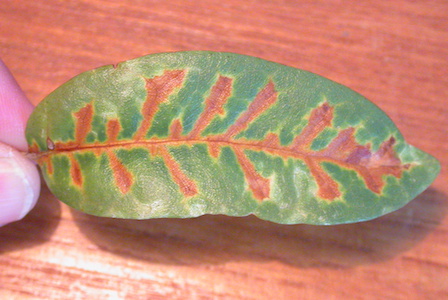
Oak wilt, caused by Ceratocystis fagacearum, has hammered oaks up north for years and is now a serious concern as it edges into Florida’s urban forests. Florida’s mix of red oaks and live oaks gives this disease plenty of fuel once it shows up.
Risk for homeowners:
- Red, laurel, and water oaks are very vulnerable and can crash quickly. Live oaks have a bit more tolerance but are far from immune.
- The fungus can spread through root grafts between neighboring oaks, meaning one infected tree can quietly infect a whole row.
- Insects that feed on sap and are attracted to fresh wounds can also move spores from tree to tree.
Symptoms to watch for:
- Leaves browning from the tips or edges inward, often on one section of the canopy at first.
- Significant dieback in the upper crown over a single season, not over several years.
- In a cross-section or small core, you may see dark rings or streaks in the outer sapwood.
Management options:
- Prevention is key. Avoid pruning oaks in warm, high-insect-activity periods if you can help it, or keep wounds as small and clean as possible.
- Promptly remove dead or strongly suspected infected oaks to slow the spread to your neighbors’ trees and the rest of your property.
- In some situations, pros use systemic fungicide injections preventively or in early stages. Good timing and a confirmed diagnosis are critical, or you’re just wasting money.
Oak wilt gets confused with root problems, drought, and old age all the time. That’s why a lab confirmation through a UF IFAS plant diagnostic clinic or a professional sample submission is smart before you commit to an expensive treatment program.
Ganoderma Butt Rot (Palms & Some Hardwoods)
Ganoderma butt rot, caused by Ganoderma zonatum, is the one that makes the hair on the back of my neck stand up. It quietly eats away at the lower trunk and root flare of palms and, in some cases, hardwoods. The tree may look “okay” up top right up until it fails.
Key attributes:
- Visible sign: a hard, shiny, shelf-like conk at or near the base of the trunk. It starts small and grows over time.
- Species affected locally: many ornamental palms in Florida, including queen palms, Washingtonia, and Phoenix species, along with occasional stressed hardwoods.
- Internal decay extent: severe butt and lower trunk decay, often hollowing the tree out where you can’t see it.
- Treatment: none once conks show up. By then, the fungus has already done major structural damage.
- Removal urgency: usually immediate in areas where failure could hit a house, car, or play space.
What homeowners should do:
- If you spot a white-to-rusty-brown conk growing from the lower trunk of a palm, stop heavy watering and fertilizing in that zone. Extra moisture and nitrogen are not going to fix it.
- Get a professional risk assessment right away, especially if the tree is close to anything valuable or where people walk or park.
- Plan on removing the tree and stump. Try not to replant the same palm species in that exact spot, since the fungus persists in soil and old roots.
Because Ganoderma butt rot has no cure, treating it as one of the early signs of dying tree issues can literally prevent a surprise tree failure on a stormy night.
Lethal Bronzing (Palms)
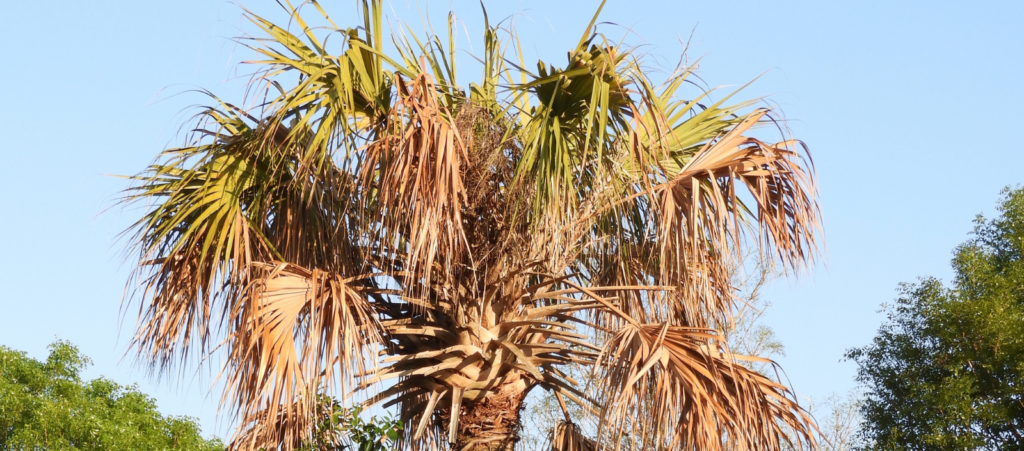
Lethal bronzing is driven by a phytoplasma, often called the lethal bronzing phytoplasma. Think of it as a bacteria-like organism that lives inside the palm’s vascular system. It has turned into a serious threat for ornamental palms all across central and south Florida, Tampa included.
Palms at risk:
- Sabal (cabbage) palm, our state tree and very common in older neighborhoods
- Queen palm, widely planted in yards and along streets
- Pygmy date palm, popular around pools and patios
- Canary Island date palm, those big statement palms at entrances
- Several other ornamental species used in Florida commercial and residential designs
Typical symptoms:
- Fruit and flower stalks fail early. You’ll see premature fruit drop and dead inflorescences.
- Older fronds gradually take on a dull, tan “bronze” color instead of a healthy green.
- The canopy collapses from the bottom up. Sometimes a little tuft of green remains at the top for a while, which fools people into thinking it’s just drought.
- As the disease progresses, the spear leaf dies and the entire crown turns brown and limp.
Management and treatment:
- There’s no cure once the phytoplasma is entrenched in the palm.
- On high-value palms, preventive trunk injections with specific antibiotics by licensed professionals can cut risk, but they have to be maintained on a schedule.
- Remove and destroy dead or confirmed infected palms so you’re not leaving a reservoir of infection next to healthy trees.
Lethal bronzing easily gets mistaken for water stress or poor fertilizing at first. That’s why a certified arborist diagnosis or lab work is so useful before you decide to cut down a palm you’ve had for years.
Common Tree Pests in Florida
A lot of the tree pests Florida homeowners battle in Florida aren’t native. They came in on shipped plants or wood and found an easy buffet in our warm, humid climate. If you catch these insects early and understand what they signal, you stand a much better chance of avoiding long-term damage or associated diseases.
Citrus Pests (Asian Citrus Psyllid & Others)
For backyard citrus, the pest that keeps me up at night is the Asian citrus psyllid. It’s not the feeding that does the real damage. It’s the fact that this little insect spreads citrus greening (HLB), which has already changed the face of Florida’s citrus industry.
Citrus greening (HLB) overview:
- Vector: Asian citrus psyllid, a tiny, wedge-shaped, jumping sap sucker that hides on new flushes of growth.
- Symptoms: blotchy, asymmetric yellowing on leaves, small and distorted fruit, off flavors, premature fruit drop, and a thinning canopy over time.
- Treatment: there’s no cure. You can support the tree and slow decline, but you can’t clean it out of the system.
- Prevention: managing psyllid populations, planting clean nursery stock, and taking out heavily symptomatic trees so they don’t act as disease factories.
- Florida prevalence: now widespread in residential citrus. Very few older lime or orange trees are untouched.
Other common citrus pests in Florida:
- Citrus leafminer: leaves those squiggly, serpentine mines and curling on new leaves. It looks ugly but is usually more cosmetic, except on young or potted trees.
- Scale insects: produce sticky honeydew that leads to black sooty mold on leaves, branches, and even patio furniture sitting under the canopy.
Because citrus greening is so hard-hitting, ongoing yellowing, stunted fruit, and twig death on citrus deserves more than guesswork. That’s when you bring in a professional inspection or send samples through a UF IFAS plant diagnostic clinic to see what you’re really dealing with.
Palm Pests (Palm Weevils, Rugose Spiraling Whitefly & More)
Palms are part of Florida’s identity, but they attract their own set of problems. I often see pests working in the background while diseases like Ganoderma and lethal bronzing get all the attention. Both sides matter.
Palm weevils, including the palmetto weevil, usually zero in on stressed or recently transplanted palms that haven’t settled in yet.
- Adults lay eggs in the crown or weakened trunk tissues. The larvae chew tunnels through the interior, eating critical structural and vascular tissue.
- Early signs can be subtle, like a suddenly drooping spear leaf or a faded spot in the upper canopy.
- By the time the top of the palm collapses or pulls out easily, it’s often too late to do anything but remove the tree.
Rugose spiraling whitefly has turned into a major nuisance on palms and other ornamentals around Florida:
- You’ll see distinctive spiral egg patterns and rows of white, waxy insects on the underside of fronds.
- Infested trees drip honeydew, which quickly turns into black sooty mold on cars, patios, and anything under the canopy.
- While it rarely kills palms outright, it drains energy, triggers leaf drop, and increases stress that pairs up nicely with disease.
Other palm pests:
- Scale insects scattered along fronds and petioles, sometimes mistaken for dirt or lichen.
- Mites that leave fine stippling or an overall bronzing of leaflets, especially in hot, dry stretches.
Big palms are not cheap to remove, and replacing a mature specimen is even more painful. A good Florida pest management program, started early, usually costs less than waiting until you have a dead, dangerous tree over your driveway.
Hardwood Pests (Pine Bark Beetles, Asian Cycad Scale & Others)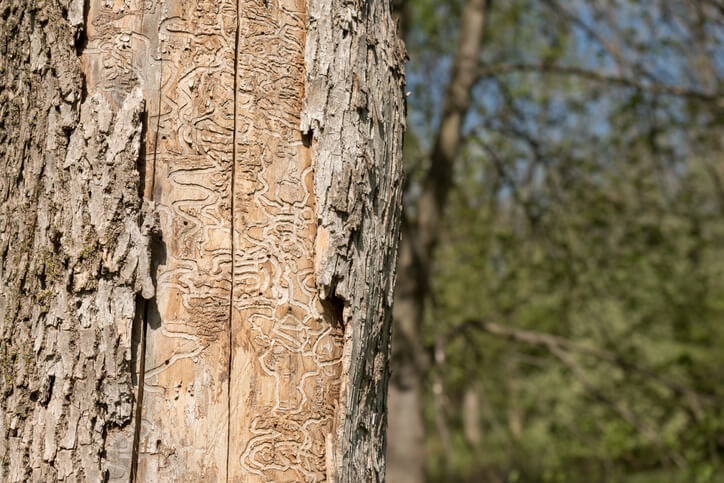
Florida neighborhoods and greenbelts often mix pines, cycads, and ornamental hardwoods. Each comes with its own insect issues, especially once trees are stressed by construction, drought, or poor planting.
Pine bark beetles are tiny, but they’re ruthless on weakened pine trees:
- Look for pitch tubes, which are small resin blobs on the bark, and fine boring dust collecting at the base of the trunk.
- Needles start turning reddish-brown, usually from the top of the crown down.
- Once beetle numbers are high enough that the tree is “mass-attacked,” it rarely recovers, no matter what you spray.
Asian cycad scale is a major threat to sago palms (which are actually cycads, not true palms):
- Thick, white, crusty-looking scale coats fronds, petioles, and sometimes the trunk.
- Fronds go from pale yellow to brown and crispy. Unmanaged plants can die outright.
- Most heavy infestations demand repeated systemic treatments and removal of heavily coated fronds to give the plant a fighting chance.
Other hardwood pests in Florida include flatheaded borers in drought-stressed oaks and maples, aphids on new flushes of growth, and seasonal caterpillars that can strip leaves bare.
Minor issues often clear up with a targeted spray or simple cultural tweaks. But if you see multiple trees declining, rapid canopy thinning, or scattered dead branches across a group of trees, that usually points to a bigger underlying problem that calls for a professional look.
Environmental Stressors Unique to Florida Trees
People often assume that because Florida gets plenty of summer rain, trees “take care of themselves.” In real life, our climate and soils beat up trees quietly over the years. These environmental stressors soften them up for the big diseases and pests.
Key Florida-specific stress factors:
- Nutrient deficiency in sandy soil: Our coastal and inland sands hold almost no organic matter. Nutrients like iron, manganese, and magnesium leach out with every heavy rain or irrigation cycle.
- Salt spray damage near the coast: On barrier islands and waterfront neighborhoods, salt-laden breezes scorch leaf edges on non-salt-tolerant trees and palms.
- Drought stress despite high rainfall: Sandy soil acts like a sieve. Water goes in fast and disappears just as quickly, so shallow-rooted trees dry out between storms.
- Flooding stress from summer storms and tropical systems: Puddled, waterlogged soil suffocates roots. Given enough hours without oxygen, root rot and sudden decline kick in.
- Florida urban heat island: In paved, built-up areas, reflected heat from streets, roofs, and walls raises temperatures and bakes root zones, especially for trees in tiny parking lot islands.
These factors often don’t kill trees outright. Instead, they chip away at overall health. Once a laurel wilt spore or Ganoderma fungus or a swarm of bark beetles shows up, those stressed trees are the first to go.
Nutrient Deficiency in Florida’s Sandy Soil (Iron, Manganese, Magnesium)
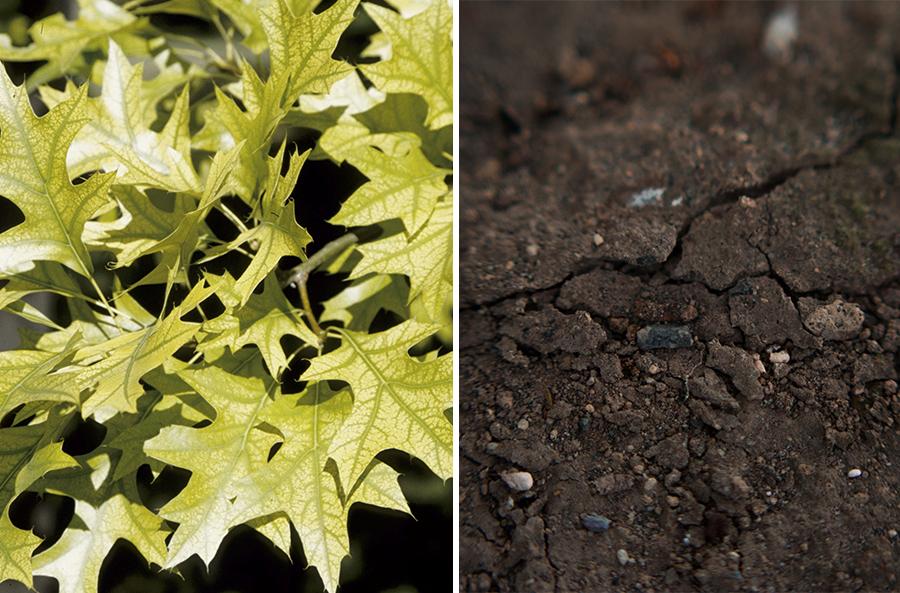
Nutrient problems are probably the most common tree health problems Florida homeowners bump into. They’re also some of the most misunderstood. Florida’s sandy, sometimes alkaline soils love to tie up micronutrients and wash fertilizer away before roots can use it.
Florida sandy soil deficiency – key attributes:
- Common deficiencies: iron, manganese, and magnesium, often in combination rather than one by itself.
- Soil pH range: lots of coastal and fill soils test as slightly alkaline, especially where shell or concrete rubble was used as fill. That chemistry locks micronutrients out of reach.
- Correction method: use chelated micronutrient products designed to stay available in higher pH soils rather than cheap, quick-leaching forms.
- Application frequency: for persistent problems, figure on 2–3 seasonal applications per year, tuned by soil test results and species sensitivity.
- UF IFAS recommendation: always soil test first before dumping on large amounts of fertilizer that might do more harm than good.
If you’re asking yourself, “Why is my tree dying in Florida?” and you see yellowing leaves on much of the canopy, but the bark looks fine, and roots aren’t exposed or damaged, nutrient deficiency is a very strong suspect. Learn more about signs of dying tree.
Iron Chlorosis (Iron Deficiency)
Iron chlorosis shows up a lot on oaks, maples, and other ornamentals planted over buried limestone, shell, or construction fill. I see it constantly in newer subdivisions.
Symptoms:
- Newest leaves are pale yellow to almost white, with dark green veins running through them like a roadmap.
- Overall, leaf size shrinks. New flushes look small and weak compared to older growth.
- In rough cases, leaf edges scorch and brown out, giving trees a burnt, tired look.
Correction:
- Use a chelated iron product. In mild cases, a soil drench works. In severe cases, trunk injections may be the only way to get iron directly into the system.
- Work organic matter into the root zone over time through mulching and compost. That helps hold moisture and nutrients instead of flushing them out.
- Address long-term pH issues if possible. Repeated irrigation with high-pH well water or runoff from concrete can keep driving pH in the wrong direction.
For product choices and how to apply them, lean on our guide to fertilizer for deficiency instead of guessing and ending up with burnt roots or wasted money.
Manganese Deficiency
Manganese deficiency is a big one for palms, though other landscape trees can show it too. I see it most often in queen palms and other high-demand species in poor fill soil.
Symptoms:
- Newer leaves show interveinal yellowing like iron deficiency, but you’ll often also see more necrotic (dead) patches along the edges or tips.
- In palms, the classic look is “frizzletop,” where new fronds emerge ragged, shrunken, and burnt, as if a torch hit the tips.
Correction:
- Apply manganese sulfate or a chelated manganese product according to the label. Too much can also be a problem, so more is not always better.
- Skip or limit lime applications around palms. Raising pH locks up manganese and makes the deficiency harder to correct.
- Plan on seasonal follow-ups if soil tests keep showing low manganese, especially in very sandy or high-pH spots.
Magnesium Deficiency
Magnesium deficiency usually flags itself on palms first, especially on older fronds that have done most of the work over the years.
Symptoms:
- Older, lower leaves are yellowing while the newer ones closer to the top stay reasonably green.
- A typical “green triangle” near the leaf base or midrib, where tissue stays green, while the rest of the leaflet turns yellow or bronze.
Correction:
- Use magnesium sulfate (Epsom salts) or a quality palm fertilizer that already includes magnesium in the right ratio.
- Split doses into multiple applications throughout the year. On our sandy soils, a single heavy shot often just disappears with the next big rain.
Important: Nutrient deficiency and disease can overlap. I’ve seen people fix chlorosis, but the tree still goes downhill because a root disease or vascular problem is running in the background. If you correct the deficiency and the decline continues to accelerate, bring in a certified arborist diagnosis or lab testing before more time and money are lost.
When to Call an Arborist vs Treat Tree Problems Yourself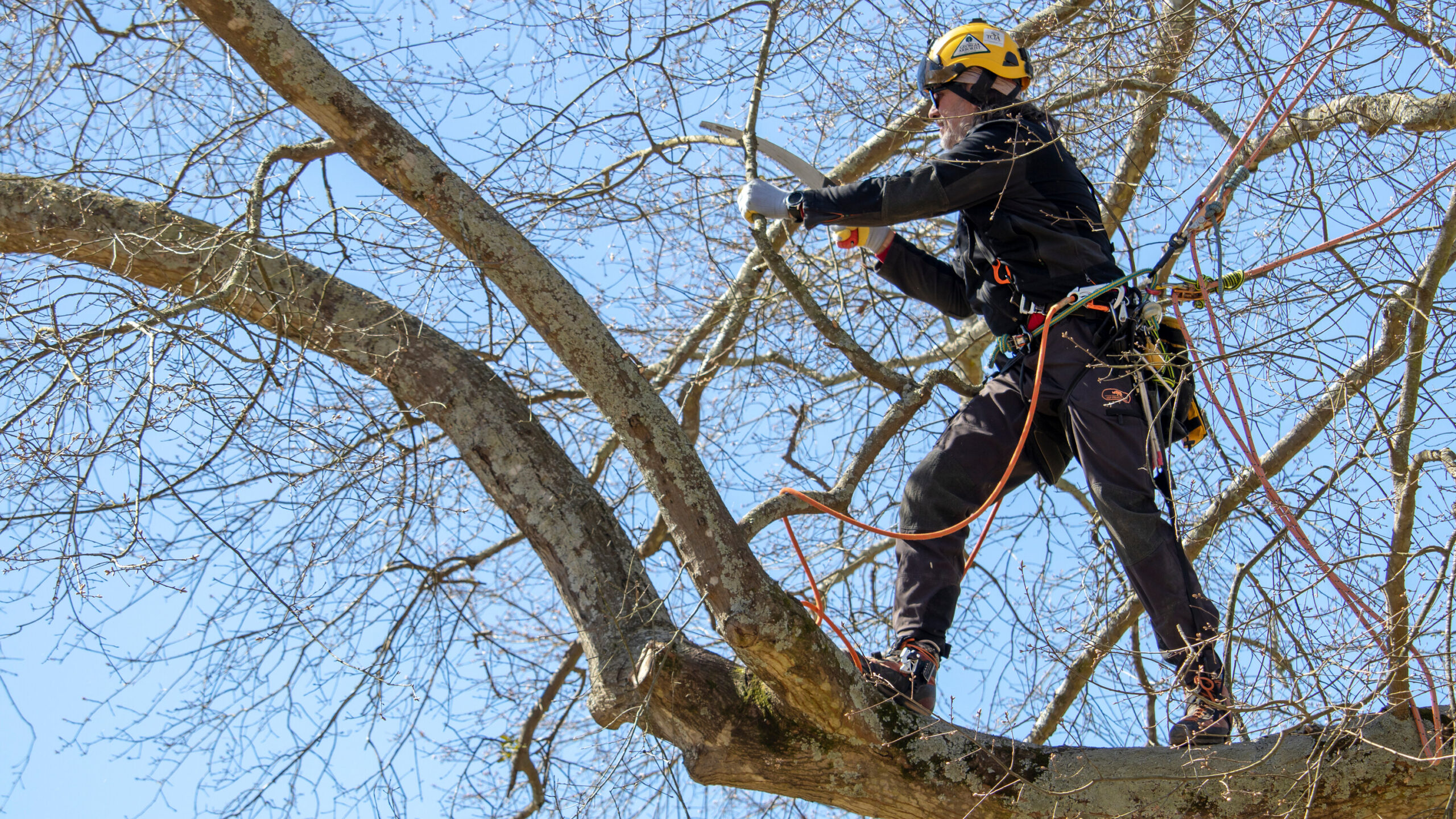
There’s plenty a careful homeowner can handle with a good eye and some basic tools. The trouble starts when folks underestimate structural risks or throw random products at something they don’t really understand. That’s where things get expensive and dangerous in a hurry.
DIY-safe problems tend to be:
- Minor, obvious nutrient issues like mild iron chlorosis, where leaves slowly yellow in a clear pattern and the tree otherwise looks solid.
- Small, localized pest groups like light aphids or a bit of scale on reachable branches where you can safely prune or spray from the ground.
- Cosmetic issues such as light sooty mold from whiteflies or aphids that disappear after you control the insects.
Before you decide to take it on yourself, check your symptoms against our signs of dying tree guide. If you’re seeing splitting trunks, heaving soil, large dead limbs, or anything that demands a ladder or chainsaw work above shoulder height, that’s not DIY territory.
Call a professional arborist when you see:
- Rapid decline where leaves wilt or brown over a few weeks, especially in avocado, oak, or palms. That kind of pace screams laurel wilt, oak wilt, or lethal bronzing.
- Trunk or root problems such as visible conks from Ganoderma, deep cavities, mushrooms at the base, leaning trees, or soft spots in the lower trunk.
- Multiple trees affected across a yard or along a street, pointing to a shared disease, bad fill soil, drainage issue, or large-scale pest outbreak.
- Large dead or broken branches over roofs, driveways, sidewalks, or play areas where failure could cause injury or serious damage.
- Uncertain diagnosis where you can’t tell if the issue is from lack of nutrients, disease, or environmental stress, and you don’t want to gamble.
What Panorama Tree Care’s Diagnostic Service Includes
Panorama Tree Care’s diagnostic service is built around one simple, practical goal: figuring out exactly what your tree is dealing with and what your smartest next move is.
Key service attributes:
- Assessment type: a thorough visual evaluation plus testing when needed. That might mean probing bark and structural roots, checking for root collar issues, and looking at the canopy from different angles.
- Diagnostic tools: can include a resistograph to measure internal trunk decay without cutting the tree down, targeted soil tests, and lab submissions to a UF IFAS plant diagnostic clinic for precise disease ID.
- Report delivery: you get written findings and recommendations within a set timeline, usually shortly after any lab results come back.
- Treatment plan: a straightforward plan is included, covering things like corrective pruning, systemic injections, soil amendments, pest treatments, cabling or bracing, or removal if safety is an issue.
- Cost (Florida area): typically structured as a USD fee per site visit or per tree, scaled to complexity. In most cases, it costs far less than losing a mature shade tree or repairing damage after a failure.
That kind of expert diagnosis is especially valuable in tight Florida neighborhoods where one sick tree can quickly pre-dispose the whole block, and where hard surfaces amplify the Florida urban heat island and redirect stormwater in ways that stress roots.
For long-term resilience, think about shifting your plant palette toward more Florida native trees resistance species that already know how to handle local pests and harsh conditions. Pair that with using fertilizer for deficiency properly instead of guessing, and your trees will reward you with fewer problems over the years.
Common Mistakes Florida Homeowners Make (and How to Avoid Them)

Most of the worst tree disasters I get called to started with small, avoidable choices. Here are some of the repeat offenders I see around Florida, along with how you can sidestep them before they cost you a tree or a roof.
- Mistake 1: Treating every yellow leaf as a “fungus.”
Issue: Folks see yellowing and immediately buy fungicides. Meanwhile, the real problem is nutrient deficiency or salt and drought stress, so nothing improves.
Fix: Run a soil test first and look closely at the yellowing pattern. Interveinal chlorosis points to micronutrient issues, while uniform yellowing can signal other stress. Use the right micronutrients and, if the tree doesn’t respond over a season, get a professional diagnosis. - Mistake 2: Ignoring mushrooms or conks at the trunk base
Issue: Homeowners often write off a Ganoderma conk or repeated mushroom clusters as “just fungus” without realizing it can mean serious internal decay.
Fix: Treat every persistent conk or mushroom on the lower trunk as a structural warning. Call for an immediate risk assessment. If stability is compromised, schedule removal before the tree chooses its own time and direction to fall. - Mistake 3: Overwatering to “fix” browning leaves
Issue: One of the most common mistakes. Browning can come from root rot or compaction, and people respond by soaking the soil even more, suffocating the roots further.
Fix: Check drainage by digging a small test hole and watching how fast water disappears. Adjust irrigation to your soil and species, and focus on improving aeration and adding organic matter instead of simply running the sprinklers longer. - Mistake 4: Heavy pruning during peak disease and insect activity
Issue: Cutting oaks or other sensitive species hard during warm, buggy months opens fresh wounds that attract vectors for oak wilt and borers.
Fix: Plan major pruning for lower-risk parts of the year and keep cuts as clean and small as practical. On high-risk species, limit unnecessary wounds during peak insect flights. - Mistake 5: Delaying help until the tree is obviously dying
Issue: By the time half the canopy is gone or the crown turns bronze, laurel wilt, lethal bronzing, or Ganoderma are usually too advanced for any treatment to matter.
Fix: Respond to early warning signs like sudden wilt, frizzletop, odd asymmetric yellowing, or the first conk. A diagnostic visit before things are dire is far cheaper than emergency crane work. - Mistake 6: Planting the wrong tree in the wrong place
Issue: Putting salt-sensitive trees on the waterfront, deep-rooted trees in tiny parking lot cutouts, or water-loving species on dry, windy ridges sets you up for constant interventions.
Fix: Select better-adapted species from guides like our native Florida trees resistance list. Choose trees that are comfortable with your site’s salt, soil type, sun, and space from day one.
FAQ: Common Tree Problems in Florida
This FAQ tackles the real-world questions homeowners ask about Florida tree disease identification, treatment options, costs, and the tough call between trying to save a tree and scheduling removal.
Contact Florida tree service company for a free assessment and estimate.
How do I tell if my Florida tree has a disease or just needs fertilizer?
Watch the pattern and speed of decline. Nutrient problems usually creep in over months. You’ll see patterned yellowing, often between veins, and the tree still tries to push new growth. Diseases like laurel wilt or oak wilt move fast. Leaves wilt, brown, and die in weeks, not seasons. Conks or mushrooms on the trunk, oozing or cracked bark, and sudden dead branches point toward decay or disease, not just a lack of fertilizer.
What does laurel wilt look like on avocado trees in Florida?
On avocado, laurel wilt usually starts as abrupt wilting and browning of leaves that stubbornly stay on the branches instead of dropping. It may hit one branch or section first, then move through the rest of the canopy quickly. Peel back a bit of bark and you’ll often find dark sapwood streaks. Tiny beetle exit holes on the trunk or large limbs are another strong clue. Once you see this pattern, the clock is ticking, and nearby laurel-family trees are in danger.
Is there any cure for citrus greening (HLB) in Florida backyard trees?
No. There is still no cure for citrus greening (HLB). Once the Asian citrus psyllid infects a tree, it moves through the vascular system and slowly cripples it. You might keep a tree limping along with nutrition and psyllid control for a while, but the overall trend is downhill. That’s why many homeowners eventually decide to remove badly affected citrus and replant with more resilient fruiting species or shade trees that don’t face the same long-term fight.
How much does it cost to treat a sick tree in Florida?
Costs cover a wide range. Straightforward nutrient fixes or light pest treatments on small trees are on the low end. Once you get into systemic injections, lab diagnostics, or structural pruning for large trees, the investment climbs, but you’re also protecting a major asset. Removing a big tree over structures, especially one with Ganoderma butt rot or advanced decay, is usually the most expensive scenario. A site visit from Panorama Tree Care’s diagnostic service gives you a realistic breakdown of what treatment vs removal will cost before you commit.
Can I prevent Ganoderma butt rot or lethal bronzing in my palms?
There’s no foolproof prevention, but you can tilt the odds in your favor. Keep heavy equipment and mowers off root zones to avoid trunk wounds and compaction. Don’t overwater or pound palms with high-nitrogen fertilizers. Remove palms quickly once Ganoderma or lethal bronzing is confirmed, so you’re not leaving source material for nearby palms. In high-value palms, some pros offer preventive trunk injections to reduce lethal bronzing risk. With Ganoderma butt rot, though, early detection and timely removal are your only real tools.
Does homeowners’ insurance cover tree loss from disease or pests?
Most policies draw a hard line between sudden accidents and gradual decline. Disease, pests, and slow structural decay are often not covered as direct losses. Some coverage may kick in if a diseased tree falls and damages a structure that is insured, but that varies a lot. It’s smart to read your policy and talk to your agent. Either way, relying on insurance instead of good tree care is a poor bet, especially with big shade trees near your house.
When is a tree problem so bad that removal is the only option?
Removal becomes the right call when there is serious structural decay like Ganoderma butt rot evidenced by conks at the base, or when systemic diseases such as laurel wilt, lethal bronzing, or oak wilt are clearly in late stages. Strong leans, large cavities, hollow-sounding trunks, and major deadwood over targets also push a tree into high-risk territory. In those situations, a professional risk assessment will usually confirm that keeping the tree is more dangerous than taking it out.
How can I prevent common tree problems in Florida?
Prevention starts long before you see the first sick leaf. Choose the right species, plant correctly, and maintain wisely. Use well-adapted or native species that can handle local salt, soil, and heat. Plant at the correct depth, not too deep, and avoid piling mulch against the trunk. Maintain a healthy mulch layer, manage irrigation for sandy soil, and base your fertilizing on soil tests instead of guesswork. Walk your yard regularly, watch for early pest or disease signs, and have a certified arborist review your bigger or more important trees every so often to catch hidden issues early.
Final Summary & Next Steps
Florida’s trees are up against a rough mix of aggressive diseases like laurel wilt, oak wilt, Ganoderma butt rot, and lethal bronzing, backed by invasive pests such as Asian citrus psyllid, palm weevils, pine bark beetles, rugose spiraling whitefly, and Asian cycad scale. Layer on top environmental stress from sandy, nutrient-poor soils, salt exposure, high heat, drought cycles, and flooding, and you get a landscape where small problems turn serious quickly.
If you see odd wilting, conks at the base, bronze or patchy yellowing that doesn’t match simple deficiency patterns, sudden dieback, or several trees declining in the same area, don’t wait to “see what happens.” That delay is what often takes removal from a possibility to a guarantee.
Look through our resources on signs of dying trees, fertilizer for deficiency, and Florida native trees resistance to dial in your basic care. Then bring in a certified arborist, such as Panorama Tree Care, for a solid diagnostic assessment and a customized treatment plan that fits your property, your budget, and the unique conditions of the Florida environment.