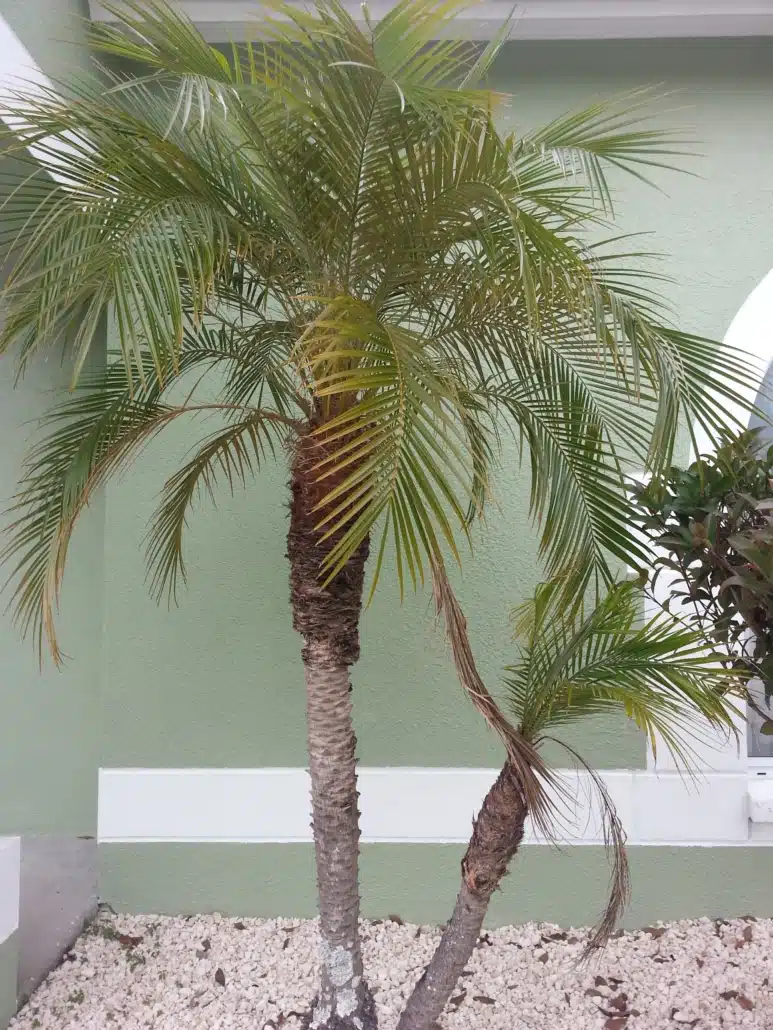
TL;DR: A light lean that has been the same for years usually isn’t a five-alarm fire. Young trees with a small lean can often be corrected with smart staking. Older trees with a gentle, long-term lean are often managed with pruning and regular checkups.
A sudden or worsening lean, especially right after one of those classic Florida thunderstorms or a tropical system, is a different story. If you see new exposed roots, fresh soil cracking, or the tree seems to have “sat down” overnight, you may be looking at root plate failure. That’s not a DIY project. That’s a call an arborist for emergency service situation.
Key Takeaways
- A lean under about 10–15 degrees that’s been the same for years and hasn’t moved is often stable. Plenty of Florida trees live long, healthy lives with a natural lean.
- A sudden lean after heavy rain or a storm in Florida’s sandy, saturated soil is a big red flag for root plate failure and may be an emergency.
- You can usually straighten a young tree (under ~4-inch trunk) with a proper staking system and flexible straps left in place for 6–12 months.
- Mature leaning trees are not weekend projects. They may need an ISA Tree Risk Assessment, corrective pruning, or cabling. High-risk cases often end in removal.
- A leaning tree moves into the danger category when it leans over a house, driveway, play area, or power lines, or when you see cracks in the trunk or upheaved roots.
- in Florida, soil saturation lean after several inches of rain plus wind is very common. Watch trees closely during hurricane season and call for emergency tree service Florida if the lean changes quickly.
- DIY staking done wrong (ties too tight, wrong materials, wrong placement) can girdle the trunk, weaken roots, or set the tree up to fail in the next storm.
- Panorama Tree Care offers emergency lean response in Florida, with ISA-certified assessment and straight talk on whether they can save or remove a leaning tree safely.
Quick Definitions: What Is a Leaning Tree?
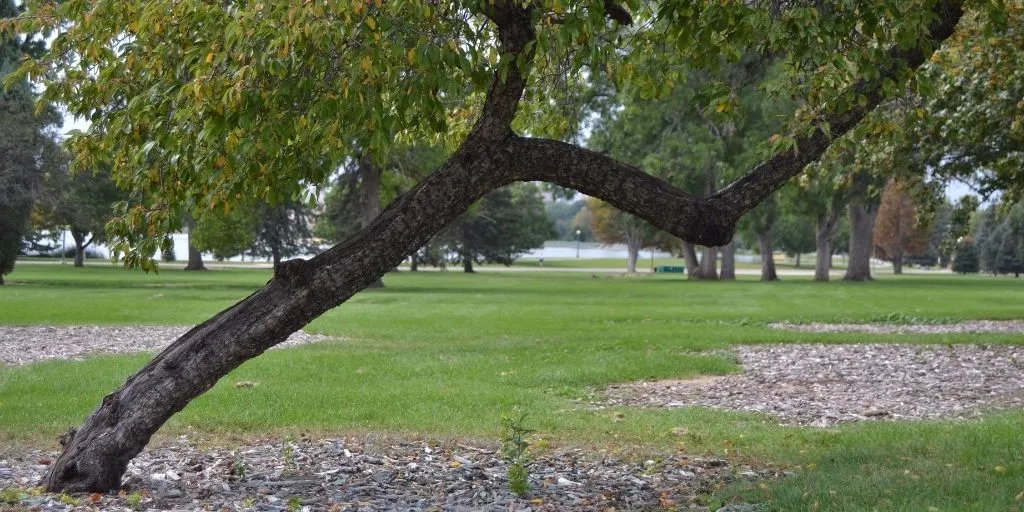
Leaning tree: Any tree that isn’t standing straight up and down. Arborists usually measure the lean angle from vertical in degrees using a simple lean angle protractor or a phone app.
Natural or phototropic lean: A slow lean toward sunlight over years. You often see this where one side of the yard is shaded by a house or big oak. Usually safe if the trunk, base, and roots are solid.
Structural lean from wind: A lean that builds over seasons because strong winds always hit from the same direction and slowly push the tree.
Soil saturation lean: Lean that develops when water-logged soil in Florida can’t hold the root system during big rain and wind events. The tree starts to tip as the root mass shifts.
Root plate failure: Partial or full lifting or rotation of the root plate, which is the main mass of roots and soil around the trunk. This usually causes a sudden change in lean and is often an emergency.
Why Is My Tree Leaning? (5 Common Causes Explained)
Most leaning trees around Florida fall into a few patterns. Some are just trees doing what trees do. Others are early warnings that the tree is getting ready to lay down in your yard or on your roof. Once you understand what kind of lean you’re dealing with, it gets a lot easier to decide whether straightening is realistic or if it’s time to bring in a pro.
- Natural Phototropic Lean (Often Safe)
Trees chase light. That behavior is called phototropism. In real life, that means a tree may slowly bow toward a gap between houses, an opening in the canopy, or away from taller trees that are hogging the sun.Typical signs:- Lean develops very slowly over many years, not weeks or months.
- No new cracks in the soil around the base after storms.
- Trunk thickens normally from bottom to top. No odd “bulb” or hump at the base.
- Roots look even all the way around. No side is lifting up out of the ground.
In practice, these trees usually just need corrective pruning for lean. That means taking some canopy weight off the leaning side and sometimes encouraging growth on the opposite side. You don’t try to winch these trees back upright. You manage the weight and keep an eye on them.
- Wind-Exposure or Structural Lean from Wind (Monitor Closely)
Florida gets consistent sea breezes plus the occasional blast from tropical systems. Over years, that shove in one direction can slowly tip a tree, especially shallow-rooted species or ones sitting in a wide-open yard with no wind break.Typical signs:- The tree leans the same direction your strongest winds usually blow.
- The lean has crept up over several seasons, not overnight.
- The root plate is still mostly buried. You might see minor lifting on the opposite side of the lean, but not major upheaval.
This “structural lean” can still be stable if the angle is modest, often under about 15 degrees, and stays put. The problem is when you start to see a progressive lean indicator like fresh soil cracks, new lifting, or the angle getting worse after every storm. That’s your sign the tree is losing its battle with the wind.
- Root Plate Failure from Saturated Soil (Dangerous)
Florida’s sandy soil drains fast most of the year. But get several inches of rain in a short window and that top 6–12 inches can turn to soup. Once that happens, roots lose their grip and the whole root plate can start to rotate under wind load.Warning signs of root plate failure:- Lean appears or jumps noticeably right after a big rain or storm.
- You see a “wall” of roots and attached soil sticking out on one side of the trunk.
- On the opposite side, the soil is cracked or pulled away from the base.
- A visible mound or hump around the base where the root plate is heaving up.
This isn’t about looks. This is a structural failure. Once the root plate starts to give way, your window to safely save the tree shrinks fast. As the lean angle gets steeper and more of the trunk’s circumference has exposed or lifted roots, the chance of a successful rescue drops off hard.
- Storm Damage Shift (Often an Emergency)
A tree leaning after a storm usually means something let go all at once. That could be broken structural roots, a cracked trunk, or the entire root plate sliding in the softened soil.Typical signs:- You wake up after high winds and the tree is leaning in a way it never did before.
- Bark splits, cracks, or open seams near the base of the trunk.
- Large hanging branches, ripped canopy, or broken limbs that have shifted weight to one side.
in Florida, these calls roll in right after big storm events. A sudden lean emergency like this needs a certified arborist assessment, especially if the tree has any chance of hitting a house, driveway, or utility lines.
- Construction Damage to the Root Zone (Hidden but Serious)
This one sneaks up on people. New driveway, pool, room addition, or heavy trucks parked on the lawn can crush or cut a lot of roots. That soil compaction and root loss might not show up right away. Sometimes the tree looks fine for a year or two, then starts to lean or decline.Indicators:- Any big landscape or construction work within the dripline in the last few years.
- Thinning canopy, dead branches, or overall stress along with a new lean.
- Exposed or visibly cut roots on the side the tree is now leaning toward.
In these cases, “just staking it” is like putting a bandage on a broken leg. The real fix often includes soil compaction correction, root zone aeration, and long-term monitoring to see if the tree stabilizes or continues to fail.
If you spot a leaning tree before hurricane season ramps up, it’s smart to schedule a certified arborist assessment and find out if that tree is going to ride out a storm or try to come through the living room.
When a Leaning Tree Is Dangerous (Warning Signs Florida Homeowners Should Know)
A leaning tree becomes dangerous when the risk of failure goes up and the target zone under it includes people, cars, houses, or power lines. Here in Florida, where we get real wind, you don’t need as much lean or damage before the risk gets serious compared to calmer areas.
Arborists lean on the ISA Tree Risk Assessment system to judge lean angle, defects, wind exposure, and what’s in the fall path. You can’t do a full TRAQ inspection on your own, but you can spot the big warning signs.
1. Sudden Lean After Rain or Storm
If the tree leaned more in the last 24–48 hours than it has in the last 5 years, treat that like a flare in the sky. A lean that appears or worsens quickly is a classic emergency indicator. Common causes are:
- Root plate failure in waterlogged soil.
- Snapped or torn structural roots.
- Trunk cracks or canopy damage that suddenly shift the tree’s balance.
In real Florida jobs, we routinely see trees that changed 5–20 degrees overnight. That kind of jump means the tree is already partway through failing, not just thinking about it.
2. Exposed Root Plate on One Side
Walk all the way around the tree and look low at the base:
- If you can see a chunk of roots and soil standing up on the side opposite the lean, that’s root ball exposure.
- If that wall of exposed roots wraps around half or more of the trunk circumference, the tree is hanging on by what’s left of the roots on the other side.
Once the root plate starts to peel out of the ground, each new storm can finish the job and put the tree on the ground.
3. Cracked or Pulled-Away Soil at the Base
Get down close and look at the soil where the trunk meets the ground:
- Fresh cracks in the soil radiating out from the trunk like spokes.
- Gaps between the trunk and soil on the compressed side of the lean.
Those signs tell you the root plate has already moved and is still shifting. Combine that with a lean over 15 degrees and you’re often in emergency territory, especially with a decent-sized tree.
4. Leaning Over a Structure or Target Area
A moderate lean might be a big deal or a small one, depending on what’s underneath it. Risk jumps if it’s leaning over:
- Your home, garage, pool cage, or a neighbor’s roof.
- Driveways, parking areas, sidewalks, or play sets.
- Power lines, service drops, or public streets.
In risk assessments, this is the “target.” A 10-inch tree pointed at your child’s bedroom window can matter more than a 30-inch oak leaning over open lawn.
5. Lean Angle Exceeding About 15 Degrees
Once a tree leans more than about 15 degrees from vertical, arborists start getting a lot more serious about it. Risk goes up even faster if:
- The lean is recent or keeps getting worse.
- There are signs of root plate movement or trunk defects.
You can get a rough idea using a smartphone angle app or a simple lean angle protractor. Stand off to the side, line your sight with the trunk, and read how far from vertical it is. Anything working up into the 20–30 degree range, especially with disturbed roots and a target in the fall zone, is rarely something to ignore.
If you’re also seeing dead limbs, mushrooms at the base, or thin foliage, you might be dealing with multiple signs of dying tree issues at once, which makes professional evaluation even more important.
How to Straighten a Young Leaning Tree (DIY Staking Guide)
A lot of young trees come from the nursery with less-than-ideal structure or get pushed around by their first few Florida storms. The good news is you can often straighten a young tree with a trunk under about 4 inches using a proper staking system. Your goal is to support the tree while the roots grab the soil again, not to strap it down so tight that it never moves.
Important: Don’t try to straighten older, heavier trees yourself, especially anything that leaned suddenly after a storm. Those need professional gear, training, and in a lot of cases, they need removal instead of straightening.
Materials Needed
Get your gear lined up before you start staking a leaning tree so you’re not wrestling with it halfway upright:
- 2–3 sturdy stakes (wood or metal): Most small Florida landscape trees do fine with 2–3 stakes around the tree. Treated wood or metal holds up better in wet soil and sun.
- Flexible straps or tree tie material: Use wide, soft, flexible material. Commercial tree straps, webbing, or rope run through an old hose all work. Don’t run thin wire or bare rope directly on bark. They cut in and can girdle the tree.
- Mallet or post driver: You’ll need to set stakes deeply in Florida’s sandy soil. In very loose or saturated spots, longer or heavier stakes are worth it.
- Shovel: Handy for firming soil around the root ball, backfilling under the lifted side, or shaving down high spots on the compressed side.
- Pruners: For trimming small branches on the heavy side of the canopy so the tree is not fighting its own weight while it re-anchors.
- Gloves and eye protection: You’re pounding stakes and handling rough materials. Protect your hands and eyes.
Staking Steps for a Young Leaning Tree
This method is for trees under about 4 inches trunk diameter (DBH) with no obvious root plate failure, no major root upheaval, and no big trunk cracks. If you see those, stop and call someone who does this for a living.
- Check for Serious Structural Problems First
Before you put a hand on the trunk, walk around the tree and really look:- Exposed roots, heaved mounds, or big soil cracks around the base? That’s root plate movement. Call an arborist instead of continuing.
- Any splits, deep cracks, or missing chunks of bark on the trunk, especially near the base? That’s a structural issue, not a simple lean.
If what you see makes you nervous, trust that feeling. Staking won’t fix a tree that’s already failing at the roots or trunk.
- Gently Straighten the Trunk by Hand
Stand on the side opposite the lean. With both hands, slowly pull the trunk toward vertical. Don’t jerk it. Don’t twist it. You’re trying to roll the root ball back without tearing what roots are still holding.in Florida’s sandy soil, you might need to:- Use your hands or a trowel to loosen soil a bit on the compressed side so the root ball can move.
- Push or pack soil underneath the lifted side as you bring the tree back up, so you’re not leaving air pockets.
If the tree fights you hard or you hear roots cracking loudly, stop. That tree may be bigger than a DIY fix.
- Place Stakes About 18 Inches from the Trunk
For a basic two-stake setup:- Put two stakes on opposite sides of the trunk, lined up with the typical strong wind direction or bracing against the lean.
- Drive each stake in about 18 inches from the trunk. Set them deep enough that you can push on them and they don’t wobble. In many yards, that means 18–24 inches into the soil.
If the site is extra windy or the soil is extremely loose, use a three-stake system spaced roughly 120 degrees apart for better support.
- Attach Flexible Straps at the Right Height
Where and how you attach your straps matters:- Fasten the straps around 1/2 to 2/3 of the trunk height, under the lowest strong branch union. Too high and the tree flexes at the base. Too low and you don’t control the lean.
- Wrap the strap around the trunk with a broad contact area so pressure is spread out. No digging into the bark.
- Connect strap to stake so there’s still some play in the system. You want the tree supported, not locked solid.
This flexible, low-tension approach lets the tree move a bit, which actually helps it build stronger wood and root anchorage.
- Adjust Tension for Gentle Support, Not Rigidity
Now fine-tune it:- Pull the straps just tight enough to bring the trunk near vertical.
- Give the trunk a gentle push. It should move slightly and spring back, not sit there like a fence post.
Over-tight staking is one of the top DIY mistakes I see. It might look “neat,” but the tree never learns to stand on its own and often fails after you finally take the stakes off.
- Mulch and Water the Root Zone
Once the tree is staked:- Spread 2–3 inches of mulch over the root zone in a wide ring. Keep the mulch a few inches away from the trunk to avoid rot and insects.
- Water deeply to settle the soil and close up air pockets, especially important if this was a soil saturation lean situation where the soil structure was loose.
Strong roots are your long-term fix here, and roots need consistent moisture and a cooler soil surface to rebuild.
- Monitor and Adjust Regularly
The job isn’t done once the stakes are in. Get in the habit of checking:- Every few weeks through the growing season.
- After any major wind event or named storm that brushes by Florida.
You’re looking for straps cutting into bark, stakes working loose, or the tree starting to lean again. Make small adjustments rather than waiting until things get bad.
When to Remove Stakes
Stakes are like training wheels. Helpful for a while, then harmful if they stay on too long. They’re a temporary support, not a permanent crutch.
- Typical duration: 6–12 months for most young trees in the Florida area.
- Really exposed or windy locations might stretch that to 18 months, but only if you keep adjusting ties and checking the bark.
- Pull stakes as soon as the tree can hold itself upright and doesn’t lean hard on the straps when you gently push it.
A simple test: grip the trunk and rock it lightly. If the base and surrounding soil move together as one, the roots are biting. If the root ball wiggles separately in the soil or feels loose, leave the staking in for a bit longer and recheck after another couple of months.
Can a Mature Leaning Tree Be Saved?
With big, older trees, the question “can a leaning tree be saved?” doesn’t have a one-size answer. It depends on why it’s leaning, how much it’s leaning, and what shape the roots and trunk are in. Mature trees are heavy, expensive to work on, and, if they fail, can do serious damage.
How Arborists Evaluate Leaning Trees
An ISA-certified arborist will usually follow an ISA Tree Risk Assessment process. That’s not just eyeballing it from the truck. It typically includes:
- Lean angle from vertical (degrees): Measured with a lean angle protractor or similar tool so we’re talking about numbers, not guesses.
- Safe vs dangerous thresholds: Long-term leans under ~10–15 degrees with solid, undisturbed roots are often acceptable. Beyond that, especially if it’s still shifting, risk climbs quickly.
- Sudden vs gradual lean: A lean that has been the same for a decade is a different animal than a progressive lean indicator where the angle is increasing every storm.
- Root and trunk defects: We look for decay pockets, cavities, cracks, fungal growth, and any hint of root plate failure.
- Target area: We always ask, “If this tree fails, what’s in the way?” Houses, cars, pools, utility lines, and play areas all weigh into that decision.
Scenarios Where a Mature Leaning Tree Can Be Saved
Plenty of mature leaning trees can stay if the structure is sound and the risk is manageable. Often, we aim for management instead of removal in cases like these:
- Natural Lean with Sound Roots
If that lean has been there as long as you’ve owned the house, the roots look evenly anchored, and our inspection doesn’t turn up serious decay, that tree may just be “built” that way.- Corrective pruning for lean lets us reduce around 10–25% of the canopy weight on the leaning side, following ANSI A300 standards so we’re not butchering the tree.
- By shifting some weight off the lean side and, in some cases, encouraging growth on the opposite side, we can improve balance without trying to move the trunk itself.
For long-standing natural leans in healthy trees, corrective pruning is often very successful. Real-world, you’re looking at something like 70–90% effectiveness in improving both stability and appearance when done right.
- Slight Progressive Lean with Manageable Risk
Sometimes the lean is changing slowly, but there aren’t big cracks, cavities, or visible root upheaval yet. In those cases, options can include:- Heavier canopy weight reduction on the leaning side, sometimes up to about 30% depending on species and health, still under ANSI A300 guidelines.
- Ongoing monitoring plus potential tree cabling for lean if a professional decides extra structural support would control movement in storms.
This is the “maybe” category. The tree might be keepable, but it comes with homework. You and the arborist watch it over time instead of making a quick yes/no call.
Scenarios Where a Mature Leaning Tree Rarely Can Be Saved
There are situations where trying to save the tree is more risk than it’s worth. In those, removal is the honest answer.
- Sudden Lean with Root Plate Failure
If a big tree suddenly leans after a storm and you can see a significant chunk of the root system lifted or exposed, the structure at the base has already given up.- The more of the trunk circumference that has lifted roots, the worse your odds of stabilizing it.
- Once the lean angle gets out past 20–30 degrees on a mature tree, rescue possibility is very low in real-world conditions.
Corrective pruning does almost nothing for a root-failure lean. You can make the crown lighter, but you haven’t rebuilt the foundation, and that’s where the problem is.
- Severe Lean Over High-Value Targets
Sometimes a leaning tree could hang in there a few more years. But if it’s pointed directly at a house, pool enclosure, or power lines, the risk math changes. In Florida’s wind patterns, many of those trees get flagged for removal because the stakes are simply too high if they come down.
A good question to ask your arborist is not just “Is this tree safe today?” but “How is this tree likely to behave in a Category 1–3 storm?” In this region, planning for the next big blow matters more than how it looks on a calm day.
When a Leaning Tree in Florida Needs Emergency Service
Not all leaning trees are fire drills. But some are. Waiting in those cases lets wind, rain, and gravity finish what has already started, and usually makes the job harder and more expensive.
Emergency Triggers to Watch For
- Lean directly over a house or structure: If the most obvious fall path goes across your roof, bedroom, neighbor’s property, or pool cage, bump it up the priority list.
- Sudden angle change after a Florida storm: Any big new lean after a thunderstorm, hurricane, or tropical storm should be treated as a sudden lean emergency.
- Visible root plate upheaval: Mounding soil, exposed roots, or one side of the base lifting are textbook root plate failure symptoms.
- Proximity to utility lines: Anything leaning into or toward power lines is time-sensitive. Often that involves coordination with the utility company, and you never try to DIY near energized lines.
- Cracked trunk or major splits: Big vertical cracks, seams you can stick fingers into, or loud popping noises from the tree all point to serious structural weakness.
What Emergency Lean Response Looks Like (Florida)
For emergency tree service Florida, Panorama Tree Care works to provide rapid response time whenever possible. On a normal day, that often means same-day or within-hours response. During a hurricane-level event, jobs get triaged, with trees already on structures or blocking access taken first.
Typical emergency response steps include:
- On-site ISA TRAQ assessment: An experienced arborist, such as Tony Padgett, physically inspects lean angle, root exposure, trunk defects, decay, and what’s in the drop zone using ISA Tree Risk Assessment methods.
- Removal decision thresholds: As a general guide, a large tree with more than a 20–30 degree lean plus visible root exposure usually crosses into removal territory instead of attempted straightening.
- Crane requirement decision: If the tree is large, tightly wedged between structures, or hanging over a roof or pool, a crane may be the safest and sometimes only realistic way to dismantle it.
- Cost range estimate: Emergency lean response in Florida can run from a few hundred dollars for simple work on small trees up into the thousands for big, complex removals with crane time. In many severe lean cases, the cost of advanced straightening and structural work ends up similar to removal, which often drives the final decision.
If you’re on the fence about whether your situation is urgent, get a professional opinion early. It’s almost always cheaper and safer to deal with a problem tree before it hits something.
Tree Lean Assessment & Staking System: Key Specs Table
The table below pulls together the numbers and specs that usually come up during a leaning tree discussion. These are not hard rules for every single tree, but they give you a realistic Florida-area reference.
| Entity | Attribute | Typical Values / Notes (Florida Context) |
|---|---|---|
| Tree lean assessment | Lean angle from vertical | Measured in degrees with lean angle protractor or phone app. |
| Tree lean assessment | Safe threshold | Often <10–15° with stable, long-term lean and intact roots. |
| Tree lean assessment | Dangerous threshold | Typically >20–30° combined with root plate movement or recent change. |
| Tree lean assessment | Sudden vs gradual | Sudden lean = high risk; gradual lean with no recent change = moderate risk. |
| Tree lean assessment | ISA assessment cost (Florida) | Commonly in the low hundreds of USD, varying by property size and number of trees. |
| Root plate failure | Soil saturation trigger | Often after several inches of rainfall in short period; sandy soils saturate quickly. |
| Root plate failure | Root exposure indicator | Percentage of trunk circumference with lifted/exposed roots; higher percentages = greater failure risk. |
| Root plate failure | Progressive lean rate | Lean increasing by several degrees per month is a serious warning sign. |
| Root plate failure | Rescue possibility | Decreases sharply as lean angle increases; once lean is severe and roots are exposed, rescue chances are low. |
| Root plate failure | Florida sandy soil vulnerability | High: shallow, sandy soils have less holding strength under saturation and wind load. |
| Tree staking system | Stake material | Wood or metal stakes suitable for 6–12 month exposure. |
| Tree staking system | Strap material | Flexible, wide, non-abrasive ties; avoid rigid wire against bark. |
| Tree staking system | Placement distance from trunk | About 18 inches from trunk for most small landscape trees. |
| Tree staking system | Maximum tree diameter for staking | Generally effective for trees up to ~4 inches DBH (diameter at breast height). |
| Tree staking system | Duration | 6–12 months, with checks after storms and removal once stable. |
| Emergency lean response | Response time (Panorama Florida) | Often within hours for single-property emergencies outside of widespread storm events. |
| Emergency lean response | Assessment method | ISA TRAQ-based risk assessment including lean, defects, and targets. |
| Emergency lean response | Removal decision threshold | Combination of high lean angle plus significant root exposure or trunk defects near valuable targets. |
| Emergency lean response | Crane requirement | Needed when tree size, location, or lean over structures makes traditional felling unsafe. |
| Emergency lean response | Cost range (Florida) | Varies from a few hundred to several thousand USD depending on size, urgency, and crane usage. |
| Corrective pruning for lean | Canopy weight reduction target | Often 10–30% reduction on lean side, per ANSI A300 guidelines and tree health limits. |
| Corrective pruning for lean | ANSI A300 compliance | Yes—professional pruning should follow ANSI standards for safety and tree health. |
| Corrective pruning for lean | Correction timeline | Leaning response and improved balance may take several years of periodic pruning. |
| Corrective pruning for lean | Effectiveness for natural lean | High; often 70–90% effective at improving stability and appearance. |
| Corrective pruning for lean | Effectiveness for root failure lean | Minimal; does not fix underlying root plate failure. |
Common Mistakes When Dealing with a Leaning Tree (and How to Fix Them)
- Mistake 1: Trying to Pull a Large Tree Upright with a Truck
Problem: Hooking a chain to a mature tree and yanking with a truck is a fast way to snap roots, rip the root plate loose, or drop the tree where you don’t want it. You can turn a borderline case into a guaranteed failure in minutes.
Fix: Skip the mechanical heroics on big trees. Get an ISA Tree Risk Assessment. Talk through pruning, cabling, or removal options with a pro who understands load paths and root systems. - Mistake 2: Over-tight Staking That Prevents Movement
Problem: Locking a young tree in place so it can’t sway at all gives you a weak trunk and shallow roots. Once you pull the stakes, the first real wind can put it on the ground.
Fix: Use flexible straps and set them with some slack. The tree should move a bit in the wind. Recheck and adjust tension every few weeks so you’re helping the tree stand, not forcing it to lean on the hardware forever. - Mistake 3: Using Wire or Rope Directly on Bark
Problem: Bare wire or thin rope cuts into the bark over time. That girdles the tree, choking off water and nutrients, and leaves you with a permanent weak spot where the tree can snap later.
Fix: Always use wide, flexible straps or at least run rope through a piece of hose or other padding. Check contact points regularly for rubbing or chafing and move ties before they dig in. - Mistake 4: Ignoring Progressive Lean
Problem: A tree that leans a little more every year is easy to overlook. But each degree adds leverage on the roots and trunk. Somewhere along the line, you cross a tipping point, and the next storm finishes it.
Fix: Take pictures once or twice a year or after big storms and compare them. If you see that lean creeping, don’t wait. Book a certified arborist assessment. Hiring a certified arborist gives you a qualified set of eyes on the problem. - Mistake 5: Leaving Stakes on Too Long
Problem: Long-forgotten stakes and ties are a common sight. They cut into the bark, restrict growth, and keep the tree dependent on artificial support.
Fix: Plan from day one to remove stakes after about 6–12 months. Put a reminder in your phone. Once the tree stands on its own and ties start to press into the bark, pull them off. - Mistake 6: Confusing a Leaning Tree with a Simple Cosmetic Issue
Problem: Treating a structural or root problem as “just crooked” means you may miss the warning signs and end up with an unexpected collapse during the next hard blow.
Fix: Look beyond the lean. Check for root plate failure, cracks, and dieback. If you’re seeing multiple warning signs or you’re not sure what you’re looking at, treat it as a structural concern and get it checked, not as a minor visual annoyance.
FAQ: Leaning Trees, Insurance, and Costs in Florida
Is a leaning tree dangerous?
A leaning tree can be perfectly manageable or very dangerous, depending on the details. It’s more dangerous if the tree has suddenly changed angle, shows root plate failure like exposed roots or fresh soil cracks, or is leaning over a house, driveway, or power lines. A long-term lean with firm roots and no change is usually less risky but still worth checking before storm season.
Can a leaning tree be saved, or does it always need removal?
Many young leaning trees can be straightened with proper staking, good watering, and a bit of pruning. Some mature trees with a natural or long-term lean respond well to corrective pruning and sometimes structural support systems like cabling. Trees with a sudden lean and root plate failure, though, are rarely good candidates for saving and often end up on the removal list.
Does homeowners insurance cover damage from a leaning tree?
Policies are all different, but as a general pattern, if a healthy tree falls because of a covered event, such as a storm, homeowners insurance often helps pay for repairs to covered structures and some debris removal. If the insurer believes the tree was obviously hazardous or neglected for a long time, they may push back on coverage. The best move is to ask your agent and keep records if you’ve had a tree assessed.
If my neighbor’s leaning tree falls onto my property, who is liable?
In a lot of cases, if a neighbor’s otherwise healthy tree blows over in a storm and lands in your yard, your own policy covers your damage. If that tree was clearly dangerous for a while, and you can show that you warned the neighbor in writing and they ignored it, liability may shift. Take photos and send written notice if you’re genuinely worried about a neighbor’s leaning tree.
Should I tell my HOA about a dangerous leaning tree?
Yes. If your HOA manages common-area trees or sets rules about tree safety, you should report any obviously leaning tree that threatens homes, sidewalks, play areas, or roads. For trees inside your own lot, check your HOA rules. Many require you to remove hazardous trees or get approval before doing major tree work.
How long should a tree stay staked after straightening?
Most young trees in Florida only need staking for about 6–12 months. Exposed, windy sites might call for up to 18 months, but you’ll need to keep an eye on ties and bark the whole time. Pull the stakes as soon as the root system can hold the tree upright without the straps doing all the work.
How much does professional tree straightening cost in Florida?
Tree straightening cost in Florida runs the gamut. Minor adjustments for young trees are often a few hundred dollars. Complex work on larger trees, especially if rigging or cranes are required, can approach or even exceed the cost of removal. An on-site visit is the only way to get a reliable number.
Is leaning tree removal in Florida expensive?
Leaning tree removal Florida pricing depends on tree size, lean angle, exact location, and access. A small tree in an open yard is on the low end. A large, storm-leaning oak over a home that needs a crane and a full crew will be at the high end. That’s why serious leans near structures are often handled sooner rather than later.
Is a leaning tree always a sign the tree is dying?
No. Plenty of healthy trees have some lean. But if that lean comes along with dieback, decay, or canopy thinning, you might be dealing with more than just a crooked trunk. Those symptoms often appear alongside other signs of dying tree issues that really should be evaluated by a pro.
Final Summary: Straighten It or Call a Florida Arborist?
A leaning tree doesn’t automatically mean your property is in danger, but in Florida’s storm-heavy climate, it also isn’t something you shrug off. Young trees with a mild lean are often good candidates for correction with a thoughtful staking system, solid watering, and a little pruning. Mature trees with a long-standing, natural lean are often managed with corrective pruning and monitoring rather than drastic measures.
Once you see a sudden or progressive lean, especially with root plate failure symptoms or a fall path across your house, it’s time to get a qualified set of eyes on it. Panorama Tree Care’s ISA-certified arborists can tell you whether it makes sense to save or remove the tree, how urgent the situation is, and what kind of costs you’re realistically facing.
Next steps for homeowners:
- If you’ve got a small, lightly leaning young tree, follow the DIY staking steps above and keep an eye on it through the season.
- If a larger tree is leaning or the lean is getting worse, set up a certified arborist assessment so you know exactly what you’re dealing with.
- If the tree suddenly leaned after a storm, shows root upheaval, or threatens your home, don’t wait. Call for emergency tree service Florida right away.
Still unsure whether your leaning tree can be safely straightened or if removal is the better call? Contact Panorama Tree Care to schedule an on-site assessment anywhere in the Florida area and get a clear plan before the next big storm rolls through.
Contact Panorama Tree Care for a free assessment and estimate.