
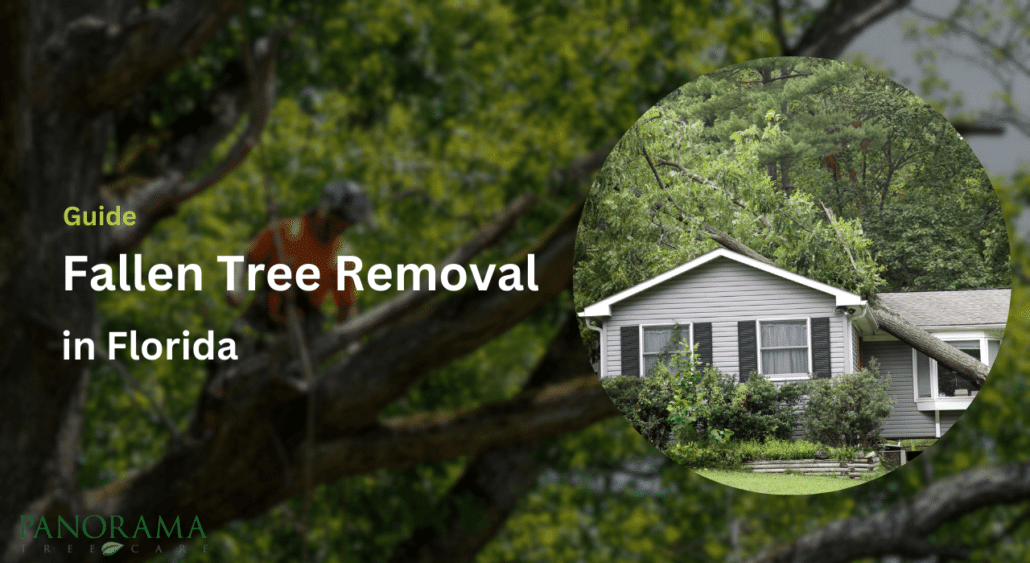
TL;DR: In Florida, you’re usually responsible for cleaning up a fallen tree that lands on your property, even if the tree started in your neighbor’s yard, unless you can show they were negligent. Homeowner insurance often helps when a covered structure gets hit, but many policies don’t pay much, or at all, when it’s just the lawn that’s a mess.
Around Florida, treat every downed wire as live, back off at least 30 feet, call 911 and TECO, take thorough photos and video, then call your insurer and a licensed emergency tree service like Panorama Tree Care.
Key Takeaways
- Liability in Florida is based on negligence under Florida Statute 95.11. The tree’s owner is usually only responsible if they knew, or reasonably should’ve known, the tree was dangerous and did nothing.
- “Act of God” storm events such as hurricanes and strong thunderstorms usually mean each property owner handles their own cleanup, unless there was documented, prior written notice of a hazardous tree that was ignored.
- Homeowner insurance tree removal coverage often taps out around $500–$1,000 per tree, and mainly when the tree hits a covered structure or blocks a driveway or access point.
- Yard-only tree falls with no damage to structures are commonly out-of-pocket, aside from limited debris removal sublimits on some policies, including certain Citizens Property Insurance policies.
- Emergency protocol in Florida: Scan for hazards, assume any downed line is energized, stay 30+ feet away, call 911 and TECO, then your insurance company, then a licensed, insured tree service.
- Typical fallen tree removal cost in Florida runs from around $200–$500 for simple small trees up to $1,500–$5,000+ for large or complex jobs that follow our emergency removal process with cranes and utility coordination.
- Public right-of-way trees in Florida and unincorporated Hillsborough County are usually handled by the city or county. Emergencies go through 911, and non-emergencies go through Tampa 311 or Public Works.
- Prevention matters: annual inspections by an ISA-certified arborist, smart pruning, and cabling weak limbs can dramatically cut down on storm failures when hurricane season shows up.
What Is Fallen Tree Removal in Florida?
Fallen tree removal in Florida is everything involved in safely cutting up, lowering, and hauling off trees or big limbs that failed from storms, rot, or accidents. In real life, that usually means emergency response, working around power lines, dealing with insurance adjusters, documenting damage, and disposing of storm debris under Florida’s liability rules and HOA storm damage responsibility guidelines.
Who Is Responsible for a Fallen Tree in Florida? (Liability Rules)
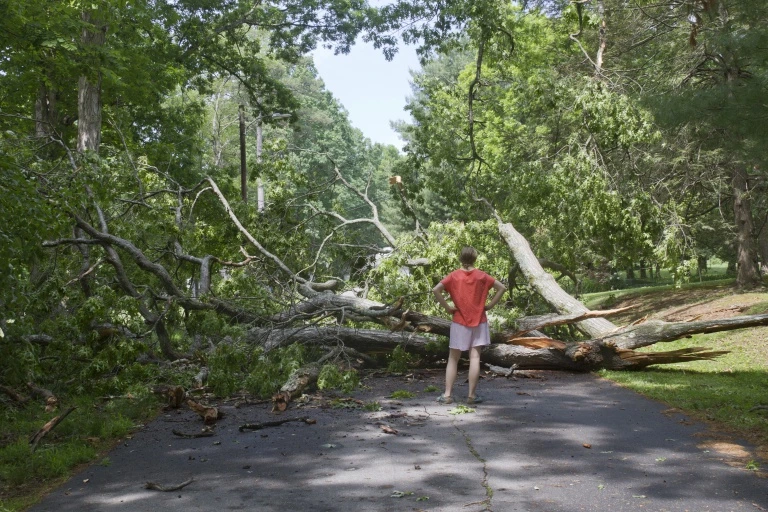
Responsibility for a fallen tree in Florida starts with one word: negligence. Ownership by itself doesn’t make someone automatically liable. Under Florida’s negligence standards and the four-year statute of limitations in Florida Statute 95.11, a tree owner is generally only on the hook if a reasonable property owner would’ve seen the danger and taken action, and they didn’t.
If a healthy oak snaps in a hurricane and lands next door, that’s often treated as an “act of God” or force majeure. Each neighbor normally cleans up their own side. But if that same tree was clearly dead, dropping limbs for years, leaning hard over your roof, and the owner ignored warnings, they can be found negligent and may be liable for the damage beyond their property line.
How Florida’s Negligence Standard Works for Trees
Florida courts look at whether the tree owner behaved like a “reasonable property owner,” not a perfect one. In practice, that comes down to a few key points I see over and over:
- Visible signs of hazard: Large dead limbs hanging over structures, obvious dead sections in the crown, mushrooms or conks at the base, heavy lean that worsens over time, or roots lifting the soil or sidewalks.
- Prior notice: Whether a neighbor, HOA, or property manager sent written notice about safety concerns, including texts and emails with photos.
- Professional advice: Whether an ISA Certified Arborist or other pro formally advised pruning or removal and the owner ignored or delayed it.
- Time to act: How long the hazard was known. A few days between a report and a major storm is different from a problem tree being ignored for years.
If those pieces line up and the tree later fails and causes damage, the owner can be found negligent and financially responsible for repairs and some or all removal costs.
“Act of God” / Force Majeure in Florida Storms
The act-of-God clause shows up constantly after hurricanes, tropical storms, and summer squall lines. If strong wind, heavy rain, or saturated soil alone take down an otherwise sound tree, insurers and courts usually treat that as an unavoidable natural event, not owner fault.
In that situation:
- Each property owner typically leans on their own insurance for damage on their side of the line.
- The neighbor whose tree failed is usually not liable unless there’s solid proof they had prior knowledge the tree was hazardous.
- Cleanup is treated as storm damage tree removal and may be covered partly under the policy’s debris removal coverage, subject to its sublimits.
Shared-Boundary Trees and Overhanging Branches
Boundary trees and overhanging branches create a lot of gray area. Florida uses a common-law approach that’s been hammered out through years of neighbor disputes.
- If the tree trunk sits directly on the property line, it’s usually considered a shared tree. Both owners share responsibility for maintenance and decisions about removal.
- If branches or roots cross onto your property, you typically have the right to trim them back to the boundary line at your own expense, as long as you don’t enter the neighbor’s property or kill the tree.
- If you’re worried about a particular limb or root system, send written notice with photos. That written trail often decides who pays what later.
For minor damage like a crushed section of fence or a small shed, the small claims limit in Florida, which is generally up to $8,000 USD, often controls how much you can chase in court if you can’t resolve it informally.
Landlord vs Tenant Responsibility
On rental properties, people get confused fast about who handles fallen trees. The answer usually lives in the lease agreement and whether the work is considered major structural maintenance or just basic yard care.
- Structural trees like large shade trees, pines, or palms and any major pruning or removals are usually on the landlord, unless the lease very clearly says otherwise.
- Tenant-caused damage, such as backing a truck into a tree or overloading a limb with swings or hammocks that cause failure, can leave the tenant responsible for part or all of the cleanup and repairs.
- Tenants should carry renter’s insurance so if a tree crushes their furniture or electronics, they’re not relying on the landlord’s policy to cover personal belongings.
Fallen Tree on Your Property: Step-by-Step Response Guide
Once a tree is down in your yard, especially after a Florida storm, you need a clear order of operations. First is safety. Then documentation. Then insurance and removal. Staying disciplined here keeps you out of the emergency room and gives your future insurance claim some teeth.
Step 1 — Safety Assessment & Utility Check
Before you grab a chainsaw or even walk too close, assume the situation could be dangerous. Storm failures are messy. Hidden tension in wood, live wires, unstable structures, and saturated ground all come into play in Florida’s climate.
- Scan for downed or sagging power lines. If any line touches the tree, the fence, a metal roof, or the ground:
- Stay at least 30–35 feet away, which is about three car lengths.
- Call 911 immediately and tell them it involves power lines.
- Call Tampa Electric (TECO) and report a downed line. TECO always treats downed lines as energized until their crews say otherwise.
- Look for structural damage. Check roofs, load-bearing walls, decks, porches, carports, and vehicles for impact points, cracks, and deflection.
- Check overhead for “widow-makers.” These are broken or hanging limbs still lodged in the canopy or perched on the roof that can drop without warning.
- Keep kids, pets, and curious neighbors well back from the area until a professional has a look.
If the tree is on your roof, pushing on a wall, mixed with wires, or simply bigger than you’re comfortable handling, stop there. That’s exactly what emergency tree removal Florida crews are trained and insured for. DIY cuts in these setups go wrong more often than people think.
Step 2 — Document Before Touching Anything
Insurance adjusters weren’t there when the storm hit, so they live off whatever proof you can give them. Before you saw, drag, or move anything, get thorough documentation.
- Take wide, clear shots from several angles that show:
- The entire tree or limb placement
- Your house or structures it hit
- The general layout of the property line area
- Take close-up photos of:
- Roof damage, punctures, broken rafters, or gutters
- Busted fences, dented sheds, damaged pools or enclosures, and vehicles
- The trunk and limb wood to capture any visible decay, fungus, or old wounds
- Photograph where the tree originated as best you can, especially if it looks like it started on a neighbor’s property.
- If there’s interior damage from water or impact, take photos of ceilings, walls, and floors too.
- Save or photograph any prior written notices you sent or received about this tree, like emails, texts, letters, or HOA warnings.
This kind of record can decide how a fallen tree insurance claim in Florida shakes out, especially when your neighbor or their insurer starts arguing it was just an act of God and there was no hazard beforehand.
Step 3 — Contact Your Insurance Provider
Once everyone’s safe and the damage is documented, call your homeowner insurance company or Citizens Property Insurance if you’re with Citizens. Don’t wait days to do this. Call while the situation is fresh.
- Have your policy number handy and your photos ready to email or upload.
- Explain clearly:
- When the tree came down and what kind of weather was happening at the time.
- Exactly what it hit: roof, fence, patio, pool enclosure, shed, driveway, or just lawn.
- Whether any utilities, roadways, or your neighbor’s property are impacted.
- Ask them straight out:
- If the policy covers tree removal and debris removal and what the per-tree and total limits are.
- Whether the hurricane deductible or your standard all-perils deductible will apply.
- What emergency actions you’re allowed to take before an adjuster sets foot on the property.
Most insurers will tell you to go ahead with emergency mitigation such as tarping roofs, stabilizing structures, and emergency tree removal that’s clearly needed to prevent more damage, as long as you keep every photo and receipt.
Step 4 — Hire a Licensed Removal Service
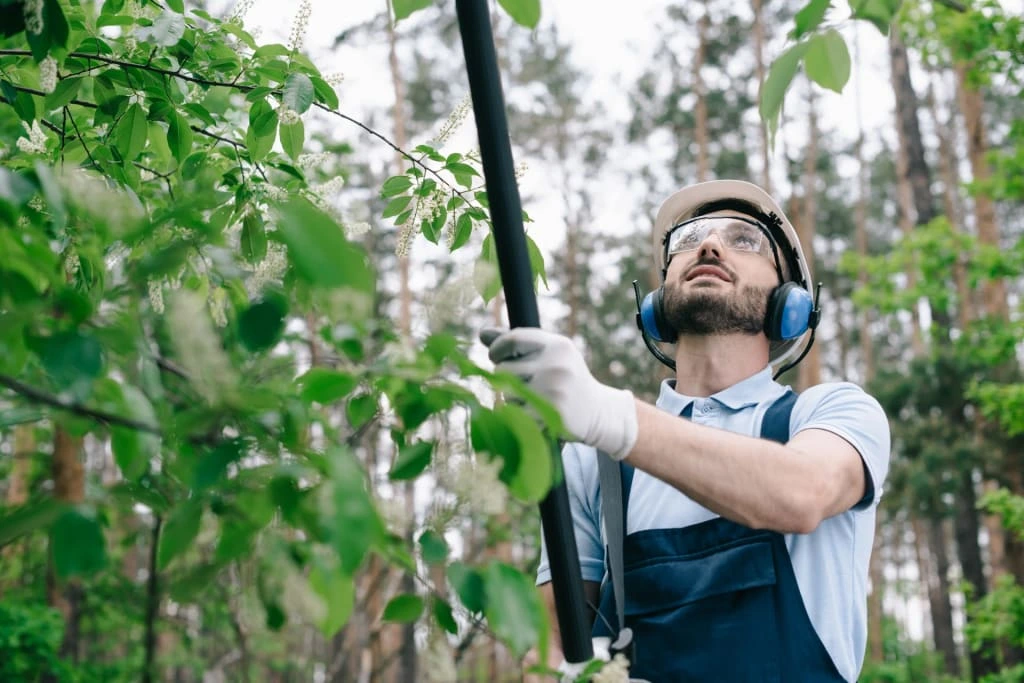
Now you bring in the pros. You want a licensed and insured emergency tree removal service with real storm experience, not a pickup truck crew that just rolled in from out of town after the last hurricane.
Look for companies that:
- Work your specific spot in Tampa or elsewhere in Florida, and have real local references.
- Employ ISA Certified Arborists or hold ISA emergency response certification, which means they follow industry standards instead of guessing.
- Provide written estimates that clearly separate:
- Tree removal and rigging
- Debris hauling or stacking curbside
- Stump grinding and root cleanup from experienced stump grinders in Florida if you want that done
- Are comfortable coordinating with TECO or other utilities when the tree is near or on lines.
- Understand what insurers want and can supply before/after photos, measurements, and itemized invoices.
Panorama Tree Care emergency service covers Florida with same-day and after-hours storm response. We handle crane work, tight backyards, and utility coordination, and we’re used to working alongside adjusters so your claim has what it needs.
Does Homeowner Insurance Cover Fallen Tree Removal in Florida?
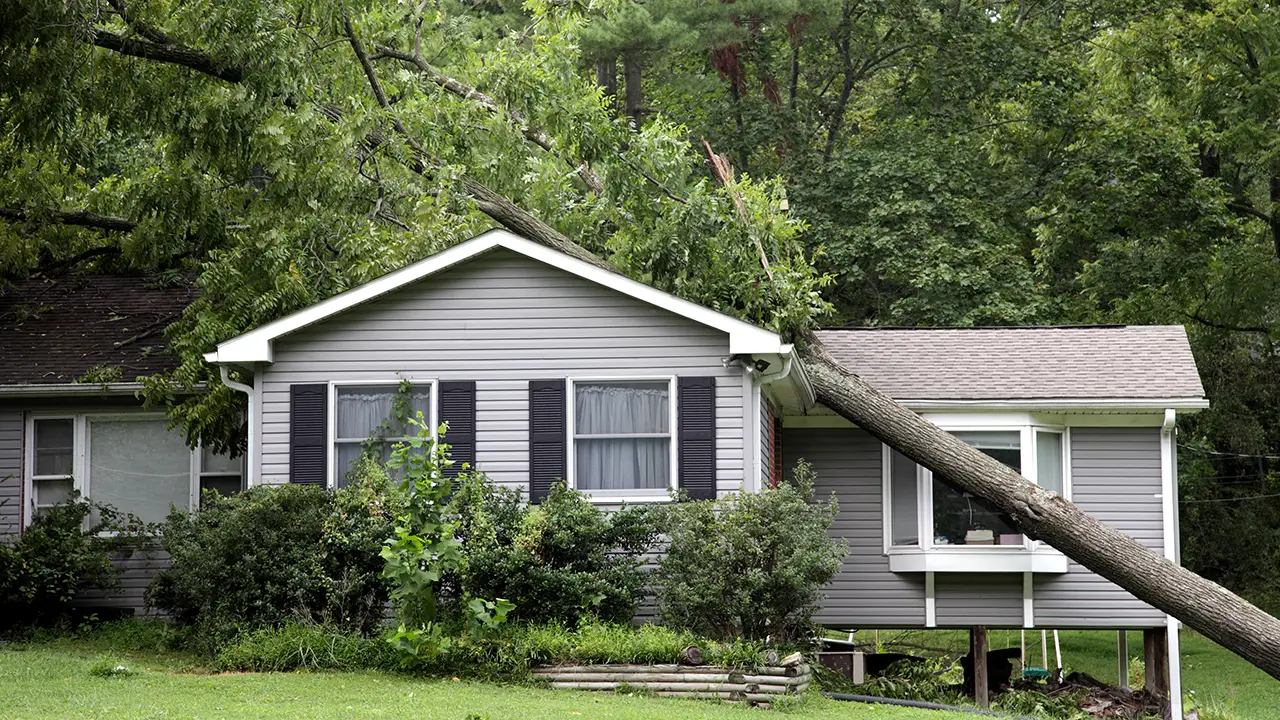
Most Florida homeowner policies, including standard HO-3 policies, offer some coverage for fallen tree removal. The catch is in the fine print. Coverage usually depends on what the tree actually hit and how your limits are written. Those common $500–$1,000 per tree numbers you hear tossed around are real, but they usually only kick in if a covered structure or access point is affected.
When Insurance Pays vs When You Pay
In practice, your coverage splits into two buckets: trees that cause structure damage and trees that only tear up the yard.
Scenario 1: Tree Damages a Covered Structure
Insurance usually follows through when a tree falls and physically damages something listed in your policy, for example:
- The main house structure, including roof, walls, and foundation
- Attached structures such as garages, carports, porches, and screened lanais
- Detached items that your policy lists, like sheds, gazebos, and fences
In those situations, most policies cover:
- Tree removal costs up to that per-tree cap, commonly $500–$1,000 USD per tree, sometimes with an overall limit per event.
- Debris removal under a separate sublimit, often in the $1,000–$2,000 USD range for the entire claim.
- The actual repair or replacement of the damaged structure, after subtracting your deductible.
Scenario 2: Tree Falls in the Yard Only
If a tree tips over and lands in the grass, crushes some landscaping, but never touches a covered structure or blocks your driveway, things change fast.
- Plenty of policies offer no direct coverage for simply removing the tree if it didn’t hit anything covered.
- Some policies offer limited yard-only coverage under their debris removal language, but this can be a small total number like $500–$1,000 for all trees combined.
- Anything beyond that is usually out-of-pocket, which surprises a lot of homeowners after a big storm.
Citizens Property Insurance Specifics
Citizens Property Insurance steps in for many Florida homeowners who can’t get coverage on the open market or were non-renewed. Their rules are similar but with a few twists.
- Citizens often uses a hurricane deductible that’s a percentage of Coverage A, not a simple flat fee. That can mean several thousand dollars before coverage really kicks in after a named storm.
- They include specific debris removal sublimits that control what they’ll pay for clearing trees and storm junk, especially in yard-only situations.
- Tree removal usually only gets covered if a covered structure is involved or if access, such as your driveway, is blocked, under wording similar to private market policies.
Filing the Claim Correctly
To get a fair shake on a fallen tree insurance claim in Florida, you’ve got to handle the paperwork like a pro. I’ve seen good claims get tangled up just because the documentation was sloppy or incomplete.
- Report your claim quickly. Many policies require “prompt” notice, which generally means within days, not months.
- Submit:
- Time-stamped photos and videos of the tree, damage, and surrounding areas
- Written estimates from your tree service and any contractors for structural repairs
- Invoices for emergency work and mitigation, clearly marked as tree removal, debris hauling, or structural repair
- Any written notice you previously gave or received about dangerous trees in neighbor disputes
- Ask if a FEMA disaster declaration was issued for your area. That usually affects local government and public debris operations more than private yards, but it can shape how cleanup is coordinated.
- Get your adjuster to confirm in writing:
- Your per-tree removal limit
- The overall debris removal sublimit for the event
- Which structure damage deductible is in play and how it applies
Clear, itemized invoices from your tree company, matched with before/after photos, make it much harder for a claim to get delayed or partially denied.
Fallen Tree on a Neighbor’s Property or Fence (Florida Rules)
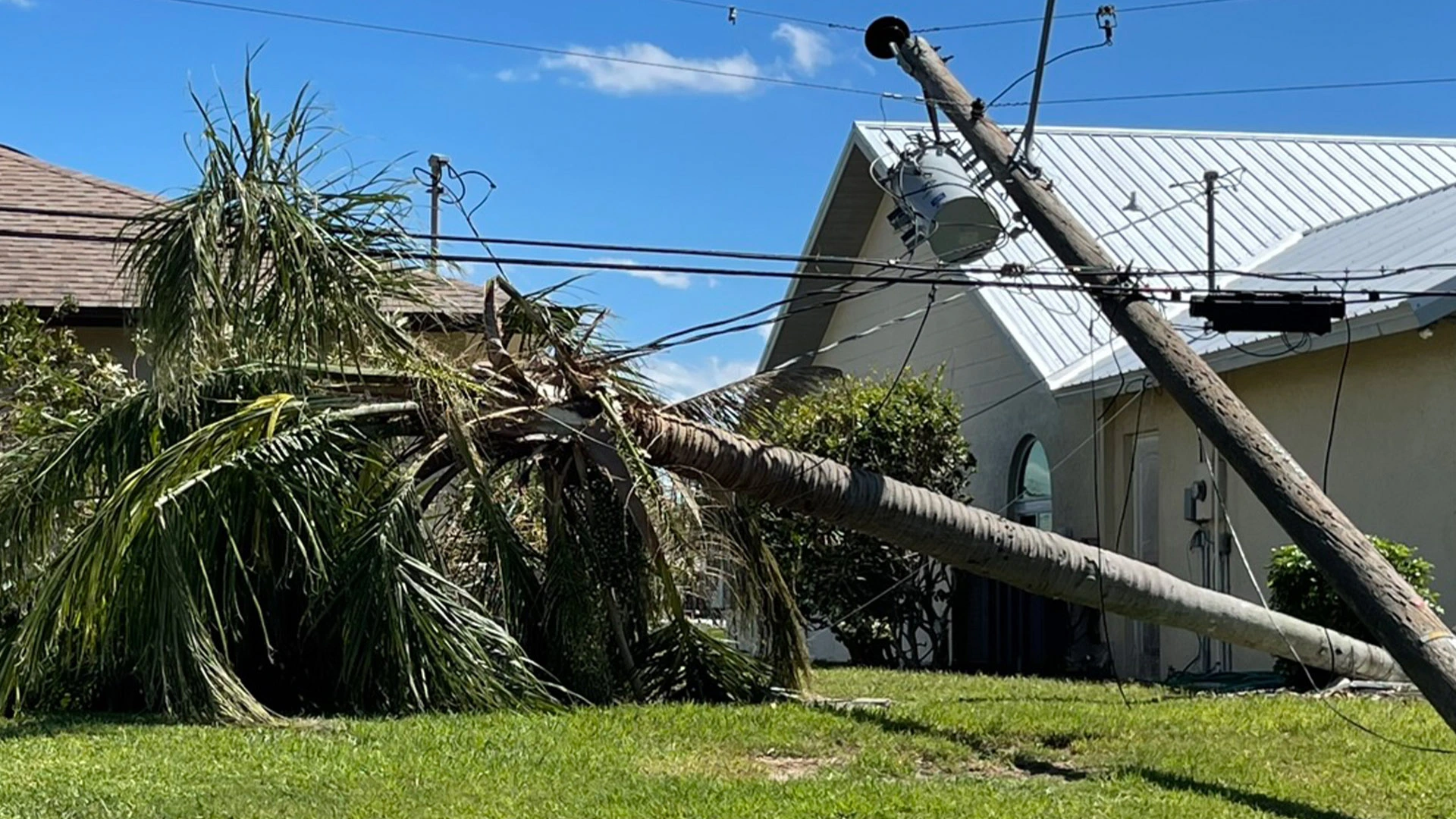
Nothing stirs up neighborhood tension faster than a fallen tree landing across a fence line. In Florida, the same basic rules still apply. Liability depends on negligence, not just whose side the stump is on. A healthy tree pushed over by a storm is usually your neighbor’s problem on their side and yours on yours. A rotten tree that was ignored for years is a different story.
Neighbor Tree Fell on My Property — Who Pays?
Say a neighbor’s tree fell on your property during a Florida thunderstorm. Legally, the default setup looks like this:
- Your homeowner policy usually pays for damage on your property.
- You can try to recover from your neighbor or their insurer only if you can show negligence, meaning they knew the tree was trouble and chose not to act.
Evidence that helps show negligence includes:
- Photos from months or years earlier showing dead limbs, peeling bark, or fungal growth that suggest long-term decay.
- Emails, text messages, letters, or HOA violation notices warning the neighbor about that specific tree.
- Arborist reports or estimates that recommended pruning or removal that your neighbor ignored.
If you can line that up, you may go after the neighbor’s insurance or sue directly for your losses, usually up to the small claims limit of around $8,000 USD in Florida, if the numbers fit that bracket.
Fallen Tree on Neighbor Property Florida – Your Duties
If a tree that started on your property ends up laying across your neighbor’s yard, fence, or shed, there are a few smart steps to take, even if the law eventually says it was just a storm event.
- Let your neighbor know quickly and calmly, and take photos of the damage on their side without trespassing.
- Share your insurance information and be ready to talk to their adjuster if they open a claim.
- Don’t walk onto their property or start cutting without permission, unless there’s an immediate life safety issue, like a trapped person.
- Give honest answers if insurers or attorneys ask about the tree’s prior condition and any earlier complaints.
Even where the law is technically on your side, being cooperative goes a long way. You might see that neighbor every day for the next 10 years.
Boundary Branches, Roots, and Fences
Overhanging branches and invasive roots are slow-burn problems that can turn into fast fights when a fence or driveway cracks.
- Your neighbor is allowed to cut branches and roots back to the property line at their cost, as long as they don’t damage or kill the whole tree.
- If you’re worried your neighbor’s tree is going to destroy your fence or structure, send written notice describing the issue and attach photos so your concern is on record.
- If things escalate after a failure, you can use mediation or small claims court to work toward a solution. Bring your written notices, arborist opinions, and any repair estimates.
Florida Emergency Fallen Tree Contacts & Response Times
In a bad storm, knowing who to call and in what order matters as much as knowing how to use a chainsaw. Public roads, power lines, and anything that risks lives are handled differently than a tree flattened across your backyard shed.
Hillsborough County Emergency Services
If you’re in unincorporated Hillsborough County and a tree is making a mess of public infrastructure or blocking emergency access, it’s handled as a public safety issue.
- Call 911 for:
- Downed or sparking power lines
- Blocked emergency access to homes or neighborhoods
- People trapped in vehicles or structures by fallen trees
- For downed trees on county roads or in public rights-of-way without immediate danger, contact Hillsborough County Public Works to:
- Report blocked roads, damaged county drainage, or obstructed ditches
- Ask about the debris removal timeline after a declared storm event
Tampa 311 and Public Right-of-Way Trees
Inside the City of Tampa, the city takes responsibility for trees on city land and rights-of-way, and they need to hear about hazards quickly.
- Use Tampa 311 (phone or app) to:
- Report fallen trees or large limbs blocking city streets or sidewalks
- Flag issues with city-maintained or public-right-of-way trees that cracked or split
- Call 911 instead of 311 if:
- You see downed or arcing power lines in or near trees
- Anyone is trapped or injured
- You smell gas, see fire, or suspect another immediate hazard
City crews handle trees rooted on public property. Anything growing on private property, even right up to the sidewalk, is generally up to the owner to manage, including removal and trimming.
TECO Utility Line Fallen Tree Protocol
Tampa Electric (TECO) follows specific procedures for trees on or near their lines. Working around that infrastructure is not a DIY situation.
- Response time: For dangerous downed lines TECO usually responds quickly, often within a few hours in normal conditions. After major hurricanes, expect slower times as they triage the grid.
- Downed line safety zone: Stay a minimum of 30 feet away from any fallen or drooping power line. More if conditions are wet or the ground surface is conductive.
- Customer responsibility: Your job is to:
- Report outages and downed lines immediately through TECO’s emergency number or website
- Avoid any cutting or clearing near lines until TECO confirms they’re de-energized or safe to work around
- Service restoration priority: TECO usually restores:
- Hospitals, fire stations, police, and water treatment systems first
- Then major feeders and circuits serving large numbers of customers
- Then smaller neighborhood and individual service issues
- Contact number: Use the emergency or outage phone number printed on your bill or listed on TECO’s website. Save it in your phone before storm season, not after.
Panorama Tree Care Emergency Response in Florida
Panorama Tree Care emergency service is set up specifically for same-day storm response and complex removals around Florida, not just routine trimming.
- Response time Florida (hours): Under typical conditions, we often arrive within 2–4 hours for high-risk situations. During widespread hurricane damage, we triage the most severe hazards first but still aim for same-day or next-day response.
- Service area (zip codes): Our core zone covers major Tampa ZIP codes such as 33602, 33603, 33604, 33606, 33607, 33609, 33611, 33612, 33613, 33614, 33615, 33616, 33617, 33618, 33619, 33624, 33625, 33626, 33629, 33647, plus nearby communities. Always call to confirm coverage if you’re just outside that ring.
- ISA certification number: Panorama operates under ISA credentials such as FL-9569A, which reflects training and adherence to recognized emergency response standards, not backyard guesswork.
- Crane availability: Yes. We have crane-equipped crews for large trees on roofs, tight urban lots, and situations where manual rigging alone isn’t safe or efficient.
- Storm season capacity: During peak hurricane season, we gear up to handle roughly 20–30 jobs per day with multiple crews, extended hours, and a dedicated dispatcher to manage priority calls.
Panorama works with utilities and adjusters where needed, pushes life-safety jobs to the top of the list, and produces detailed, insurance-ready documentation for every emergency tree removal project.
Fallen Tree Removal Cost in Florida (2026 Pricing)
The fallen tree removal cost in Florida is never one-size-fits-all. Around Florida, price depends on size, access, risk, timing, and how many other folks are calling at the same time. Emergency removal pricing during a busy storm week is always going to cost more than a scheduled job in the dry season.
Typical 2026 Price Ranges in Florida
The table below gives a realistic idea of what homeowners are paying around Florida in 2026. These aren’t quotes, just the ranges I see most often in the field.
| Tree Size / Situation | Typical Cost Range (USD) | Notes |
|---|---|---|
| Small tree (up to ~15 ft) on open ground | $200 – $500 | Simple felling or sectional cutting, easy drag-out, no structures or utilities nearby. |
| Medium tree (15–40 ft) partially on fence or shed | $500 – $1,500 | Needs controlled rigging, care to avoid more damage, and tends to produce more debris. |
| Large tree (40–80 ft) on roof or close to home | $1,500 – $3,500+ | Requires advanced rigging, roof protection, and sometimes a small crane or bucket truck. |
| Very large tree (>80 ft) with crane and utility coordination | $3,500 – $5,000+ | High-risk, complex removal in tight or urban settings, often with TECO coordination. |
| Emergency after-hours / same-day storm response | +25% – 75% surcharge | Overtime crew rates, night lighting, priority scheduling during peak demand. |
Your actual number will depend on the species (live oak vs pine vs palm), trunk diameter, how tangled it is with structures, and how far the crew has to move material. Sometimes your policy’s debris removal sublimit helps soften the blow. For broader non-emergency pricing details, see our tree removal cost breakdown.
Key Cost Drivers
Here’s what really pushes the price up or down in the area, based on what I see job after job:
- Trunk diameter (crane requirement threshold): Once you get beyond about 24 inches in diameter on a roof or tight yard, cranes and specialized rigging start to become the smart option, and that adds cost.
- Height and spread: Tall trees with wide canopies take more time to dismantle and generate a much larger debris pile, especially mature live oaks.
- Location: A tree that fell next to the street is far cheaper to deal with than one wedged behind a pool enclosure with no vehicle access.
- Complexity: Trees entangled with fences, decks, pools, roofs, or utility lines need more skilled labor, more gear, and more time.
- Emergency vs scheduled: Emergency tree removal Florida jobs outside regular hours or during active storms often carry an after-hours surcharge in the 25–75% range, depending on conditions.
Even if insurance is involved, remember the typical per-tree removal limit of $500–$1,000 and your deductible. It’s common for homeowners to pay part out-of-pocket, especially on big trees or multiple-tree events.
How to Prevent Tree Failure Before the Next Storm
Stopping problems before they start is always cheaper than cleaning up a mess in the middle of hurricane season. In Florida’s climate, a bit of proactive work almost always beats emergency tree failure post-hurricane disasters and long arguments with insurance adjusters.
1. Schedule Annual ISA-Certified Inspections
Having a certified arborist inspection once a year, especially before June, is one of the best investments you can make in your property’s safety.
- The arborist will look for structural defects, internal decay, pest issues, root damage, and poor pruning from past years.
- You’ll get a prioritized list of trees that need pruning, cabling, or outright removal before they turn into emergency calls.
- A written report provides proof that you acted responsibly if a storm damage liability question ever lands in front of a judge or insurance adjuster.
If you’re unsure how to pick a qualified pro, we break it down in our guide on certified arborist inspection and why credentials matter more than a low bid.
2. Improve Structure with Cabling and Bracing
Multi-stem trees and heavy limbs stretched out over roofs or driveways fail more than any other setup I see. Professional tree cabling prevents failure by tying the weak sections together and sharing the load.
- High-strength steel cables can be installed high in the canopy between co-dominant stems to keep them from splitting under wind stress.
- Bracing rods can reinforce big limbs with known cracks or weak attachment points that threaten structures below.
- These systems need to be inspected every few years and sometimes tightened or updated as the tree grows.
We go into much more detail in our article on how tree cabling prevents failure and when it’s the smarter option compared to full removal.
3. Prune for Wind Resistance
Done right, pruning gives the wind less to grab onto and removes obvious hazards before the first named storm appears on the radar.
- Crown thinning: Selectively taking out smaller interior branches lets more wind pass through the canopy instead of hitting a solid wall of foliage.
- Deadwood removal: Cleaning out dead, dying, or broken branches removes the pieces that are almost guaranteed to come down first in a storm.
- Clearance pruning: Keeping branches off the roof, away from your service drop line, and clear of parked vehicles avoids a lot of avoidable damage.
All of this should follow ANSI A300 standards and ISA best practices. That means no harsh topping or stripping out all the interior foliage. Those shortcuts look tidy today and fail tomorrow.
4. Address Root and Soil Problems
People focus on what they see above ground, but roots are what keep the tree standing when the soil turns to soup in a tropical storm.
- Root collar excavation: Removing excess soil or mulch from around the base exposes the root flare, helps spot rot, and reduces moisture-related decay at the trunk.
- Avoid cutting large structural roots for new driveways, pools, or patios without talking to an arborist. Severing the wrong root on the wrong side can tip the stability equation.
- Improve soil health with proper drainage and organic matter so roots stay strong and well anchored, not suffocating in standing water.
5. Follow a Florida Hurricane Preparation Calendar
Timing your tree work around Florida’s official hurricane season (June 1 – November 30) keeps you ahead of the storms instead of scrambling after every weather alert.
- Winter – early spring: Best window for significant pruning, structural cabling, and taking down marginal trees.
- Early summer: Quick inspection pass to catch dead limbs or new issues before the most active part of the season.
- Late season: Monitor trees that took hits earlier in the year, watching for delayed lean, root heave, or branch dieback.
For a step-by-step prep list before storms arrive, check our hurricane tree preparation before storm guide. That resource covers the “before” side. This page is focused on what you do after a tree falls and how liability and insurance shake out.
Common Mistakes in Fallen Tree Situations (and How to Avoid Them)
A bad decision in the first few hours after a tree falls can cost you a clean insurance payout, or worse, send someone to the hospital. Here are mistakes I see constantly in Florida, and easy ways to sidestep them.
Mistake 1: Touching the Tree Before Checking for Utilities
Problem: Grabbing a saw or pushing branches around without realizing a live line is running right through the mess.
Fix: Always assume wires are energized until TECO or fire rescue says otherwise. Stand back, visually inspect for lines, and if there’s even a chance of contact, call 911 and TECO and wait.
Mistake 2: Failing to Document Before Cleanup
Problem: Cleaning up in a hurry, then calling the insurer later with no clear record of how bad it really was.
Fix: Take plenty of photos and videos before any cutting or hauling. Multiple angles, wide shots, and close-ups. It takes 10 minutes and can protect thousands of dollars in claim value.
Mistake 3: Assuming the Neighbor Automatically Pays
Problem: Getting angry at the neighbor and refusing to call your own insurer because “it was their tree.”
Fix: Remember Florida’s negligence standard. Start by opening a claim with your own company. If you have strong evidence of neighbor negligence, your insurer or attorney can pursue reimbursement on the back end.
Mistake 4: Hiring Unlicensed or Uninsured Crews
Problem: Letting the cheapest crew that knocks on your door after a storm cut on your house with no license, no insurance, and rusty gear.
Fix: Ask for a copy of their insurance certificate and verify their license number with the state. Check for ISA credentials where possible. Insurers tend to look more favorably on work done by properly insured professionals if something goes wrong.
Mistake 5: Ignoring HOA and Local Rules
Problem: Taking out protected trees or making major changes in a neighborhood with strict Florida or HOA regulations without checking the rules.
Fix: For non-emergency work, talk to your HOA and the city or county before pruning or removing large trees, especially older oaks. In true emergencies, focus on safety first, but keep photos and follow up with the proper departments afterward if you removed a protected tree.
Mistake 6: Waiting Too Long to File Claims
Problem: Letting weeks pass before notifying your insurance, then running into policy deadlines and skepticism.
Fix: Report the claim early, even if you’re still getting estimates. You can always update the file later, but you can’t undo a missed reporting window.
FAQ: Fallen Tree Removal in Florida (2026)
Here are quick, practical answers to the questions Florida homeowners ask most about fallen trees, liability, and emergency response around Florida and the rest of the state.
How long do I have to file an insurance claim for a fallen tree in Florida?
Most homeowner policies require you to report a claim promptly, often within a specific number of days or “as soon as reasonably possible.” While Florida Statute 95.11 gives you four years to bring a negligence lawsuit, your insurance contract is stricter. Treat a fallen tree claim like any other property claim and notify your insurer quickly, even if you’re still sorting out the details.
Is the city or the homeowner responsible for a tree in the public right-of-way?
Generally, trees on public right-of-way such as medians, city-maintained strips, and certain swales fall under the responsibility of the city or county. Inside Tampa, that means using 311 to report issues. In unincorporated Hillsborough County, you’d contact Public Works. Trees with trunks rooted on private land remain the homeowner’s responsibility, even if branches or roots stretch into the public area.
What is the utility company obligated to do when a tree hits power lines?
Utilities like TECO are responsible for making their system safe and restoring power. That can include cutting or moving parts of trees that interfere with lines or equipment. But they usually stop at what’s needed to protect the grid. Full debris removal and cleanup on your property are your responsibility, often shared between your insurance and your tree service.
How long will I wait for emergency tree removal after a storm in Florida?
In normal times, reputable tree companies often respond within 2–12 hours for urgent hazards. After a major hurricane or large storm system, the emergency response window can stretch to 24–72 hours or more, as crews focus first on trees on roofs, blocking access, or tangled in lines. Calling early and working with established local firms like Panorama Tree Care usually cuts that wait.
What documentation do I need for a fallen tree insurance claim?
You’ll want a complete package: time-stamped photos and videos, a brief written timeline of how and when the tree fell, itemized estimates and invoices for tree work and repairs, and any prior written notices about hazardous trees if you’re dealing with a neighbor dispute. Keeping as much of your communication with the insurer in writing gives you a clear record if the claim is questioned later.
Does FEMA pay for fallen tree removal on my private property?
The FEMA Public Assistance program is built mainly to help governments and certain nonprofits with debris removal and infrastructure repair after disasters. It usually does not cover routine fallen tree cleanup in private yards. Most homeowners are expected to rely on their own insurance or personal funds, unless there’s a special local program created for a particular disaster.
Are permits required for emergency fallen tree removal in Florida?
For genuine emergencies where a tree is an immediate danger to life or property, local rules often allow permit exemptions so you can act first and protect people and structures. Still, take photos before removal and keep contractor invoices. Some protected species or zones in city limits might require you to provide documentation later or obtain retroactive approval, especially if you plan follow-up tree work beyond the emergency cut.
Final Summary & What to Do Next
In Florida, and especially around storm-tested Florida, fallen tree removal hits legal liability, insurance fine print, and real safety risks all at once. Under Florida’s negligence-based rules, the fact that a tree stands on one person’s land doesn’t automatically make them liable when it fails. You have to look at whether the hazard was obvious or documented ahead of time. Insurance often helps when structures get hit. Yard-only messes, on the other hand, frequently end up on your own dime.
Contact Florida tree care professionals for a free assessment and estimate.
When a tree comes down on your property:
- Start with safety: keep your distance, look for lines, and call 911/TECO if there’s any utility involvement.
- Document thoroughly before anyone cuts or moves a limb.
- Contact your insurance company right away to open a claim and clarify coverage.
- Bring in a licensed, insured, ISA-certified tree service to handle the removal, protect your structures, and provide solid paperwork.
To lower your odds of dealing with another emergency next hurricane season, get a certified arborist inspection, handle recommended pruning or cabling, and follow the seasonal guidance in our hurricane tree preparation guide.
If you need emergency tree removal Florida or want expert eyes on a risky tree anywhere in Florida, reach out to Panorama Tree Care for a same-day assessment, safe removal plan, and insurance-ready documentation from a crew that handles this work every storm season.

2 Responses
Our trees behind our house were planted by HOA with sod. We have 1 sacred fig approx. 2 years old as well as an olive tree. We would like to remove these 2 trees and replace with 2 Christmas palms. Would our HOA object to removal of these 2 trees. They are in back of house between house and small man made lake. Thank you for your input please.
Hello Sandra, all HOA have different bylaws I would recommend checking with them. Yet we have Christmas Palms of all sizes available. Please share how tall you want the Christmas Palm to be. Also, do you want single, double or triple trunk?
Respectfully
Tony