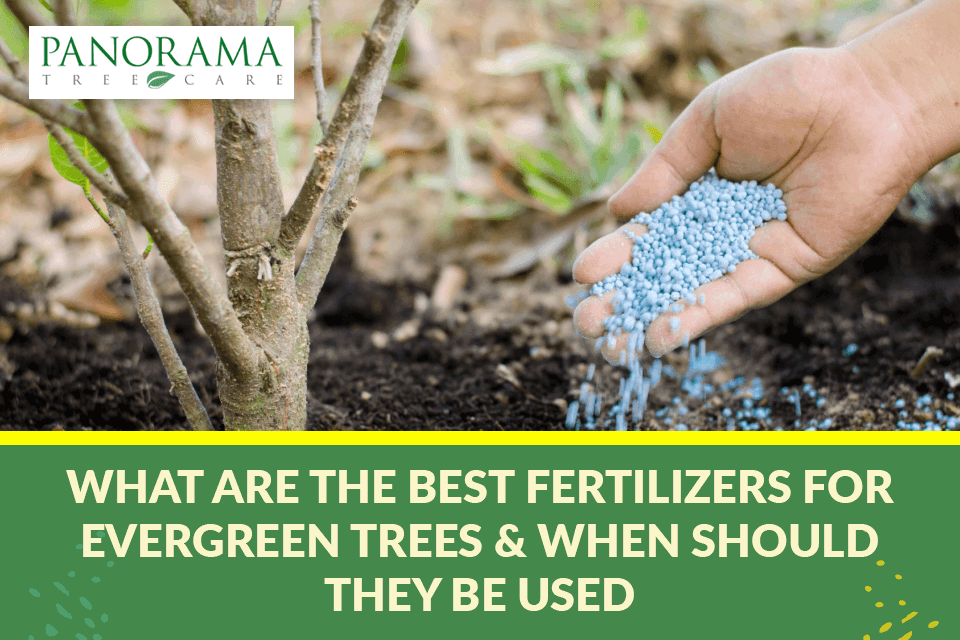
TL;DR: in Florida’s hot, sandy soils, evergreen trees respond best to a slow-release granular fertilizer around 12‑4‑8 or a similar analysis, put down mainly in March and, if needed, a lighter follow-up in September.
Put the emphasis on nitrogen and potassium, keep phosphorus low, water deeply right after you spread it, and stay on top of iron and manganese issues since our alkaline, leach-prone soils bring those problems up often.
Key Takeaways
- Ideal NPK for Florida evergreens: Go with higher nitrogen and moderate potassium, with low or zero phosphorus, such as 12‑4‑8 or 16‑0‑8, which lines up with Florida fertilization guidelines and phosphorus restrictions across much of the state.
- Best fertilizer type: A slow-release granular tree food is usually the safest and most effective choice for Florida’s sandy soils. Liquids are good for quick rescue work, and spikes are convenient but can feed in patches instead of evenly.
- When to fertilize evergreens in Florida: Do your main feeding in March ahead of the spring flush of growth, with an optional lighter feeding in September. Skip heavy fertilizing in the middle of summer and through winter.
- Application method: Broadcast fertilizer evenly from a safe distance away from the trunk out to the drip line, keep it off the bark, and then water in with about ½–1 inch of water so nutrients move into the root zone instead of blowing or washing away.
- Common nutrient issues: Iron chlorosis, manganese deficiency, and magnesium deficiency show up a lot in Florida’s alkaline sandy soils. Deal with them using chelated micronutrients and soil-building practices, not just more NPK.
- Top product picks: Espoma Holly-tone, Jobe’s Evergreen Spikes, Miracle‑Gro Shake ’n Feed, and a quality slow-release 12‑4‑8 formulated as a best tree fertilizer Florida option all perform well when you apply them correctly.
- Follow UF/IFAS guidance: Base your fertilizer rate on trunk diameter and the current UF IFAS tree fertilization guidelines. Keep Florida’s phosphorus fertilizer laws and any local Florida ordinances in mind before you buy and apply.
- When to call a pro: If your trees show strong yellowing, dead tips, thinning crowns, or recurring nutrient issues, call a certified arborist such as Panorama Tree Care to handle deep root feeding, soil testing, and a full health check.
What Is Evergreen Tree Fertilizer?
Evergreen tree fertilizer is a plant food put together with more nitrogen (N), a moderate dose of potassium (K), and either low or zero phosphorus (P), along with key micronutrients like iron and manganese. For Florida landscapes, the best evergreen fertilizers are usually slow-release granular blends labeled for trees and shrubs.
You spread them across the root zone and water them in so the nutrients soak down through the sand instead of disappearing with the first storm.
What NPK Ratio Do Evergreen Trees Need?
Evergreen trees in the Florida area usually do well on fertilizers with higher nitrogen, moderate potassium, and low phosphorus, such as 12‑4‑8 or 16‑0‑8. Nitrogen feeds foliage and steady growth, potassium helps with overall vigor and stress resistance, and phosphorus is only needed in small amounts and is often already present in Florida soils at adequate levels.
The N‑P‑K ratio printed on the fertilizer bag is simply the percentage of each major nutrient by weight:
- N – Nitrogen, which drives green foliage and new shoot growth
- P – Phosphorus, which supports root development and flowering
- K – Potassium, which boosts stress tolerance, disease resistance, and overall plant health
For most evergreen trees tucked into Florida landscapes, the UF IFAS tree fertilization guidelines point you toward fertilizers in the 2‑1‑2 or 3‑1‑2 style ratio range. That would be products like 12‑4‑8, 15‑5‑15, or 18‑6‑12. Look for a label that lists a good chunk of the nitrogen as slow-release. Evergreens put on growth steadily instead of in big spurts, and they keep their foliage year round, so a gentle, controlled feed fits them better than a quick blast of soluble nitrogen.
Why Phosphorus Is Often Low or Zero in Florida
The Florida phosphorus fertilizer law and a stack of local ordinances limit how much phosphorus you can apply on established lawns and landscapes, including in much of the region. This is mainly to protect waterways from runoff.
- Restriction area: Many counties and cities in Florida restrict landscape phosphorus use unless a soil test proves the soil is short on P.
- Phosphorus application limit: Where it is allowed, it is often capped around 0.25–0.5 lbs P₂O₅ per 1,000 sq ft per year. You need to check your local rules for exact numbers and timing.
- Soil test exemption: If a certified lab soil test shows your soil really is deficient in phosphorus, then you can apply what that lab and UF/IFAS recommend to correct it.
- Penalties: If you ignore these rules, local code enforcement can fine you, and they are especially watchful near canals, lakes, and storm drains.
- Florida applicability: In Hillsborough County and many Florida neighborhoods, both phosphorus and nitrogen use are regulated during certain months or near water. Always double check the latest ordinances before you fertilize.
Most established evergreen trees in Florida do not need extra phosphorus. That is exactly why so many best tree fertilizer Florida products are stamped with “low-P” or “zero-P” and carry numbers like 16‑0‑8. They are designed to feed your trees without breaking the law or clouding the bay with algae.
How Florida Sandy Soil Affects NPK Needs
Florida sandy soil fertility is a different animal compared with the heavier soils you might see up north. A few things about it really drive your fertilizer choices:
- Natural pH range: Many sites test slightly alkaline (around 7.0–7.8), especially where there is coastal influence or imported fill dirt.
- Cation exchange capacity (CEC): Very low. Sandy soils simply do not hold onto nutrients the way a loam or clay would.
- Nutrient leaching rate: High. Nitrogen and potassium can move down past the root zone quickly after a few hard rains or heavy irrigation cycles.
- Organic matter content: Often below 2–3% in typical urban yards, which means poor water and nutrient holding ability.
- Recommended amendment: Regularly adding compost, pine bark fines, or organic mulch improves organic matter and the soil’s ability to hang on to nutrients.
So the best fertilizer for evergreen trees in Florida checks a few important boxes:
- A generous portion of slow-release nitrogen to cut back on leaching and keep feeding steady
- Low phosphorus so you respect the law and reduce runoff risk
- Plenty of potassium so trees can cope with heat, drought, wind, and storm damage
On top of that, working organic matter into beds and keeping a proper mulch ring around your trees does more for long-term fertility than many people realize. It is the difference between constantly chasing yellow leaves with fertilizer and having a tree that stays dark green on modest feeding.
Best Fertilizer Types for Evergreen Trees (Slow-Release vs Liquid vs Spikes)
People often ask me what fertilizer for evergreen trees is “the best brand” in Florida. The honest answer is, the type matters just as much as the name on the bag. Different delivery formats behave very differently in our heat and sand.
Slow-Release Granular Fertilizer (Best Overall for Florida)

For most homeowners, a slow-release granular fertilizer is the most reliable evergreen tree food you can use in a yard.
Typical attributes:
- NPK ratio (typical): Often 12‑4‑8, 15‑0‑15, or 16‑0‑8 with around 30–60% of the nitrogen in slow-release form.
- Release duration: Under Florida conditions, you usually get about 2–3 months of feeding from a single application. Our heat shortens that window a bit compared with cooler climates.
- Application rate: Frequently in the range of 2–4 lbs per 1,000 sq ft, or by trunk diameter following UF/IFAS tables.
- Cost per bag: Around $20–$45 depending on brand, bag size, and how many micronutrients are included.
- Florida sandy soil suitability: Excellent, because the slow-release portion resists washing straight through the sand.
Pros:
- Feeds at a steady pace and greatly reduces the risk of fertilizer burn, even in hot weather.
- Fits an evergreen tree fertilizer schedule of only 1 or 2 applications a year, which is realistic for most people.
- Easy to spread with a handheld or broadcast spreader across the drip line.
- Cost-effective for properties with many trees or long hedgerows.
Cons:
- Not ideal for emergency fixes. If a tree is badly chlorotic, a granular alone might take weeks to show improvement.
- Still needs proper irrigation after application in Florida. If you skip watering, more of it will be lost when the next big storm hits.
Liquid Deep Root Feeding
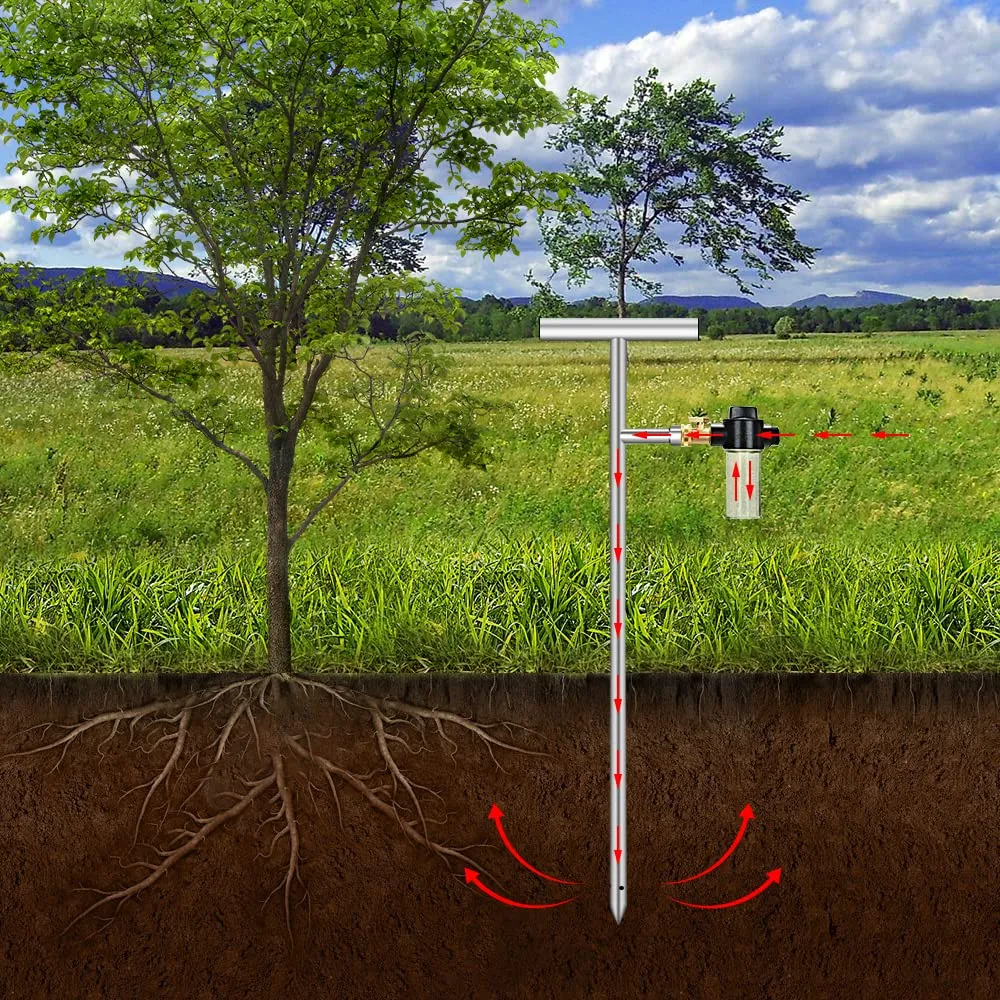
Liquid deep root feed is a dissolved fertilizer solution injected several inches down into the soil profile at multiple spots around the tree. Companies such as Panorama Tree Care fertilization service use this method a lot on higher value trees.
Uses in Florida:
- Quickly addressing severe micronutrient deficiency like iron chlorosis or manganese deficiency where foliage is already pale or dying back.
- Helping stressed or specimen evergreens growing in compacted areas, tight courtyards, or poor fill dirt.
- Getting nutrients to the root zone on sites where surface-applied fertilizer would just run off, such as sloped yards or near hardscapes.
Pros:
- Very fast uptake because the solution is placed near active absorbing roots.
- Customizable blends that can include extra iron, manganese, magnesium, and sometimes mycorrhizal inoculant to support root health.
- Far less likely to wash into storm drains compared with surface broadcasting if done properly.
Cons:
- More expensive than buying a bag of fertilizer and doing it yourself.
- Requires proper pumps and injectors, and someone who understands rates and tree biology.
Fertilizer Spikes (Tree Food Stakes)
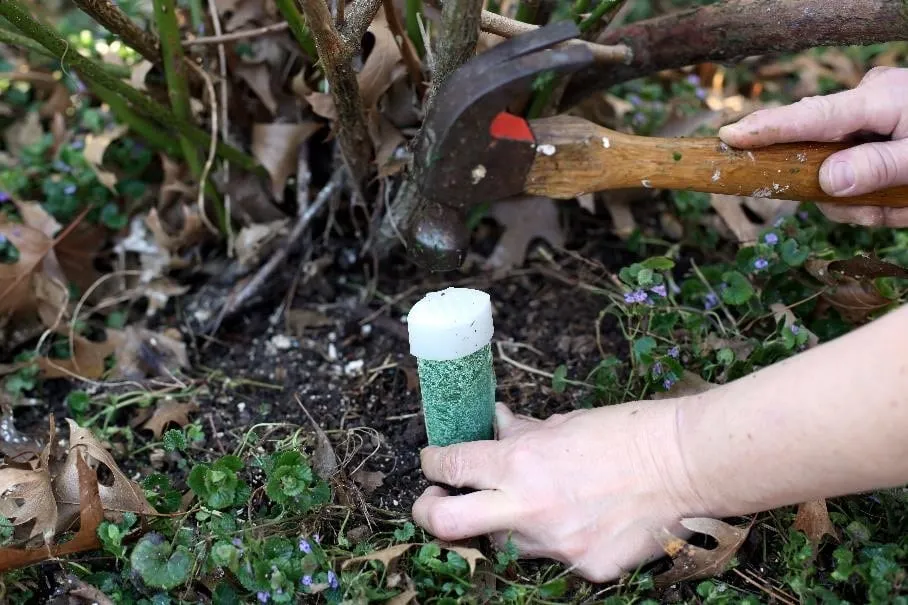
Fertilizer spikes, including products like Jobe’s Evergreen Spikes, are solid rods of fertilizer that you hammer into the soil around the tree’s drip line.
Pros:
- Extremely simple for homeowners. No spreader to clean, no bag to haul around the yard.
- Slow-release nutrients leach out of each spike over time.
- Work reasonably well for small ornamental evergreens, formal hedges, or dense planting beds where you do not want loose granules everywhere.
Cons (especially in Florida):
- Deliver fertilizer in patches instead of across the entire rooting zone, so roots between spikes get less benefit.
- In our very sandy soils, nutrients from the spikes may still move too deep after heavy summer rains.
- Harder to fine-tune the total amount applied based on trunk diameter or canopy size.
Recommendation: Around Florida, I usually reserve spikes for small to medium ornamental evergreens or tight beds where convenience is the priority. For big shade trees and large conifers, a slow-release granular or a professional deep root injection will give a more even, predictable feed.
When to Fertilize Evergreen Trees in Florida (Seasonal Schedule)
Picking the right fertilizer is half the job. Hitting the right window on the calendar is the other half, especially in a climate that swings from dry spring to intense summer storms.
Best Time to Fertilize: March (Primary Application)
The sweet spot for feeding evergreen trees around Florida is usually early to mid‑March, right before or as you see the first push of new growth.
Why March works well:
- Soil temperatures are climbing, so roots are active and ready to pull in nutrients.
- Evergreens are gearing up for their spring growth flush, which is where you want the nitrogen working.
- We are still ahead of the worst summer downpours, so fertilizer has time to move into the root zone instead of straight past it.
Following the UF IFAS tree fertilization guide, many evergreen trees that are reasonably healthy only need this single spring application. Trees growing in richer or older soils may not even need that every year.
Optional Fall Feeding: September (Light Application)
Some sites justify a second feeding. A modest application in early September can help trees recover from heat and storm stress and set them up for the cooler months.
Guidelines for the September application:
- Cut the rate down to 50–75% of what you used in spring. You are topping off reserves, not trying to push big growth.
- Get it done by mid‑September so roots have warm soil and time to use the nutrients.
- Lean toward a fertilizer with a higher percentage of slow-release nitrogen so you do not force tender late-season growth that might be weaker or more pest-prone.
Why Avoid Summer and Winter Fertilizing
- Summer (June–August): Our mix of high temperatures and thunderstorms brings several problems:
- Greater risk of fertilizer burn, especially if granules sit on dry soil or foliage.
- Much higher nitrogen leaching rate as repeated storms pound nutrients deep into the sand.
- More runoff into storm drains, ponds, and the bay, which is exactly what local rules try to prevent.
- Winter (December–January):
- Evergreens slow down; even here they are semi-dormant and not pulling in many nutrients.
- Fertilizer can linger unused or wash out with winter rain systems.
- You end up wasting product while taking on extra environmental risk.
One thing a lot of homeowners miss: if your evergreen trees are mature, have decent color, and are growing at a reasonable pace, you might not need to fertilize them every single year. Use growth rate, foliage color, and soil test results as your guide instead of just circling a date on the calendar.
How to Apply Fertilizer to Evergreen Trees (Florida Sandy Soil Method)
in Florida’s quick-draining sand, how you apply fertilizer decides if the tree actually uses it or if you just paid to feed the aquifer. You want nutrients where the feeder roots live, and you want to keep them there as long as you can.
Step 1: Measure the Drip Line and Root Zone
The drip line is the line on the ground under the outer edge of the tree’s canopy, where water would drip off if it were raining. Most tree roots reach at least to this line and often extend well past it.
- Step back and eyeball the distance from the trunk to the tips of the outermost branches. That is your canopy radius in feet.
- To estimate the area, use Area ≈ 3.14 × radius². You do not have to be perfect, just close.
- This gives you the rough square footage where the majority of your feeder roots sit, which is where your granular fertilizer should go.
Many UF IFAS fertilization guidelines also describe application rates by trunk diameter at breast height (DBH). A common ballpark is 0.1–0.25 lbs of nitrogen per inch of trunk diameter per year for established landscape trees, though you need to confirm the latest UF/IFAS numbers for your specific species.
Step 2: Calculate the Fertilizer Amount
To figure out how much fertilizer to apply without guessing:
- Pick the recommended nitrogen rate. For example, maybe you decide on 0.2 lbs N per inch of DBH.
- Measure the tree’s trunk diameter in inches about 4.5 feet above the ground.
- Multiply that rate by the trunk diameter to get the total pounds of actual nitrogen needed.
- Convert nitrogen needed into pounds of product using the fertilizer’s N percentage. With a 12‑4‑8:
- 12% N means each pound of product contains 0.12 lbs of nitrogen.
- If you need 1.2 lbs of N, divide 1.2 ÷ 0.12, which gives you 10 lbs of fertilizer to spread.
This little bit of math takes a few minutes but saves you from over-fertilizing, which in sandy soil can burn roots, or under-fertilizing, which just wastes your time.
Granular Application
Here is how to handle slow-release granular fertilizer so it actually benefits your trees:
- Step 1: Keep a bare ring at least 6–12 inches away from the trunk. Surface roots and bark are sensitive to salts, especially under heat.
- Step 2: Broadcast the fertilizer evenly starting about a foot away from the trunk and going out to just past the drip line. Roots do not stop at the drip line, so a little beyond is fine.
- Step 3: Aim for a uniform scatter. Piles and clumps increase the burn risk.
- Step 4: If you can, gently rake or scratch the granules into the top inch of soil. That helps keep them from blowing or washing off.
- Step 5: Water thoroughly with about ½–1 inch of irrigation. That is usually 30–45 minutes with typical sprinklers. You want everything dissolved and starting to move downward.
Broadcast vs drill method: For typical home yards, the broadcast method is fine and far easier. The drill method, where you auger holes and drop fertilizer in, is usually reserved for compacted commercial sites or specific professional treatments where you need to punch through a hard surface layer.
Deep Root Feeding
Deep root feeding uses a probe to inject a diluted fertilizer solution roughly 6–12 inches down into the soil at staggered spots under and just outside the canopy.
- Works well for high-value evergreens, or trees that have struggled since construction or grade changes altered their root zone.
- Often combines nutrients with mycorrhizal inoculant or soil conditioners to help roots recover and explore more soil.
- Injection points are spaced around the drip line and sometimes beyond, forming a ring or grid pattern.
Because strength, volume, and injection depth matter, and it is easy to overdo it, deep root feeding is a job for a certified arborist fertilization service instead of a DIY experiment.
Preventing Nutrient Leaching in Florida Sandy Soils
To keep your fertilizer working for the tree instead of washing straight through the profile:
- Choose slow-release: Look for “slow-release” or “controlled-release” on the label, and aim for at least 30% of the nitrogen in that form.
- Time around rain: Do not spread fertilizer right before one of our predicted gully‑washer storms. Fertilize when you can control the first watering.
- Add organic matter: Maintain a 2–3 inch layer of mulch (kept a few inches away from the trunk) and add compost-based amendments in beds to slowly raise organic matter and CEC.
- Irrigate correctly: Water deeply but less often so the water soaks well down and encourages deeper roots instead of a shallow, weak root system.
- Respect buffer zones: Keep fertilizer away from storm drains, sidewalks, driveways, and open water as your local codes require.
Common Florida Evergreen Nutrient Deficiencies (Iron, Manganese, Magnesium)
Florida’s alkaline, sandy, low-organic soils are perfect for certain nutrient problems to show up, especially in evergreen trees that like slightly acidic conditions. Catching them early and treating them correctly saves you from losing branches or whole trees.
Iron Chlorosis
Iron chlorosis is one of the things I see most often on evergreens that prefer acidic soils, including several ornamental species. Our higher pH soils tie up iron, even when there is technically enough in the ground.
Symptoms:
- New leaves come out yellow with darker green veins. That interveinal pattern is a classic sign.
- The whole canopy can look washed out, especially toward the top and on sunny sides.
- In advanced cases you get brown edges, smaller leaves, and twig dieback.
Iron chlorosis correction (EAV attributes):
- Chelated iron product: Use an iron labeled as EDDHA or EDDHMA chelate. These hold up far better in higher pH soils than cheaper EDTA forms.
- Application method:
- A foliar spray can give faster cosmetic greening, especially on ornamentals.
- A soil drench under the drip line tends to last longer and treats the real issue at the root level.
- Correction timeline: With decent conditions, you usually see leaves start to green up within 1–3 weeks.
- Recurrence prevention: Work in some acidic organic matter like pine bark, avoid liming your soil, and keep a mulch layer in place to buffer pH swings.
- Florida prevalence: High. It is common on fill sites, newer subdivisions, and any property with a lot of shell-based material in the soil.
Manganese Deficiency
Manganese deficiency often looks similar to iron problems to the untrained eye, but it tends to show up on slightly older leaves first, and the pattern can be a bit different.
Symptoms:
- Interveinal yellowing on newer to mid-aged leaves, with veins staying somewhat green.
- “Frizzled,” distorted, or small new foliage when the deficiency becomes severe.
- Progressive thinning of entire branches or sections of the canopy over time.
Correction:
- Apply a manganese sulfate product as a soil drench under the canopy, following label directions.
- Check your main tree fertilizer for Florida and see if it already contains manganese. Some do, and that can help prevent the issue from returning.
- Stay within the recommended rates. Manganese in excess can be toxic, so more is not better.
Magnesium Deficiency
Magnesium deficiency tends to start on the older foliage lower down in the canopy. Magnesium is mobile in the plant, so it moves to new growth if the tree is short on it.
Symptoms:
- Older leaves turning yellow while the veins stay greener, especially on the lower branches.
- On some species you see a distinct yellow band at the leaf edges with a greener center strip.
- Earlier than normal drop of older foliage, which can make the lower canopy look thin.
Correction:
- Apply magnesium sulfate (Epsom salt) around the drip line and lightly work it into the surface. Do not pile it near the trunk.
- Use rates appropriate for your tree size and avoid the temptation to keep re‑applying at high doses. Salt buildup is a real issue in sandy soil.
- Fold this into a complete nutrition plan, not as a one-off fix. Balanced feeding makes repeat magnesium problems less likely.
If you are trying to sort out whether your evergreen has a nutrient deficiency, a pest problem, or something like root rot, take a look at our guide to common tree problems in Florida or get an arborist to confirm before you start throwing products at it.
Top 5 Evergreen Tree Fertilizers for Florida 2026
Here are five evergreen tree fertilizers that have proven to work well across Florida yards when they are used properly. Always cross-check the label with your local regulations and follow directions exactly.
| Product | Type | NPK Ratio | Best Use Case | Approx. Application Rate | Approx. Price (USD) |
|---|---|---|---|---|---|
| Slow-Release 12‑4‑8 Tree & Shrub Blend | Granular, slow-release | 12‑4‑8 (with micros) | General evergreen feeding in Florida sandy soils | 2–4 lbs per 1,000 sq ft, or per inch DBH per label | $30–$45 per 40 lb bag |
| Espoma Holly‑tone | Organic-based granular | 4‑3‑4 | Acid-loving evergreens needing gentle feeding and soil improvement | Generically 1–2 cups per ft of branch spread (check label) | $25–$35 per 18 lb bag |
| Jobe’s Evergreen Spikes | Slow-release spikes | Varies (~13‑3‑4 commonly) | Small ornamental evergreens, homeowners wanting convenience | Number of spikes based on trunk diameter and canopy spread | $10–$18 per pack |
| Miracle‑Gro Shake ’n Feed for Trees & Shrubs | Granular, extended feed | Varies (~12‑4‑8 or similar) | Landscape evergreens needing micronutrients with a simple shaker application | Amount per sq ft or plant size as directed on label | $15–$25 per container |
| Professional Liquid Deep Root Feed (via Panorama Tree Care) | Liquid injection | Custom blend (NPK + micros) | Stressed or high-value evergreens needing rapid, targeted nutrition | Based on trunk diameter and canopy size by arborist | Service-based pricing |
Use this table as a quick reference. Once you know what kind of tree you are feeding and what its soil tests say, picking a product from this list gets much easier.
1. Slow-Release 12‑4‑8 Tree & Shrub Blend
A good quality slow-release 12‑4‑8 is the workhorse in a lot of Florida landscapes. The 12‑4‑8 ratio checks the boxes in UF/IFAS guidance and gives you the nitrogen and potassium evergreens like, with just enough phosphorus to cover genuine needs without overdoing it.
Best for: Established evergreen trees in Florida that need a dependable, long-lasting feed with low risk of burning. Great for mixed plantings where you have several species sharing the same root zone.
Expert tip: On the label, look for 30–60% slow-release N from sources like polymer-coated urea, sulfur-coated urea, or natural organic nitrogen. Make sure iron, manganese, and magnesium show up in the guaranteed analysis, since our sandy soils often come up short on these.
2. Espoma Holly‑tone
Espoma Holly‑tone is an organic-based fertilizer targeted at acid-loving plants like hollies, camellias, and azaleas. It also works nicely on many broadleaf and needled evergreens that appreciate a slightly lower pH around their roots.
Best for:
- Evergreens showing mild yellowing or stress in alkaline Florida soils, especially species known to prefer acidic conditions.
- Homeowners who want an organic evergreen tree food that does double duty by feeding the soil life and improving structure over time.
Because Holly‑tone releases nutrients slowly as soil microbes work on it, it is gentle. Paired with a good mulch layer, it helps boost organic matter in Florida’s sandy ground and creates a more forgiving root environment over a few seasons.
3. Jobe’s Evergreen Spikes
Jobe’s Evergreen Spikes are a good fit for homeowners who are not going to drag a spreader around and would otherwise skip fertilizing altogether. You just follow the spacing chart, drive the spikes into moist soil, and you are done.
Best for:
- Smaller evergreen trees, hedge rows, and screening plants that benefit from a simple, once or twice a year feeding.
- Situations where you want to avoid loose granules in rock beds, play areas, or around pets.
To keep feeding from being patchy, install enough spikes around the entire canopy, not just on one side. For bigger trees, or if you notice uneven growth, you can back the spikes up with a broadcast micronutrient product or a light granular application every few years.
4. Miracle‑Gro Shake ’n Feed for Trees & Shrubs
Miracle‑Gro Shake ’n Feed comes in a shaker container, which makes it straightforward for homeowners who do not want to invest in spreaders but still want a relatively even application.
Best for:
- Smaller landscapes with mixed beds of evergreen shrubs, young trees, and flowering plants.
- Folks who like to give plants a light but regular feeding and appreciate a product that already includes micronutrients.
Shake it evenly around each plant’s drip line, scratch it into the surface if possible, and water well. Always look at the phosphorus content and any seasonal restrictions so you stay in line with Florida rules for landscape fertilizer.
5. Professional Liquid Deep Root Feed (via Panorama Tree Care)
For older trees, valuable specimens, or evergreens that have never really recovered from construction damage or chronic nutrient issues, a professional deep root feeding through an arborist can be money well spent.
Best for:
- Mature or high-value evergreens that show repeated yellowing, dieback, or thinning crowns even with regular home fertilizing.
- Trees that lived through construction, trenching, new driveways, or grade changes and now struggle with root loss or compaction.
A crew from Panorama Tree Care fertilization service can tailor a blend with a custom NPK ratio, add iron, manganese, magnesium, and even soil conditioners based on actual soil test results and species needs. That level of fine tuning is hard to achieve with off‑the‑shelf consumer products alone.
Common Mistakes When Fertilizing Evergreen Trees in Florida (and How to Fix Them)
- Mistake 1: Over-fertilizing “just in case”
Problem: Dumping extra fertilizer to “help” the tree often backfires. You get fertilizer burn, weak flushes of soft growth, and higher susceptibility to insects and disease.
Fix: Use UF IFAS rate guidelines based on trunk diameter, and adjust from soil test results and tree performance. If your tree’s growth and color look good, skip the extra feeding. - Mistake 2: Using high-phosphorus lawn fertilizer on trees
Problem: Many older lawn blends are high in phosphorus and quick-release nitrogen. Using them around trees risks violating the Florida phosphorus fertilizer law and contributes to nutrient runoff.
Fix: Use a low- or zero-P tree fertilizer formulated for trees and shrubs. They will list a suitable NPK and usually have the micronutrients your evergreens actually need. - Mistake 3: Spreading fertilizer up to the trunk
Problem: Granules sitting against the trunk or major roots can burn bark and fine roots, especially in hot sun.
Fix: Keep a clear 6–12 inch buffer around the trunk where no fertilizer is placed. Focus your application under and just past the drip line where most feeder roots sit. - Mistake 4: Not watering in granular fertilizer
Problem: If you leave granules dry on the soil, some nitrogen can volatilize, and heavy rain can slam most of the fertilizer past the root zone in one shot.
Fix: As soon as you finish applying, water the area with ½–1 inch of irrigation so the product dissolves and starts moving into the usable root zone. - Mistake 5: Ignoring micronutrient deficiencies
Problem: Trees can stay yellow or thin even with NPK fertilizer if iron, manganese, or magnesium are off. People mistakenly keep adding nitrogen and never fix the real issue.
Fix: Address iron chlorosis, manganese, and magnesium deficiency with specific chelated products and some pH management. Check labels for micronutrients or use targeted drenches as recommended. - Mistake 6: Fertilizing newly planted trees too soon
Problem: Freshly planted trees are stressed and focused on re‑establishing roots. Strong fertilizer can scorch young roots and slow that process down.
Fix: Follow UF/IFAS guidance and usually wait about 2–3 months after planting before adding a light fertilizer. In that early period, good watering and mulching matter far more than plant food.
For issues that look like stress but might not be nutrient related, take a look at our resource on common tree problems in Florida before you assume fertilizer is the answer.
FAQ: Best Fertilizer for Evergreen Trees in Florida
How do I know if I over-fertilized my evergreen tree?
Over-fertilized evergreens often show leaf tip burn, sudden yellowing or browning shortly after fertilizing, or lots of soft, succulent new growth that wilts easily. Sometimes you will even see a white crust of salts on the soil surface. In Florida’s sandy soils, root burn can happen fast, so flush the area with deep irrigation right away and hold off on any more fertilizer until the tree stabilizes.
Is organic fertilizer better than synthetic for evergreens in Florida?
Organic fertilizers like Espoma Holly‑tone feed more slowly and add organic matter, which our low‑CEC sands really appreciate. Synthetic slow-release products often give you tighter control on NPK ratios and faster response, especially when you are correcting a deficiency. Many homeowners get the best of both worlds by using organic mulches and compost for long-term soil health, then layering in a well-chosen slow-release synthetic tree fertilizer as needed.
When can I start fertilizing a newly planted evergreen tree?
The UF IFAS tree fertilization guide generally suggests waiting around 2–3 months after planting before you apply fertilizer to a new tree. Early on, consistent watering and a proper mulch ring are far more important. After that establishment window, start with a light dose of a balanced, slow-release fertilizer and gradually step up to normal rates over the next couple of years as the root system expands.
Should I fertilize my evergreen trees and water them on the same day?
Yes. Granular fertilizers should be watered in immediately. Spread the product first, then water the entire treated area with roughly ½–1 inch of water. That gets the nutrients into motion toward the roots. Avoid throwing fertilizer on a tree that is already bone dry and stressed. Give it a good soak a day before, then fertilize and water again to reduce salt shock.
Can I use lawn fertilizer on my evergreen trees?
Using lawn fertilizer on trees looks convenient but usually is not a smart move. Florida lawn blends are set up for turf species with different timing and nutrient demands, and they can contain phosphorus or fast-release nitrogen that do not match evergreen needs or local ordinances. It is safer and more effective to pick a tree- and shrub-specific fertilizer with the right NPK ratio and a good slow-release nitrogen fraction for evergreen trees.
How often should I fertilize mature evergreen trees in Florida?
Most mature, healthy evergreens around Florida only need one fertilization per year in March. Some that are established in richer soils can go even longer between feedings. UF/IFAS guidance usually allows 1–2 applications per year for landscape trees, but you should let growth, foliage color, and soil test results steer your schedule instead of fertilizing by habit.
What NPK ratio should I choose if my tree is yellow but growing normally?
If your evergreen has yellow foliage but is still putting out new growth at a normal rate, you are likely looking at a micronutrient deficiency, not a lack of nitrogen. Before you bump up N, consider using a fertilizer or supplement that includes iron, manganese, and magnesium, and check your soil pH. A slow-release 12‑4‑8 with micronutrients alongside a chelated iron or manganese fix usually works better than just dumping more nitrogen on a yellow tree.
When should I call a professional for evergreen fertilization?
Bring in a certified arborist or a company like Panorama Tree Care fertilization service if you see severe yellowing, branch dieback, repeated nutrient deficiencies, or no real improvement after doing careful home fertilization. A pro can run soil tests, check the roots, look for hidden pests or diseases, and design a targeted deep root feed program that is much harder to pull off with store-bought products alone.
Final Summary & Next Steps
Feeding evergreen trees in Florida is not about piling on more fertilizer. It is about matching the right NPK ratio, choosing a solid slow-release formulation, and applying it at the correct time for our hot, sandy, often alkaline soils. For most yards, a 12‑4‑8 or similar slow-release granular fertilizer put down in March, with an optional lighter touch-up in September, will keep evergreens in good shape without wasting nutrients or frying roots.
Stay alert for iron chlorosis, manganese, and magnesium shortage, and handle those with targeted chelated products and long-term soil improvements like mulch and compost. Follow UF IFAS fertilization guidelines, respect Florida’s phosphorus laws, and do not be shy about calling a certified arborist fertilization service if your high-value trees are struggling or you are not sure what the real problem is.
Contact professional tree service in Florida for a free assessment and estimate.
If you are still planning your landscape, picking the right species from the start will cut down your fertilizer headaches. Take a look at our guide to native tree care and our list of trees that grow in Florida for ideas. For ongoing issues beyond nutrition, our breakdown of common tree problems in Florida can help you track down the cause before you reach for another bag of fertilizer.