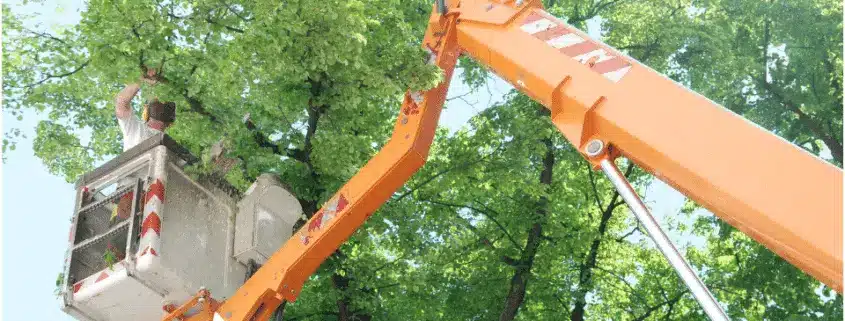
TL;DR: Around Florida, “trimming” means carefully pruning selected branches so the tree stays healthy, safe, and good-looking. The tree stays in place.
“Cutting” almost always means full tree removal when that tree is unsafe, dying, or blocking something important — watch for the signs tree needs removal rather than guessing. Any time an ISA Certified Arborist says the tree can still be made safe, you start with trimming, not removal.
Key Takeaways
- Tree trimming = selective branch removal for health, safety, and aesthetics. The tree stays and keeps doing its job.
- Tree cutting/removal = taking the entire tree down, stump and all in many cases. Usually a last resort or done for new construction.
- in Florida, trimming every 2–3 years is normal maintenance for shade trees. Full removals are usually one-time events in that tree’s life.
- Trimming in Florida generally runs $200–$1,200 per tree. Removals can range from about $500 to $5,000+ depending on size, access, and risk.
- ANSI A300 and ISA pruning guidelines support a preservation-first approach whenever a tree can be made reasonably safe.
- Hillsborough County often requires permits for tree removal and sometimes for heavier structural pruning that alters the tree’s form.
- An ISA trim vs remove assessment weighs health, structure, risk, and long-term cost before anyone recommends taking a tree out.
- Staying on a regular trimming schedule is usually cheaper over time than paying for an emergency removal after storm damage.
What Is Trimming vs Cutting a Tree?
What is tree trimming? Tree trimming is selective branch removal (proper pruning) to keep a tree’s health, structure, safety, and appearance in line. The whole point is to keep the tree, not lose it. That covers crown maintenance pruning, deadwood removal, structural work, and clearance pruning done according to ANSI A300 standards and ISA pruning guidelines.
What is tree cutting? In everyday Florida conversation with tree crews, “cutting” almost always means full tree removal. The trunk and canopy are dismantled or felled, and the stump is often ground out afterward. This is the route for trees that are hazardous, diseased beyond recovery, or stuck in the wrong spot for driveways, pools, or additions.
Trimming vs Cutting: Quick Comparison Table
The real divide between trimming and cutting trees is simple. With trimming, the tree stays. With cutting, the tree goes. Trimming focuses on precise branch cuts that improve health, safety, and looks. Cutting, or full removal, takes down the entire tree when it’s unsafe, unwanted, or not worth trying to save.
| Factor | Tree Trimming (Pruning) | Tree Cutting (Full Removal) |
|---|---|---|
| Primary purpose | Health, safety, clearance, aesthetics, storm-readiness | Eliminate hazard, remove dead/dying tree, free space for construction |
| What happens to the tree? | Tree stays. Only select branches are removed and the structure is refined. | Entire tree is taken down, often followed by stump grinding and site cleanup. |
| Main techniques | Crown maintenance pruning, deadwood removal, structural and clearance pruning, restoration pruning | Rigged dismantling in pieces, felling when there’s room, crane work for large or hazardous trees |
| ANSI / ISA standards | Guided by ANSI A300 pruning types and ISA pruning guidelines for proper cuts and limits | Removal guidelines under ANSI standards and ISA BMPs for safe dismantling and rigging |
| Typical cost in Florida (2026) | ~$200–$1,200 per tree, depending on size, access, density, and pruning type | ~$500–$5,000+ per tree, especially for large, close-quarters, or risky removals |
| Frequency | Part of a Florida tree maintenance schedule every 2–3 years | One-time per tree, unless you replant and repeat in the future |
| Permit needs (Hillsborough County) | Often no permit for routine pruning. Permits may be needed if pruning significantly alters structure or canopy coverage. | Permit required in most cases for trees over certain sizes or protected species. Always verify with Hillsborough County rules. |
| Outcome for your property | Healthier, safer, better-looking tree. More filtered light and proper clearance around structures. | Open space for new landscaping or construction. Also a loss of shade, privacy, and canopy cover. |
| Tree preservation | Yes. It follows a preservation-first approach so the tree keeps adding value to your property. | No. Removal is the last resort once preservation options have been considered or exhausted. |
For a deeper dive into specific pruning types like crown thinning, reduction, and restoration, see this guide:
When Your Tree Needs Trimming (5 Indicators)
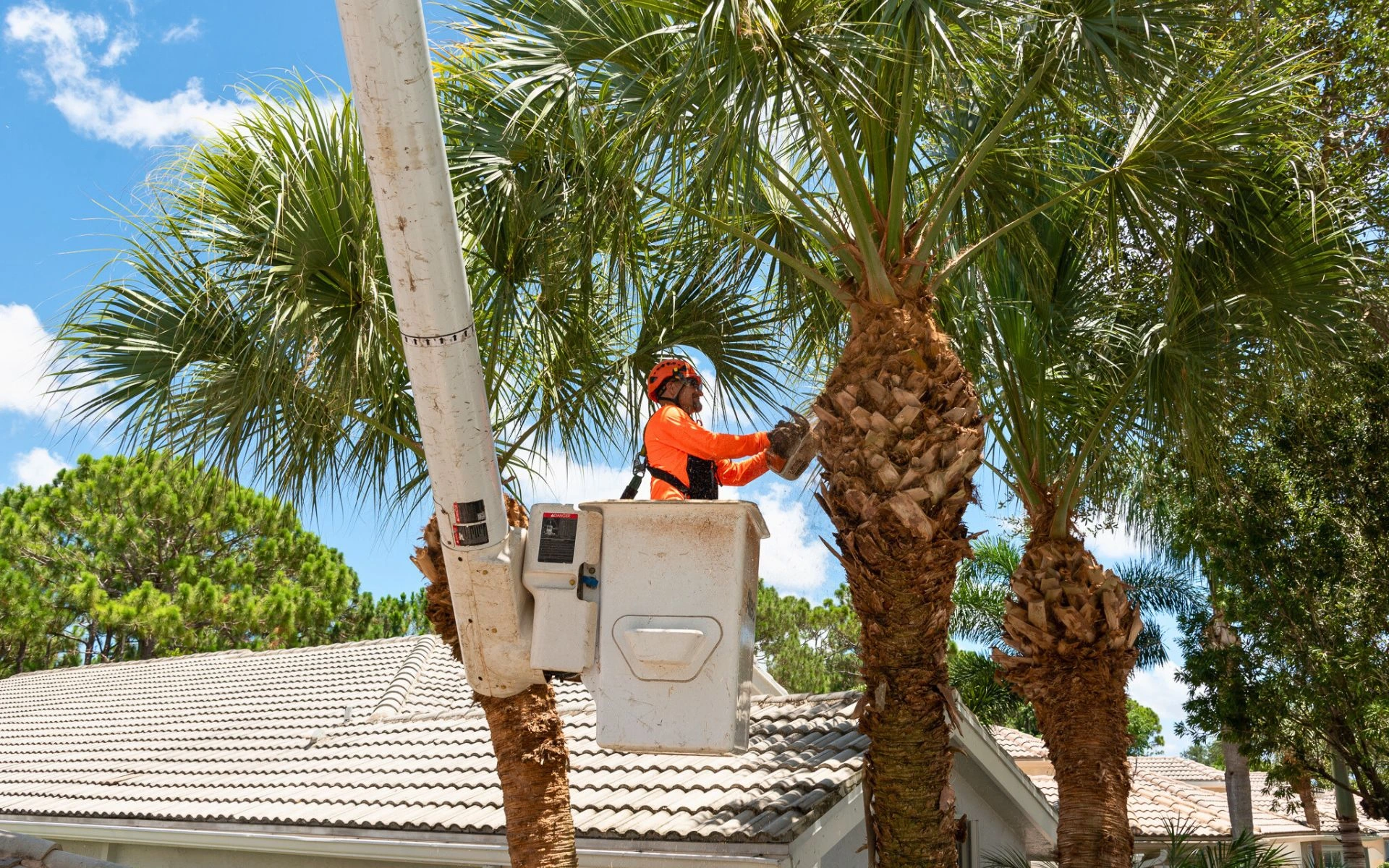
Most Florida trees you see in decent shape have one thing in common: someone trims them on a regular schedule. Your tree likely needs trimming, not cutting, when you see dead branches, limbs hanging over roofs or driveways, a canopy so thick light and wind can’t move through, crossing branches chewing each other up, or you’re gearing up for storm season and want less to worry about.
1. Dead or Dying Branches (Deadwood Removal)
Deadwood removal is about as routine as it gets for tree trimming in Florida. Those dry, lifeless limbs are the ones that come down in a storm or even on a clear day with a gust of wind. They also act like open doors for pests and decay.
- Branches with no leaves during growing season while the rest of the canopy is green and full.
- Bark peeling off easily, or branches that feel extra light, hollow, or brittle when tapped.
- Mushrooms, shelf fungi, or dark fungal growth along a limb or at old wounds.
ANSI A300 and ISA pruning guidelines call for selective removal of dead, dying, or broken branches to cut down on failure risk and slow decay spread. Most of the time, this is a straightforward trimming job. Full removal only gets considered when the deadwood points to a tree that’s already far gone across most of the canopy or trunk. For dying-tree diagnosis.
2. Branches Overhanging Your Roof, Driveway, or Power Lines
If you’ve got limbs brushing your shingles or hanging over your driveway, that tree is ready for clearance pruning, which is one of the specific ANSI A300 pruning types. Ignoring those limbs usually costs you more later.
- Limbs resting on shingles, gutters, or a pool cage can rub through materials and cause leaks or frame damage.
- Branches over driveways or parking spots drop debris and can break onto vehicles or people.
- Low limbs encroaching on sidewalks or streets can violate HOA rules or Hillsborough County tree maintenance requirements for clearance.
Clearance pruning focuses on selective branch removal that pulls the canopy away from structures, walkways, and lines while keeping the tree balanced and healthy. Good arborists won’t just lop everything back to the trunk. They plan cuts so the tree looks like it grew that way.
3. Very Dense Crown Blocking Light or Airflow
A crown that’s packed solid is a problem in Florida’s stormy climate. A dense canopy acts like a sail. Wind hits it and pushes hard instead of flowing through. That’s how big branches snap and trunks uproot.
- Yard or landscape beds always in deep shade under the tree, with turf or plants struggling or bare.
- Storm winds “shove” against the tree but you don’t see much movement inside the canopy.
- Interior branches stay shaded out and slowly die, leaving deadwood buried in the middle.
Crown maintenance pruning and hazard mitigation pruning work here. Proper crown thinning spreads out selective cuts to reduce wind sail and let light through while keeping plenty of interior foliage. What you never want is lion-tailing, where crews strip all the inner branches and leave puffs of leaves at the ends. That might look neat for a minute, but it creates weak levers that snap in strong wind.
4. Crossing or Rubbing Branches (Structural Pruning Need)
Crossing and rubbing branches are like two bones grinding together. Over time they wear through bark, open up wounds, and leave weak spots that decay and break. Structural pruning, another ANSI A300 category, aims to clean this up and build a strong, future-proof branch framework.
- Branches that move in the wind and scrape each other, leaving smooth, bare wood patches.
- Multiple co-dominant leaders with tight V-shaped crotches that trap bark and create weak unions.
- An unbalanced canopy that leans hard to one side, especially toward a house or driveway.
On young and mid-aged trees in Florida, structural pruning is money well spent. You remove or shorten competing limbs early and train one main leader. That usually prevents the kind of big structural failure that later forces a costly tree removal or causes storm damage to roofs and cars.
5. Storm Preparation and Post-Storm Restoration
Hurricane season is when a lot of people suddenly notice their trees. By then, crews are slammed and it’s late in the game. Certified arborists normally handle storm work in two phases: pre-storm hazard mitigation pruning and post-storm restoration pruning.
- Pre-storm: Remove weak, cracked, or poorly attached branches. Reduce end weight on overextended limbs and clean out problem spots before big winds arrive.
- Post-storm: After a hit, restoration pruning slowly reshapes a damaged but savable tree. That usually means several rounds of trimming over a few years to guide healthy regrowth.
Restoration pruning is especially important after bad topping jobs or heavy storm breaks. I’ve seen plenty of trees that looked hopeless, but with patient restoration they came back and avoided being cut down entirely.
Expert Tip: If the tree is generally healthy but just has one or more of the issues above, always get a trimming quote before assuming you need removal. In most cases, a preservation-first approach costs less, keeps your shade, and protects property value.
When Your Tree Needs to Come Down (5 Removal Triggers)
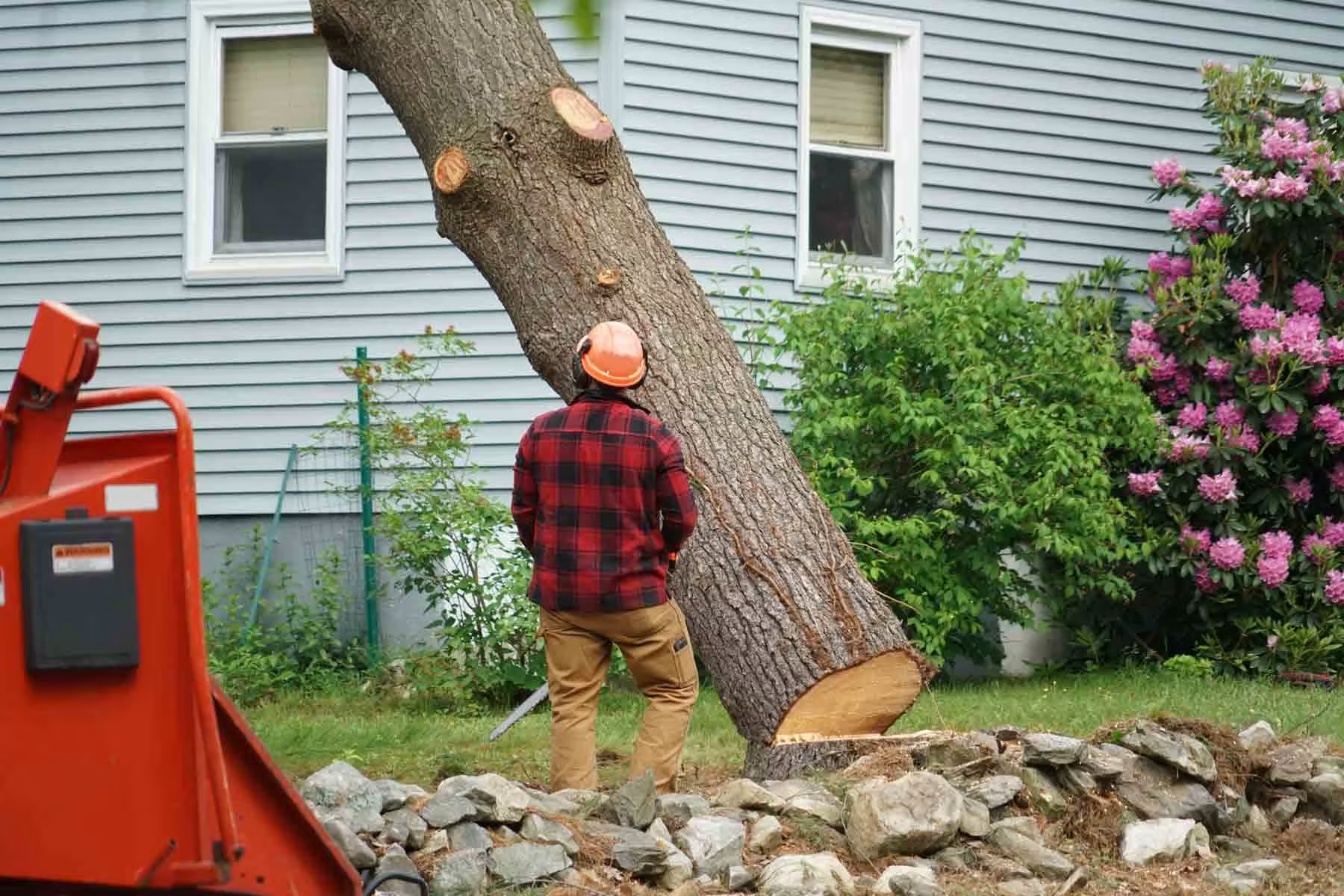
Cutting a tree down isn’t just another yard project. Once it’s gone, it’s gone. Good Florida arborists stick to a preservation-first mindset, but they’ll tell you straight when the tree is too far gone. Structural failure risk, untreatable disease, destructive roots, construction needs, or extreme storm hazard can all push a tree over that line where removal becomes the responsible move.
1. Major Structural Failure Risk
Some defects you just can’t “prune out.” You can lighten ends and install cables, but if the main structure is shot, the risk sticks around. If that tree sits over a house, road, pool, or power lines, hoping for the best isn’t smart.
- Large cracks or splits running through the trunk or major crotches.
- A severe lean that’s recently worsened, especially after heavy rain or saturated soil.
- Extensive decay at the base, hollow spots, or soft, punky wood near the root flare or main unions.
ANSI A300 and ISA risk assessment methods look at two things together: the likelihood of failure and the likelihood of impact to targets. If both are high and no combination of pruning, cabling, or bracing can bring that risk down to an acceptable level, then full removal moves to the top of the list.
2. Disease or Pests Beyond Treatment
Some Florida trees get so hammered by disease or insects that there’s no realistic way back. Sprays and injections might slow things for a bit, but they won’t restore a canopy that’s mostly dead.
- Widespread canopy dieback across most of the crown instead of just a few branches.
- Advanced fungal conks around the base or along the trunk, which usually signal serious internal decay.
- Severe borer or insect damage in multiple large limbs, with frass, exit holes, and peeling bark.
Once a tree crosses a workable preservation threshold (often around 60–70% of the canopy and structure still sound), an ISA arborist will usually shift the conversation to removal. That protects nearby trees, removes the hazard, and lets you replant something that actually has a future.
3. Roots Damaging Foundations, Utilities, or Hardscape
Root problems sneak up on people. By the time driveways buckle or plumbing backs up, frustration is already high. In Florida’s sandy soils, big roots can still lift concrete, push on foundations, and crack pipes.
- Driveways, walkways, or pool decks heaving or cracking from root pressure.
- Roots intruding into septic systems, drain fields, or old clay/Orangeburg lines.
- Root systems sitting right up against foundations or underground utilities with visible damage.
There are times you can do limited surface root pruning or install root barriers. But cutting major roots too close to the trunk destabilizes the tree and goes against ISA guidelines. If root issues are serious and right against structures, full tree removal with stump grinding usually ends up as the cleanest, safest long-term answer.
4. Construction, Renovation, or Hardscape Changes
New pool, house addition, driveway reroute, or solar install on a tight lot can corner you into a decision. Some trees just sit in the exact worst place for what you want to build.
- The tree stands directly in the footprint of a new structure or pool.
- Critical root zones would be destroyed by excavation, trenching, or grading.
- Building or fire-code clearances can’t be met with trimming alone, even with aggressive pruning.
In those cases, a good arborist will still look at whether shifting the design, using root protection zones, or moving hardscape can save the tree. When it can’t, planned removal is done in an organized way. That means permits, utility locating, and scheduling instead of last-minute, rushed cutting when a contractor is already on site.
5. Extreme Storm Hazard Proximity
In hurricane-prone Florida, some trees stand in dangerous spots. Large, weakened trees directly over bedrooms or main living areas make a lot of homeowners nervous, and for good reason.
- Big, declining trees leaning hard over houses, kids’ play areas, or main parking spots.
- Trees with poor structure and decay close to power lines, busy roads, or public sidewalks.
- Trees that keep losing major limbs in storms even after hazard mitigation pruning.
Here, an trim vs remove assessment looks at whether aggressive structural pruning and ongoing maintenance can reduce the risk enough to live with. If the answer is no, arborists may recommend removal so the property meets Hillsborough County tree maintenance standards and you’re not exposed to neglect liability if a known hazard fails.
For more on red flags.
Cost Comparison: Trimming vs Removal in Florida 2026
Across Florida, tree trimming typically runs $200–$1,200 per tree, depending on size, access, and how technical the work is. You repeat this every few years as part of normal maintenance. Tree removal is a single, bigger hit, usually $500–$5,000+ per tree, plus stump work if you want the root plate gone. Over a decade or so, regular trimming is often cheaper than a couple of emergency removals and the damage those emergencies cause.
Tree Trimming Service: Purpose, Frequency, and Cost
Tree trimming services are built around health, safety, and aesthetics. The crew’s goal is to make that tree safer and better-looking without shortening its life.
- Purpose: Improve tree health, knock down risk, keep limbs off structures, and clean up appearance.
- Frequency (Florida): About every 2–3 years for established shade trees. Faster-growing ornamentals or high-risk locations can need attention more often.
- Typical cost range in Florida (2026): Around $200–$1,200 per tree, driven by height, spread, access, debris volume, and ANSI A300 pruning type.
- Permit required? Usually no for routine crown maintenance and deadwood work. Heavy structural pruning, work in protected zones, or drastic canopy reductions can trigger permit requirements, so always check Hillsborough County rules or have your tree service do it.
- Tree preservation: Yes. Trimming is how you support a preservation-first approach so the tree keeps doing its job for decades.
Many HOAs and commercial properties in Florida have a written Florida tree maintenance schedule that lines up with ANSI standards. They often require professional trimming at set intervals to keep liability down and keep the neighborhood looking consistent.
Tree Removal Service: Purpose, Frequency, and Cost
Tree removal services are a different animal. The focus is hazard elimination, severe disease removal, or clearing for construction. There’s more risk, heavier equipment, and usually more crew involved.
- Purpose: Take out dangerous, dead, dying, or obstructive trees. Open up ground for new builds or major hardscape changes.
- Frequency: A one-time event for each tree. You might replant, but that’s the next generation’s maintenance cycle.
- Typical cost range in Florida (2026): About $500–$5,000+ per tree. Large live oaks or pines over houses, near power lines, or with crane setups usually land at the higher end.
- Permit required? In most cases yes, especially for protected species or larger diameters. Both Hillsborough County and the City of Tampa have ordinances that spell this out.
- Stump included? Often not included by default. Stump grinding is typically a separate line item, so always ask what’s in the quote.
For deeper detail on what drives pricing.
ISA Trim vs Remove Assessment: How Costs Are Compared
An ISA trim vs remove assessment doesn’t just look at the cheapest number on today’s invoice. It weighs lifecycle cost against the value that tree brings you over time.
- Assessment factors: Overall health, decay, structural integrity, risk to people and structures, species value, site constraints, and how the tree fits your long-term plans.
- Preservation threshold: If roughly 60–70% of the canopy and structure are still solid and risk can be reduced with proper trimming, preservation usually wins.
- Cost comparison method:
- Trimming scenario: Average trimming cost over the expected remaining life of the tree, plus the benefits from shade and aesthetics.
- Removal scenario: Upfront removal and stump grinding cost, then the impact of losing shade, privacy, and energy savings, and any replanting costs.
- Report format: A written recommendation that explains risk rating, preservation options, and the reasoning behind a trim vs remove call so you’re not guessing.
- Assessment cost in Florida: Typically $150–$350. Many companies credit that fee back if you move forward with the recommended work.
Cost Comparison Lifecycle: Maintenance vs Emergency Removal
To put numbers into something more concrete, here’s how a cost comparison might look for a medium-large Florida oak over about 10 years.
| Cost Element | Trimming Scenario | Removal Scenario |
|---|---|---|
| Annual trimming cost (average) | ~$300/year, averaged over a 2–3 year trim cycle with routine crown maintenance. | $0 if you skip maintenance entirely. |
| Lifetime trimming cost (10 years) | ~$3,000 invested into safety, structure, and appearance. | $0, right up until something goes wrong. |
| Planned removal cost (non-emergency) | Might not be needed at all if the tree stays healthy and conditions stay reasonable. | ~$1,500–$3,000 if you schedule the removal on your terms. |
| Emergency removal cost (storm failure) | Less likely if the tree is kept trimmed and structurally sound. | ~$2,500–$5,000+ with overtime, possible crane work, and damage control. |
| Net savings from maintenance | Can save ~20–40% over repeated emergencies, plus lower property damage risk and fewer insurance headaches. | Short-term savings often disappear with one serious storm failure or structural break. |
Hidden cost insight: Skipping routine trimming to “save money” often ends with a big, ugly bill. Emergency removal, property repairs, higher insurance deductibles, and even legal exposure from neglect can run several times what steady maintenance would’ve cost.
How Florida Arborists Decide: Trim or Remove?
Certified Florida arborists don’t guess. They lean on ISA pruning guidelines, ANSI A300 pruning types, and a formal risk assessment to decide between trimming vs cutting trees. The aim is a preservation-first approach. Removal is only recommended once trimming and other mitigation options can’t make the tree safe enough or worth the ongoing cost.
1. Health Evaluation
First step is always a health check. If the tree isn’t basically healthy, the rest of the conversation changes fast.
- Leaf density, size, and color across the canopy during the growing season.
- Presence of pests, fungal disease, dieback, or abnormal growth patterns.
- Condition of bark, trunk, and root flare, including any wounds, conks, or girdling roots.
If most of the canopy is vigorous and the root flare looks sound, ISA pruning guidelines lean toward selective trimming. That usually means crown maintenance pruning, deadwood removal, and structural pruning instead of drastic cutting.
2. Structural Integrity Assessment
Next, arborists look at how the tree is built. A healthy tree with a weak structure can still be a ticking time bomb in a Florida storm.
- Cracks, cavities, seams, or large areas of internal decay.
- Weak branch unions, co-dominant stems, and leans, especially toward “targets.”
- Evidence of bad past work like topping, flush cuts, or lion-tailing that weakened structure.
If the defects are mild to moderate, structural pruning, and sometimes cabling or bracing, can make that tree much safer. Once the main trunk or primary roots are too compromised, though, trimming won’t remove the hazard. At that point, removal gets put on the table.
3. Risk to Targets (People, Structures, Utilities)
A perfect tree in the middle of an open field isn’t much of a liability. The same tree over a bedroom or power line is a different story. So arborists always evaluate surroundings.
- What will a failing limb or trunk hit? A roof, road, neighbor’s house, pool, or utility line?
- How often are people, pets, or vehicles in that “target zone” beneath the tree?
- Does the tree meet local clearance rules for roads, driveways, signs, and sightlines?
Hillsborough County tree maintenance requirements and general neglect liability standards expect owners to deal with obvious hazards. That usually means hazard mitigation pruning first. If risks can’t be brought down enough, removal becomes the recommended fix.
4. Treatment Viability and Long-Term Outlook
Now the arborist asks the big question: Can this tree actually improve with trimming and care, or are we just delaying the inevitable?
- Is the disease something that responds to injections, root-zone improvement, or other tree care methods?
- Will structural pruning today create a stronger tree five years from now, or just clean it up temporarily?
- Is the species known to do well long-term in Florida’s heat, storms, and soil, or does it age poorly here?
If the outlook is poor even with good care, and repeated pruning won’t meaningfully improve safety or appearance, an honest arborist will lean toward removal instead of selling you maintenance that doesn’t pay off.
5. Cost and Value: Trim vs Remove Decision Criteria
Last piece is cost versus what the tree is actually doing for you. Shade isn’t just nice to have. In Florida it can mean lower cooling bills and better outdoor comfort.
- Trim scenario: What’s the cost to prune now and then maintain the tree every 2–3 years going forward?
- Remove scenario: What’s the full tree removal cost, including stump grinding, cleanup, and any replanting you want?
- Value consideration: How much shade, privacy, curb appeal, wildlife habitat, and energy savings does this particular tree provide?
An ISA trim vs remove assessment in Florida typically recommends trimming when the tree is structurally sound enough and the lifecycle value from keeping it outweighs the combined cost of maintenance and future risk. When the numbers and safety picture don’t work, they’ll be upfront about recommending removal.
Contact Florida tree service company for a free assessment and estimate.
Panorama Tree Care’s Preservation-First Approach
On a typical Panorama Tree Care service menu, you’ll see trimming options listed way before full tree removal. That includes routine maintenance, hazard mitigation pruning, structural pruning, and restoration pruning based on ANSI A300 standards.
Their preservation-first approach usually follows a clear path:
- Start with a written ISA assessment recommendation that spells out health, structure, and risk.
- Offer trimming or restoration options that match ANSI A300 pruning types instead of jumping straight to chainsaws and removals.
- If removal criteria are clearly met, explain in plain language why trimming alone won’t lower risk enough.
- Talk through replanting options that restore canopy and help you stay aligned with local replacement standards and neighborhood look.
Pro Tip (most people don’t ask this): When getting quotes, ask your Florida arborist for both a trimming proposal and a removal proposal, with a basic lifecycle cost comparison. That single question usually shows whether they really care about preservation or mainly about selling removals.
Common Mistakes People Make About Trimming vs Cutting Trees
Mistake 1: Assuming Cutting Is Always Cheaper Long-Term
A lot of homeowners look at one trimming quote and say, “Forget it, just take it down.” On paper that can look cheaper for this year. But once you factor stump grinding, replacement planting, lost shade, higher cooling costs, and property value hits, removal often costs more over the life of the property.
Fix: Ask for a straightforward cost per service comparison and a simple 5–10 year cost picture from your arborist before you decide to cut a tree that could be kept safely.
Mistake 2: Confusing Any Cutting with Professional Trimming
I see this all the time. Someone hires a cheap crew with chainsaws, they “trim” the tree, and what you’re left with is topping, lion-tailing, or butchered flush cuts. Those cuts violate ISA pruning guidelines, invite decay, and make the tree more dangerous in storms. Sometimes that bad work is what forces removal later.
Fix: Use companies that actually follow ANSI A300 pruning types and ISA pruning guidelines, especially for large, old, or valuable trees. Ask them to explain what type of pruning they’ll do and how much canopy they plan to remove.
Mistake 3: Waiting Until After Storm Season
Plenty of people wait until a tropical system is on the radar and then try to book pruning. By then, crews are slammed with emergency calls, prices can climb for rush work, and you might end up on a waiting list while your risky tree rides out the storm.
Fix: Stick to a Florida tree maintenance schedule that targets dry or calmer months for crown maintenance and hazard mitigation pruning. That timing gives crews room to work safely and keeps your costs more predictable.
Mistake 4: Ignoring Local Permits and HOA Rules
Cutting or heavily pruning a tree without clearing it with the county or your HOA can get expensive fast. Hillsborough County has real fines for unpermitted removals, and HOAs can levy their own penalties or demand you replant.
Fix: Before you remove or heavily cut back a tree, confirm whether a permit is required and check your HOA standards. A quality tree service should be familiar with local ordinances and often helps handle or guide the permit process.
Mistake 5: Over-Trimming Instead of Removing a Truly Hazardous Tree
Sometimes owners are scared of the removal price, so they keep paying for heavy trims every year on a tree that’s already structurally shot. They spend more than one clean removal would have cost and still sleep under something they know is risky.
Fix: If your ISA assessment recommendation clearly says the tree is past a safe preservation threshold, accept that. Plan a controlled, non-emergency removal on your schedule instead of throwing money at band-aid pruning and risking a storm failure.
FAQ: Trimming vs Cutting Trees in Florida
Here are straight answers to common questions about tree trimming vs tree removal, permits, insurance, and how to get an honest assessment around Florida.
How often should I trim my trees in Florida?
Most established shade trees around Florida do best with trimming every 2–3 years, using ANSI A300 crown maintenance pruning guidelines. Fast-growing ornamentals, trees in tight spaces, or high-risk trees near structures might need more frequent structural pruning or hazard mitigation pruning as part of your Florida tree maintenance standard.
Do I need a permit to cut down a tree in Hillsborough County?
In many situations, yes. Hillsborough County and nearby cities often require permits for tree removal, especially if the tree is over a certain trunk diameter or on a protected list. Routine trimming usually doesn’t need a permit, but heavy structural changes or full removals should always be cleared with the local authority before work starts.
What’s the main difference between trimming and cutting trees?
Trimming, or pruning, is selective branch removal to keep the tree healthy, safe, and good-looking. Cutting, in everyday use, usually means full tree removal, where the trunk and canopy are taken down completely. Trimming preserves the tree and its benefits. Removal eliminates it and its risks.
Who is responsible if my neighbor’s tree hangs over my property?
Generally, each property owner is responsible for the portion of the tree on their side of the property line. You can usually trim branches back to the line as long as you don’t damage the tree as a whole. For obvious hazard trees, sending written notice and getting an ISA assessment can help protect you from neglect liability. Local laws vary, so talk to an attorney for specific neighbor disputes.
Does insurance treat trimming and removal differently?
Yes. Tree trimming is viewed as preventative maintenance, so it’s rarely covered by homeowners insurance. Tree removal may be partially covered when a storm-damaged tree falls on a covered structure and causes damage. Voluntary removal of a healthy or mildly hazardous tree is almost always out-of-pocket.
How do I know if my tree needs trimming or full removal?
The safest move is to schedule an ISA trim vs remove assessment with a certified Florida arborist. They’ll inspect health, structure, and risk to targets, then give a written recommendation laying out whether crown maintenance, hazard mitigation pruning, restoration pruning, or full removal makes the most sense.
Is it better to remove a tree once than keep paying for trimming?
Not usually. If the tree is healthy and structurally sound, the net savings from maintenance over its lifetime often come out ahead of what you’d lose in shade, comfort, and potential emergency costs. Removal is cost-effective mainly when a tree is truly hazardous, in steep decline, or in the way of planned construction that you can’t work around.
Can bad trimming force me to remove a tree later?
Yes. Poor practices like topping, lion-tailing, or taking out too much interior foliage weaken the tree and set up decay and weak regrowth. That can push a tree past its preservation threshold and leave removal as the only safe option a few years down the line. Using ISA-guided professional trimming from the start helps avoid that trap.
Final Summary: Trimming vs Cutting – Which Does Your Florida Tree Need?
Trimming vs cutting trees in Florida really comes back to one core question: Can this tree be made safe and healthy through selective pruning, or has it reached the point where removal is the only responsible choice?
Trimming, including crown maintenance, structural, clearance, and restoration pruning, follows ANSI A300 and ISA pruning guidelines so you can preserve your trees as long as it’s safe. Removal is reserved for trees that are structurally unsound, diseased beyond treatment, tearing up infrastructure, or sitting where essential construction has to go.
If you’re not sure which category your tree falls into, the smartest move is to schedule a professional ISA assessment. Ask for both a detailed maintenance plan and a removal quote so you can compare cost, risk, and long-term value side by side instead of guessing.
Ready for a clear answer? Contact a certified Florida arborist for an ISA-based trim vs remove assessment and a preservation-first recommendation tailored to your property and your trees.