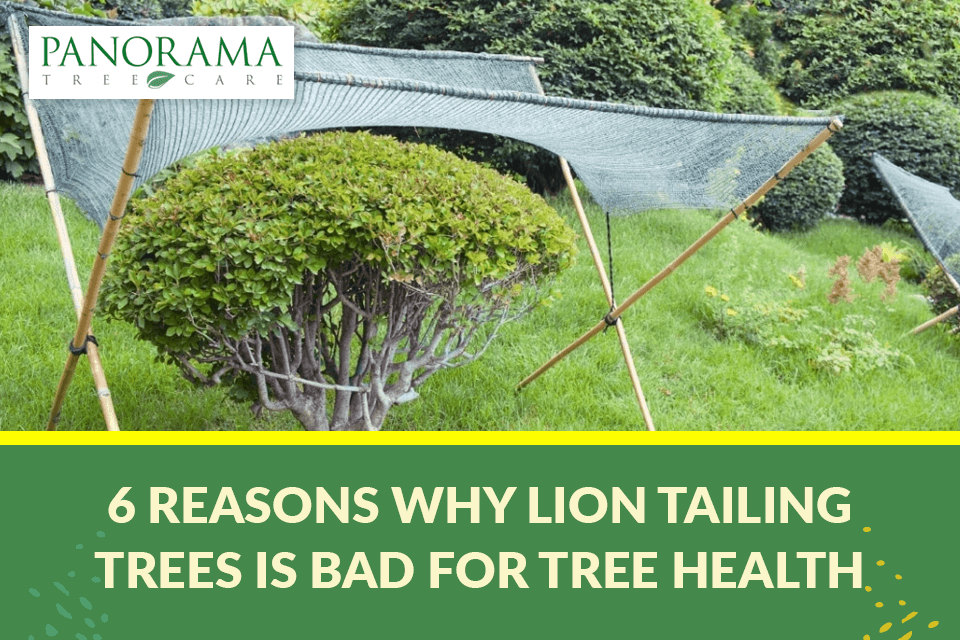
TL;DR: Lion tailing trees – where live branch stripping creates lion tail shapes by leaving only “pom-poms” of foliage at the tips – is not proper pruning types.
It weakens structure, boosts storm failure risk, violates ANSI A300 and ISA guidelines, and is prohibited by many Florida HOAs.
Key Takeaways
- Lion tailing removes most interior branches and leaves, leaving foliage only at branch ends and creating a palm or pom-pom look.
- This causes wind sail effect, higher storm loads, and a measurable increase in branch and trunk failure during Florida storms.
- Stripped interiors lead to sunscald bark damage, photosynthesis capacity reduction, and energy reserve depletion.
- Trees respond with epicormic sprouting (weak, fast new shoots) that are poorly attached and more likely to fail.
- Lion tailing conflicts with the ANSI A300 pruning standard and ISA pruning guidelines that require interior branch retention and balanced thinning.
- Many Florida HOA tree maintenance codes specifically prohibit lion tailing and can issue fines or require corrective work at the owner’s expense.
- With lion tail recovery pruning, some trees can stabilize in 2–5 years, but severely damaged trees may never fully regain strength.
- Hiring an ANSI-compliant, ISA-certified arborist like Panorama Tree Care shows the certified arborist difference in long-term oak lion tailing damage avoidance.
Quick Definition: What Is Lion Tailing a Tree?
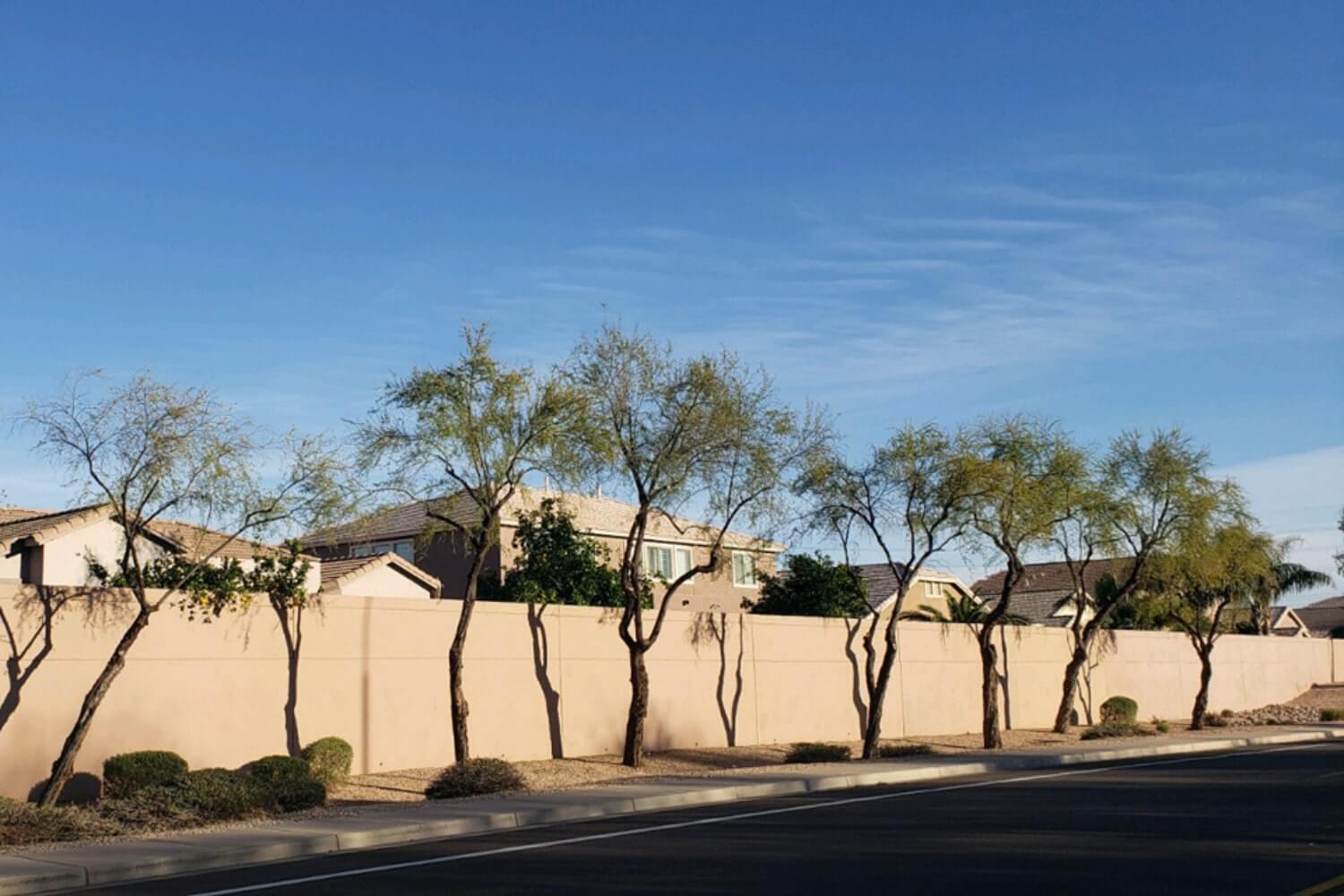
What is lion tailing a tree? Lion tailing is a harmful pruning practice where a worker strips off most of the interior branches and foliage along a limb and leaves a dense clump of leaves only at the tip.
Branches resemble a lion’s tail – long, bare stems with leafy “tufts” at the ends – instead of a naturally full, layered crown.
What Is Lion Tailing? (Definition & Visual Identification)
Lion tailing is the interior branch stripping of a tree’s crown so that almost all foliage remains only at the branch tips, creating a pom-pom or palm-tree appearance.
It is the opposite of proper crown thinning, which keeps interior structure and distributes foliage.
If you’ve ever walked out after a “trim” and thought your oak suddenly looked like a palm, you’ve probably seen lion tailing. To understand why it is so hard on trees, you first need a clear picture of what was cut and what was left behind.
Definition: Lion Tailing vs. Proper Thinning
In lion tailing, a worker typically does three things in a hurry:
- Removes most or all small interior branches and leaves along the limb
- Leaves a dense clump of foliage only at the tip of each branch
- Creates long, bare sections of branch with no side structure
On a ladder or in a bucket, this feels fast and “efficient.” You just walk the limb and knock off everything that is in reach.
The tree ends up looking “cleaned out,” but mechanically you have turned every limb into a long, skinny lever with all the weight at the end.
By contrast, proper pruning types such as ANSI-compliant crown thinning work very differently:
- They remove selected branches throughout the crown, not just on the inside
- They maintain interior branch structure and taper so the limb still has gradual strength from trunk to tip
- They keep a natural, layered look instead of a “poodle” or palm-tree silhouette
In practice, good thinning feels slower because every cut is a decision. You’re always asking “If I remove this, what happens to balance, light, and future growth?” Lion tailing skips those questions and the tree pays for it later.
How to Visually Identify Lion Tailing
You don’t need to be an arborist to recognize lion tailing. A quick look from the ground usually tells the story:
- Pom-pom tips: Branches end in fluffy clumps of leaves with bare wood behind.
- Exposed interior: You can suddenly “see right through” the middle of the crown after trimming.
- Uneven light penetration: Intense light hits the trunk and inner branches that were previously shaded.
- Long naked limbs: Limbs appear overly long and thin, without side branches.
- Flat or lollipop crown outlines: The tree looks like a lollipop or palm instead of a full, rounded canopy.
in Florida, lion tailing is especially common on live oaks, laurel oaks, and ornamental shade trees around driveways and houses.
A crew will “open them up” so the owner can see the roof or let more light hit the lawn. On paper that sounds nice. In real storms, those same trees are the ones that snap first.
6 Reasons Lion Tailing Destroys Tree Health
Lion tailing concentrates foliage at limb tips, causing wind sail overload, sunscald on suddenly exposed bark, energy reserve depletion, weak epicormic sprouting, branch end-loading stress, and significantly higher storm failure risk for Florida trees under hurricane-force winds.
I have climbed and cut trees across plenty of Florida storm seasons, and lion-tailed trees are always overrepresented in the failure piles. Here are the six main reasons they struggle, especially in Florida’s wind and heat.
1. Wind Sail Effect & Storm Failure
The most dangerous impact of lion tailing in Florida is the wind sail effect. By stripping interior foliage and concentrating mass at the ends of branches, you turn each limb into a long lever with a sail stuck on the end.
Wind sail effect – key attributes:
- Mechanism: Foliage concentration at branch ends acts like a sail, catching more wind further from the trunk.
- Force multiplication: Wind forces can increase 2–3× at the branch tips because of longer lever arms and larger sail area.
- Failure point: The stress focuses at branch unions and weakly tapered points, where cracks and breakage occur.
- Florida hurricane relevance: During tropical storms and hurricanes, this multiplied force greatly increases branch and trunk failure risk.
- Prevention: ANSI A300 crown thinning requires even foliage distribution to avoid this dangerous wind sail physics.
On a properly thinned tree, wind slips through the canopy. The tree bends and recovers. On a lion-tailed tree, those tip-heavy limbs whip hard.
I have seen big live oak limbs snap clean at the trunk during 50–60 mph gusts, while a well-managed tree two houses down rides out the same storm without losing a twig.
2. Sunscald & Bark Damage
Healthy bark is “trained” from the day it forms to handle a certain amount of sun. Interior wood grows in shade. It isn’t built for direct, brutal Florida rays bouncing off concrete and stucco.
When lion tailing rips away the interior canopy, that shaded bark suddenly bakes. This often leads to:
- Sunscald bark damage: Overheated bark can crack, blister, or even kill underlying tissues.
- Wound entry points: Cracks and dead patches become open doors for fungi, borers, and decay organisms.
- Structural weakening: Decay in inner branches or the trunk significantly reduces long-term stability.
On Florida live oaks and maples, you often spot this a year or two after aggressive “clean-outs.” South- and west-facing sides of the trunk develop flaky bark, dark streaks, or dead patches.
By the time you see mushrooms or conks, that decay has usually been working inside the wood for quite a while.
3. Energy Starvation & Photosynthesis Loss
Trees run on leaf power. Every square inch of green is doing a job. Lion tailing throws away a big chunk of that photosynthetic factory in a single afternoon.
This causes:
- Photosynthesis capacity reduction: Significant loss of leaf area can cut a tree’s energy production by 30–50% or more.
- Energy reserve depletion: The tree burns stored carbohydrates in roots and wood to survive, leaving fewer reserves for defense and growth.
- Growth slowdown and thinning crown: Over time, the tree may show reduced growth, smaller leaves, and dieback.
The ANSI A300 pruning standard and ISA pruning guidelines didn’t land on that “no more than about 25% live foliage removal” number by accident.
You start taking 40, 50, even 60% of live growth in one hit, and the tree moves from “pruned” to “stressed.” Owners often notice more dead tips, less new growth, and a canopy that just never looks as dense again.
4. Weak Epicormic Regrowth & Stress Response
A lion-tailed tree doesn’t just give up. It tries to replace what it lost. That reaction shows up as fast, shaggy growth on trunks and older limbs, which many people mistake for “healthy new branches.” That’s not what’s going on.
Epicormic sprouting – key attributes:
- Cause: Triggered by stress (over-pruning, lion tailing, sunscald, or damage) and the tree’s attempt to rapidly replace lost leaf area.
- Attachment strength: Typically only 30–60% as strong as normal branches because they arise from shallow tissues.
- Growth rate: Very fast, often several feet per season in Florida’s warm climate.
- Indication of tree stress: A strong signal that the tree is under physiological stress and attempting emergency recovery.
- Management approach: Selective removal or thinning, training a few best-placed sprouts into better-attached branches.
Under a lion-tailed canopy, those epicormic shoots turn into a tangled mess. They put leaf area back on the tree, but they do it with poor attachment and bad structure.
I often describe them to clients as “Velcro branches.” They hang on fine in calm weather, then start snapping off when the first serious storm rolls through.
5. Branch End-Loading & Taper Loss
Good limbs have taper. They start thick near the trunk and step down in size with properly placed side branches. Those side branches share the load and help a limb flex without failing.
Lion tailing wrecks that system, because it:
- Branch end-loading: Puts most of the weight and wind force at the extreme tips of long limbs.
- Taper loss: Leaves long, uniform-diameter sections that act more like a rigid pole than a flexible, tapered branch.
- Crown weight redistribution failure: Shifts mass from the inner canopy to a few outer clusters where wood is already weaker.
Over a few years, those lion-tailed limbs often sag. You’ll see exaggerated bows, cracks along the top of the limb, or splits where the limb meets the trunk.
in Florida’s gusty thunderstorms, that end-loading is what turns “just looks a little bent” into “half the crown is now on your truck.”
6. Increased Storm Failure Risk in Florida
Put all the above problems together on one tree, then throw a late-season tropical storm at it. That’s exactly the setup we see in older Florida neighborhoods that had “heavy hurricane pruning” from cheap crews five or six years in a row.
Typical impacts of topping and lion tailing damage include:
- Wind load increase: Up to an estimated 30–50% higher effective loading on key limbs due to sail effect and leverage.
- Storm failure increase: A lion-tailed tree can easily see a 50–100% higher chance of branch or partial crown failure in severe weather compared with a properly thinned tree of similar size and species.
- Debris hazards: Longer, heavier branches travel farther if they break, threatening roofs, vehicles, fences, and neighbors’ property.
This is why many Florida HOA tree maintenance codes and insurance-minded communities treat lion tailing as pruning mistake and a risk management issue.
They’ve seen the cleanup bills after a storm. Lion-tailed trees produce more big debris and more expensive claims.
Lion Tailing Damage – At-a-Glance Impact Table
The table below sums up the kind of impacts we commonly see on lion-tailed trees around Florida. These are ballpark figures so homeowners can understand the scale of the problem, not exact engineering numbers.
| Aspect of Lion Tailing Damage | Typical Impact (Estimate) |
|---|---|
| Wind load increase on key limbs | 30–50% higher effective load |
| Sunscald risk on exposed bark | High for previously shaded interior bark |
| Energy loss from leaf area reduction | 30–60% less photosynthetic capacity |
| Epicormic sprout appearance | Within 4–12 weeks after heavy lion tailing |
| Storm failure likelihood | 50–100% higher branch/crown failure risk vs. properly pruned tree |
Why Lion Tailing Is Common in Florida (And How to Spot It)

Lion tailing is common in Florida because some low-cost, non-certified crews can do it quickly and it looks “dramatically trimmed” to customers. Homeowners can spot lion tailing by long, bare limbs, pom-pom tips, see-through crowns, and rapid epicormic sprouting afterward.
You might wonder, “If it is that bad, why do I see it everywhere?” The answer is simple: speed, sales, and lack of training.
Why Uncertified Crews Default to Lion Tailing
Even though lion tailing violates industry standards, it remains widespread in Florida for a few predictable reasons:
- Speed over science: Stripping interior branches is fast. Crews can move quickly from tree to tree without thoughtful branch selection.
- “More removed = better value” illusion: To some homeowners, a heavily stripped tree looks like they “got their money’s worth.”
- Lack of training: Workers who don’t follow ANSI A300 pruning standards or ISA pruning guidelines often have never been taught why lion tailing is harmful.
- Short-term aesthetics: For a few months, a lion-tailed tree can look very “neatly trimmed,” before structural and health problems show up.
I see this pattern over and over. A low bid wins the job. The crew shows up with a pole saw and no arborist on site. They clear out the interior, stack a big pile of debris by the curb, and the homeowner thinks the job was done “thoroughly.” The trouble is, storms don’t care how neat the curb pile looked.
How Florida Homeowners Can Spot Lion Tailing Before & After
You can catch lion tailing before it happens by listening carefully to how the work is described. You can also spot it right after the crew leaves, long before storm season.
Before work begins, warning signs in the quote or conversation:
- The company talks about “cleaning out all the middle” or “stripping interior branches.”
- No mention of ANSI A300 or ISA standards when asked about pruning practices.
- They promise to “thin it way out so you can see the house clearly” on a large shade tree.
If you hear those phrases, stop and ask for specifics. A reputable company will talk about structural pruning, load reduction, and crown thinning by ANSI A300, not “gutting” the canopy.
Immediately after the work, visual signs of lion tailing:
- You can clearly see long, naked stretches of branch with foliage only near the tips.
- The tree’s crown looks like a series of poodle balls, pom-poms, or palm fronds.
- The interior is overly bright and the trunk and big limbs suddenly receive direct sun.
- Within 1–3 months, you see clusters of small shoots (epicormic sprouts) along the trunk and main branches.
If any of that sounds like your tree, don’t wait a few years to “see how it does.” Early lion tail recovery pruning by someone who knows ANSI standards gives you the best odds before Florida’s next major storm cycle.
Florida HOA Rules Against Lion Tailing
Many Florida HOAs now reference the ANSI A300 pruning standard in their tree maintenance rules and explicitly prohibit lion tailing. Violations can trigger fines, mandated corrective pruning, or tree replacement. Homeowners can report non-compliant contractors through HOA management.
HOAs didn’t start out caring about pruning methods. They learned the hard way after paying for storm cleanup and watching property values take a hit from butchered trees and unnecessary removals.
How HOAs Define Acceptable Pruning
Florida HOA tree rules and maintenance codes often incorporate or reference:
- ANSI A300 pruning standard: The nationally recognized benchmark for tree pruning methods and limits.
- ISA pruning guidelines: Best-practice recommendations from the International Society of Arboriculture.
These standards emphasize:
- Retaining interior branches and natural crown structure
- Limiting live foliage removal to around 25% per pruning cycle
- Evenly distributed thinning throughout the crown
- No topping and no aggressive interior stripping
Because lion tailing breaks every one of those principles, it’s often treated just like topping in HOA documents.
In communities with big live oaks arching over streets and sidewalks, those rules protect both the canopy and the HOA’s insurance rates.
Typical HOA Restrictions on Lion Tailing
Language varies, but once you read a few Florida HOA tree codes you start to see familiar patterns. Many include provisions such as:
- Prohibiting “excessive interior branch removal leaving foliage only at branch extremities.”
- Requiring that all pruning conform to ANSI A300 and be performed or supervised by an ISA Certified Arborist.
- Specifically banning pruning that compromises structural integrity or increases storm risk.
Some HOAs have been burned badly enough by past storms that they now list lion tailing by name as an unacceptable practice. They put it right next to topping so there’s no gray area for residents or vendors.
Enforcement, Fines & Liability
If a tree on your HOA-governed property is lion-tailed, the community is not powerless. Typical responses include:
- Issuing a violation notice and requiring corrective pruning or tree replacement.
- Levying fines if the violation isn’t corrected within a set timeframe.
- In some cases, hiring an ANSI-compliant contractor themselves and billing the owner.
If a lion-tailed tree later fails and damages common areas or neighboring homes, the HOA or its insurer will often review:
- Who hired the tree service?
- Did the owner ignore written HOA or arborist warnings?
- Did the pruning clearly violate ANSI A300 or published HOA rules?
This is where good paperwork helps you. Documenting your contractor’s credentials, keeping estimates that reference ANSI A300 and ISA pruning guidelines, and noting the date and scope of work gives you a record that you acted responsibly.
How to Report Lion Tailing by Uncertified Services
If you see fresh lion tailing in your neighborhood, you’re not being a bad neighbor by saying something. You might be saving someone from a bigger mess later.
- Take clear photos of the tree before and after if possible.
- Note the date, contractor name, and address.
- Send details to your HOA property manager or board with a brief description of your concerns.
- Ask that future work require an ISA Certified Arborist and compliance with ANSI A300.
Most board members aren’t tree experts. They rely heavily on residents and their own contracted arborists to flag problems like lion tailing before the pattern spreads through the whole subdivision.
What Proper Crown Thinning Looks Like (ANSI A300 Standard)
Proper crown thinning under ANSI A300 selectively removes small branches throughout the crown, keeps interior foliage and branch structure, and never removes more than about 25% of live growth in one session. The result is a natural, balanced canopy, not a stripped interior.
If lion tailing is the “wrong way,” you need a clear picture of the right way so you can tell the difference from the ground. Proper crown thinning looks almost boring to the untrained eye, and that’s a good thing.
ANSI A300 Crown Thinning – Key Attributes
The ANSI A300 pruning standard defines crown thinning as a method to improve light and air penetration while preserving structure. Important attributes include:
| ANSI A300 Crown Thinning Attribute | Standard Practice |
|---|---|
| Maximum live foliage removal per session | Typically ≤ 25% of live crown |
| Interior branch retention | Required; interior branches & structure must be preserved |
| Distribution pattern | Thinning is evenly distributed throughout the crown, not just on the inside or tips |
| Heading cut on mature wood | Generally prohibited (except in special cases); use proper reduction cuts instead |
| Recommended pruning cycle | Every 2–5 years depending on species, age, and site conditions |
On a real job, that means a climber is moving throughout the canopy, not just along one side or along the bottom. Cuts are small, made back to branch collars, and aimed at reducing competing branches, crossing limbs, and minor weight imbalances. You shouldn’t see big stub cuts or whole sections of the interior gutted.
Before & After: Proper Thinning vs. Lion Tailing
Proper ANSI A300 thinning – after appearance:
- Crown still looks full and natural.
- Light filters through evenly; you can see some sky but not “empty holes.”
- Interior branches remain, with small, well-spaced cuts near the branch collar.
- No long, bare limbs; taper and structure are easy to see.
Lion tailing – after appearance:
- Tree looks “see-through” inside with clumps of leaves only at the ends.
- Trunk and main limbs are suddenly fully exposed to sun.
- Cut stubs and scars are visible along the interior where healthy branch structure used to be.
- Crown shape may look unnaturally flat, poodle-like, or palm-like.
If your “thinned” tree looks more like the lion-tailed description, you have a problem. Any reputable arborist in Florida should be comfortable explaining how their work fits ANSI A300 and why they’re keeping interior structure, not stripping it.
Can a Lion-Tailed Tree Recover?
Many lion-tailed trees can partially recover with lion tail recovery pruning, but it takes 2–5 years to rebuild structure. An ISA Certified Arborist will manage epicormic shoots, rebalance weight, and limit further stress. Severely lion-tailed or older trees may never fully regain strength.
I’m honest with clients on this part. You can help a lion-tailed tree, but you don’t turn the clock all the way back. Think of it more like physical therapy on an injured knee than swapping in a brand-new joint.
Recovery Timeline & Factors
Recovery from lion tailing is a multi-year process. Florida’s long growing season helps, but the tree still needs time to rebuild structure correctly.
- First 6–12 months: Tree produces heavy epicormic sprouting; little structural improvement yet.
- Years 1–3: With proper guidance, selected sprouts begin to form new secondary branches and partial taper.
- Years 3–5: Crown regains more normal shape and density; risk gradually decreases if pruning is done correctly.
How well and how fast a tree recovers depends on several real-world factors:
- Tree species, since oaks and some natives usually bounce back better than delicate ornamentals
- Tree age, because younger trees push new structure faster
- How much foliage was removed during the lion tailing
- Any pre-existing decay, cracks, or root damage
- Soil quality, irrigation, and overall site care during recovery
A 10-year-old live oak that was mildly lion-tailed is a very different case from a 60-year-old laurel oak that was gutted every other year for a decade.
The first is usually worth a strong recovery effort. The second might never get out of the high-risk category.
What Is Lion Tail Recovery Pruning?
Lion tail recovery pruning is a structured, multi-visit approach used by arborists to help a lion-tailed tree regain strength and safe form. You’re not “fixing it in one visit.” You’re guiding the tree’s response over time.
| Lion Tail Recovery Pruning Attribute | Typical Value / Approach (Florida) |
|---|---|
| Recovery timeline | 2–5 years, depending on damage and species |
| Corrective approach | Gradually redistribute weight, select and train new branches, remove hazardous weak growth |
| Pruning sessions needed | Often 2–4 sessions spaced 12–24 months apart |
| Success rate – mild/moderate damage | Roughly 70–90% will reach acceptable structure |
| Success rate – severe/old trees | May drop to 30–50%; some trees remain high-risk |
| Approximate Florida cost | Often $450–$1,500+ per tree over several years, depending on size and access |
Homeowners are often surprised that corrective work costs more than proper pruning up front. That’s the same story we see in a lot of trades. Fixing damage takes more skill, time, and care than doing it right the first time.
How Arborists Help a Lion-Tailed Tree Recover
An ISA Certified Arborist will typically do more than just “trim it again.” A good recovery plan looks something like this:
- Assess structural risk: Identify over-extended limbs, cracks, decay, and high-risk defects.
- Manage epicormic sprouts: Thin out weak clusters and select a few well-placed sprouts to develop into permanent, better-attached branches.
- Redistribute crown weight: Use careful reduction cuts to shorten overly long limbs and rebalance the canopy.
- Protect energy reserves: Avoid further over-thinning so the tree can rebuild photosynthetic capacity and stored carbohydrates.
- Recommend support systems: In some cases, cabling or bracing may be suggested for severely compromised limbs.
Beyond the saw work, a good arborist will also talk about mulching, watering, and avoiding root damage. The less outside stress your tree faces while it’s rebuilding, the better the odds it stabilizes safely.
When Damage Is Too Severe to Fix
Sometimes the most honest answer is “We’re throwing good money after bad.” In certain situations, removal really is the safer and more cost-effective path.
- The tree has extensive decay in key limbs or the trunk.
- Large branches already failed after lion tailing, leaving major structural defects.
- The tree is very old and slow-growing, with limited capacity to rebuild.
- The tree stands over high-value targets (home, driveway, pool) and remains high-risk despite corrective pruning.
In those cases, your arborist should help you pick replacement species and better planting spots that work with Florida’s wind and soil, then set pruning expectations so lion tailing never becomes part of that new tree’s story.
Contact Panorama Tree Care team for a free assessment and estimate.
Step-by-Step: What to Do If Your Tree Was Lion-Tailed
If you discover that a tree on your property has been lion-tailed, acting quickly and in the right order makes a big difference. Here’s a practical, field-tested sequence to follow.
1. Document the Condition
- Take clear, dated photos from multiple angles.
- Capture close-ups of bare limbs and clumps of foliage at tips.
- Save any invoices/quotes that describe the work performed.
These records help in three ways. Your arborist can see what changed, your HOA can verify a violation, and your insurance company can see that you reacted responsibly once you understood the problem.
2. Contact an ISA Certified Arborist
- Ask specifically if they follow ANSI A300 pruning standards and ISA pruning guidelines.
- Request a written assessment and recovery plan, including risk rating and timeline.
Don’t be shy about asking who on staff holds the ISA Certified Arborist credential and whether they’ll be directly involved. A short site visit from the right person is worth far more than another cheap pruning job that repeats the same mistake.
3. Notify Your HOA (If Applicable)
- Share photos and the arborist’s initial findings with your HOA manager or board.
- Confirm any Florida HOA tree maintenance code requirements and deadlines for corrective work.
Most HOAs appreciate being looped in early. It shows you’re not trying to hide the issue and that you’re already working with an ANSI-compliant professional to fix it.
4. Begin Corrective Pruning
- Schedule initial recovery pruning before the main storm season if possible.
- Follow the arborist’s multi-year plan, avoiding any additional heavy thinning by unqualified crews.
Resist the urge to “get it all done at once.” Over-correcting in a single visit can strip too much new leaf area and set the tree back again. Good recovery work is careful and staged.
5. Improve Overall Tree Care
- Add a 2–3 inch mulch layer (not against the trunk).
- Provide deep, occasional irrigation during drought.
- Avoid trunk injury from mowers, string trimmers, or vehicles.
Healthy roots support healthy tops. A small amount of regular care under the dripline will often do more for recovery than any fancy fertilizer product advertised online.
6. Change Your Contractor Vetting Process
- Only hire companies that clearly state ANSI/ISA compliance in writing.
- Ask for proof of ISA Certified Arborist credentials and insurance.
- Make it explicit in your contract that lion tailing and topping are prohibited.
After you’ve been burned once, your estimate process should change. A good rule is to treat tree work like electrical or structural work on your house. Low bid is not the main goal. Qualified and compliant is.
Comparison: Lion Tailing vs. Proper ANSI-Compliant Pruning
This side-by-side comparison helps you quickly see how lion tailing stacks up against proper ANSI-compliant crown thinning on the stuff that actually matters: structure, safety, and HOA acceptance.
| Feature | Lion Tailing | ANSI-Compliant Crown Thinning |
|---|---|---|
| Interior branches | Mostly removed, leaving bare limbs | Retained to preserve structure and taper |
| Foliage distribution | Concentrated at branch tips (pom-poms) | Evenly distributed throughout crown |
| Leaf area removed | Often 30–60%+ (over-thinning) | Typically ≤ 25% per session |
| Wind behavior | Wind sail effect, high storm failure risk | Better wind diffusion and flex under loads |
| Tree response | Strong epicormic sprouting, stress | Minimal stress response when properly executed |
| Standard compliance | Conflicts with ANSI A300 and ISA guidelines | Designed to comply with ANSI/ISA best practices |
| HOA acceptance (Florida) | Often a violation of HOA tree codes | Generally accepted or required by HOA rules |
Common Lion Tailing Mistakes Florida Homeowners Make (And How to Fix Them)
Mistake 1: Asking for a Tree to Be “Cleaned Out”
Problem: Many homeowners request that trees be “cleaned out” or “thinned way out,” unintentionally inviting interior stripping.
Fix: Use language like “ANSI A300 crown thinning performed by an ISA Certified Arborist” and explicitly state “no lion tailing, no topping” in your contract.
That one change in wording has saved a lot of trees I’ve worked on. It tells the estimator you care how the work is done, not just how much is on the ground afterward.
Mistake 2: Hiring on Price Alone
Problem: The lowest bid often comes from crews that work quickly by lion tailing or topping.
Fix: Weigh credentials and standards as heavily as price. Ask to see ISA certification and insurance, and request references for previous work on similar trees.
In practice, the difference between a low bid and a solid, ANSI-compliant company is often one or two hundred dollars per visit. Compared to the cost of a crane removal or roof repair after a failure, that extra up-front cost is cheap insurance.
Mistake 3: Confusing Heavy Thinning with Safety
Problem: Some owners believe the more you remove, the safer the tree becomes. Lion tailing feels like “storm proofing” but does the opposite.
Fix: Ask your arborist to explain wind load management and how proper thinning reduces, rather than concentrates, forces. Review the plan before work begins.
If a contractor says “We’re going to take off a lot so it won’t catch wind,” and can’t talk through ANSI A300 or show you past structural pruning work, that’s your sign to keep shopping.
Mistake 4: Ignoring Early Signs of Stress
Problem: Rapid epicormic sprouting, sunscald, or small dead branches after lion tailing are often ignored until major failure occurs.
Fix: At the first sign of abnormal sprouting or bark damage, schedule an arborist evaluation. Early lion tail recovery pruning is much more effective.
I’ve walked plenty of properties where an owner says, “Yeah, I noticed all those little shoots last year but figured it meant the tree liked the pruning.” By then, we’re already behind the curve.
Mistake 5: Treating Lion Tailing as a One-Time Aesthetic Issue
Problem: Homeowners see lion tailing as just a strange look, not a structural or legal problem.
Fix: Recognize lion tailing as a health, safety, and HOA compliance issue. Correct it promptly to reduce storm risk and avoid HOA penalties.
Once you understand that your HOA, your insurer, and every reputable arborist in town all dislike lion tailing for the same reasons, it becomes easier to treat it as more than just a cosmetic quirk.
FAQ: Lion Tailing Trees in Florida
Is lion tailing bad for trees?
Yes. Lion tailing is harmful because it strips interior branches, increases wind sail effect, promotes weak epicormic sprouting, and causes sunscald bark damage. It conflicts with ANSI A300 and ISA pruning guidelines and significantly raises storm failure risk.
How long does it take a lion-tailed tree to recover?
Most lion-tailed trees in Florida need about 2–5 years of careful, ANSI-compliant pruning and good care to rebuild structure and leaf area. Mild cases in younger trees recover faster; older or severely damaged trees may never fully regain their former strength.
Can a lion-tailed tree be saved, or should it be removed?
Many lion-tailed trees can be partially saved with professional lion tail recovery pruning, but success depends on species, age, and severity. If major limbs are decayed, badly cracked, or over targets like homes and driveways, removal may be the safer long-term option.
Am I liable if my lion-tailed tree fails and damages property?
Liability depends on local law and your insurance, but if you hired a non-compliant service or ignored HOA tree rules and professional warnings, you could face more scrutiny. Documenting that you used an ISA Certified Arborist following ANSI standards helps show reasonable care.
Do Florida HOAs really prohibit lion tailing?
Many Florida HOAs now reference ANSI A300 and ISA guidelines in their rules and treat lion tailing as a violation. Some explicitly list HOA lion tailing prohibition alongside topping due to its history of increasing storm damage and cleanup costs.
How much does corrective pruning after lion tailing cost?
Corrective pruning can cost roughly $450–$1,500+ per tree over several years in Florida, depending on size, access, and severity of damage. It typically requires 2–4 pruning sessions spaced 1–2 years apart to safely rebuild structure.
How can I make sure a tree service won’t lion tail my trees?
Ask whether they follow ANSI A300 pruning standards and have an ISA Certified Arborist on staff. Put in writing that you do not authorize lion tailing or topping and request the work be described as ANSI-compliant crown thinning in your estimate.
Is lion tailing the same as topping?
No, but both are damaging pruning practices. Lion tailing strips interiors, leaving foliage only at the tips; topping cuts branches back to stubs or arbitrary points. Both violate ANSI and ISA guidelines and should be avoided in favor of proper pruning methods.
Will epicormic sprouts from a lion-tailed tree become strong branches?
On their own, most epicormic sprouts remain weakly attached and prone to failure. A skilled arborist can select and train a limited number of sprouts over several years to develop better attachment, but they rarely equal natural, undisturbed branches.
Where can I learn more about avoiding other tree cutting mistakes?
For broader guidance on common pruning errors beyond lion tailing, see our resource on tree cutting mistakes that homeowners often make and how to avoid them.
Final Summary: Don’t Let Lion Tailing Put Your Trees – or HOA Standing – at Risk
Lion tailing may look like a “clean” prune, but it is one of the most destructive tree cutting mistakes in Florida’s storm-prone climate. By stripping interior branches, it increases wind sail effect, weakens structure, triggers epicormic sprouting, depletes energy reserves, and often violates both ANSI A300 and Florida HOA tree maintenance codes.
With the right lion tail recovery pruning plan, many trees can gradually regain safer form over 2–5 years. But the best strategy is to avoid lion tailing entirely by hiring ANSI-compliant professionals and clearly prohibiting interior stripping in your work agreements.
If you suspect your trees have been lion-tailed—or want to ensure future pruning is done correctly—consult an ISA Certified Arborist who follows ANSI A300 and understands local HOA requirements. Protect your trees, your property, and your community’s canopy the right way.