Most palms in Florida only need trimming once a year. A handful of heavy fruiters, Queen Palms and coastal Coconut Palms, earn a second visit. That has been my answer for twenty five years of climbing around Tampa Bay, and nothing has changed my mind.
How often is the easy half. What actually matters is what is left on the tree when the crew packs up. I have seen palms on a perfect annual schedule slowly die from bad cuts, and neglected ones in a forgotten corner look better than the manicured palms out front.
Key takeaways
- Once a year is the baseline for most Florida palms
- Only fully brown fronds should come off
- Nothing above the 9-and-3 horizontal line gets cut
- A “hurricane cut” raises storm failure risk instead of lowering it
- Yellow fronds signal nutrition or disease, not a trimming job
How Often Palms Need Trimming in Florida
Most palms in Florida need one trim a year. Fruit drives the exceptions, not looks.
The once-a-year baseline and what shifts it
Palms do not grow the way oaks do. An oak keeps adding wood and pushing branches into new space, so it needs structural pruning. A palm is a monocot with a single growing point at the top. New fronds push out of the crown, old ones die at the bottom, and the count stays roughly steady. There is no structure to manage. Trimming a palm is housekeeping, not surgery.
Four things move the schedule off that annual baseline:
Species. Some palms drop their own dead fronds cleanly. Others hold onto every one and build a thick skirt down the trunk.
Fruit and seed load. This is the biggest driver of a second visit. A Queen Palm can drop a seed mass heavy enough to dent a car hood and stain a paver driveway for months.
What sits underneath. Over open lawn, a dead frond can hang for months with no real cost. The same frond over a pool cage, walkway, driveway, or screened lanai is a scheduled accident.
Nutrient status. This one catches people. A potassium-short palm sheds fronds faster than a healthy one, so it looks like it needs more frequent cuts. It does not. It needs feeding. Cutting it more often makes the deficiency worse.
Palm trimming frequency by species
| Palm | Frequency | What drives it |
|---|---|---|
| Sabal (Cabbage) Palm | Once a year, late spring after fruiting | Frond skirt buildup, seed stalks, volunteer seedlings |
| Queen Palm | One to two times a year | Very heavy seed pods, hardscape staining |
| Washingtonia (Mexican Fan) | One to two times a year | Dead fronds do not shed reliably, real fall hazard |
| Canary Island Date Palm | Once a year, spring | Spined fronds, specialist work, tool sanitation is critical |
| Coconut Palm (coastal) | Two to three times a year | Falling coconuts over cars, roofs, walkways |
| Pindo Palm | Once a year, plus summer fruit removal | Fruit mess on hardscape |
| Areca and clustering palms | As needed | Older fronds yellow naturally on this group |
That last row is worth a pause. Areca palms drop older fronds into a yellow phase as normal aging. Homeowners see the color, assume a deficiency, and start cutting. Leave them alone.
What happens when you skip years
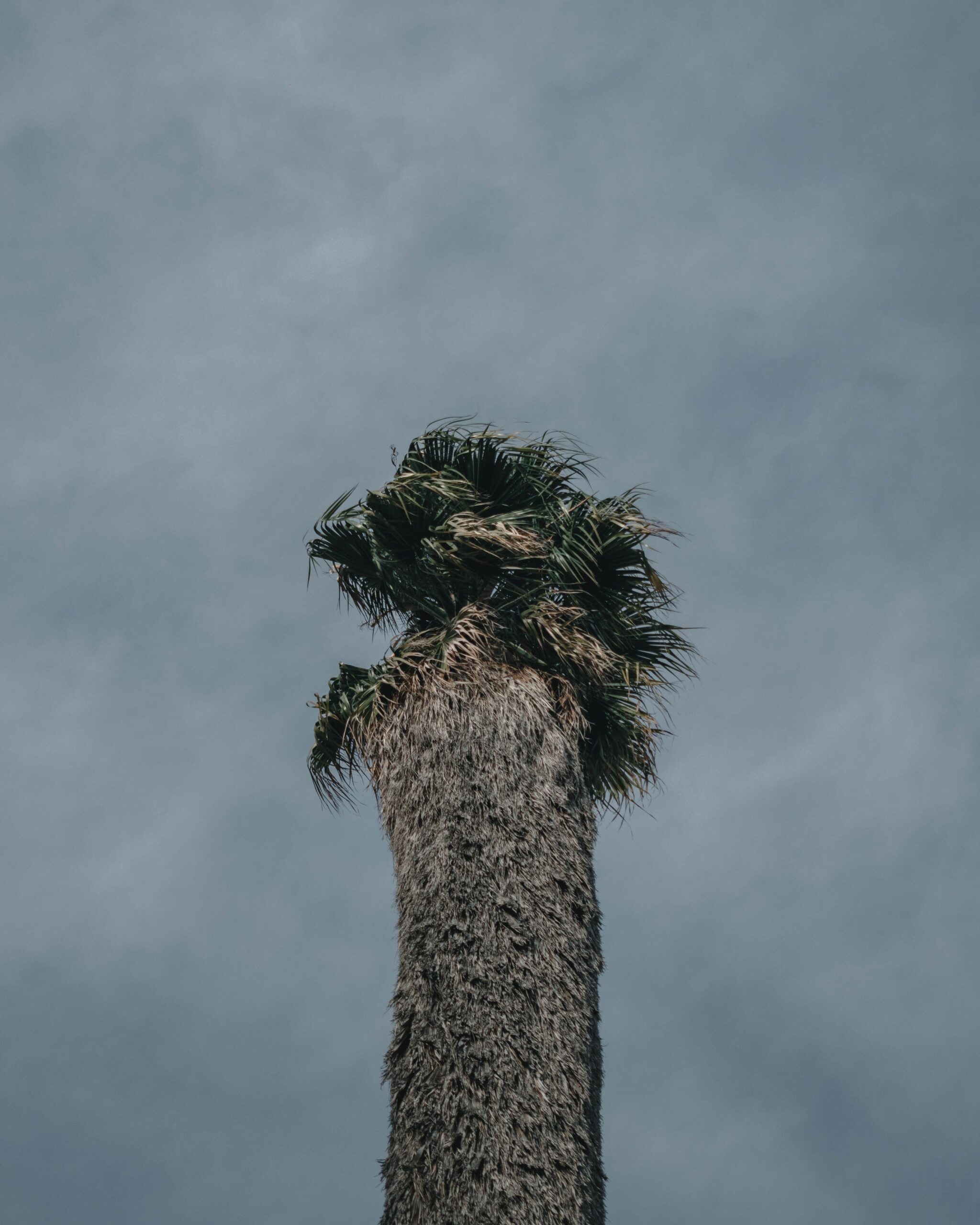
Neglect compounds and costs real money. Three or four years of accumulated fronds turn into a dense skirt that holds moisture, hosts rodents and wasps, and becomes fire load in a dry spring. Seed stalks that were never removed drop thousands of seeds into the beds. Sabal seedlings are miserable to pull once they root.
A rescue trim on a neglected palm takes far longer than a maintenance visit, which is why annual service is cheaper over a five year window. Our palm and tree trimming service is priced per palm. A palm on a regular cycle simply takes less crew time than one being brought back from years of buildup.
Why trimming more often is not better
Here is what surprises most Tampa homeowners. The most common palm problem I see is not neglect. It is over-service. Palms trimmed three and four times a year, or stripped down to a handful of upright fronds every spring, are the ones that decline, and the ones that snap in a storm.
What a Correct Palm Cut Looks Like
A correct palm trim is defined by what stays on the palm, not by what comes off.
The 9-and-3 rule
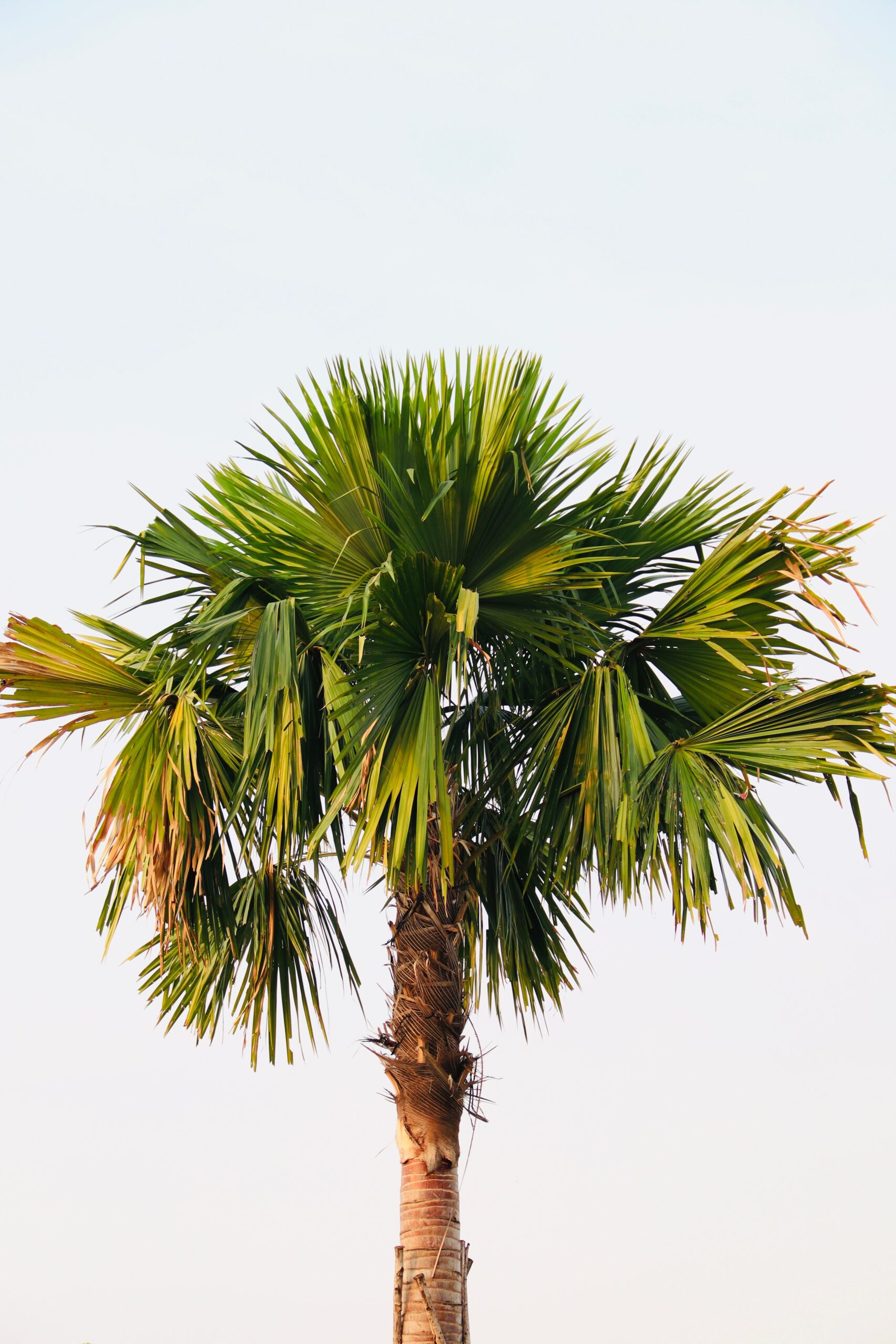
Picture the crown as a clock face with the trunk running up the center. Fronds below the horizontal line from 9 o’clock to 3 o’clock can be removed. Nothing above that line comes off.
Two things about this rule get misunderstood constantly.
First, 9-and-3 is a ceiling, not a target. It is the absolute maximum you are allowed to take, not the shape you are aiming for. A well maintained palm should carry a full, rounded 360 degree crown. Most of the time the correct trim removes far less than the 9-and-3 line permits.
Second, the damaging practice is cutting above that line. That leaves the crown looking like a closed umbrella or a rocket on a launch pad. That is the hurricane cut, and it has nothing to do with the 9-and-3 rule that protects palms.
Only completely brown fronds come off
A frond that is half green, or yellowing but not dead, is still working. Palms translocate mobile nutrients, potassium in particular, out of aging fronds and back into the crown to build new growth. That dying frond is a nutrient bank the palm is actively withdrawing from.
Cut it early and you close the account. The palm loses nutrients it had already earmarked for the next frond. In Florida’s sandy, potassium-poor soils it often has nowhere else to get them. Every premature cut forces the palm to rebuild from soil reserves that may not exist.
The rule I hold my crews to is simple: if there is any green tissue in the frond, it stays.
Seed pods, flower stalks, and fruit
Here is the useful exception. Removing living flower stalks and fruit clusters does not harm the palm. There is no evidence it does, and this is where most of the legitimate extra value in palm trimming lives, especially on Queens, Sabals, Pindos, and coastal Coconuts.
Take out the seed masses and you eliminate the staining, the seedling invasion, the wasp attraction, and in the case of coconuts, the falling projectiles.
One care point that separates skilled work from fast work: when cutting a stalk out of the crown, do not nick the petiole bases of the fronds you are keeping. A nicked petiole tends to snap in half a few months later, and now you have created the exact hazard you were paid to remove.
Frond bases, boots, and trunk shaving
Removing a dead frond base at the point where it meets the trunk is fine. Shaving or peeling into living trunk tissue is not.
Palms do not compartmentalize wounds. An oak walls off an injury with new wood and eventually seals it over. A palm has no cambium and no secondary growth, so it cannot do that. A wound on a palm trunk is permanent. It stays open as a soft spot for decay organisms and boring insects for the rest of the tree’s life.
If a boot or frond base does not release cleanly with a proper cut, leave it. Forcing it tears living tissue and opens a doorway.
The five second crown check
You do not need to know arboriculture to judge the work. Walk out when the crew is loading up and look at five things:
- Shape. Does the crown still look round? If it looks like a feather duster, a pineapple, or a shuttlecock, it was over cut.
- The ground. Any green fronds in the debris pile? There should not be.
- The trunk. Any fresh puncture marks running up it? Those are spike wounds.
- The cuts. Frond bases trimmed flush without gouged, torn trunk tissue.
- The base. Debris hauled off, not stacked against the trunk where it holds moisture.
The “Hurricane Cut” Is the Opposite of Hurricane Preparation
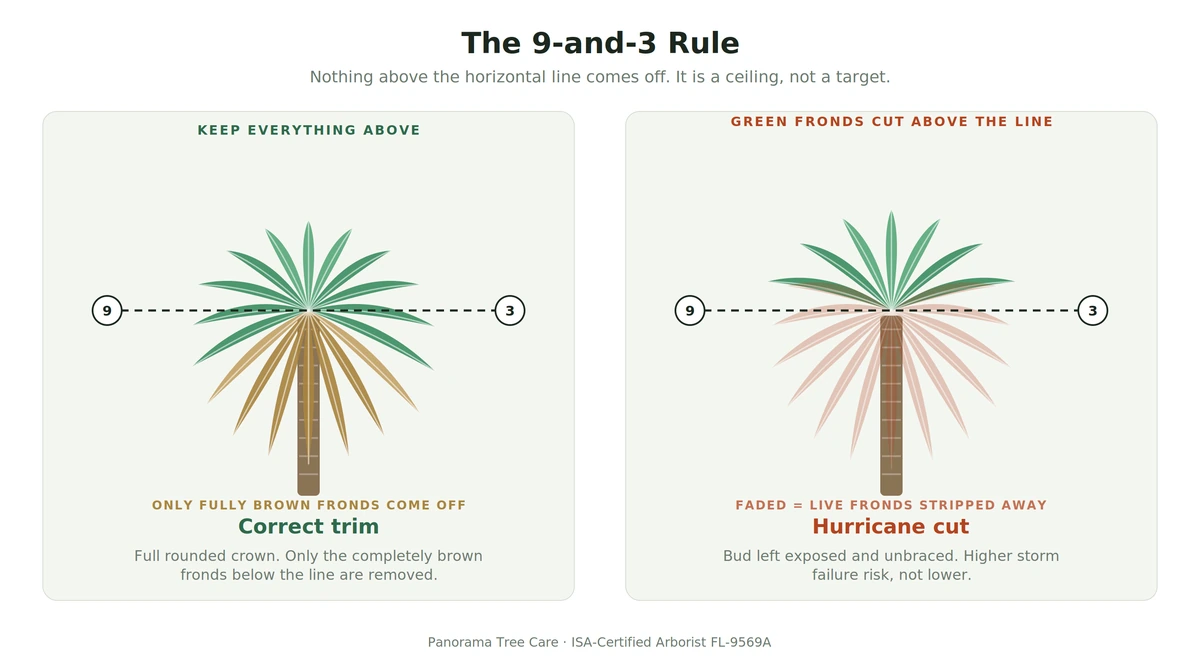
Severely pruned palms are more likely to fail in high wind, not less.
What the storm data actually showed
After the 2004 and 2005 hurricane seasons, UF/IFAS researchers and county extension agents went back through the damage. Ed Gilman’s urban-tree storm pages and Doug Caldwell’s Collier County notes after Hurricane Wilma are the ones I point homeowners to: some arborists reported that coconut palms, and some other palms, with many lower fronds stripped were damaged more than palms left unpruned, because the cut exposed the bud. Caldwell photographed over-pruned coconuts on one block that lost their heads in Wilma, and unpruned coconuts a block away that only kinked a few fronds. That is field observation, not a randomized trial, but it is the record the hurricane-cut claim rests on.
That result runs against instinct, so it is worth understanding the mechanism.
Why the crown snaps
The newest frond on a palm is also the softest. It emerges from the meristem at the top and needs time to harden off. Until it does, it relies on the older, tougher fronds around and below it for physical support, and on the mass of overlapping leaf bases for bracing.
A full crown behaves like a shock absorber. The outer fronds bend, tear, and shed wind energy before it ever reaches the growing point. Strip those outer fronds away and the youngest, softest growth is standing exposed with nothing bracing it. That is how the entire crownshaft snaps clean off. Once the apical bud is gone, the palm is dead. There is no second growing point.
The cold weather version of the same mistake
Heavily pruned palms also appear to handle freezes worse, for the same structural reason. A full canopy of mature fronds and leaf bases insulates the bud. Strip it and the meristem sits exposed.
The practical instruction after a cold snap: leave the damaged fronds alone. They look terrible and they are protecting the bud. Wait until all danger of frost has passed before touching anything.
Why it still gets sold
I want to be fair about this. A hurricane cut is easy to sell because it works as a business model. It takes one visit, it looks dramatically “cleaned up,” and it buys the homeowner two or three years before the palm looks overgrown again. The customer feels like they got their money’s worth.
We do not perform it. What we do instead before storm season is remove genuinely dead fronds, take down loose fronds and seed masses that could become projectiles, and clear coconuts. That is real hurricane preparation. Stripping green fronds is not.
What Over-Pruning Actually Costs the Palm
It deepens potassium deficiency
Most palms in Florida landscapes are already running a potassium deficit because of our sandy soils. Many carry only about half the fronds they should before anyone touches them. Premature frond removal accelerates the exact deficiency the homeowner is usually trying to fix by trimming. If your palms look thin, the answer is deep root fertilization with a proper palm formulation, not a saw.
It attracts pests
Fresh wounds and stressed tissue draw opportunistic borers. The palm weevil is the one I worry about most in this region. It targets palms that are already weakened, and an over-pruned palm is exactly that.
It opens disease pathways
Every cut is an entry point on a plant that cannot seal wounds. Pink rot in particular colonizes fresh pruning wounds, and it moves fast in humid weather.
It erases the evidence
This one almost never gets mentioned, and it may be the most costly. When a crew cuts off every yellow and half dead frond, they destroy the diagnostic pattern I need to read. Whether the yellowing started at the bottom or the top, how fast it progressed, whether the streaking runs lengthwise on new leaflets: that pattern is the diagnosis. Cut it off and you have removed the symptom before anyone read it. I have stood under palms that were three months from death with no way to tell what was killing them.
Yellow Fronds Are a Diagnosis, Not a Trimming Job
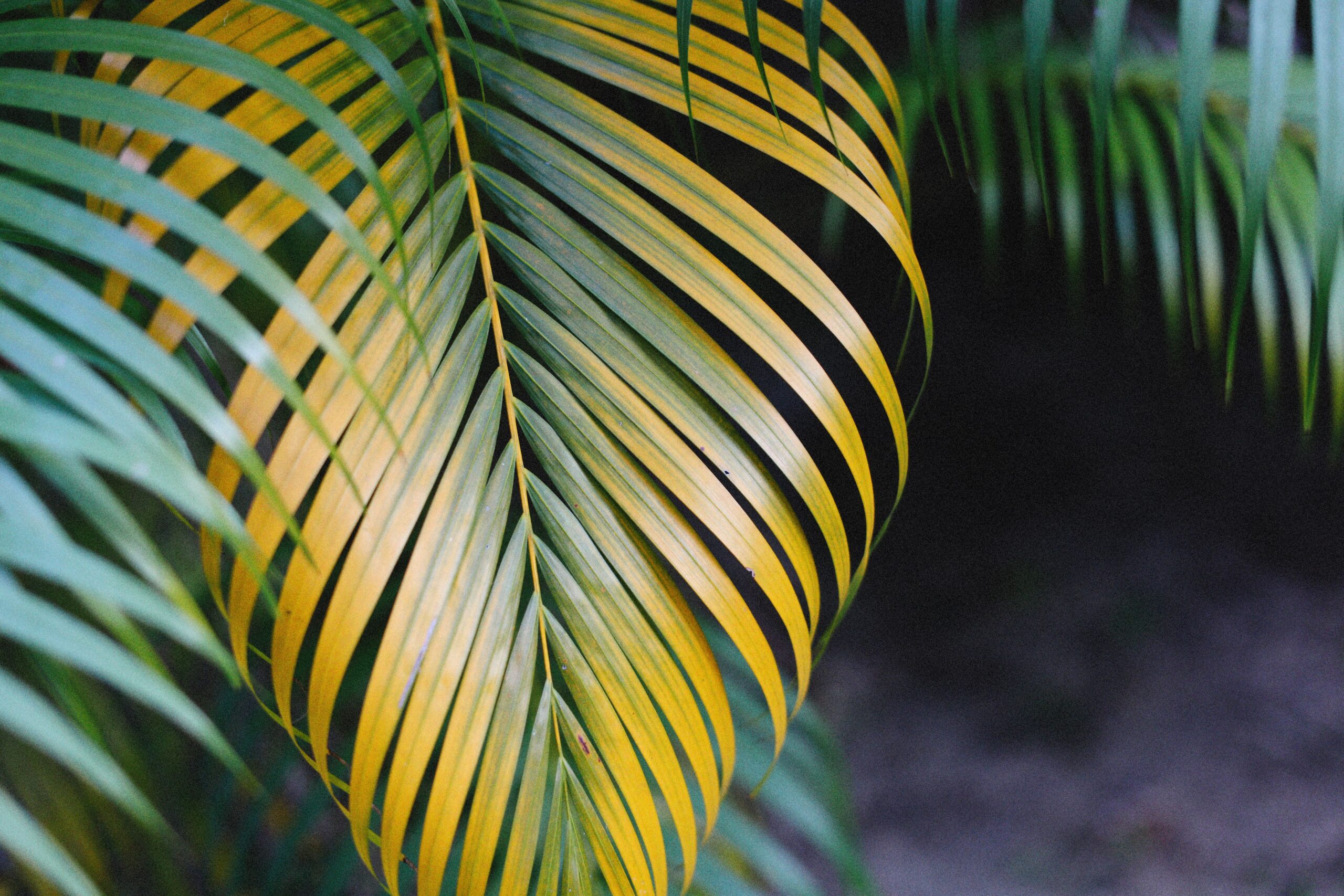
Cutting yellow fronds off fixes nothing, and it can make the underlying problem worse.
Before you call anyone, look at where the discoloration is and how fast it moved.
| What you see | Likely cause | What it actually needs |
|---|---|---|
| Oldest, lowest fronds yellow slowly over months or years | Potassium deficiency | Correct palm fertilizer, not pruning |
| Newest fronds emerge frizzled, streaked, withered, curled around the rachis | Manganese deficiency, known as frizzle top | Manganese supplement, and quickly, since it hits the growing point |
| Lower fronds turn bronze then gray, spear leaf dies, flower stalks blacken, fruit drops early | Lethal bronzing | Lab confirmation, no cure, removal to protect nearby palms |
| Shelf-like conk forming near the base of the trunk | Ganoderma butt rot | No cure, removal, and do not replant a palm in that spot |
| One sided frond death and canopy collapse on Queen, Washingtonia, or Canary Island Date | Fusarium wilt | No cure, strict tool sanitation, isolate the debris |
The speed tell is useful. A frond dying of old age browns quickly and is done. A frond dying of a nutrient deficiency declines slowly, holding a sick yellow for weeks. Lethal bronzing moves through a palm in roughly four to five months from first symptoms to death, and once the spear leaf is gone the palm is finished even if lower fronds still look green.
If you cannot tell which of these you are looking at, that is what a consulting arborist visit is for. A written diagnosis costs a fraction of a palm removal.
Two Questions That Separate a Real Palm Crew From a Landscaper With a Pole Saw
“Do you sterilize tools between palms?”
Fusarium wilt of Canary Island Date Palm spreads primarily on contaminated pruning tools. Infested sawdust stays on the blade after cutting an infected palm, and the next cut inoculates a healthy one. A crew that runs a row of date palms without disinfecting between each tree can seed a fatal disease down an entire street in one afternoon. The same risk applies to Queen and Mexican Fan Palms with the related Fusarium pathogen.
The answer you want is a bleach or alcohol solution used between every palm, no exceptions, and a fresh cleaning before the crew arrives at your property.
“Do your climbers use spikes on palms?”
Climbing spurs should not be used on live palms. ANSI A300 Part 1 says climbing spurs shall not be used when entering and climbing trees for pruning. The standard is written for trees, not as a palm-only rule, but the wound problem is worse on a palm: it has no cambium and cannot close the holes.
The reason goes back to compartmentalization. Every spike hole punched into a palm trunk is a permanent open wound in tissue that will never close. On a tall Sabal that means dozens of untreated entry points running up the stem, each one an invitation for decay and for the boring insects that follow it. Spikes are for removals. On a palm you intend to keep, the access should be ropes, a saddle, a pole saw, or a lift.
When in the Year to Trim Palms in Tampa Bay
Our climate lets us work on palms year round, but there are better and worse windows.
Late spring, after fruiting, is my preference for Sabal Palms, since you get the dead fronds and the spent seed stalks in one pass. Spring also suits Canary Island Date Palms, which are slow, specialized work regardless of season.
Ahead of hurricane season I prioritize genuine hazard removal: loose dead fronds, heavy seed masses, and coconuts over targets. Timing there is about what is over your roof, not about thinning the crown.
The one window to avoid entirely is a cold snap. Do not trim right before a forecast freeze, and do not clean up freeze damage until the risk of frost has fully passed. For hardwoods on your property, the seasonal picture is different, and I break that down in our Florida tree pruning calendar.
DIY Palm Trimming: Where the Line Actually Is
I am not going to tell you to hire a professional for every palm on your lot. That is not honest.
Reasonable to do yourself: a palm you can reach with both feet flat on the ground and a pole saw, removing fully brown fronds and spent seed stalks, with a blade you disinfected first.
Not worth the risk: anything that requires a ladder, anything overhead with a running saw, Canary Island Date Palms with their spined lower leaflets, and any palm where you are not certain whether a frond is dead or deficient.
The hazard people underestimate is weight. A saturated Washingtonia frond skirt or a mature Queen Palm seed pod is far heavier than it looks from the ground, and it does not fall straight down. Add a ladder and a chainsaw held above shoulder height and you have the setup behind most of the palm injuries I hear about. If you want the full list of what goes wrong, we cover the most common pruning mistakes in detail.
Palm Trimming Around Tampa Bay
Frequency shifts a little depending on where you sit in the bay. Inland neighborhoods around Brandon, Riverview, and Lutz tend to be Sabal and Queen heavy, which is a clean annual cycle with seed stalk removal. Closer to the water in South Tampa and out toward the barrier islands, Coconut Palms push that to two or three visits, mostly to get nuts down before they find a windshield.
The other local variable is your HOA. Plenty of Tampa Bay associations have frond and skirt language in their covenants, and some of it, written by people who are not arborists, quietly asks for over-pruning. Read it before you approve a scope of work, and see our breakdown of Florida HOA tree trimming rules if you are stuck between the covenant and the palm.
Frequently Asked Questions
How often should palm trees be trimmed in Florida? Once a year for most species. Queen Palms and Washingtonias may need two visits because of seed load and unreliable frond shedding, and coastal Coconut Palms often need two or three to keep nuts off cars and roofs.
Should I remove yellow palm fronds? No. A yellow frond still holds green tissue and is still moving potassium back into the palm. Removing it early deepens the deficiency and destroys the pattern needed to diagnose the cause. Wait until the frond is completely brown.
Is a hurricane cut good before a storm? No. UF/IFAS storm write-ups after 2004 and 2005, including Gilman’s palm-damage notes and Caldwell’s Wilma comparison, report that heavily stripped palms lost crowns more often than unpruned or lightly pruned ones. Stripping the outer fronds removes the support and wind buffering that protect the growing point.
What is the 9-and-3 rule for palm trimming? Imagine the crown as a clock face with the trunk at the center. Fronds below the horizontal 9 to 3 line may be removed, and nothing above it should be cut. It is a maximum limit, not a target shape.
Can I cut off palm seed pods without hurting the tree? Yes. There is no evidence that removing flower stalks or fruit clusters harms a palm, and it prevents staining, seedlings, and falling fruit. Just avoid nicking the petiole bases of the fronds you are keeping.
What happens if I never trim my palms? Most palms survive fine, but dead fronds accumulate into a skirt that holds moisture, harbors rodents and wasps, adds fire load in dry weather, and eventually falls. Fronds and seed masses landing on people, cars, or pool cages are the real risk.
Do palm trees need trimming to stay healthy? No. Trimming a palm is about safety and appearance, not health. Unlike hardwoods, palms have no branch structure to correct, and every cut is a wound they cannot seal.
Is it safe to trim a palm tree myself? It is reasonable if you can reach the fronds from the ground with a pole saw. Once a ladder or overhead saw work is involved, or the palm is a spined Canary Island Date, the injury risk climbs sharply.
Should palms be trimmed before or after a freeze? Neither. Leave damaged fronds in place through the cold season because they insulate the bud, and wait until all danger of frost has passed before cleaning up.
Why do my palms look worse after being trimmed? Usually over-pruning. Removing green or partly green fronds strips nutrients the palm was reclaiming, which deepens potassium deficiency and produces a thinner, sicker crown over the following year.
Get a Written Quote Before Anyone Touches Your Palms
Every estimate we give is walked, counted, and written down before a saw comes off the truck, with the species, the height, and the exact frond removal scope on paper. Palm trimming runs $100 per palm with a $300 minimum across Tampa Bay, and all work is supervised by an ISA-Certified Arborist (FL-9569A).
If you want a second opinion on palms someone else has already cut, or you are looking at yellowing you cannot explain, request a free estimate and we will read the crown for you.