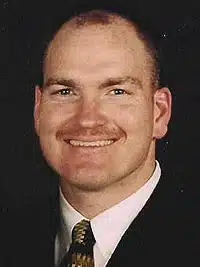
Long before “hurricane prep” became a yearly headline across Tampa Bay, local television stations already knew who to call when they needed a trusted voice on storm-ready trees: Tony Padgett of Panorama Tree Care.
Back in 2011 and 2012, Tony was invited onto two local programs — a storm-season safety segment on ABC Action News (WFTS), the Tampa Bay ABC station now known as Tampa Bay 28, and an in-studio interview on Consumer Update — to explain how homeowners can protect their families and property from tree and limb damage during a storm.
More than a decade later, we’re proud to share both features. What’s remarkable is how well the advice has held up: the guidance Tony gave Tampa Bay viewers all those years ago is still exactly what our arborists tell our neighbors today.
Featured on ABC Action News / WFTS (Now Tampa Bay 28): Getting Your Trees Storm-Ready
This news segment opened with an important reminder: a healthy tree is one of the best investments a property owner has. As the report put it, a healthy tree “increases in value with age,” paying dividends by raising property values, beautifying our surroundings, purifying the air, and providing cooling shade that saves energy in Florida’s summer heat. But the same report was honest about the flip side — “when a storm arrives, trees and limbs can be one of our worst enemies.”
That’s where Tony came in. On camera, he walked through the practical clearances and cuts that keep a home safer when the wind picks up:
- Keep 10–15 feet of clearance off your roof for any overhanging limbs.
- Keep large trees 10–15 feet away from the walls of the home.
- Remove dead wood, hangers, and any limb that’s already broken off.
- Don’t forget palm trees. As Tony explained, loose palm fronds “have a tendency to blow during storms, and they’ll just sail into a window and break a window.” Trimming them ahead of time removes that risk.
- Elevate the canopy 10–15 feet from the ground. This lets wind pass under and through the tree instead of pushing against a solid wall of foliage — cutting down wind resistance so the whole tree is less likely to fail.
- Stay away from power lines. Tony was clear that electrical lines are a serious hazard and that a wrong cut on a wind-loaded limb “can even do more damage to the home.”
The segment also included a smart clarification on who is responsible for which power line — something many homeowners get wrong.
The utility company — here in Tampa, that’s TECO (Tampa Electric) — will trim roughly three feet back from the primary power lines if you call them, but the homeowner is responsible for the “drop line” that actually feeds power into the house.
On the job shown in the video, the homeowner asked Panorama to clear both the primary line and the drop line of debris, and to remove several large limbs with “prominent leads” and defective, split-prone crotches.
Finally, the piece reinforced a principle we live by: proper pruning technique matters for the life of the tree. Trees don’t heal wounds the way people do — instead, a tree has to grow over a wound, and that wound stays sealed inside the trunk forever.
Small cuts do far less damage than large ones, which is why pruning and training young trees correctly is so important. Our crew makes clean, flush cuts to the branch collar and removes limbs in small, manageable pieces so the tree can close its wounds properly.
Featured on Consumer Update: Preparing Your Yard for Hurricane Season
In this in-studio interview, host Susan Williams welcomed Tony to Consumer Update to talk through what Tampa homeowners should be thinking about at the start of hurricane season. As she noted, we prepare our windows, our roof, our food supply, even our pets — “but what about your trees and your yard?”
Tony explained that properly trimming and pruning your trees does more than tidy them up — it eliminates the structural defects that cause trees to fail in a storm. The one he stressed most was the “V-shaped crotch,” also called a co-dominant limb: two limbs competing to be the main trunk, which have a strong tendency to split and peel off the tree. (When a valuable tree already has this defect, cabling and bracing can sometimes save it rather than removing it.)
A Simple Test Any Homeowner Can Do
One of the most useful moments in the interview was Tony’s do-it-yourself inspection tip. Go out and look at where two large limbs meet:
- You should be able to place the palm of your hand in the center of the crotch where the limbs join.
- If you see a “V” shape there, that union has a tendency to split and peel — a warning sign, especially in larger oak trees.
- A healthy tree should have one main trunk, not two limbs fighting for dominance.
He also warned that a tree can become top-heavy and actually pull out of the ground and topple over — and that a professional inspection can tell you whether that’s a risk for your tree. Another factor: a canopy that’s too dense. If a tree is “loaded with new buds in the center,” it gives the wind something to push against. Thinning the interior lets the wind pass through.
When Should You Prune?
Asked about timing, Tony’s answer was straightforward: prune during spring, or right before spring. Different species behave differently — our seasonal pruning calendar for Florida breaks it down species by species — but spring is generally the best window to start. And you shouldn’t wait until a storm is on the radar — the time to have your trees pruned and trimmed is before hurricane season arrives.
Why Hire a Professional Instead of Doing It Yourself?
When Susan asked why a homeowner should call a professional rather than tackle it alone, Tony pointed to two things that catch people off guard (and if you’re vetting companies, our guide to choosing a tree service covers exactly what to look for):
- Safety. “There’s a lot of safety issues involved in running a chainsaw” — especially at height, near structures, and on wind-loaded limbs.
- Permitting laws. Tree work in many areas is subject to local permitting rules, and a qualified company knows how to stay compliant.
He also reminded viewers that after a storm passes, Panorama is just a phone call away to remove anything that has already come down — off your grounds, your house, or wherever you need it cleared.
Tony’s Storm-Prep Checklist for Tampa Bay Homeowners
Pulling both features together, here’s the quick reference Tony shared with Tampa Bay viewers — and the same checklist we use today. For a deeper, step-by-step walkthrough, see our complete hurricane tree preparation guide:
- Roof clearance: keep limbs 10–15 feet off the roof.
- Wall clearance: keep large trees 10–15 feet from the sides of the home.
- Canopy elevation: raise the lowest limbs 10–15 feet off the ground to reduce wind resistance.
- Remove hazards: clear dead wood, broken hangers, and limbs with V-shaped, co-dominant crotches.
- Thin the interior: open up dense canopies so wind passes through instead of pushing against the tree.
- Trim palms: remove loose fronds that can sail into windows.
- Mind the power lines: the utility trims near the primary line; you’re responsible for the drop line to the house — leave both to professionals.
- Prune at the right time: spring or just before, and always before hurricane season.
- Make proper cuts: clean, flush cuts at the branch collar so the tree can seal its wounds.
The Same Trusted Expertise — Today
Being invited onto local news programs like ABC Action News and Consumer Update was an honor, and it reflected something we still work hard to earn every day: the trust of Tampa Bay homeowners. The trees may be a little taller now, but our commitment to safe, knowledgeable, properly-executed tree care hasn’t changed a bit.
If you’d like the same expert eye on your property that Tampa Bay television relied on, reach out to Panorama Tree Care for an inspection or estimate.
Whether you’re preparing for hurricane season or dealing with storm damage that’s already happened, we’re here to help — just like we’ve been for well over a decade.