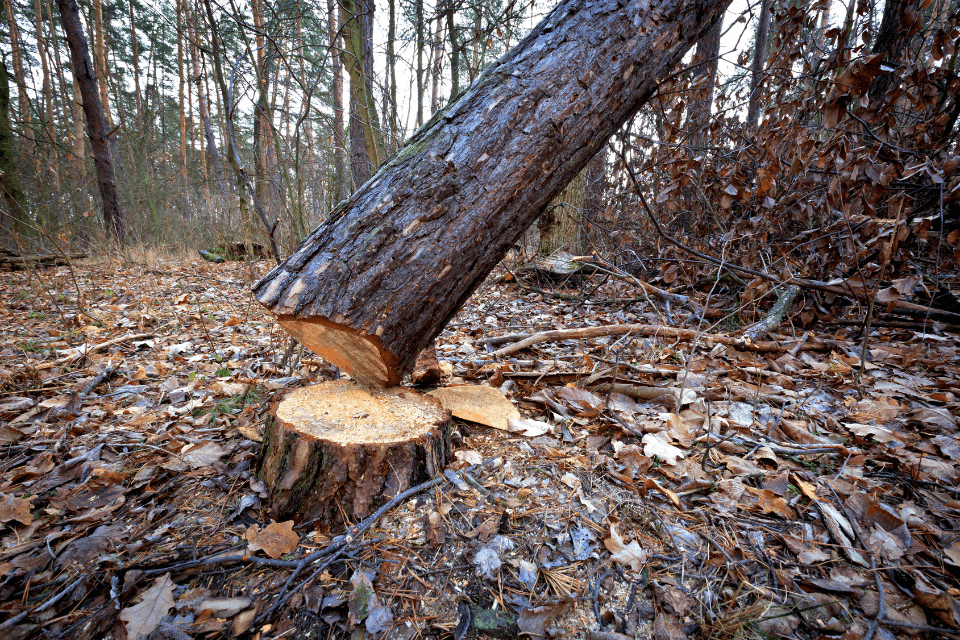
TL;DR: Most of the really ugly, expensive tree problems I see in Florida start with somebody making what looked like a “simple” cut with the wrong technique or at the wrong time. Flush cuts, topping, over-thinning, pruning during disease season, skipping permits, unsafe DIY felling, and working with dull tools all show up again and again.
Know what these mistakes look like, why they’re a problem, and when it’s time to call a certified arborist like Panorama Tree Care instead of gambling with your trees and your insurance.
Key Takeaways
- Cutting off the branch collar with a flush cut peels away the tree’s natural defense zone. That massively increases decay risk and slows healing, often for the rest of the tree’s life.
- Topping trees to “shrink” them does the opposite of what you want. It forces weak epicormic shoots, raises storm-failure risk, and can land you in hot water with Florida HOAs or code enforcement.
- Lion tailing (stripping interior foliage so leaves are only at the tips) violates ANSI A300 pruning standards and makes trees more likely to snap in Gulf Coast storms.
- Pruning at the wrong time of year in Florida spreads disease, stresses trees, and ruins next season’s flowers. Oaks especially should avoid heavy cuts from March through June.
- Cutting without a Hillsborough County permit can trigger fines calculated per inch of DBH, replanting orders, and stop‑work notices. You usually don’t get a retroactive permit after the fact.
- DIY felling without a solid drop zone or awareness of utilities sets you up for massive liability, including damage to homes, fences, pools, and Florida Electric lines.
- Dull or incorrect equipment tears bark, causes dangerous kickback, and leaves ugly wounds that trees struggle to compartmentalize.
- Following ANSI A300 and ISA Best Management Practices yourself, or hiring a Florida-licensed, ISA-certified arborist, is the most reliable way to protect your trees, your property, and your wallet.
Quick Definitions: What Are “Tree Cutting Mistakes”?
Tree cutting mistakes are all the little and not-so-little ways people cut, time, or permit their tree work that end up hurting tree health, stability, or their legal standing. Around Florida, the big offenders are flush cuts, topping, heavy over-thinning, pruning during the wrong season, ignoring Hillsborough County permits, unsafe backyard felling, and using dull or undersized tools.
Those choices might not show a problem right away, but they set trees up for decay, storm failures, HOA complaints, expensive fines, and sometimes serious injuries. The goal is simple: cut in ways the tree can handle and that keep you inside Florida’s rules.
Mistake #1 — Flush Cutting (Removing the Branch Collar)
Every branch connects to the trunk through a built‑in “armor ring” called the branch collar. Flush cuts slice that collar right off so the wound is flat with the trunk. Once you do that, decay walks straight into the heartwood. A correct cut stays just outside the branch bark ridge and branch collar so the tree can compartmentalize the wound and seal it over.
What is the branch collar — and why it matters
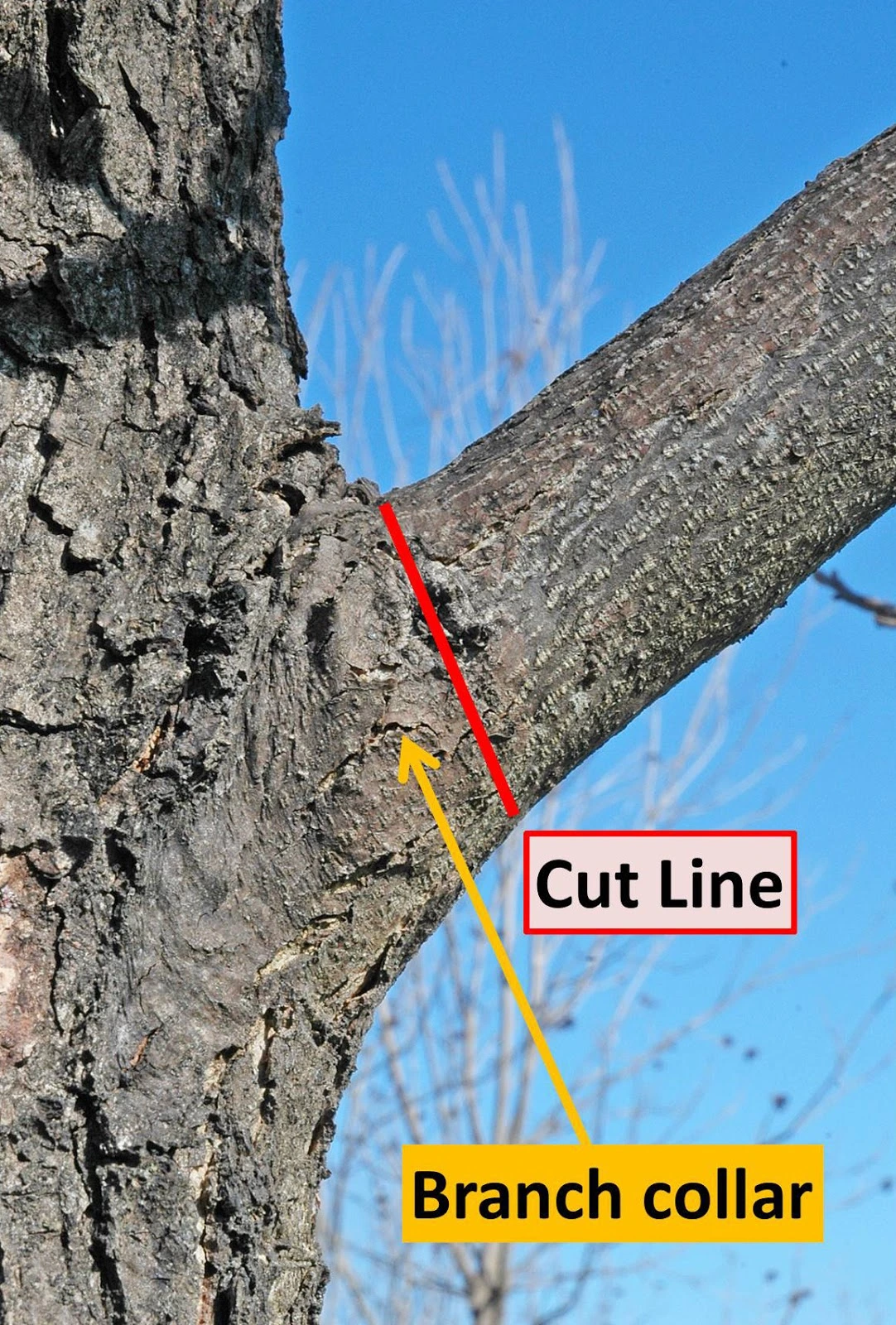
The branch collar anatomy is one of those basic details most homeowners never learn, but every good arborist obsesses over. Stand next to the trunk where a limb comes out. That slightly swollen, wrinkled ring at the base of the branch is the collar. Just above that, nestled in the crotch angle, you’ll see the branch bark ridge, a raised, darker strip of bark.
Inside that collar is where trunk wood and branch wood overlap. That overlapping tissue is what lets the tree build a callus “donut” over a proper cut. According to the CODIT model (Compartmentalization Of Decay In Trees), this collar is where the tree throws up its internal walls to slow or stop decay. Cut it off, and you’ve just taken down the fence on the property line.
What a flush cut looks like
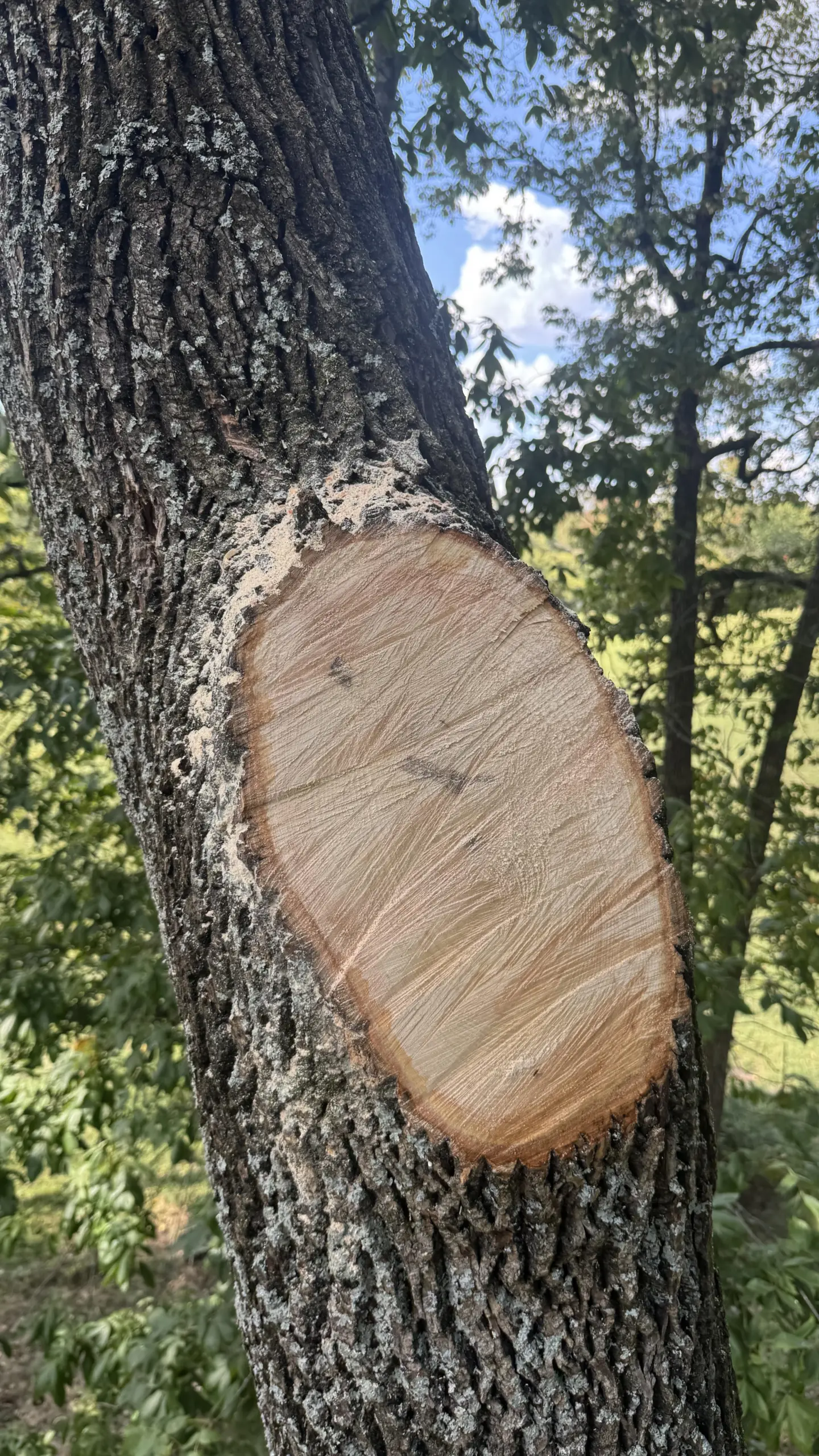
A flush cut wound is what you get when somebody cuts the branch perfectly flat against the trunk, shaving right through the collar so everything looks “smooth and tidy.” It looks clean to people. It looks like an open door to decay organisms.
On real trees in Florida yards, you’ll usually notice:
- No raised callus “donut” building a rounded ring around the wound even after a year or two. The edge often stays flat and sharp.
- A big, flat oval cut surface that may start to crack, check, or turn dark in spots.
- Over the years, decay entry risk: high. The wood inside softens, darkens, and the decay column can crawl right up or down the trunk.
Why are flush cuts so damaging
When you cut off the collar, you’re not just removing bark. You’re stripping out the tree’s specialized defense tissue. Research behind the CODIT model pretty much lines up with what we see in the field:
- Compartmentalization failure: Flush cuts have a much higher rate of deep internal decay than cuts made just outside the collar. You often get long decay columns instead of a short, well-contained pocket.
- Healing time vs. proper cut: A collar-preserving cut might close in a few years. A big flush cut can stay open for decades, if it ever closes at all.
- Structural weakening: As decay spreads down the trunk, the tree can look fine from the outside but be hollowed out inside. That’s how “healthy-looking” trees snap in a storm.
- Correction possibility: Once the collar is gone, that mistake is permanent. You can’t glue it back on or “trim it better” later. All you can do is monitor the tree and manage risk.
How to visualize the correct cut (without a full how‑to)
Even if you never touch a saw, it helps to know what a good final cut should look like so you can judge work on your property.
- The top of the cut lines up just outside the branch bark ridge.
- The bottom follows just outside the slight bulge of the branch collar. The collar stays visible as a subtle ring.
- There’s no long stub, but you also haven’t carved into the trunk. The trunk bark is untouched around the wound.
If you’re squinting at the tree and can’t clearly see the collar, or the branch is big enough to need a chainsaw, that’s your cue to hire a certified arborist. One bad flush cut in the wrong spot can create a lifetime defect in an otherwise valuable tree.
Mistake #2 — Topping Trees (Crown Butchery)
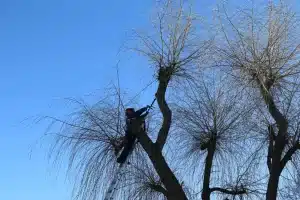
Topping means hacking the main leader or big limbs back to ugly stubs to “shorten” a tree. It doesn’t actually solve size or safety problems. It shocks the tree, forces out weak epicormic shoots, ramps up storm-failure risk, shortens lifespan, and tends to annoy Florida HOAs and insurers.
What is tree topping?
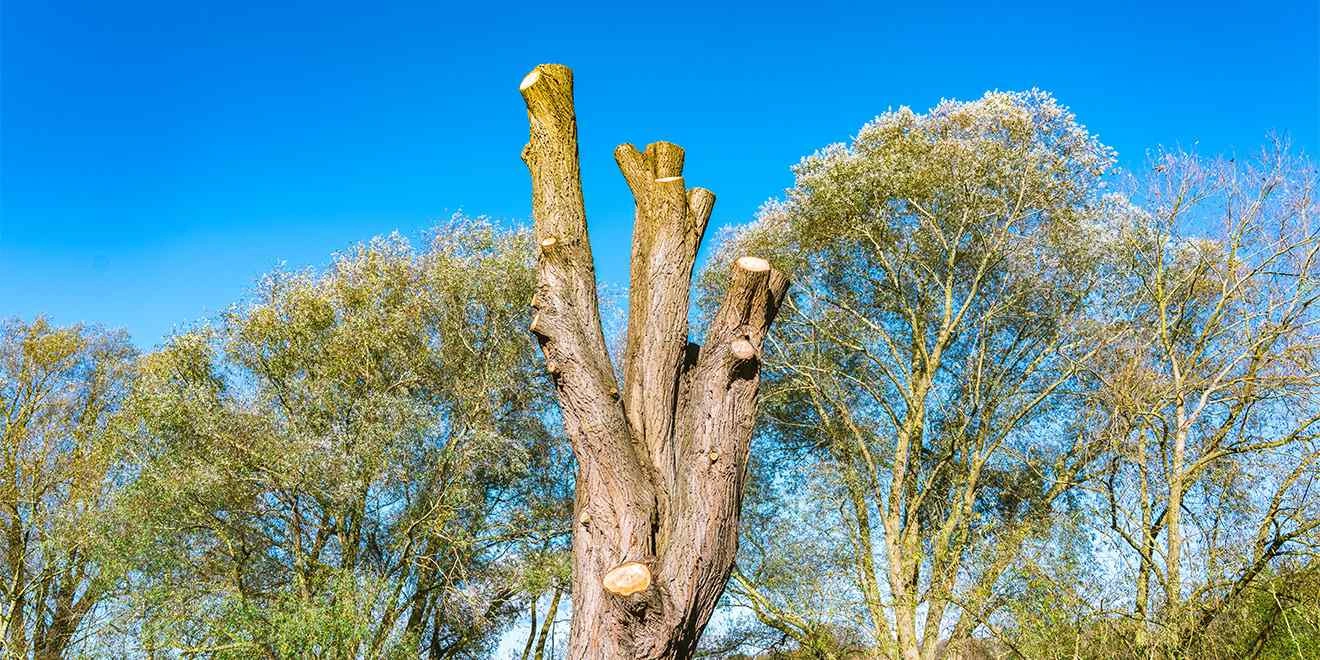
Tree topping is a severe heading cut taken way too far. Big limbs or the central leader get chopped back to random points with no properly sized lateral branches to take over. You’re left with big, blunt stubs or “hat-rack” shapes.
The ISA Best Management Practices and the ANSI A300 pruning standard both warn against topping mature trees. Instead of carefully chosen reduction cuts that move growth to a lateral branch, topping strips off the upper crown in one brutal pass. The tree survives, but it pays for that shock for years.
Tree topping consequences you don’t see right away
The problem with topping is it looks “done” the day it happens and the real trouble doesn’t show up until later. Here’s what I see play out over time:
- Epicormic sprout count (× increase): A topped tree responds by exploding with thin, vertical shoots around each cut. You can end up with many times more branches than you started with, all packed into one stressed area.
- Attachment strength of new growth: Those epicormic shoots are anchored in shallow tissue just under the bark. They don’t grow out of a normal branch collar. Years later they thicken, look like “real” limbs, but their attachment can be far weaker than original branches.
- Storm failure risk increase (%): Once those shoots stretch out and load up with foliage, you’ve got a bunch of heavy, poorly attached limbs higher in the crown than before. Under Florida’s thunderstorms and tropical systems, they snap or peel out far more often.
- Tree lifespan reduction (years): Those large topping wounds rarely seal well. Decay works in from each cut. Repeated topping just extends the decay and stress cycle until the tree becomes a removal job.
Legal and neighborhood issues in Florida
Topping often conflicts with what Hillsborough County and the City of Tampa expect as “proper maintenance,” even if the word “topping” isn’t spelled out in every code paragraph. The pushback usually shows up from a few directions:
- HOA violation Florida (yes): A lot of Florida HOAs consider topped trees a visual blight. They can fine you, force more work, or demand removal and replanting.
- Insurance and liability: If a topped tree fails later and damages a home or car, adjusters sometimes ask whether the work followed recognized standards. Poor pruning can muddy your negligence and coverage situation.
If you want to understand where topping sits with your specific neighborhood rules and what the better options are, dig into your HOA guidelines and the Florida codes before anyone starts cutting.
Expert insight most homeowners miss
Most folks who ask to top a tree aren’t trying to butcher anything. They’re worried about height, shade, or storms and just don’t know better options. That’s where things go sideways.
- You’re actually destroying the tree’s natural, flexible wind-dissipating structure. A topped tree becomes more rigid and failure-prone.
- You lock yourself into a high‑maintenance loop. Once you start topping, you have to keep coming back to tame all that epicormic regrowth.
- You usually raise the eventual removal cost. By the time the tree is dangerous, it’s often decayed, oddly structured, and tougher to take down safely.
If a tree is truly the wrong size for the spot, a good arborist will usually suggest structural reduction per ANSI A300 combined with long-term planning, or just honest removal and replacement with a smaller species. Topping is almost never the smart long-term solution.
Mistake #3 — Over-Thinning or Lion Tailing the Crown
Under ANSI A300, you generally keep live crown removal to around 25% per cycle, often less. Ripping out too many interior branches and leaving leaf “puffs” at the tips is called lion tailing damage explained in detail elsewhere — it makes branches behave like long levers, creates a wind-sail effect, and is one of the most dangerous homeowner pruning habits I see across Florida.
What ANSI A300 says about removal limits
The ANSI A300 pruning standard is the rulebook most reputable pros follow in the United States. It’s not light reading, but the key ideas are simple enough:
- Maximum canopy removal: For most mature trees, you stay under about 25% of the live crown per pruning cycle. Young trees can sometimes tolerate a bit more, but you still don’t strip them bare.
- Heading cut restriction: Large heading cuts into mature wood are kept to a minimum. They’re reserved for specific, justified situations, not general “cleanup.”
- Minimum cut diameter reporting: On professional reports, bigger cuts, usually in the 2–4 inch range and above, get documented so everyone knows how hard the tree was worked.
- Pruning cycle recommendation: Instead of heavy work every decade, most urban trees do better on a 3–5 year structural pruning cycle where you make smaller, smarter cuts.
What is lion tailing?
Lion tailing is what you see when someone strips away most of the interior branches along the length of the limb, then leaves a ball of foliage out at the tip. From the ground, it really does look like a lion’s tail with a tuft on the end.
It’s one of the classic common tree trimming mistakes in Florida. Homeowners ask crews to “thin it out so I can get more light on the grass,” and poorly trained workers respond by gutting everything inside the crown. It looks airy right after the job, which tricks people into thinking it was done correctly.
Why over-thinning is structurally dangerous
The physics of lion tailing are where things get ugly fast, especially in our storm-prone Gulf Coast conditions:
- Over-thinning crown: All those small interior branches help support the larger limb and absorb and dampen movement. Take them away and the weight concentrates at the tips.
- Lion tailing wind damage: Those long, bare limbs with heavy foliage on the end act like lever arms. In high winds they flex and bend far more, jacking up the stress at the branch union.
- Wind-sail effect: A normal crown breaks up wind as it moves through the canopy. After lion tailing, the outer shell of leaves catches more wind while the hollow interior offers no resistance. That’s how branches split or entire trees go over.
- Sunscald after over‑pruning: Branches and trunk sections that were shaded for years suddenly get full Florida sun. The bark can crack, scorch, or die off, opening the door for insects and decay fungi.
Why it’s so common in Florida
Homeowners here are always battling shade on lawns and pools, and they want that “opened‑up” feel under big oaks and maples. Some untrained crews figure the fastest way to deliver that is to strip everything inside and leave greenery at the end of each limb. It’s fast, dramatic, and dead wrong under ISA Best Management Practices.
Under those standards, lion tailing is a clear bad tree trimming practice, not an acceptable technique. A good arborist will thin very selectively, leaving plenty of interior structure so the tree can handle our Gulf winds rather than snap in them.
Mistake #4 — Pruning at the Wrong Time of Year
Florida’s long growing season means timing actually matters a lot. Heavy oak pruning during the high disease and insect window (roughly March–June) is a bad idea. Flowering trees should be pruned right after bloom. Bigger structural work usually belongs in the cooler November–February period so wounds close better and trees stay less stressed.
Florida’s climate and disease dynamics
We don’t get the deep, hard dormancy you see up north. Florida trees are active for most of the year, even if growth slows a bit in winter. That longer active period changes how they handle cuts, pests, and heat.
Prune at the wrong time and you might strip stored energy the tree needs, wipe out a season of flowers, or open up wounds when pests and pathogens are most active. That’s how a simple pruning job turns into recurring dieback or chronic decline over a few seasons.
Key timing rules for homeowners
- Oaks and disease risk (March–June): While the “oak wilt” people talk about online is more common in other states, our oak diseases and borers still get around easier in warm, active months. Avoid heavy pruning from early spring into early summer. A few small cuts for safety are fine, but skip big structural jobs.
- Flowering trees: As a simple rule, spring‑blooming species after they flower. Those bloom buds were set the previous season, so if you prune beforehand you’re cutting off your own show.
- Dormant-season preference: Around Florida, November–February is usually the better window for major pruning. Temperatures are lower, pest levels are down, and you can see branch structure clearly without as much foliage.
How pruning wounds spread problems
Every fresh cut is an open infection court where something unwanted can walk in. Here’s what that looks like in real yards:
- Dirty tools carry fungal spores or bacteria from one tree to the next, especially on busy crews that bounce from job to job.
- Insects home in on fresh sap odors. Some of those insects act as disease vectors and move problems from tree to tree.
- In the hottest months, heat and drought stress make it harder for trees to seal wounds and run the wound compartmentalization process described in the CODIT model. Cuts stay open longer and decay has more time to get established.
Good crews that follow ISA Best Management Practices plan their heavier jobs around climate and disease pressure, disinfect tools when needed, and separate quick hazardous cut work from routine structural pruning.
Mistake #5 — Cutting Without a Hillsborough County Permit
In the Florida area, a lot of trees are legally protected once they hit a certain trunk size or fall into certain species groups. Removing or heavily cutting those trees without going through the permit process can cost you a pile of money. Fines are often calculated per inch of DBH, and you can be ordered to replant. Once you cut first and ask questions later, there’s usually no option to fix it with a retroactive permit.
When do you need a permit?
Hillsborough County keeps a close eye on tree removal and severe cutting, especially on larger shade trees. The exact DBH numbers and species lists get updated from time to time, but the principles stay steady:
- DBH thresholds: Trees over a certain diameter at breast height (DBH), measured about 4.5 feet above ground, will often need a permit before removal or aggressive pruning. The idea is that once a tree reaches a certain size, it has value for shade, stormwater, and neighborhood character.
- Protected species: Certain native or historically important trees can be protected even at smaller diameters. These sometimes include big live oaks and other species the county considers “grand” or heritage trees.
Before you start serious cutting or call in a crew, homeowners should look up current Florida permit requirements through Hillsborough County or the City of Tampa tree ordinances and confirm directly with the county office.
Typical Hillsborough County cutting violation consequences
A Hillsborough County cutting violation usually isn’t a slap on the wrist. Depending on the situation, you might be looking at:
- Fine per inch DBH (USD): Penalties are frequently tied to trunk size. A 30‑inch DBH oak at a few hundred dollars per inch adds up to a nasty surprise very fast.
- Replanting requirement (ratio): You might be ordered to plant two, three, or more new trees for every protected tree removed, often with specific sizes and species you have to meet.
- Stop-work order (yes): The county can slap a stop‑work order on your property if there are ongoing violations or development tied to the tree removal.
- Criminal referral threshold: On large, intentional clear‑cuts or obvious disregard for the rules, the case can be pushed beyond civil fines for more serious enforcement.
- Permit retroactive possibility (no): Once the tree is gone, you usually can’t go back and apply for a permit to make it disappear on paper. The violation stands and you deal with the consequences.
How to check before you cut
To steer clear of a Hillsborough County tree code violation, a little homework goes a long way:
- Call the Hillsborough County Environmental Protection Commission (EPC) or your city’s tree desk before any major work.
- Have your tree’s species, approximate DBH, and location ready. Whether it’s in the front yard, near a sidewalk, or next to a right‑of‑way can all matter.
- Get written confirmation or an official permit in hand before any large removals or severe pruning cuts begin.
Companies like Panorama Tree Care deal with these rules every week. We help homeowners navigate permits correctly so you’re not learning about a violation from a code officer after the work is done.
Mistake #6 — DIY Felling Without Proper Drop Zone
Bringing a tree down in one piece is a lot more technical than it looks on YouTube. You need a clear drop zone at least 1.5× the tree’s height, a good read on lean and weight distribution, and a full understanding of nearby homes, sheds, fences, pools, and utilities. In tight Florida neighborhoods, backyard felling is almost never truly DIY-safe.
Why felling is riskier than it looks online
Of all the DIY tree cutting errors, backyard felling is the one that sends people to the ER and wrecks property the fastest. Online videos rarely show the failures, just the clean textbook falls.
in Florida’s older neighborhoods, trees often sit right over houses, driveways, screened lanais, and Florida Electric clearance zones. That means any misjudgment sends that trunk somewhere you really don’t want it. Even pros often dismantle trees in sections with ropes and rigging instead of trying to drop them whole.
Minimum drop zone and lean assessment
If you’re even thinking about dropping a tree in one shot, there are a few non‑negotiables:
- Minimum clearance zone: You need a clear landing strip at least 1.5× the tree’s height in the direction you want it to fall. That space has to be free of structures, vehicles, and anything else you care about.
- Back-lean miscalculation risk: Trees rarely stand perfectly straight. Even a little back‑ or side‑lean that’s hard to see from the ground can make a tree swing off your planned line, pinch the saw, or fall sideways into a fence or roof.
- Improper notch felling: If your notch and backcut are the wrong size, depth, or angle, the tree can split up the trunk (barber chair), twist, or peel bark down the stem. All of those can injure you or send the tree somewhere unintended.
Utilities, property lines, and liability
Inside Florida city limits and throughout Hillsborough County, you’re not just dealing with your own yard. You’re working in a web of utilities and property lines:
- Utility line proximity law: Work near energized overhead lines is governed by OSHA and utility regulations. Untrained people aren’t supposed to be cutting trees near conductors. Hitting a line with a falling tree can cause outages, fires, or worse.
- Liability for neighbor property: If you drop a tree on a neighbor’s house, car, or fence, you’re usually financially responsible. Some insurers get pretty picky if there was obvious risk and you didn’t use a professional.
When is felling never DIY-safe?
There are situations where you should flat-out walk away from DIY felling and bring in pros. You should never try to fell a tree yourself when:
- The trunk or major limbs lean over a house, shed, pool cage, or vehicle.
- Any section of the crown is within reach of Florida Electric lines or service drops.
- The trunk has visible decay, hollows, big cavities, or heavy lean that suggests compromised structure.
- You’re not fully trained in proper notches, backcuts, wedging, and planned escape routes.
In those cases, the smart move is to hire a certified arborist with the right insurance, rigging gear, and experience to follow Florida arborist licensing and safety standards. They’ll take it down in controlled pieces instead of gambling on a single big fall.
Mistake #7 — Using Dull or Wrong Equipment
I see more ugly cuts and near misses from dull tools than almost anything else. A dull chain or the wrong saw forces you to push and twist, which tears bark, causes dangerous kickback, and leaves rough wounds that trees struggle to compartmentalize.
Matching the right chainsaw bar length and sharpness, and using proper hand tools and PPE, is just as important as where you cut.
Chainsaw safety requirements and cut quality
Good chainsaw work is at the heart of avoiding a lot of tree cutting safety mistakes. Safety and cut quality go hand in hand. You can’t get one without the other. Basic chainsaw safety requirements look like this:
- Minimum PPE: A helmet with face shield or good safety glasses, hearing protection, cut‑resistant chaps or protective pants, sturdy boots, and gloves. If you’re missing half of that, you’re not set up for safe saw work.
- Chain sharpness indicator: A properly sharpened chain feeds itself into the cut and throws out long, thick chips. If you’re getting fine dust, smoke, or have to lean into the saw, the chain is dull and you’re asking for trouble.
- Kickback zone: The top-front quadrant of the bar is the kickback zone. Hit wood with that part and the bar can rocket up toward your face faster than you can react.
- Minimum operator age Florida: Homeowners can run saws on their own property, but once you’re working commercially you’re expected to be an adult and the business has to follow OSHA and state rules.
- Certification requirement commercial: Good commercial tree outfits in Florida use trained operators, keep safety records, and often have ISA certification on staff to stay ahead of risk and liability.
Wrong size or type of equipment
Picking the wrong tool for the job is another big source of damage and frustration. Common problems include:
- Chainsaw size vs branch diameter: Using a tiny homeowner saw on a big trunk forces awkward angles and binding. You end up cutting from both sides, pinching the bar, and making ragged surfaces. The bar should comfortably handle the wood you’re cutting.
- Hand pruner vs lopper thresholds: Bypass hand pruners are great for twigs and small shoots. Once you get around finger thickness or a bit bigger, you should step up to loppers. Forcing thick branches through small pruners crushes the tissue instead of slicing it cleanly.
How dull tools damage trees
Dull tools don’t just slow you down. They actively injure trees in ways that can haunt you later:
- Tear-out bark damage: A dull saw or pruner tends to grab and rip bark down the stem, making a wound much larger than the original cut.
- Rough, crushed cut surfaces give the tree a harder time with wound compartmentalization. The edges dry out irregularly, and decay organisms get more footholds.
- You work harder, get tired faster, and your control slips. That’s where most operator accidents start, especially when fatigue meets poor footing.
Expert tip: match the tool to the cut
Even if you’re just doing light touch‑ups around the yard, one simple habit avoids a lot of tree pruning mistakes to avoid:
- Use sharp bypass pruners for fine twigs and small lateral growth.
- Move up to loppers once the branch is around finger-thickness or a bit bigger. If you’re straining to close the handles, it’s too big for that tool.
- Anything that realistically needs a chainsaw, especially overhead or near a structure, belongs to an insured pro who does that work every day.
Quick Comparison: Good Practices vs 7 Common Tree Cutting Mistakes
This table lays out, side by side, what ANSI/ISA consider good practice versus the 7 common tree cutting mistakes homeowners run into, along with what usually happens if you choose the wrong path.
| Area | Good Practice (ANSI/ISA) | Common Mistake | Main Consequence |
|---|---|---|---|
| Branch removal | Cut just outside branch collar and bark ridge | Flush cut wound removing collar | High decay risk, slow/failed healing |
| Crown size control | Selective reduction cuts to laterals | Tree topping legality issues (heading main leader) | Weak epicormic sprouting, higher storm failure |
| Crown thinning | Remove limited, strategic interior branches (<25%) | Lion tailing / over-thinning | Wind-sail effect, sunscald, structural stress |
| Timing | Dormant or low-disease periods; post-bloom for flowering trees | Heavy pruning in hot, disease-active months | Higher disease transmission, stress, bloom loss |
| Permitting | Check DBH and species; obtain permit when required | No permit violation | Fines per inch DBH, replant orders, stop-work |
| Tree removal | Professional rigging and controlled dismantling | DIY felling without drop zone | Property damage, injury, utility conflicts |
| Tools | Sharp, sized correctly, full PPE | Dull or wrong equipment | Tear-out bark, poor cuts, higher accident risk |
How to Avoid the Worst Tree Cutting Mistakes in Florida (Step-by-Step)
- Identify your goal clearly.Decide exactly what you’re trying to accomplish before anybody fires up a saw. Are you looking for better clearance over the roof, less storm risk, or just a neater look? Each goal points to a different pruning method under ANSI A300. “Just cut it back” is how you end up with topping, flush cuts, and lion tailing.
- Check legal requirements first.Grab a tape, estimate DBH, and find out if your tree might be protected. Don’t assume that because it’s on your property it’s fair game. Use county and city resources, or have a professional check for you, so you don’t end up with a Hillsborough County cutting violation hanging over your project.
- Plan for timing.Look at the calendar before you look at the saw. Avoid heavy cutting on oaks and stressed species from March–June. For flowering ornamentals, plan your work right after the blooms fade. If you’re not sure, aim for the cooler November–February window where trees handle structural pruning better.
- Look at structure, not just foliage.Walk all the way around the tree. Watch branch angles, crossing limbs, lean, and any cracks or cavities. Don’t plan to “fix” problems with drastic crown reductions, topping, or lion tailing. Those shortcuts violate ISA Best Management Practices and tend to create bigger problems a few years down the road.
- Select only small, necessary cuts.Keep homeowner work limited to small, reachable branches you can cut cleanly with hand tools from the ground. Focus on dead, broken, or minor rubbing limbs. Anything that needs a chainsaw off the ground, or involves limbs over structures or near wires, should be handed off to a pro.
- Use sharp, appropriate tools and PPE.Before you make the first cut, sharpen your blades, check chains, and put on eye, ear, and leg protection. If you don’t own or want to invest in basic PPE, that’s your sign the work might be beyond what’s safe to DIY.
- Stop if the job becomes complex.If you uncover hidden decay, notice unexpected lean, start seeing cuts bind, or realize branches are directly over a roof or pool cage, put the saw down. Call a certified arborist. Taking a step back at that moment saves trees, money, and sometimes hospital visits.
Common Tree Cutting Mistakes in Florida — And How to Fix or Prevent Them
- Flush cutting past the collar
Mistake: Cutting branches perfectly flat with the trunk and shaving off the collar so the wound looks “neat.”
Consequence: Very high decay risk, slow or failed closure, and permanent structural weakness around the cut.
Fix: You can’t undo a flush cut. Avoid repeating the mistake on other limbs, and have an arborist inspect the tree periodically for decay and storm risk around the old wounds. - Topping to reduce height
Mistake: Lopping the tops off shade trees or palms to make them “shorter” or “safer.”
Consequence: Severe stress, epicormic sprouting, weak branch attachments, and often HOA violations or neighbor complaints.
Fix: Shift to proper structural reduction over time and stop topping cycles. For badly topped trees, talk with a pro about staged removal and replacement with better-sized species. - Over-thinning or lion tailing
Mistake: Gutting interior branches and leaving foliage only at the outer tips of limbs.
Consequence: Increased wind load, sunscald on suddenly exposed bark, and likely ANSI A300 non-compliance.
Fix: Let interior growth fill back in over several pruning cycles. Have a qualified arborist reshape and rebalance the crown using ANSI-guided thinning instead of more stripping. - Pruning during peak heat or disease season
Mistake: Doing heavy crown work in the hottest months, when insects and diseases are in high gear.
Consequence: Greater disease spread, water stress, dieback, and loss of next season’s flowers on many ornamentals.
Fix: Reserve summer pruning for urgent hazards of improper cutting only. Move non-urgent structural work to cooler months and plan flowering tree pruning for right after bloom finishes. - Skipping permits for large or protected trees
Mistake: Removing or drastically cutting large trees without checking Hillsborough County or City of Tampa requirements.
Consequence: Fines based on DBH, forced replanting, and possible stop‑work orders that delay other projects.
Fix: For any future work, treat permit checks as step one. If you may already be in violation, contact EPC quickly to discuss what remediation options you have before the situation worsens. - DIY felling near homes and power lines
Mistake: Trying to drop tall trees whole in small yards with houses, fences, or utilities nearby.
Consequence: Crushed roofs or fences, injuries, damage to Florida Electric infrastructure, and legal or insurance headaches.
Fix: Stop before you make any more cuts and book a professional hazard assessment and removal plan. Read more about common DIY cutting mistakes to understand where the real risks lie. - Using dull chainsaws and undersized tools
Mistake: Forcing dull chains and tiny homeowner saws through heavy limbs or trunks.
Consequence: Bark tear-out, rough wounds, kickback incidents, and fatigue that leads to sloppy technique.
Fix: Keep chains sharp, replace worn blades, and choose tools sized for the cuts you’re making. If the job keeps outgrowing your equipment, that’s the time to call an arborist instead of forcing it.
FAQ: Fixing Tree Cutting Mistakes in Florida
Can my tree recover from past bad pruning or topping?
Many trees can bounce back from moderate tree cutting errors if you stop the damage and switch to good care. But severe topping or lion tailing often leaves permanent structural weaknesses and decay points. An ISA-certified arborist can look at decay patterns, regrowth, and how the tree handles wind, then lay out realistic options such as staged corrective pruning, cabling, or removal and replacement if the risk is too high.
How long does it take a tree to heal from a flush cut?
A flush cut wound usually takes far longer to close than a proper collar-preserving cut of the same size. On large limbs, many flush cuts never fully seal over. Instead, the tree builds internal decay columns behind the wound. That’s why routine inspections and risk assessments are important for flush‑cut trees near homes, driveways, or play areas.
What should I do if my HOA forced or allowed tree topping?
Start by taking clear photos of the work from different angles and distances. Then get a Florida-licensed arborist who knows ISA Best Management Practices to provide a written assessment. That report can help educate your HOA about the long‑term impact, support a corrective care plan, or back up a request to replace the tree with a more appropriate species instead of repeating topping cycles.
When should I absolutely call an arborist instead of DIY?
You should bring in a pro any time the work moves beyond light, reachable hand pruning. Call a certified arborist when:
- Branches require a chainsaw and can’t be safely reached from the ground.
- The tree is large, leaning, close to a building, or over a pool or driveway.
- You see cavities, mushrooms, cracks, or suspect root problems.
- DBH or species suggests permits might be required.
There are good reasons to hire a certified arborist instead of just any “tree guy.” Training, insurance, and adherence to standards matter when something goes wrong.
What Florida-specific legal problems can happen from bad tree cutting?
In this area, poor or unpermitted cutting can easily lead to Hillsborough County tree code violations. That can mean fines based on DBH, mandatory replanting, and stop‑work notices that delay other projects. On top of that, cutting or damaging a neighbor’s tree or a tree in a right‑of‑way can land you in civil disputes or other legal trouble, even if you thought you were working on “your side” of the line.
Is it safer to cut trees in winter in Florida?
For a lot of species, yes. Cooler months (November–February) are usually better for major structural pruning here. Pests are less active, trees aren’t fighting intense heat, and it’s easier to see branch structure without as much foliage in the way. That said, you still have to respect safety, permits, and species‑specific timing. Some tropical or semi-tropical trees follow slightly different growth rhythms.
What is the ANSI A300 pruning standard and why should I care?
The ANSI A300 pruning standard is the main quality benchmark for tree work in the U.S. It lays out how much live crown you should remove, which cuts are acceptable, and why topping and lion tailing are poor practice. If your tree crew works to ANSI A300, you’re far less likely to see the kind of damage that leads to failures, fines, or early removals.
Who is allowed to do tree work commercially in Florida?
In Florida, commercial tree services need to follow business licensing, insurance requirements, and workplace safety rules. While “arborist” isn’t regulated like an electrician’s license, many municipalities and smart clients insist on ISA Certified Arborists on the job and compliance with Florida arborist licensing-related business standards and OSHA rules. That combination keeps both trees and homeowners better protected.
Can I be fined in Florida for cutting a tree on my own property?
Yes. If your tree meets protection thresholds and you cut or remove it without the proper approval, you can be hit with a Hillsborough County cutting violation. That usually involves fines based on DBH and replanting requirements. Routine maintenance on smaller, non‑protected trees is typically allowed, but you should always check current regulations instead of guessing where the line is.
Protect Your Trees, Your Property, and Your Wallet
Tree cutting mistakes in Florida don’t just make a tree look rough for a season. They shorten tree lifespans, increase storm risk, and in some cases bring code enforcement and insurance problems right to your front door. Respecting the branch collar, refusing to top or lion tail, choosing the right season, following local permit rules, avoiding risky DIY felling, and using sharp, appropriate tools all stack the odds in your favor.
If you’re not sure whether your plans line up with ANSI A300, Florida regulations, and long-term tree health, that’s the moment to bring in an expert eye. Panorama Tree Care helps homeowners clean up past mistakes, schedule safe pruning cycles, and stay on the right side of both biology and the law.
Ready to protect your trees and avoid costly errors? Contact Panorama Tree Care today to schedule an inspection with a certified arborist and get a clear, site‑specific plan for your property.
Contact our tree care team for a free assessment and estimate.
Want to dig deeper into related topics?
- Learn more about pruning errors that can quietly weaken your trees.
- Compare common DIY errors with what professionals do differently.
- Understand the deciding whether to cut a tree that lead to regret and extra costs.