
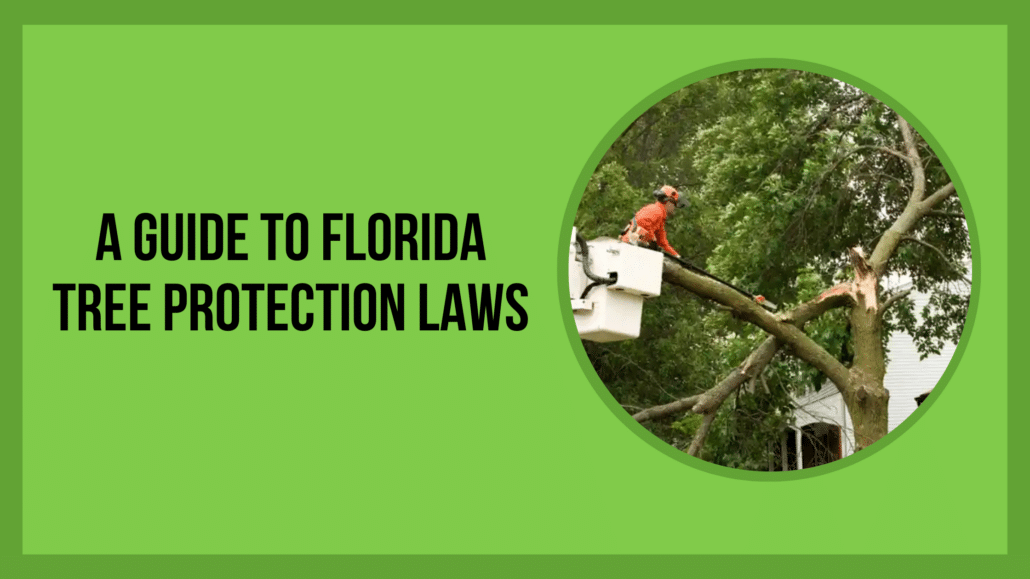
TL;DR: Florida tree protection laws are a mix of state statutes, Hillsborough County’s Land Development Code, and Florida’s even tighter city ordinance. Most established shade trees are protected once they hit certain trunk sizes.
Removing them usually needs permits, arborist permit letters, and mitigation planting, especially for heritage trees, wetland trees, and mangroves along the bay.
Key Takeaways
- Florida Statute 163.045 gives residential property owners strong rights to remove documented “dangerous” trees. If a qualified pro calls it dangerous in writing, local governments are very limited in what they can require.
- Hillsborough County’s tree protection ordinance controls most non-dangerous trees. It sets protected species lists, DBH size thresholds, permit triggers, and how you replace or pay for canopy when you cut.
- Florida’s City Code (Chapter 13) tightens the screws further. It covers more species, has stronger canopy preservation targets, and demands detailed commercial tree surveys and preservation plans.
- Heritage trees in the region are the top tier of protection. Getting permission to remove one usually means high mitigation ratios, hefty fees, and rock solid justification.
- Mangroves are protected across Florida under the Florida Mangrove Trimming and Preservation Act — see the full mangrove trimming rules for details. Along Florida’s shorelines you can’t just cut or top them for a better view.
- Most homeowners can trim branches that cross over the property line. But whole-tree removals, work near wetlands, and anything on shorelines often need a professional review and permits first.
- Unauthorized removal can bring substantial per-inch DBH fines, stop-work orders, extra mitigation, and big delays, especially on commercial or development jobs.
- Working with an ISA Certified Arborist and a crew that truly understands Florida tree protection laws dramatically cuts your legal and financial risk.
What Are Florida Tree Protection Laws?
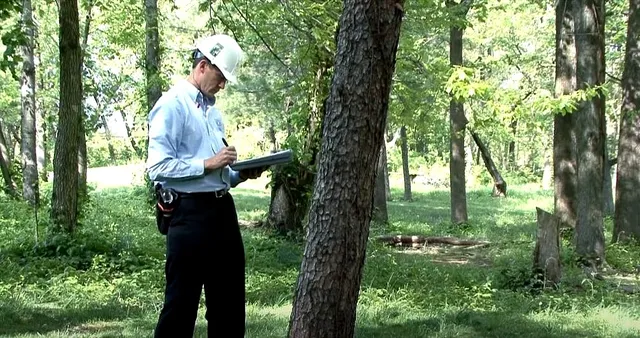
Florida tree protection laws are not one single rulebook. They are a stack of requirements that all hit you at the same time:
- State statutes like Florida Statute 163.045 and the Florida Mangrove Trimming and Preservation Act that set those baseline rights and limits for everyone in the state.
- Local ordinances such as the Hillsborough County Land Development Code and City of Tampa Code Chapter 13 that drill down into which trees are protected, when you need permits, and how you must replace removed trees.
- Administrative programs run by the Hillsborough County Environmental Protection Commission and Florida’s Urban Forestry program that actually review permits, inspect sites, and enforce those rules.
All of that together decides which trees you can cut without asking permission, when you have to protect or replace canopy, and what happens to your wallet if you ignore the rules.
Florida Tree Protection Laws: State-Level Overview (2026)
Florida’s statewide rules try to walk the line between property rights and environmental protection. For most homeowners, the law that matters day to day is Florida Statute 163.045, backed up by broader environmental rules and the Florida Mangrove Trimming and Preservation Act.
Florida Statute 163.045 limits local governments from requiring permits to remove documented dangerous trees on residential property. It doesn’t erase all local rules. Cities and counties still enforce their own tree protection ordinances everywhere the state law doesn’t specifically override them.
Florida Statute 163.045: Residential Property Tree Rights
Florida Statute 163.045, often called the “residential property tree rights” law, was written to keep homeowners from getting stuck under unsafe trees just because of red tape. The main pieces you need to understand are:
- Scope: It applies only to residential property. That means homes and similar lots, not shopping centers, big apartment complexes, or undeveloped tracts being prepped for construction.
- Dangerous tree exemption: If a tree on that residential property is documented by a qualified pro as dangerous, the local government typically cannot require a permit for removal of that tree.
- Professional documentation: You need a written opinion from an ISA Certified Arborist or licensed design professional stating that the tree presents an unacceptable risk to people or structures. A gut feeling from the homeowner doesn’t cut it.
- Limited preemption: The law overrides local ordinances only for those documented dangerous residential trees. For healthy or merely inconvenient trees, all the usual local rules are still in play.
- Local exceptions: Protected areas such as mangroves, wetlands, conservation lands, and some designated habitats stay under state and federal environmental laws, regardless of 163.045.
How State Law Interacts with Local Ordinances
Florida uses a “home rule” setup. That means counties and cities can pass their own tree protection ordinance as long as they don’t flat-out contradict state law.
In practice, this works like a stack of rules:
- State law sets the floor. It guarantees some basic rights, like removing a documented dangerous tree from your residential property without a local permit.
- Local governments can be stricter everywhere else. They can protect more species, lower DBH thresholds, and demand more mitigation for canopy loss.
- State preemption is narrow. For dangerous residential trees covered by 163.045, cities and counties cannot demand permits or mitigation in many cases. For every other situation, county and city rules still control what you can do.
So before you fire up the saw, you always need to think in layers: state statute → county code → city code. Inside Tampa’s city limits, City of Tampa Code Chapter 13 sits on top of the Hillsborough County Land Development Code and generally tightens the requirements.
Hillsborough County Tree Protection Ordinance (Complete Breakdown)
In the unincorporated parts of the county, Hillsborough’s Land Development Code lays out the detailed tree protection laws. That code defines which trees are protected, when a permit is needed, how you must mitigate removals, and what happens if you skip the rules.
Hillsborough County’s Land Development Code protects certain species above specific DBH thresholds, requires permits for most non-residential or non-dangerous removals, sets mitigation and replanting formulas, and backs it up through the Environmental Protection Commission’s permitting portal, site inspections, and enforcement actions.
Protected Species & DBH Thresholds
The Hillsborough County tree ordinance doesn’t treat every tree the same. Protection depends on the species and the tree’s size (DBH – diameter at breast height, usually measured 4.5 feet above the ground). The exact list changes from time to time, but the structure stays pretty consistent:
- Protected species count: Dozens of native and high-value shade trees are usually covered. Live oak, laurel oak, bald cypress, longleaf pine, Southern magnolia and similar canopy builders almost always make the list.
- Minimum DBH for protection: Many regulated species become “protected trees” around 4–6 inches DBH. Bigger trees can step into specimen or heritage categories with stricter rules.
- Exempt species: Invasive or nuisance trees like Brazilian pepper, Australian pine, or chinaberry are commonly exempt. Those can usually be removed without jumping through permitting hoops.
- Specimen/heritage tiers: Large, healthy specimens, especially native oaks and big canopy trees, can trigger extra protections or qualify for a formal heritage tree program.
Because the official protected list and DBH thresholds do get updated, I always tell people to check with the Hillsborough County Environmental Protection Commission (EPC) or a local arborist before cutting any tree that looks older than a few years.
Permit Process & Fees
Most regulated removals in unincorporated Hillsborough County go through a tree removal or land clearing permit. Often that permit is bundled into the larger land development review if you’re building or redeveloping.
While this guide doesn’t walk you line by line through the forms, you should understand what the code expects before you plan a project:
- When permits are required:
- Taking down protected trees above the DBH threshold, even on a single lot.
- Doing broad land clearing for a new house, subdivision, or commercial build.
- Working on commercial or multi-family sites where a tree preservation plan and a commercial development tree survey are required before approvals.
- Typical submittals:
- A site plan that shows where existing trees sit compared to proposed buildings, driveways, utilities, and grading.
- A tree survey listing each significant tree’s species, DBH, and health condition.
- A mitigation proposal that explains what you’ll preserve, what you’ll remove, and how you’ll replant or pay to keep canopy numbers up.
- Permit fee structure:
- Base application fees that are often in the $50–$150+ range depending on the type of project and size of the lot.
- Extra per-tree or per-acre review fees on larger or more complex developments.
- Occasional expedited review surcharges if you qualify for rush handling.
Most environmental and tree-related permits in the county go through the Hillsborough County EPC or the online county permitting portal. That same system usually coordinates any needed environmental review for wetlands, flood zones, and listed species.
Mitigation & Replanting Requirements
Once a protected tree comes down under a valid permit, the county still expects you to pay back the canopy you just removed. That payback is called mitigation, and it ties into Hillsborough’s long-term urban forest canopy target.
The basic ideas are:
- Mitigation ratio: The county usually expresses this as “caliper inches planted per DBH inch removed.” A common number is a 1:1 or higher inch-for-inch ratio for non-heritage trees. Bigger or more valuable trees can push the ratio higher.
- On-site replacement: The preferred approach is to replant replacement trees on the same property until your mitigation requirement is satisfied and the site meets canopy standards.
- Off-site mitigation / tree funds: If the site is too tight or fully built out, you may be allowed to pay a mitigation fee instead. That fee, often somewhere in the $50–$150+ per DBH inch range depending on the code section, goes into a fund for planting trees in parks, right-of-way areas, or other public property.
- Species standards: Replacement trees must come from an approved species list. Those are usually native or well-adapted trees with minimum planting caliper sizes so the replacement actually counts toward canopy, not just mulch and sticks.
EAV example – Hillsborough County tree ordinance: The table below isn’t a legal chart, but it gives you realistic ballpark numbers based on typical county practice.
| Attribute | Typical Value/Range (Illustrative) |
|---|---|
| Protected species count | Dozens of native and high-value canopy species |
| Minimum DBH for protection | Approx. 4–6 inches DBH for regulated species |
| Permit fee | Approx. $50–$150+ depending on scope |
| Mitigation ratio | Often 1:1 (caliper inches planted per DBH inch removed) or higher |
| Penalty per inch DBH | Fines can reach $100+ per uncompensated DBH inch (varies by code section) |
Penalties & Enforcement
Cutting corners on Hillsborough County’s tree protection ordinance usually costs more than doing it right from the start. The Hillsborough County Environmental Protection Commission, working with code enforcement, has a pretty full toolbox for dealing with violations.
- Common violations:
- Removing protected trees without any permit or valid exemption.
- Clearing more area than you were approved to disturb on your plans.
- Skipping or shorting the required mitigation plantings once construction wraps up.
- Enforcement tools:
- Stop-work orders that can freeze a construction site mid-project.
- Administrative fines calculated per DBH inch removed of unpermitted or under-mitigated trees.
- Orders requiring you to plant extra trees beyond your original mitigation ratio to make up for the violation.
- Liens recorded against the property for unpaid fines and costs.
Practical tip: Any time you’re planning more than simple yard pruning, talk to a pro who knows Florida tree removal laws and has dealt with Hillsborough County enforcement before. That early conversation is cheap compared to unplanned fines.
City of Tampa Tree Ordinance: Where It Differs from County Rules
Inside Tampa city limits, the rules change gears. Tree protection is handled by City of Tampa Code Chapter 13 (Natural Resources, Landscaping, Tree Protection), and those rules are generally tougher than what the county uses outside city limits.
Florida’s tree ordinance adds more protected species, tightens canopy preservation targets, and creates special rules in historic and overlay districts. Commercial and multifamily projects must submit detailed tree surveys and preservation plans, and removing mature canopy often triggers higher mitigation requirements.
Additional Protected Species & Stricter Standards
Florida’s ordinance casts a wider net than the county. That’s where many owners and builders get surprised.
- Florida protects a wider range of native and ornamental trees, not just the big-name canopy species. Street trees and some understory trees can be regulated once they reach modest DBH sizes.
- The city often uses lower DBH thresholds in walkable urban neighborhoods, which means trees hit the “protected” category sooner than they would in unincorporated areas.
- Oak removal regulations are especially tight in older neighborhoods where live oaks form continuous canopy streets. Even a single removal can trigger review.
- Certain parts of the city have overlay districts that layer on extra requirements, including:
- Historic districts like Ybor City, Seminole Heights, Hyde Park, and others, where trees are a big part of the historic character.
- Special overlay zones with specific canopy, streetscape, or design objectives that affect tree removal and replanting.
For oak-specific issues in more detail.
Canopy Preservation and Florida’s Urban Forestry Master Plan
Florida has spent serious time and money mapping and planning its canopy. The urban forestry master plan sets long-term canopy goals, and Chapter 13 is one of the tools the city uses to hit those targets.
- The code sets urban forest canopy targets by land use and sometimes by district. A downtown block and a residential neighborhood won’t always have the same expectations.
- Development plans usually must include a tree preservation plan that proves you tried to keep high-value trees instead of clearing everything and starting from scratch.
- The city strongly encourages, and in some cases effectively requires, planting of large-maturing canopy trees instead of relying mostly on small ornamental species that barely shade the sidewalk.
Because of this, Tampa has a reputation among Florida cities for having one of the stricter tree protection ordinance setups, especially for tear-downs, infill builds, and major renovations on tight urban lots.
Commercial Development Tree Surveys & Environmental Review
On commercial, industrial, and multifamily projects in Florida, you’ll almost always be dealing with a full tree review. That usually means:
- A commercial development tree survey that maps every tree above a set DBH threshold on the site, with species, size, and condition noted for each one.
- A tree preservation plan explaining which trees will stay, which will be relocated or removed, where new trees will go, and what methods will protect trunks and roots during construction.
- Any environmental review needed for wetlands, floodplain issues, or endangered species habitat trees, often in coordination with state and federal agencies like the Florida DEP and sometimes the U.S. Army Corps of Engineers.
The city’s review staff uses all that information to check whether your project meets landscaping, buffer, and canopy conservation standards before they sign off on your site plan or building permits.
Heritage Tree Protections in Florida
Across Florida, including the City of Tampa and parts of Hillsborough County, some trees are treated as community assets, not just private landscaping. These are the “heritage trees,” and they receive the highest level of protection in the local codes.
Heritage trees are usually very large, healthy natives above a set DBH, nominated for their age, size, or history. Once designated, removing one demands exceptional justification, steep mitigation ratios, and heavy fines if done illegally, and the designation often has to be disclosed when the property is sold.
What Is a Heritage Tree?
The exact criteria shift a bit from one jurisdiction to the next, but most heritage trees around Florida share several traits:
- Minimum DBH: You’re generally looking at 24 inches DBH or larger, and for some species, the bar is even higher before they qualify as heritage.
- Species qualification: Only long-lived native canopy trees usually qualify. Live oak is the poster child, but Southern magnolia, cypress, and other high-value natives can count when they reach legacy size.
- Significance factors:
- Unusually old age, impressive size, or outstanding shape and structure.
- Ties to local history, a landmark property, or a cultural site.
- Special ecological value, like critical wildlife habitat or rarity for that area.
EAV – Heritage tree program Florida: This table gives a feel for how a typical heritage tree program is structured.
| Attribute | Typical Value/Requirement (Illustrative) |
|---|---|
| Nomination process | Public or property owner may submit; reviewed by city/county staff |
| Minimum DBH | Commonly 24+ inches DBH (varies by species and jurisdiction) |
| Species qualification | Native canopy trees (live oak, magnolia, cypress, etc.) with proven longevity |
| Removal mitigation ratio | Often inch-for-inch or higher (e.g., 2:1 inches planted per inch removed) |
| Property sale disclosure | Disclosure frequently required on seller/property reports |
Heritage Tree Designation, Removal, and Fines
Getting a tree designated as heritage is a badge of honor, but it also brings rules and responsibilities.
- Nomination & designation:
- A property owner or any interested citizen can submit a nomination package with photos, species info, and DBH measurements.
- Urban forestry staff usually visit the site, confirm the data, and decide whether the tree meets the criteria before issuing an official designation.
- Protection level:
- Even routine pruning often needs to follow tighter guidelines, sometimes with oversight from an ISA Certified Arborist, to avoid damaging the tree.
- Removal is heavily discouraged. It’s usually only approved if the tree is dead, dying, structurally unsound, or absolutely blocking a critical public project.
- Removal requirements:
- Expect to provide detailed documentation, often including a thorough ISA arborist report with photos, test results, and risk ratings.
- If removal is approved, the mitigation ratios are often much higher than for a normal protected tree, sometimes 2:1 or more inches of new planting for every DBH inch removed.
- Fine structure:
- Unauthorized removal can trigger very large fines, typically calculated per DBH inch of the heritage tree, plus a requirement to plant replacement trees.
- If the tree sits in a historic district or an environmentally sensitive area, there can be extra penalty layers on top of those base fines.
Property transactions: If you buy or sell a property with a designated heritage tree, you may have to disclose that designation in the paperwork. Buyers should factor that tree into their plans for pools, additions, new driveways, and future maintenance since removing it later will not be easy or cheap.
Mangrove Protection Laws (Florida Mangrove Act)
Along Florida’s coastlines, canals, and tidal creeks, mangroves are not just another tree. They are protected coastal resources, and cutting them incorrectly can get very expensive very fast, regardless of what city or county code says.
The Florida Mangrove Trimming and Preservation Act controls how much you can trim mangroves, often requires a state-registered professional mangrove trimmer, and uses Florida DEP permits for heavier work. Violations can carry huge fines, especially on waterfront Florida properties.
Florida Mangrove Trimming and Preservation Act
The Florida Mangrove Trimming and Preservation Act is a statewide law that covers red, black, and white mangroves. Here’s how it usually hits homeowners and contractors:
| Attribute | Requirement/Explanation |
|---|---|
| Professional trimmer requirement | In many cases you must use a professional mangrove trimmer who is registered with the state to perform the work |
| Maximum trim percentage/height | The act limits how much height and canopy you can remove in one go. Aggressive topping and severe height reduction are not allowed |
| DEP permit threshold | Larger trims, restructuring, or any removal work usually require a Florida DEP permit in advance |
| Fine for violation | Fines can run into the thousands of dollars, sometimes calculated per individual mangrove or per square foot of affected area |
| Florida applicability | Applies to coastal properties, canals, and tidal waterways throughout Florida, including behind homes in many waterfront neighborhoods |
Local Interaction and Wetland Buffer Tree Protection
On top of the state mangrove law, both Hillsborough County and the City of Tampa have their own rules for wetland buffers and shoreline tree protection. That catches a lot of owners by surprise.
- Even if a tree is not a mangrove, it may still be protected because it sits inside a mapped wetland buffer tree protection zone or coastal high-risk area.
- Projects near wetlands or tidal waters usually need two types of approvals:
- Local tree or land clearing permissions from the city or county, and
- State and sometimes federal permits coordinated through the Florida DEP and other agencies such as the water management district or the Army Corps.
For a more focused breakdown of shoreline and coastal tree rules.
Homeowner Rights Under Florida Tree Law
Homeowners often ask, “Is it illegal to cut down trees in Florida?” The answer is a frustrating “it depends.” Your rights are real, but they have boundaries based on the tree’s condition, location, and which layers of law apply to that spot.
Florida homeowners can remove documented dangerous trees under Statute 163.045, trim branches and roots that cross onto their side of the property line, and get emergency removals after storm damage backed by insurance. Local governments cannot block qualifying dangerous residential tree removals but still regulate everything else.
Dangerous Tree Removal and Florida Statute 163.045
Your strongest homeowner removal rights under 163.045 kick in only for dangerous trees on qualifying residential parcels. The details matter here.
| Attribute | Conditions/Rights |
|---|---|
| Dangerous tree self-determination | The owner cannot just call a tree “dangerous” on their own. A qualified professional must provide a written opinion |
| Neighbor encroachment trimming | The owner may trim branches and roots that cross onto their side, as long as they stay on their property and don’t trespass |
| Insurance claim removal | Insurance companies often want photos, arborist reports, or adjuster notes to justify removal and debris coverage for storm-damaged trees |
| Permit exemption conditions | The exemption applies on residential properties when a qualified professional documents that the tree is a danger to persons or property |
| Appeal process | For disputes involving trees not covered by 163.045, local appeal or variance processes may still be available |
- If a tree is documented as dangerous:
- The local government generally cannot require a permit for you to remove it under 163.045.
- Some jurisdictions may still request that you submit a copy of the letter or photos so they have it on file.
- If a tree is healthy but annoying:
- The regular local tree protection ordinance applies, just as if 163.045 didn’t exist.
- You may need a removal permit, mitigation, or both, depending on DBH and location.
Neighbor Trees, Encroaching Branches, and Roots
Florida’s common law gives you a practical tool called self-help trimming. That lets you deal with some neighbor issues without going to war.
- You can trim branches or roots that cross onto your property, right up to the property line, as long as you stay on your side of the boundary.
- If you trim so aggressively that you kill or destabilize the neighbor’s tree, you can end up responsible for the damage, so overdoing it is risky.
- You can’t walk onto the neighbor’s land to do the work without their permission, even if the tree is causing headaches.
If you believe a neighbor’s tree is clearly dangerous, document what you see with photos and written communication. In serious cases, getting an arborist and an attorney involved early can help sort out risk and liability before the tree fails.
Insurance, Storm Damage, and Emergency Removals
After a major storm, it’s common to see whole neighborhoods dealing with blown-over oaks and snapped pines. The insurance rules and local codes both come into play.
- Insurance coverage for tree removal usually hinges on:
- Whether the tree actually damaged a covered structure like the house, fence, shed, or driveway.
- Whether your policy includes coverage for debris removal if the tree only fell in the yard.
- Emergency removals:
- Most jurisdictions allow immediate removal of trees that pose an imminent threat to life or property, with permits or documentation handled afterward.
- Keep photos from multiple angles, any insurance adjuster notes, and arborist letters you can get. Good documentation helps with both code compliance and insurance reimbursement.
Working with a tree company that knows Florida tree preservation law and insurance practices makes it much easier to get unsafe trees removed quickly without stepping into a violation.
What Local Governments Cannot Prohibit
Under the 2019 revisions and later clarifications to Florida Statute 163.045, local governments are specifically restricted in a few key ways.
- They generally cannot require a permit to remove a tree on residential property when a qualified professional has documented that the tree:
- Is dangerous to persons or property, or
- Has a condition that makes failure likely.
- They often cannot require you to replant or pay mitigation for that specific dangerous tree removal, though the exact language and interpretations can evolve.
They can still regulate a long list of other scenarios. That includes routine pruning standards, non-dangerous trees, mangroves, wetlands, heritage trees, and commercial site trees.
For extra layers like HOA rules that sit on top of these laws.
How Panorama Tree Care Navigates Florida Tree Laws for You
Florida and Hillsborough County tree laws can be a maze if you only deal with them once in a while. That’s why a lot of homeowners, builders, and property managers lean on experienced companies to keep them clear of problems. Panorama Tree Care has built its workflow around staying in step with Florida tree protection laws from the first visit to the final cleanup.
Panorama Tree Care keeps clients compliant by providing ISA Certified Arborist assessments and dangerous tree letters, flagging protected species, designing mitigation and replanting strategies, talking directly with local officials, and assembling the documentation needed for legal tree removals in Florida and Hillsborough County.
Contact licensed tree service in Florida for a free assessment and estimate.
ISA Arborist Letters and Dangerous Tree Documentation
The request I see the most is simple on paper: “I need a professional letter so I can remove a dangerous tree under Florida Statute 163.045.” Doing that right takes real field work.
- Panorama’s ISA Certified Arborists inspect each tree for structural defects, decay pockets, root issues, diseases, and site conditions that affect risk.
- They prepare ISA Certified Arborist reports that document what they found, explain the risk level in plain language, and clearly state whether the tree qualifies as dangerous for:
- Residential dangerous tree removals under 163.045.
- Insurance claims tied to storm or impact damage.
- Clarifications or appeals with city or county code enforcement if a decision is disputed.
Protected Species Identification and Mitigation Planning
On both residential jobs and larger commercial projects, guessing which trees are protected is a good way to get into trouble. Panorama Tree Care helps sort that out early.
- They identify protected species using City of Tampa Code Chapter 13 and the Hillsborough County Land Development Code so you know exactly which trees are on the legal radar.
- They help you prioritize saving the highest-value canopy trees and work those into your layout, instead of designing everything and then trying to shoehorn the trees back in later.
- They build mitigation and replanting plans that:
- Meet or exceed local mitigation ratios so the plan is more likely to be approved the first time.
- Use species and placement that support long-term canopy health, shade, and neighborhood character instead of short-lived or undersized trees.
Permit Coordination and Legal Documentation
The paperwork side of tree work can be just as important as the chainsaw work. While this article doesn’t walk through every permit step (see our dedicated page on the tree permitting process for that), Panorama Tree Care typically helps clients by:
- Gathering all the necessary site photos, measurements, and tree information so applications are complete, not pieced together.
- Working with surveyors, engineers, and architects on larger sites so tree info lines up with grading plans, utilities, and building footprints.
- Preparing clear supporting documents for permit applications that explain tree conditions, rationales for removal, and how mitigation will be handled.
- Responding to follow-up questions from city or county staff, and providing extra documentation or site walks if something in the application needs clarification.
By thinking about compliance planning from the start instead of treating it as an afterthought, Panorama helps keep projects moving, cuts down on surprises, and reduces how often plans have to be revised around tree issues.
Common Mistakes in Navigating Florida Tree Protection Laws (and How to Avoid Them)
- Mistake 1: Assuming residential property rights override all local rules.
- Problem: Many homeowners hear about Florida Statute 163.045 and assume it lets them remove any tree they dislike, without permits or mitigation.
- Fix: Remember that 163.045 only covers documented dangerous trees on residential property. Healthy or non-dangerous trees are still fully subject to Florida and Hillsborough ordinances.
- Mistake 2: Removing trees before getting a professional risk assessment.
- Problem: Some owners cut the tree first and then try to get an arborist to “bless” it afterward. That often looks like an attempt to backfill paperwork.
- Fix: Get an ISA arborist letter before removing a tree if you plan to rely on 163.045. That timing matters if there’s ever a question.
- Mistake 3: Ignoring mangroves and wetland buffers.
- Problem: Shoreline property owners sometimes hack down vegetation for a better view, not realizing they just cut protected mangroves or wetland buffer trees.
- Fix: Before touching shoreline trees, confirm whether you’re in a wetland buffer or mangrove zone and check with the Florida DEP or a qualified professional.
- Mistake 4: Failing to budget for mitigation.
- Problem: Developers and small builders often underestimate how many replacement trees or fee-in-lieu costs they’ll face after removing mature canopy.
- Fix: Ask early for mitigation calculations based on site tree DBH and local ratios so you can design and budget around real numbers.
- Mistake 5: Over-pruning heritage or specimen trees.
- Problem: Heavy topping, lion-tailing, or aggressive root cutting can kill protected trees. That brings liability, fines, and forced replacements.
- Fix: Follow ANSI A300 pruning standards and hire ISA Certified Arborists for big or protected trees, especially heritage-quality specimens.
- Mistake 6: Overlooking HOA and deed restrictions.
- Problem: Even if the city or county lets you remove a tree, your HOA might have its own rules requiring approval or replacement.
- Fix: Read your HOA documents carefully and check out HOA tree rules to understand how those private rules stack with public law.
FAQ: Florida Tree Protection Laws in Florida & Hillsborough (2026)
This FAQ tackles common questions on whether cutting trees without permits is illegal, which trees are protected, what neighbors and HOAs can make you do, what fines usually look like, and how to move permits faster when safety or construction schedules are on the line.
Is it illegal to cut down trees in Florida without a permit?
It can be, depending on the tree and location. In Florida and Hillsborough County, protected trees above certain DBH thresholds usually require permits for removal. Under Florida Statute 163.045, though, you can remove documented dangerous trees on residential property without a local permit. Always confirm with the city or county before you cut.
Which tree species are protected in Hillsborough County and the City of Tampa?
Both the county and the city protect many native canopy trees such as live oaks, laurel oaks, magnolias, cypress, and other large shade species once they cross specific DBH sizes. Florida also covers some ornamental and understory trees. Invasive species like Brazilian pepper are usually not protected and often encouraged to be removed.
Can my neighbor force me to cut down my tree?
Most of the time, no. Your neighbor has the right to trim encroaching branches and roots back to the property line, but they usually can’t force you to remove a healthy tree that’s fully on your property. If the tree is clearly hazardous and you ignore documented warnings, liability might be shared if it fails.
Does my HOA override Florida tree protection laws?
No. HOAs don’t outrank state or local governments, but they can create stricter private rules that members must follow in addition to public law. So you need to comply with both your local ordinances and your HOA’s covenants. For more detail, see our HOA tree rules guide.
What are typical fines for illegal tree removal in Florida or Hillsborough County?
Fines vary with DBH, species, and site, but they’re often charged per DBH inch of illegally removed trees. Removing large or heritage trees without permission can easily lead to several thousand dollars in penalties, plus required replanting. Violating the mangrove act can be even more costly.
How can I get a tree removal permit expedited?
There’s no magic button, but you can usually move faster by:
- Submitting a complete application with a current tree survey and an arborist report that answers obvious questions up front.
- Clearly documenting safety issues, structural damage, or hard construction deadlines tied to the removal.
- Working with a tree service that knows the local review staff and how they like to see information presented.
True emergencies where a tree is likely to fail soon are often pushed to the front of the line.
Do I need a permit to trim my trees in Florida?
Standard maintenance trimming that follows industry standards is usually allowed without a permit. But excessive pruning, major crown reduction, or work that could damage protected or heritage trees can be regulated. Mangrove trimming is in its own category and always tightly controlled. If you’re not sure, talk to an ISA Certified Arborist and double-check the city code.
What should I do before removing a large oak tree on my property?
If you’re thinking about removing a large oak:
- Verify whether it’s covered under Hillsborough County tree laws or Florida tree protection rules, depending on where your property sits.
- Get an arborist evaluation to see whether it qualifies as dangerous under 163.045 or whether it’s a normal protected tree.
- Review oak removal regulations to understand oak-specific issues like root zones and canopy standards.
Are dead trees always exempt from permits?
Dead trees are often treated differently, but not always the same way everywhere. Many jurisdictions allow removal of clearly dead trees with less permitting, yet some still require notice, photos, or basic documentation, especially for large or previously protected trees. If in doubt, photograph the tree thoroughly and ask your local code office or an arborist before removal.
Who should I call if I’m unsure about tree protection on my property?
The best starting point is your city or county’s urban forestry or environmental protection office. Ask which ordinances and maps apply to your address. Then bring in a local ISA Certified Arborist or a company like Panorama Tree Care to walk the property, flag protected trees, and advise on next steps before any work starts.
Final Summary: Navigate Florida Tree Protection Laws with Confidence
Florida’s tree protection framework ties together state statutes like Florida Statute 163.045 and the Florida Mangrove Trimming and Preservation Act with local codes such as the Hillsborough County Land Development Code and City of Tampa Code Chapter 13. In the area, that means:
- Most mature shade trees become regulated once they pass local DBH thresholds, especially oaks, magnolias, and cypress.
- Heritage trees, wetland trees, and shoreline vegetation receive extra layers of protection and are the most expensive to remove illegally.
- Residential owners can remove documented dangerous trees under state law but still have to respect wetlands, mangroves, and non-dangerous tree rules.
- Ignoring the rules can lead to steep per-inch fines, forced replanting, project delays, and friction with both neighbors and inspectors.
If you’re planning tree removal, land clearing, or a development project, you don’t have to sort this all out on your own. Panorama Tree Care can interpret Florida tree protection laws for your specific property, provide arborist documentation, design mitigation, and coordinate with the city or county so your project stays safe, legal, and respectful of Florida’s canopy.
Ready for expert, compliant tree work? Contact Panorama Tree Care today to schedule an on-site evaluation and full compliance review for your property.

One Response
What is the measurement for a protected oak in Charlotte county Florida? Thanks