
TL;DR: In Florida, your HOA’s authority over tree trimming comes from three places: your CC&Rs, the written landscaping or architectural rules, and Florida Statute 720. The association can push you to keep trees safe and reasonably maintained, but it cannot ignore county or state tree protection laws or force you to do work that would be illegal under those laws. Learn more about coastal HOA mangrove rules.
in Florida, HOA tree disputes usually move through written back-and-forth, an Architectural Review Committee (ARC) review, and then mediation before anyone files a lawsuit.
Key Takeaways
- HOA tree rules in Florida are driven by Florida Statute 720 (HOA Act), your community’s CC&Rs, and any adopted landscaping or architectural guidelines the Board or ARC uses.
- In most Florida HOAs, common area trees are the HOA’s job, lot trees are the owner’s responsibility, and boundary trees often fall into a shared or disputed zone that needs extra care to sort out.
- Your HOA can demand trimming or even removal of trees that are dead, hazardous, or in clear violation of CC&R species or placement rules, but it can’t force you to cut down trees that are protected by local or state law or that need a permit the city or county won’t issue.
- Before anyone heads to court, Florida Statute 720 usually requires presuit mediation for HOA–homeowner disputes, and that includes most tree and landscaping fights.
- HOAs can charge fines for tree violations only if they follow both their own CC&Rs and the notice, hearing, and limit rules in Florida Statute 720.
- An ISA Certified Arborist report is often the strongest piece of evidence on the table when people disagree about whether a tree is actually hazardous or if it can be kept safely with proper pruning.
- Around Florida, HOAs commonly write standards for canopy clearance, sightline visibility at intersections, hurricane-season pruning, and approved tree species for new planting and replacements.
- Vendors like Panorama Tree Care helps HOAs manage risk and compliance through community-wide inspections, written ISA reports, maintenance contracts, and rapid storm response, which protects both the association and individual owners.
What Are HOA Tree Trimming Rules in Florida?
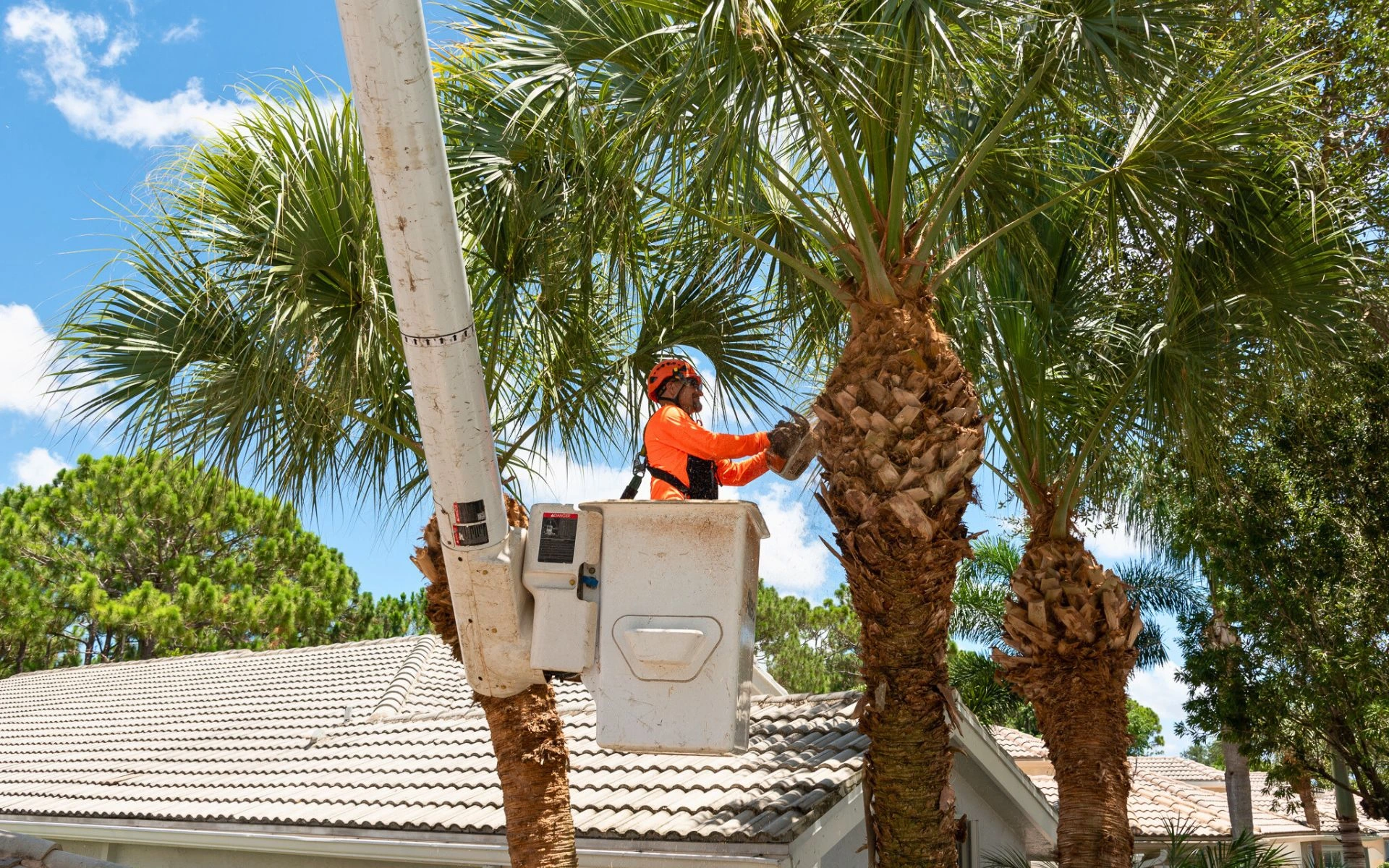
HOA tree trimming rules in Florida are the written standards your association uses to control how trees are planted, pruned, and removed in your deed-restricted neighborhood. They usually live in your CC&Rs (Covenants, Conditions & Restrictions), plus any separate landscaping or design guidelines, and they have to line up with the Florida Statute 720 HOA Act.
Those rules answer key questions like:
- Who trims which trees and who pays for what.
- When you need ARC or Board approval to plant, prune, or remove.
- Which species and sizes are allowed, and what must be replaced.
- How violations are handled and what the fine range looks like.
Even the strictest HOA rules still sit under higher law. They’re subject to HOA rules under Florida law and local city or county tree protection ordinances. So if local code says a tree is protected, HOA rules have to work around that, not bulldoze through it.
What Can Your Florida HOA Legally Require for Tree Trimming?
Your Florida HOA can set reasonable tree trimming and landscaping standards as long as those standards are properly adopted and recorded. But those rules can’t blow past Florida Statute 720 or override Florida or Hillsborough County tree regulations.
In practice, three main tools give your HOA its authority over trees:
- Florida Statute 720 (HOA Act) that creates the general enforcement framework.
- Your recorded CC&Rs and deed restrictions, which are the backbone of the rules on your title.
- Architectural / landscaping guidelines adopted by the Board or ARC, where you’ll usually find the nuts and bolts on tree placement, height, and pruning.
Florida Statute 720: HOA Tree Maintenance Authority & Limits
Florida Statute 720 does not list out tree rules one by one, but it gives HOAs broad power to enforce properly adopted use restrictions and maintenance standards. With trees, that usually translates into authority to:
- Require owners to keep landscaping, including trees, in a reasonably neat, safe condition that doesn’t become an eyesore or hazard.
- Authorize the HOA, in some communities, to enter a lot after notice to correct serious safety problems and bill the owner, if that right is clearly laid out in the CC&Rs.
- Let the Board levy fines and suspend rights for noncompliance, as long as they follow the hearing process and statutory dollar limits.
- Send most HOA–owner fights into presuit mediation or arbitration before anyone files in court.
The same statute also puts real brakes on how far an HOA can go:
- An HOA cannot enforce a rule that conflicts with state law or local code. So if Hillsborough County protects a specific tree or requires a permit they won’t issue, the HOA can’t demand you remove that tree anyway.
- Rule changes that seriously affect property rights, like suddenly banning tree types that were always allowed, usually require a proper amendment vote under both the statute and your CC&Rs, often in the 50–67% approval range.
If you want to see how state and city rules box in HOA powers, look at Florida tree protection laws and tree permitting over HOA. Those resources give a good feel for why “HOA says so” is not the last word.
CC&R Tree Provisions & Architectural Guidelines
Every Florida community has its own flavor of CC&Rs, but most of them carve out a landscaping section that handles:
- An approved species list and a “do not plant” list. You’ll often see no invasives, sometimes a requirement for certain shade trees or palms in front yards to keep a consistent look.
- A maintenance standard that talks about trees being trimmed, free of major deadwood, not leaning dangerously, and in generally good health.
- A removal approval process that kicks in once a tree hits a certain trunk diameter or height. Many communities peg this in the 4–6 inch diameter range.
- A violation fine range, often something like $25–$100 per day, kept under the caps and procedures set out in Florida Statute 720.
- An appeal process where you can ask for a hearing in front of a fining committee or the Board instead of just writing checks.
The Architectural Review Committee (ARC) or a similar design committee usually fills in the gaps with more detailed landscape and tree design guidelines. Those can get pretty specific and might cover things like:
- Required distances from sidewalks, driveways, and structures for new trees, including any HOA driveway clearance rules.
- Canopy clearance targets over sidewalks, driveways, and streets to keep walkways safe and fire trucks from being scratched to pieces.
- Rules on replacement trees when you remove one, including size and species from an approved list.
- Pruning standards and a short list of “don’ts,” such as topping, hat-racking, or severe lion-tailing that guts the interior branches. See HOA-prohibited pruning practices if you want to know why these methods cause trouble.
What HOAs Can Require vs. What They Cannot Override
Your HOA can legally require things like:
- Routine trimming of lot trees that hang over sidewalks, streets, driveways, or neighboring yards to the point they’re blocking access or creating a clear hazard.
- Removal of dead, dying, or obviously hazardous trees, especially when a professional has documented risk like decay, major lean, or large dead limbs over homes or walkways.
- Removal of trees that clearly break approved species rules in the CC&Rs, such as newly planted invasive species or trees on a written prohibited list.
- Compliance with published architectural standards about height, placement, and overall uniformity, as long as those standards are reasonable and consistently enforced.
Your HOA generally cannot:
- Force a cut or removal that would violate city or county tree ordinances or state protection laws, even if the Board “really wants it gone.”
- Retroactively apply a brand-new tree rule in a way that strips away your vested rights under older approvals without going through the proper amendment vote and statutory process.
- Blow off credible scientific evidence from an ISA Certified Arborist and push for pruning or removal that is unsafe, unnecessary, or conflicts with city permitting decisions.
Whenever a demand feels questionable, ask for the exact CC&R section, plus any written ARC guidelines they’re relying on. Then line that up with your city or county tree codes and the state-level rules in Florida tree protection laws. That side-by-side comparison clears up a lot of arguments fast.
HOA vs Homeowner: Who Is Responsible for Tree Maintenance?
Responsibility in a Florida HOA hangs on two things: where the tree is actually growing and what your CC&Rs say about that location. In Florida, most communities slice it this way:
- Common area trees → HOA usually owns and maintains these.
- Lot trees → The individual owner trims, manages, and usually pays.
- Boundary trees → Gray area that often becomes a shared job or a dispute, especially when trunks sit right on or close to the property line.
Common Area Trees
Common area trees sit on land owned or fully controlled by the HOA. Think entrance monuments, medians, neighborhood parks, stormwater ponds, and in some communities the strips along private HOA-maintained streets.
Under most CC&Rs, the HOA has to step up and:
- Maintain those trees as part of its fiduciary duty to keep common property safe and usable. That means inspections, routine trimming, and removal when something becomes truly unsafe.
- Carry potential damage liability. If a neglected common area tree fails and crushes a carport, the HOA’s master insurance policy often gets pulled in, especially where there’s evidence the tree should have been addressed earlier.
- Follow some sort of inspection schedule. Many professionally managed HOAs push for at least annual or semi-annual tree risk assessments near structures, walkways, and playgrounds.
- Respond to a documented hazard tree in a decent time frame. Once an ISA arborist HOA report flags a serious risk, sitting on it for months is asking for problems. Most communities try to act within 7–30 days, depending on severity.
- Plan and budget. Tree work in common areas gets paid out of the HOA’s operating budget or reserve fund. Good boards plan years ahead so they aren’t scrambling when a large removal project hits.
Many Florida associations bring in vendors like Panorama Tree Care to handle regular inspections and pruning. That reduces storm damage, helps with insurance, and keeps the Board from guessing about tree safety.
Lot Owner Trees
Lot trees live entirely on your deeded property, inside your lot lines. In most Florida HOAs, that means:
- You are responsible for routine trimming, health, and hazard reduction. If branches are dropping on your roof or blocking your driveway, the HOA usually expects you to handle it.
- Your homeowner’s insurance typically responds to damage from your trees, depending on whether you were negligent and what your policy covers.
- You still have to follow the HOA’s maintenance standards and usually need ARC approval for removals or heavy pruning on noticeable trees, especially in the front yard.
The HOA’s authority over your lot is not a blank check. So if your tree is healthy, properly permitted, and code-compliant, the question “Can HOA force tree removal?” usually turns on whether that tree clearly violates a written CC&R tree provision or a documented safety rule, not just that someone on the Board dislikes it.
Boundary Trees
Boundary trees are where most people get tripped up. These are trees whose trunks sit on or right next to the property line between two lots, or between a lot and a common area strip owned by the HOA.
- Under common property concepts, a tree with a trunk directly on the line is often treated as shared property. Both owners may have rights and responsibilities, though the exact rules can get messy and sometimes require legal advice.
- Each neighbor usually has the right to trim branches crossing onto their property, as long as they don’t kill the tree, violate pruning standards, or ignore HOA landscaping rules.
- Where a boundary tree sits between a lot and a common area, fights often break out over whether the lot owner vs HOA authority gets to decide on major pruning or removal.
For boundary fights in Florida HOAs, a methodical approach goes a long way:
- Pull a survey and confirm the exact property line. Guessing off a fence line is a recipe for arguments.
- Review the HOA’s plat map and any CC&R sections that mention boundary trees, easements, or shared maintenance.
- Get an independent ISA arborist HOA report to document the tree’s health and risk so nobody is arguing from pure opinion.
Can Your HOA Force You to Remove a Tree?
Whether an HOA can force tree removal in Florida always comes back to three questions: why they want it gone, what your CC&Rs actually say, and how that lines up with local and state law. In Florida, HOAs have solid footing on truly unsafe or clearly rule-breaking trees. Their footing is weaker on healthy, code-compliant trees that have been in place for years.
When an HOA Can Legitimately Require Tree Removal
In practice, Florida HOAs usually have strong ground to demand removal when:
- The tree is dead, dying, or objectively hazardous, backed up by an arborist or another qualified inspector. Signs might include major trunk decay, large dead limbs, heavy lean over a structure, or root failure.
- The species is clearly prohibited in the CC&Rs or ARC guidelines. For example, certain invasive species or messy nuisance trees that the documents specifically ban.
- The tree was planted or heavily altered without ARC approval in a community where front-yard landscape changes need written signoff.
- The tree violates setback, sightline, or utility easement rules and creates real safety or access problems for drivers, pedestrians, or utility crews.
- The tree is causing documented damage to common structures, like lifting a community sidewalk or cracking a perimeter wall, and there’s no practical alternative short of removal.
If you refuse to act after proper notice and a chance to be heard, the HOA may step up enforcement. That can include:
- Assessing HOA enforcement fines in the range and manner allowed by Florida Statute 720 and your CC&Rs.
- In some neighborhoods, having the work done and charging it to you, but only where the governing documents clearly allow that and where the hazard is serious enough to justify it.
When an HOA Cannot Force Removal
HOA power is not unlimited. In Florida, an HOA usually cannot force tree removal if any of the following are in play:
- The tree is a protected species or meets size or heritage thresholds under city/county rules, and removal would violate permit requirements or replacement mandates.
- The tree is healthy, structurally sound, and code-compliant, and there’s no specific, written CC&R rule about its species, placement, or height.
- The HOA is trying to bulldoze past a legitimate tree permit denial from the city/county or is asking for work that local staff has already said no to.
- The demand is purely aesthetic and not tied to any written rule, safety concern, or documented standard. “We just don’t like that tree” is not a legal basis.
Always cross-check a removal demand against local codes, permitting decisions, and state rules. For more detail on how permits and HOA demands interact, look at tree permitting over HOA.
Using ISA Arborist Reports to Push Back on Improper Demands
If you think your HOA is overstepping, a strong move is to get a report from an ISA Certified Arborist. In real-world disputes, this kind of report often carries more weight than any letter the Board writes.
Good arborist reports typically include:
- A formal risk assessment rating the tree as low, moderate, high, or extreme risk, with photos and explanations.
- A clear discussion of alternatives, like selective pruning, cabling, or reduced crown density instead of removal.
- Confirmation that the tree is healthy and code-compliant where that’s the case, including reference to local rules if needed.
Many HOAs, especially ones that work with Panorama Tree Care, already lean on ISA arborist HOA reports when deciding if a tree really needs to come out. If the HOA’s arborist and your arborist disagree, that conflict becomes the core issue to put on the table in mediation or arbitration.
Florida HOA Tree Disputes: Resolution Process
Most tree fights in Florida HOAs never make it to a judge. Florida Statute 720 points everyone toward mediation and arbitration first, and in practice, most disputes calm down once there’s a paper trail, clear rules cited, and expert opinions on the table.
Step 1 — Written Communication
Start on paper, not in the parking lot. Calm, clear written communication sets you up for success later.
- If you get a violation notice:
- Respond in writing by the deadline. Don’t sit on it.
- Ask for the exact CC&R or written rule section they say you violated.
- Request any photos, arborist reports, or inspection notes they’re relying on.
- Ask them to spell out the corrective action they expect and the timeline for compliance.
- If you’re the one raising a concern, such as a neighbor’s dangerous tree or a failing common area oak:
- Send a detailed email or letter to the Board or manager naming the exact location of the tree.
- Describe what you’re seeing: lean, deadwood, lifting roots, fungus, or prior limb failures.
- Attach photos or incident notes if branches have already fallen or sightlines are blocked.
Save every email and letter. If things move into ARC review, mediation, or court, that paper trail becomes your best friend.
Step 2 — ARC Review
The Architectural Review Committee (ARC) usually steps in whenever a tree issue touches design standards or visible changes to the lot’s appearance.
ARC involvement is common in disputes over:
- Tree removal and replacement plans.
- New plantings, especially in the front yard, side yards facing streets, or near common areas.
- Alleged violations of height, species, or placement rules in the design guidelines.
Key ARC attributes that matter for tree cases:
- Authority scope: Usually covers landscaping, trees, exterior finishes, and sometimes view corridors in waterfront or golf communities.
- Review timeline: Most documents give the ARC 30–45 days after a complete submission to approve or deny. If they miss that window, some CC&Rs treat it as an automatic approval.
- Approval criteria: Often include consistency with community standards, safety, aesthetics, and in some neighborhoods, preservation of mature canopy trees.
- Denial appeal process: Denied applications can usually go to the Board or a separate appeal body, depending on your documents.
- ISA report acceptance: Many ARCs either explicitly or informally agree to rely on ISA arborist reports for health and risk questions.
If you’re trying to get approval for removal or pushing back on an HOA order, your ARC package should be complete from the start:
- A simple site sketch or survey marking the tree and nearby structures.
- Clear photos from multiple sides.
- Any relevant ISA arborist HOA report explaining the condition and recommended work.
- Copies of any city/county permit or permit exemption letters or emails.
Step 3 — Mediation
If direct communication and ARC review still leave you stuck, Florida Statute 720 usually kicks in and requires presuit mediation before a lawsuit can move forward on covenant or rule enforcement issues, including tree disputes.
Key features of HOA tree dispute mediation:
- Florida requirement: For most HOA covenant and rule fights, yes, mediation is required before court.
- Mediator selection: You and the HOA generally pick a mediator together from a list of Florida-certified mediators. If you can’t agree, a court or referral service might step in.
- Cost split: Typically 50/50, though you can negotiate other arrangements in a mediated agreement.
- Binding decision: Mediation is usually non-binding. The mediator tries to help you reach a deal instead of handing down a verdict.
- Timeline: Many tree-related disputes settle within 1–3 sessions, often scheduled within 60–90 days after the mediation process is triggered.
Mediation is the place to lay out your ISA arborist reports, photos, emails, and excerpts from the CC&Rs and tree codes. Many Boards are far more flexible in that room than they appear in the first violation letter.
Step 4 — Arbitration or DBPR Complaint
If mediation fails or the issue involves statutory violations beyond a simple covenant fight, the next options include arbitration or a complaint with the Florida Department of Business and Professional Regulation (DBPR).
- Arbitration: Certain HOA disputes can or must go to binding arbitration instead of a court trial. An arbitrator reviews the evidence and issues a binding decision under a set schedule.
- Florida DBPR complaints: Owners can file complaints if they believe the HOA is breaking parts of the HOA Act, ignoring required procedures, or mismanaging. DBPR can investigate statutory compliance and Board conduct, though it won’t usually decide complex tree ownership or damage liability issues the way a court would.
These later steps can get technical fast. Most owners talk with an attorney before heading into arbitration or filing a formal DBPR complaint about a tree case.
HOA Tree Trimming Standards for Florida Communities
Most Florida HOAs don’t just wing it on tree care. They have written tree trimming standards designed to keep the neighborhood looking good, maintain sightlines, and reduce storm damage. The details differ from one community to the next, but the main themes show up over and over.
Canopy Height & Clearance
Canopy clearance is one of the first things I see in HOA guidelines around here. Typical requirements look like this:
- Sidewalk clearance: Branches must usually be kept at least 7–8 feet above sidewalks so pedestrians aren’t ducking or getting smacked in the face.
- Street clearance: Above internal streets, HOAs often call for 12–14 feet of clearance to give delivery trucks, school buses, and emergency vehicles room to pass safely.
- Driveways and walkways: Trees near driveways or paths are expected to be pruned so they don’t block access, scratch vehicles, or hit delivery vans.
Professional crews like Panorama Tree Care work off ISA pruning standards so they can hit those clearances without hacking the tree to pieces. Proper cuts and timing matter if you want a tree to stay healthy long term.
Visibility Triangle & Sightlines
Traffic safety is another big area where HOAs get strict. Most communities in Florida adopt some form of visibility triangle standard near intersections, bends in the road, and driveway exits.
- Within a certain triangle from an intersection or stop sign, you usually can’t have tree trunks or dense foliage that block a driver’s view.
- Lower branches often have to be pruned up in these zones so drivers can see oncoming cars, walkers, and cyclists.
If a tree blocks a stop sign or an intersection view, the HOA may require heavy trimming or, in worst cases, removal. Even then, the work still has to line up with local tree laws and any required permits.
Property Line Setbacks & Encroachment
Plenty of Florida HOAs spell out minimum distances for trees from key features to keep peace between neighbors and limit damage:
- Setbacks from property lines to reduce constant branch encroachment and root issues.
- Distances from structures like houses, screen enclosures, fences, and walls to keep roots from cracking slabs and trunks from rubbing roofs.
- Offsets from sidewalks and utilities to keep roots from lifting pavers, damaging irrigation, or tangling with power lines.
If your tree’s roots are breaking a community wall or shared sidewalk, the HOA might claim you’ve failed your tree maintenance obligation. In those cases, an arborist can help everyone figure out whether root pruning, root barriers, or a species swap is best, instead of jumping straight to full removal.
Storm Preparation Trimming
Florida doesn’t need to be reminded about hurricanes. Many HOAs here require periodic storm preparation trimming ahead of or during hurricane season.
- Removing dead, cracked, or poorly attached branches that are likely to break in high winds.
- Selective thinning to let wind pass through the canopy without over-thinning and weakening the tree.
- Correcting poor structure in young trees so they hold up better once they size up.
The trick is doing enough without going too far. Some boards or untrained landscapers push for topping or extreme lion-tailing to reduce wind load, but those methods actually make trees weaker and more dangerous in future storms. Take a look at lion tailing HOA violations for specifics on why certain pruning demands are flat-out bad practice.
Aesthetic Standards & Approved Species Lists
Beyond safety, Florida HOAs usually have a vision for how the neighborhood should look from the street. That’s where an HOA approved tree species list and other aesthetic standards come in.
- Encouraging or requiring wind-resistant, non-invasive trees that do well in our soil and weather without constant headaches.
- Calling for certain species, heights, or canopy forms in front yards to keep a cohesive appearance along each street.
- Banning especially messy or aggressive species, such as those known for invasive roots, heavy fruit drop, or constant limb shedding.
The CC&Rs normally pair those species rules with a general maintenance standard, like no obviously diseased, heavily leaning, or badly overgrown trees visible from common areas. As long as those standards are reasonable, tied to safety or community character, and enforced across the board, they usually fit under Florida HOA landscaping rules.
Role of ISA Arborist Reports in Setting & Enforcing Standards
When owners and HOAs disagree about how much trimming is needed, or whether a tree still meets the community standard, ISA arborist HOA reports are often what break the tie.
Those reports can:
- Assign a risk level to each tree and explain what that actually means in plain language.
- Lay out whether pruning, cabling, or removal is the right tool for the problem, instead of guessing.
- Suggest maintenance schedules communities can build into their vendor contracts so they stay ahead of problems instead of reacting after something fails.
Companies like Panorama Tree Care deliver this type of documentation all the time for Florida HOAs. That keeps Boards aligned with industry standards and Florida law, rather than just winging it based on what looks “too big” or “too messy.”
How Panorama Tree Care Works with Florida HOAs
Panorama Tree Care works with a lot of HOA boards and managers across Florida. Understanding how a professional tree service plugs into HOA operations helps you see why some decisions get made the way they do, and it gives you better questions to ask when you’re on the receiving end of a notice.
Community-Wide Tree Assessments
On a new HOA contract, Panorama usually starts with a community-wide tree assessment rather than just chasing one complaint at a time.
- We identify all common area trees, plus any big private trees that hang over shared spaces, walkways, or roads.
- We rate condition and risk level using ISA standards, taking into account structure, defects, targets, and site conditions.
- We flag trees that need immediate attention versus those that just need routine maintenance down the road.
This process gives the HOA a clear map of where they stand on fiduciary duty tree hazard issues and lets them plan their budget for phased pruning and removals instead of playing catch-up after every storm.
ISA Compliance Reports & ARC Support
Panorama’s ISA Certified Arborists issue detailed HOA arborist reports that plug directly into the HOA decision-making process.
- Boards and ARCs use these reports to support approvals or denials of removal requests and to explain decisions in writing.
- Homeowners can use them to back up ARC applications, especially if they’re asking for removal of a tree the HOA would otherwise want to keep.
- Insurance carriers sometimes review them in HOA insurance tree damage claims to see if the association was on top of known hazards.
These reports usually reference ANSI A300 pruning standards and best practices. That keeps everyone honest about what’s “safe” pruning and what crosses the line into damage, and it reduces fights about whether a job was overdone or not enough.
If you’re wondering why the HOA cares about certified professionals, take a look at certified arborist HOA reports. That background helps explain why these reports carry so much weight.
Scheduled Maintenance Contracts
Most Florida HOAs want stable, predictable costs and no ugly surprises. Panorama supports that with scheduled maintenance contracts tailored to each community.
- Regular annual or semi-annual inspections of common area trees, with updates on new risks and changes since the last visit.
- Rotating pruning cycles so different sections of the neighborhood get worked each year without blowing the budget.
- Built-in pricing and priority for emergency response work, so the community isn’t left at the bottom of the list after a major storm.
These contracts help HOAs meet their tree maintenance obligation and demonstrate that they’re actively managing risk, which can matter a lot during insurance negotiations and legal disputes.
Emergency Storm Response
After a big wind event in Florida, everyone suddenly wants tree work at the same time. HOAs that already work with Panorama Tree Care usually get first call on emergency storm response.
- We handle rapid hazard removal on downed or dangerously compromised trees so roads, driveways, and sidewalks can reopen fast.
- We coordinate with insurance adjusters and property managers to document damage and necessary follow-up work.
- Communities with existing maintenance contracts jump to the top of the scheduling queue when cleanup hits.
This protects both the association and individual homeowners, especially in those gray areas where nobody is sure who pays for fallen tree removal or cleanup. That’s usually the moment everyone digs out the governing documents and insurance policies and looks for past inspection records.
ARC-Compliant Work Documentation
When Panorama works directly for individual homeowners inside HOA communities, we pay close attention to documentation that lines up with HOA expectations.
- We provide before-and-after photos so you can show exactly what was done if questions come up later.
- Invoices and reports reference HOA-approved standards and, where needed, specific ARC conditions.
- We confirm that work followed industry best practices, which owners can show to the ARC or Board to demonstrate compliance.
This paper trail makes it much easier if someone on the Board later claims the work was unauthorized or excessive. You’ll have professional documentation backing you up.
Common HOA Tree Mistakes in Florida (and How to Fix Them)
I see the same avoidable mistakes over and over again, both from homeowners and from HOA boards. Knowing these ahead of time can save you a lot of grief.
Mistake 1: Ignoring Local Tree Protection & Permit Rules
Problem: HOAs sometimes demand tree removal without checking whether city or county law requires a permit, replacement planting, or proof of hazard first. That can put both the HOA and you on the hook for fines or forced replanting.
Fix: Before removing any decent-size tree, verify local requirements. Use resources like Florida tree protection laws and tree permitting over HOA, or talk with a professional arborist who knows Florida’s permitting habits. Get it in writing before you cut.
Mistake 2: Relying on Informal Verbal Approvals
Problem: An owner chats with a Board member at the pool, hears “yeah, go ahead and take that down,” then removes the tree. A year later, with a new Board in place, they’re staring at a violation letter and fine schedule.
Fix: Treat every major tree decision like a construction project. Get written ARC or Board approval before removal or heavy pruning, and keep those emails and approval letters forever. Don’t trust a handshake or a hallway nod.
Mistake 3: Unsafe or Excessive Pruning (Topping & Lion-Tailing)
Problem: In a rush to reduce storm risk or height, some owners or even HOAs demand drastic topping or lion-tailing. That kind of pruning shocks the tree, weakens structure, and often increases long-term hazard.
Fix: Make sure all significant work follows ISA and ANSI A300 standards, and take a few minutes to read lion tailing HOA violations so you know what to avoid. For any meaningful job, insist on a certified arborist, not just the cheapest guy with a chainsaw.
Mistake 4: Skipping Independent Arborist Opinions in Disputes
Problem: I see owners arguing from the heart about how much they love a tree, while HOAs keep repeating “it’s dangerous” without any objective evidence. That kind of standoff goes nowhere.
Fix: Bring in facts. Order an independent ISA arborist HOA report. A neutral, detailed assessment gives both sides something concrete to work from and makes ARC reviews and mediation far more productive.
Mistake 5: HOAs Applying Rules Inconsistently
Problem: One owner gets hammered with fines for a messy oak, while three other oaks on the same street are just as bad and nobody says a word. That opens the door to selective enforcement claims and real legal risk for the Board.
Fix: Boards should adopt clear written enforcement policies and stick to them. Community-wide inspections by vendors like Panorama help catch similar violations across the neighborhood so enforcement is even-handed, not personal.
Mistake 6: Homeowners Waiting Until After Fines Accrue
Problem: Some owners throw violation letters in a drawer, hope it all blows over, and wake up months later facing a big fine balance and potential lien talk.
Fix: Engage early. Respond in writing as soon as you get a notice, ask for a hearing or ARC review if you disagree, and start lining up an arborist report and mediation if needed. Addressing the issue on day one is almost always cheaper and easier than fighting it six months in.
FAQ: Florida HOA Tree Trimming Rules (Florida Focus)
Here are answers to questions homeowners ask all the time about HOA tree trimming rules in Florida and how they actually work in real neighborhoods.
1. Can my Florida HOA fine me for not trimming my trees?
Yes, they usually can, if your CC&Rs and written rules clearly say you must keep trees trimmed and safe. Under Florida Statute 720, those fines have to follow a process. You’re entitled to written notice, a chance for a hearing in front of an independent fining committee, and limits on how much they can charge per day and per violation. Many communities use numbers like $50 or $100 per day up to $1,000, unless the documents allow a higher cap.
2. What is the typical fine amount for HOA tree violations?
in Florida, HOA tree violation fines often fall in the $25–$100 per day range until you fix the issue, with a per-violation cap in the ballpark of $1,000. That structure fits nicely with the guidelines in Florida Statute 720 and many CC&Rs. If you ignore notices and the HOA has to bring in a crew for emergency work, some documents also let them bill you for the actual cost of trimming or removal.
3. Can I appeal an HOA decision about my trees?
In most Florida HOAs, yes. There’s usually an appeal or hearing process where you can sit down in front of a fining committee or the Board and lay out your side. Bring photos, ISA arborist reports, and any local code sections that support your position. If you still can’t reach an agreement, mediation under Florida Statute 720 is usually required before anyone files a lawsuit.
4. What happens if HOA rules conflict with county or city tree laws?
If your HOA’s rules collide with county or city tree laws, the government’s rules win almost every time. So if your city or county denies a removal permit or marks a tree as protected by species or size, the HOA can’t force you to cut it down anyway. When that happens, send the HOA a copy of the permit decision or code section and, if needed, have them call the local planning or urban forestry office for clarification.
5. Do I need HOA approval if I already have a city tree removal permit?
Often yes. A city or county permit only says the government is fine with you removing the tree under public law. It doesn’t erase your private contract with the HOA. If your CC&Rs require ARC or Board approval, you still need to get it. Skipping that step can lead to violations, fines, and demands for replacement trees, even if your city permit is perfectly valid.
6. Can an HOA force tree removal on my property without my consent?
In most cases, your HOA can’t just roll in with chainsaws uninvited. Some CC&Rs give the HOA power to act without consent on extreme hazards after proper notice if an owner refuses to address an immediate danger, but that’s the exception and the documents have to spell that power out clearly. More commonly, the HOA issues violation letters, fines, and then, if needed, seeks a court order. Whatever they do still has to line up with Florida Statute 720.
7. Who pays when an HOA tree falls and damages my home?
If a common area tree comes down and hits your roof, your homeowner’s insurance often responds first. After that, your insurer might pursue the HOA if there’s strong evidence the tree was a known hazard the HOA ignored. If the tree was on your lot, your own insurance usually takes the lead. Policy language, local case law, and whether anyone was negligent matter a lot, so talk to your insurer or an attorney for specific claims advice.
8. How do I get an ISA arborist report to challenge an HOA demand?
Look up an ISA Certified Arborist who regularly works with Florida HOAs. Tell them you need a written risk assessment report that covers health, structure, and recommended actions. Submit that report with your ARC application or include it in your written response to a violation. You can also point the HOA to resources like certified arborist HOA reports so they understand the professional basis for the opinion.
9. Will I have to replace a tree my HOA makes me remove?
In many Florida communities, yes. Both local tree codes and HOA rules often require replacement trees when you remove a significant tree. Your CC&Rs or guidelines may call for a specific replacement size and species, such as a 2–3 inch caliper shade tree from the HOA’s approved list. Always confirm any replacement obligations with both the HOA and the permitting authority before the removal crew shows up.
10. What if my neighbor’s tree is dangerous but the HOA won’t act?
If you’re worried about a neighbor’s tree and the HOA seems uninterested, you still have options. Document the issue in writing to both the neighbor and the HOA. Photos and timelines matter. Consider hiring an ISA arborist to document the hazard. If nothing changes, talk with an attorney about your rights around boundary trees, potential liability, and whether mediation under Florida Statute 720 makes sense if the issue ties into HOA enforcement failures.
Final Summary & What to Do Next
Dealing with HOA tree trimming rules in Florida, especially around Florida, means working through three layers: your CC&Rs and ARC guidelines, Florida Statute 720, and whatever local tree protection laws apply to your property. Your HOA can set and enforce reasonable safety and appearance standards, but it can’t override government protections or demand pruning that violates ISA standards or local code.
If you’re in the middle of a tree disagreement with your HOA, a solid plan looks like this:
- Ask for specific written citations to the exact CC&R sections and guidelines they say you’re breaking.
- Compare those rules against Florida tree protection laws and local permitting requirements so you’re not pushed into illegal work.
- Order a certified ISA arborist report so the discussion is grounded in facts instead of feelings.
- Use the ARC review, hearing, and appeal process spelled out in your documents, and be ready for mediation under Florida Statute 720 if things stay stuck.
When it’s time to trim or remove trees in your Florida HOA community, working with a tree service that understands HOA standards, ARC processes, and local regulations makes life a lot easier. Done right, you can keep your trees healthy, your home safe, and your rights protected without turning every pruning job into a full-blown fight.


2 Responses
How long do pine trees live? I have 2 next to my HOA condo, and it is common area, so HOA is responsible.
These 2 trees however are quite old and tall enough to cause significant roof damage if broken in storm or from lightning.
Should I worry? One is leaning.
I have Homeown. insurance.
The HOA does regularly vendor out another arborist company for tree inspections.
Hi Laura, Pine trees typically live between 100 and 1,000 years, though average lifespans vary widely by species, and extreme outliers like the bristlecone pine can survive for nearly 5,000 years.
Considering the Tree risk to property I would recommend calling Panorama Tree Care for a Tree Assessment level 2 which is a written assessment which then can be presented to you HOA and put on notice regarding mitigation. Cost for level 2 written Tree Assessment is 240.00.
Respectfully.