A clear HOA tree contract helps the board plan maintenance, compare bids and respond when a tree needs urgent attention. Use this guide to set the scope, check the contractor and agree on the records and approvals your community needs.
What Tree Maintenance Contracts for HOAs Should Cover
Tree maintenance contracts for HOAs are written agreements that define how a community association manages the trees on its common property, including who performs the work, to what standard, and who carries the risk.
Scope of work and common area maintenance
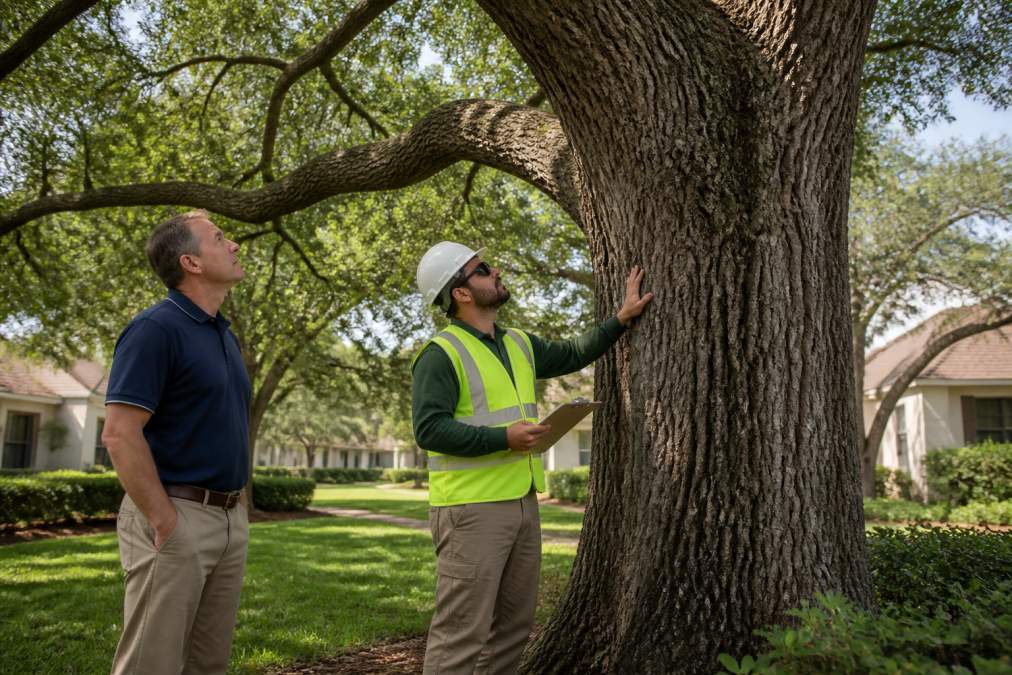
The scope of work is the section boards read first and argue about last. It should list every tree by location, species, and size, not as a vague promise to “maintain community trees.”
Common area maintenance typically covers:
- Trimming and pruning on a set schedule
- Deadwood removal and canopy management
- Stump grinding after any removal
- Cleanup and debris hauling
- Emergency response terms
Pruning standards and cleanup responsibilities
Pruning standards should reference ANSI A300, the industry standard for tree care operations. (Tree Care Industry Association, ANSI A300) Say so explicitly in the contract. “Prune as needed” means nothing in a dispute.
Liability Coverage, Workers Compensation, and Insurance Certificates
Insurance is where cheap bids fall apart. Any commercial tree service contract checklist starts here.
- General liability coverage
- Workers compensation coverage
- Automobile coverage for equipment and crews
Request current certificates before work starts and confirm coverage with the insurer or issuing agent. Match the insured business name to the contractor on the agreement, check policy dates, and ask how coverage applies to the work and any subcontractors. Have the association’s insurance adviser review the limits and any required additional-insured endorsement.
Assign someone to track renewal dates and obtain updated documents during a longer agreement. The contract should also state how the contractor reports an injury or property damage, who the board contacts, and what information must accompany an incident report.
In Florida, construction-industry employers need workers’ compensation with one or more employees; non-construction employers need it with four or more. Ask whether the contractor’s coverage, or a valid exemption, applies to the crew on your job, and require subcontractors to show their own. (Florida Division of Workers’ Compensation)
For a starting point in bid discussions, boards can ask for general liability limits of $1 million per occurrence and $2 million aggregate. These are example contract limits, not a legal minimum or a guarantee of sufficient coverage. Confirm appropriate limits and endorsements with the association’s insurance adviser.
Florida Law Boards Should Know Before Signing
Florida law requires HOA contracts for services to be in writing. If a contract requires payment exceeding 10% of the association’s total annual budget, including reserves, the association must obtain competitive bids, though it is not required to accept the lowest bid. Emergency purchases are not limited by this rule. A contract awarded by competitive bid can be renewed without rebidding if it lets the board cancel on 30 days’ notice. (Fla. Stat. 720.3055)
Contracts the association is a party to are official records, and bids received for work must be kept for 1 year. (Fla. Stat. 720.303)
Florida’s arborist-documentation exemption from local tree permits applies only to a single-family detached home on a lot actively used as one. It does not cover HOA common areas, entrances or retention ponds, so removals there still need whatever local permit applies. (Fla. Stat. 163.045; Hillsborough County Tree Resources)
Specify that the contractor obtains any required tree permits before removal, identifies whether the permit is in the contractor’s or association’s name, and gives the board copies of approvals and conditions. Pinellas County’s tree rules changed on January 23, 2026, and apply countywide unless a city has its own ordinance: the general removal-permit threshold is 4 inches in trunk diameter, with separate rules for homesteaded, actively occupied single-family properties. Confirm which rules apply to the common-area parcel. (Pinellas County tree regulations)
Building Your HOA Tree Maintenance Policy Template
An HOA tree maintenance policy template turns scattered decisions into a repeatable process. Boards that adopt one stop relitigating the same questions every year.
A workable template includes:
- A current tree inventory with species, size, and condition notes
- Inspection frequency: We usually recommend an annual walkthrough and a more detailed risk assessment on a cycle set by the arborist based on tree age, condition and targets. Communities with mature canopy, past storm damage or waterfront exposure may need more frequent checks.
- A named point of contact for both the board and the vendor
- Approval thresholds for work above routine maintenance
- Emergency response procedures and after-hours contacts
- A records file for certificates, reports, and completed work
Require before-and-after photos and a written report after each visit, matched to the tree inventory. UF/IFAS recommends regular contractor reports covering completed and planned work, deviations from the schedule, problems encountered and suggested improvements. (UF/IFAS community association contract guidance)
Use a table like this for the inventory. These rows are examples, not an assessment of a particular community.
| ID | Species | Trunk diameter | Location | Condition | Recommended action |
|---|---|---|---|---|---|
| T-01 | Live oak | 24 inches DBH | Main entrance | Dead branch noted | Arborist to assess and specify work |
| T-02 | Crape myrtle | 6 inches DBH | Clubhouse path | No obvious defect noted | Include in scheduled walkthrough |
Commercial Tree Service Contract Checklist for Board Members
A commercial tree service contract checklist keeps bid solicitation fair and comparable. Send every bidder the same scope, the same inventory, and the same questions. The checklist below is one most boards should be working from.
| Contract Element | What to Verify | Why It Matters |
|---|---|---|
| Scope of work | Tree-by-tree list with location, species, and size | Prevents disputes over what was included |
| Pruning standards | ANSI A300 referenced by name | Sets a measurable quality bar |
| Insurance | Certificates on file, association named as additional insured | Protects the association if something goes wrong |
| Cleanup | Debris hauling, raking, and turf repair terms | Avoids surprise charges after the crew leaves |
| Term and renewal | Start date, end date, auto-renewal notice window | Controls budget timing and pricing |
| Termination | Notice period, cause vs. convenience, exit procedure | Lets the board leave a bad vendor without legal blowback |
| Records and reporting | Written inspection reports, photo documentation, retention period | Helps the next board track findings and completed work |
The termination clause most boards skip
A contract with no exit clause locks you in even when performance drops. The clause needs three things spelled out:
- Notice period. How many days’ written notice the board must give to end the agreement, and how that notice is delivered (certified mail, email to a named contact, both).
- Termination for cause vs. for convenience. Cause covers non-performance, missed visits, unsafe work, lapsed insurance. Convenience lets the board exit for any reason, usually with a longer notice period. A contract with only a cause provision forces the board to prove a breach before it can leave.
- Exit procedure. What happens to work in progress, who removes debris already on site, how final invoices are settled, and whether the vendor must return keys, gate codes, or equipment stored on common property.
What to do before you sign
Before the board signs, confirm four things in writing:
- The insurance certificates are current and name the association as additional insured.
- The pruning standard references ANSI A300 by name, not “industry standard.”
- The termination and renewal clauses match what was negotiated, not the vendor’s boilerplate.
- The point of contact for both the board and the vendor is named, with an after-hours number for emergencies.
If any of those four is missing, the contract is not ready for a board vote.
A memo template for the board packet
Boards that document the reasoning behind the spend have a defensible record if a tree later fails. A short memo in the board packet can cover: the current tree inventory summary, the inspection findings, the recommended work and its priority, the budget line it draws from, and the contract terms being approved. That memo is what a resident sees when they ask why the community is spending on trees this year, and it is what the board points to if a claim is ever filed.
Key Takeaway
The two clauses that decide whether a tree contract is an asset or a trap are the termination clause and the renewal notice window. Get both in writing before the board votes.
Tree Risk Assessment for Communities: Inspections and Hazard Assessment
Tree risk assessment for communities is a structured evaluation of each tree’s likelihood of failure and the consequences if it falls. It is not the same as a health check.
Start with the shared spaces people use most: entrances, sidewalks, parking areas, playgrounds and buildings. Ask the assessor to identify each tree by a map location or inventory number, explain the visible defects and potential targets, and separate urgent work from items that can be monitored.
Specify the deliverables in the contract: a written tree risk assessment, photos, recommended actions and a suggested reassessment interval. Agree on who receives urgent findings and who can authorize work, so an important recommendation does not sit unanswered until the next board meeting.
Pro Tip
Ask your arborist for written findings, not a verbal walkthrough. Ask that the report identify which recommendations need immediate action and which need a follow-up visit.
Agree on separate response targets for immediate hazards, urgent work and routine debris cleanup. As a negotiation example, request a callback within 1 hour for an immediate hazard, an assessment within 24 hours for urgent non-immediate concerns, and a cleanup plan within 3 business days. These are proposed contract targets, not Panorama response guarantees; define safe access, utility clearance and regional storm-demand exceptions before signing.
Name the board officer or property manager who may authorize emergency work, a backup contact and a spending limit. Schedule a pre-season inspection before June 1. After a storm, keep people away from hazards, arrange assessment and approved debris work, and retain dated photos, tree locations, work logs, quantities and invoices for insurance or any applicable disaster-assistance review. Confirm eligibility and documentation requirements with the local emergency-management office; HOA debris work is not automatically eligible for FEMA reimbursement.
Annual Service Agreement vs. On-Call: Budgeting and Scheduling
An annual service agreement locks in scheduled maintenance at a predictable cost. On-call service handles work as it arises, usually at higher rates and longer wait times. The decision is not philosophical; it is a budgeting question the board has to defend at the next meeting.
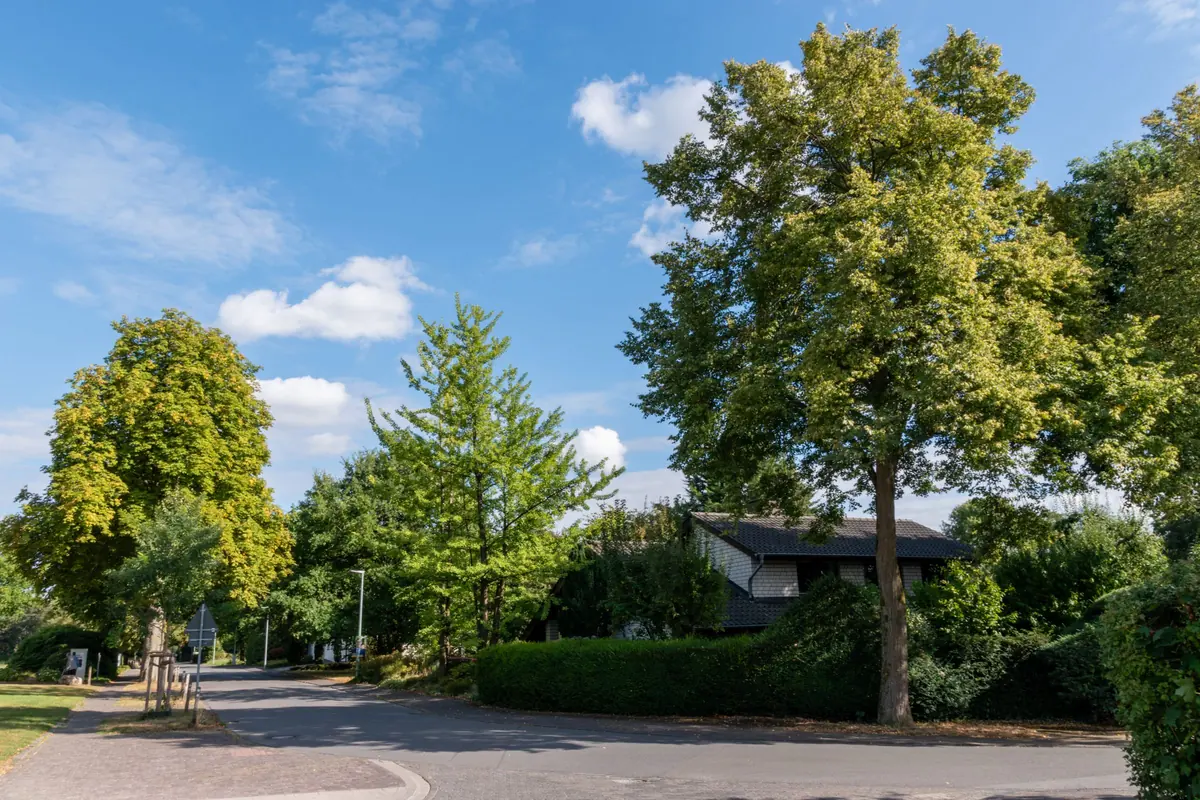
What each model actually costs the association
A standing agreement spreads predictable work across the year: scheduled pruning, deadwood removal, canopy raising over walkways, and a set number of inspections. Because the vendor can plan crews and equipment, the per-visit rate is typically lower than the same work ordered on demand. On-call pricing reflects the vendor’s need to fit an unscheduled crew into an already-booked calendar, and after a storm event, demand spikes across the entire region at once.
Splitting the budget into two lines
Boards that fold routine care and emergency response into one line item get caught short after a major weather event. Split them:
- Routine maintenance line: scheduled pruning, inspections, deadwood removal, stump grinding, and cleanup, funded annually and tied to the contract term.
- Emergency reserve line: a separate reserve sized to cover at least one large removal plus emergency response, held for storm season and not spent on routine work.
Aligning the contract term with the fiscal year
Contract renewal timing matters. If the agreement renews in the middle of the fiscal year, the board is approving spending it did not budget for, and the renewal becomes a fight. Align the start date with the beginning of the fiscal year so the board approves the tree budget before the season starts, not after.
Justifying the spend to residents
Tree care is one of the easiest line items for a resident to question, because the work is invisible until something falls. A short memo to the community (what was inspected, pruned and removed, why, and what the reserve covers) turns a line item into a risk-management decision. Include the next planned visit and any access restrictions so residents know what to expect.
Pro Tip
Ask your arborist to break the annual agreement into a per-service schedule with dates and a fixed price per visit. A schedule the board can read is far easier to approve than a single lump-sum number.
Watch Out
Do not sign a multi-year agreement with automatic renewal and no termination clause. Boards that do often discover the vendor has no incentive to respond quickly, and they cannot leave without paying out the remaining term.
Selecting a Qualified Arborist and Negotiating the Contract
Hire an ISA Certified Arborist, not just a tree cutter. ISA certification means the person passed an exam on tree biology, pruning standards, and risk assessment, and maintains continuing education.
Ask for the name and credential number of the arborist who will assess the trees or oversee the work, then verify the credential with ISA. Request references from communities with a similar tree inventory and a sample report so the board can judge whether the recommendations are clear enough to use.
Compare bids against the same scope before negotiating the price. Have each bidder identify exclusions, subcontracted work, equipment access needs and the process for approving extra charges. Record agreed changes in the final contract, including who will communicate with residents about parking restrictions and temporary closures.
Conclusion
The hardest part of tree maintenance contracts is not the paperwork; it is knowing which clauses actually protect your community when a storm hits or a vendor underperforms. Panorama Tree Care works with property managers and boards across the Tampa Bay area on annual service agreements, tree health assessment, and 24/7 emergency storm response, backed by ISA Certified Arborists and ANSI A300 compliant work. Discuss your community’s scope and schedule with our commercial and HOA tree service team.
HOA Tree Contract FAQs
What should be included in a tree maintenance contract for an HOA?
A solid tree maintenance contract for HOAs should define the scope of work, including which trees and common areas are covered, pruning standards, deadwood removal, and cleanup responsibilities. It must require liability coverage, workers compensation, and current insurance certificates. Include an annual service agreement term, inspection frequency, emergency response times, and a clear process for contract renewal or termination. A tree inventory and hazard assessment schedule should also be attached as an exhibit.
Is the HOA responsible for tree maintenance on private lots?
Responsibility for trees on private lots depends on the association’s governing documents and the circumstances. For homeowner responsibilities and disputes, see our HOA tree trimming rules in Florida.
How often should an HOA schedule professional tree inspections?
We usually recommend an annual walkthrough and a more detailed risk assessment on a cycle set by the arborist based on tree age, condition and targets. Communities with mature canopy, past storm damage or waterfront exposure may need more frequent checks. After a major storm, arrange an inspection once it is safe to access the site.
What is the difference between routine trimming and emergency tree services in a contract?
Routine trimming is scheduled preventative care, typically performed on a set cycle for canopy management and deadwood removal. Emergency tree services cover storm damage, fallen limbs, or hazardous trees that require immediate response, often at premium rates and outside normal business hours. Your contract should separate these scopes, state the guaranteed emergency response window, and list the hourly or per-call rates so the board is not surprised during hurricane season.
How do ISA Certified Arborists add value to HOA maintenance agreements?
ISA Certified Arborists are tested on standards-based practices such as ANSI A300; your contract should still require A300 by name. Their assessments and written recommendations help the board prioritize work and compare the proposed scope with the community’s budget.
What liability protections should be in an HOA tree service contract?
The contract should require general liability coverage, workers compensation, and commercial auto insurance, with the HOA named as an additional insured on the general liability and auto policies. Ask for insurance certificates before work begins and at each contract renewal. Include indemnification language, a hold harmless clause, and a requirement that the contractor follow ANSI A300 and the ANSI Z133 safety standard, plus OSHA and all applicable laws. This protects the board of directors and the community association from claims if a worker is injured or property is damaged.
Prefer to talk first? Call (813) 234-9842 to review your community’s tree contract with an ISA Certified Arborist.