Table of Contents
- Why Identifying Unstable Trees Matters Before Storm Season
- Signs a Tree May Fall in a Storm
- Tree Root Damage Signs You Can Spot
- How to Inspect Trees Before a Storm
- Which Tampa Bay Trees Are Most Likely to Fail
- Storm Preparation Tree Trimming and Risk Reduction
- Prioritizing Risk by Target Area and Exposure
- What to Do Immediately After Storm Damage
- Frequently Asked Questions
Why Identifying Unstable Trees Matters Before Storm Season
Storms arrive with little warning. Wind speeds climb. Heavy rain saturates soil. Trees that looked fine last week can fail catastrophically when conditions shift.
In Tampa Bay, the Atlantic hurricane season runs from June 1 to November 30, and summer thunderstorms can bring sudden, strong gusts. Panorama Tree Care has helped homeowners and property managers here spot the early warning signs of unstable trees since 2000.
This guide walks you through the most common warning signs of unstable trees before storms, what you can safely inspect yourself, and when to call an ISA Certified Arborist.
Signs a Tree May Fall in a Storm
Trees fail in storms for predictable reasons. Wind loads increase. Saturated soil weakens root anchorage. Weak limbs snap. Hollow trunks collapse. Most of these problems announce themselves if you know where to look.
Dead, Broken, and Hanging Branches
Dead branches are the easiest warning sign to spot. They’re brittle. They don’t bend in wind, they snap.
Look for branches that:
- Have no leaves while the rest of the canopy is green
- Are visibly cracked or splintered at the base
- Hang at odd angles, partially detached from the trunk
- Have bark that has peeled away, exposing bare wood
Broken branches pose immediate risk during storms. Wind can tear them free and send them falling.
If a large part of the crown is dead, see our guide to the signs of a dying tree.
Check your trees from the ground with binoculars if needed. Look up into the canopy. If you see dead wood overhead, that’s a problem worth addressing before storm season arrives.
Hanging branches can fall without warning, even during light wind. Never stand directly under a tree with obvious dead or partially detached limbs. If you see them, keep people and property away until they’re removed.
Visible Cracks and Splits in the Trunk
Cracks and splits in the trunk are serious structural defects. They indicate the wood is compromised. Stress fractures spread when wind loads increase.
Look for:
- Vertical cracks running along the grain
- Horizontal splits across the trunk
- Bark that has separated from the wood underneath
- Areas where the trunk appears to be peeling or flaking
A single small crack doesn’t mean the tree will fail tomorrow. But multiple cracks, especially if they’re growing, signal weakening wood.
Inspect the trunk from multiple angles. Walk around the tree. Look at the base and work your way up. Cracks are easier to spot when the light hits them at an angle.
A New or Worsening Lean
Trees naturally lean sometimes. But a new lean or one that’s getting worse is a red flag. Leaning trees have shifted their root plate.
Pay attention to:
- A lean that wasn’t there last year
- A lean that appears to be increasing month to month
- Soil that’s lifted or mounded on the side opposite the lean
- Cracks in the soil around the base
A slight lean that’s been stable for years is usually fine. A new lean or one that’s visibly worsening indicates the root system is failing.
Mark the lean’s angle with a photo or note its position relative to nearby objects. Check it again in a few weeks. Our article on leaning trees explains when a lean can be corrected and when it cannot.
Take reference photos of your trees from the same spot each season. This makes it easy to spot changes in lean, branch structure, or overall form that might indicate instability.
Hollow Trunks and Internal Decay
You can’t see decay inside the trunk just by looking. But you can spot signs that suggest it’s there.
Look for:
- Cavities or holes in the trunk
- Soft, spongy wood if you press on the bark
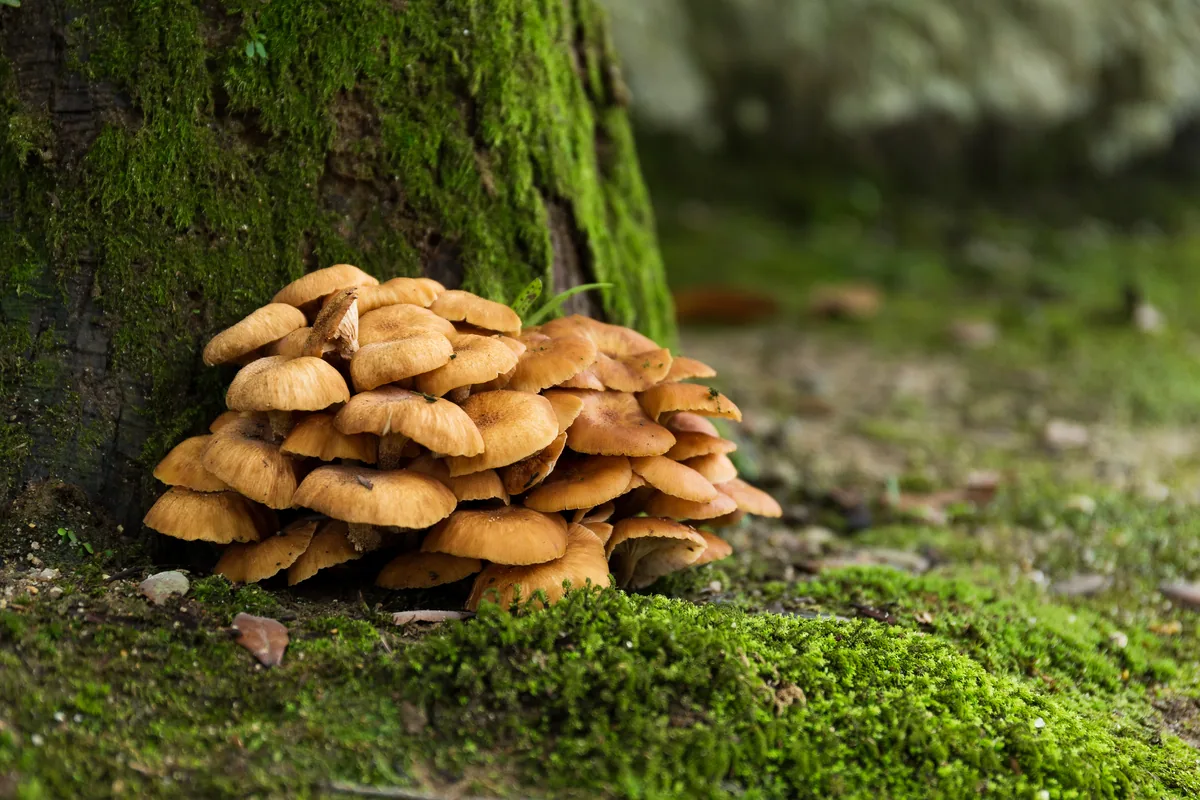
- Mushrooms or fungal fruiting bodies growing on the trunk or base
- Bark that’s sunken or discolored in patches
Hollow trunks lose structural strength. The wood that remains has to support the entire crown. Wind loads that the tree could once handle become dangerous.
Fungi that fruit on trees (shelf fungi, conks) are feeding on decaying wood inside. Their presence is a sign decay is active.
Tree Root Damage Signs You Can Spot
The root system anchors the tree and absorbs water and nutrients. Damage to roots often shows up above ground first. Knowing what to look for can help you catch problems early.
Our team shared storm-prep advice on local TV too. See Panorama Tree Care on Tampa Bay TV.
Exposed Roots and Root Movement
Healthy roots stay in the soil. Exposed roots signal erosion, compaction, or root failure. Roots that shift or move indicate the root plate is unstable.
Check for:
- Roots visible above the soil surface
- Soil that’s washed away from the base, leaving roots hanging
- Soil at the base that lifts or cracks when the tree moves in the wind
- Cracks in the soil radiating outward from the base
Exposed roots lose the soil’s support and protection. They dry out. They’re vulnerable to damage.
Walk around the base of trees on your property. Look at the soil line. If roots are visibly exposed or the soil has eroded away, that’s a sign of instability.
Soil Lifting and Mounding Around the Base
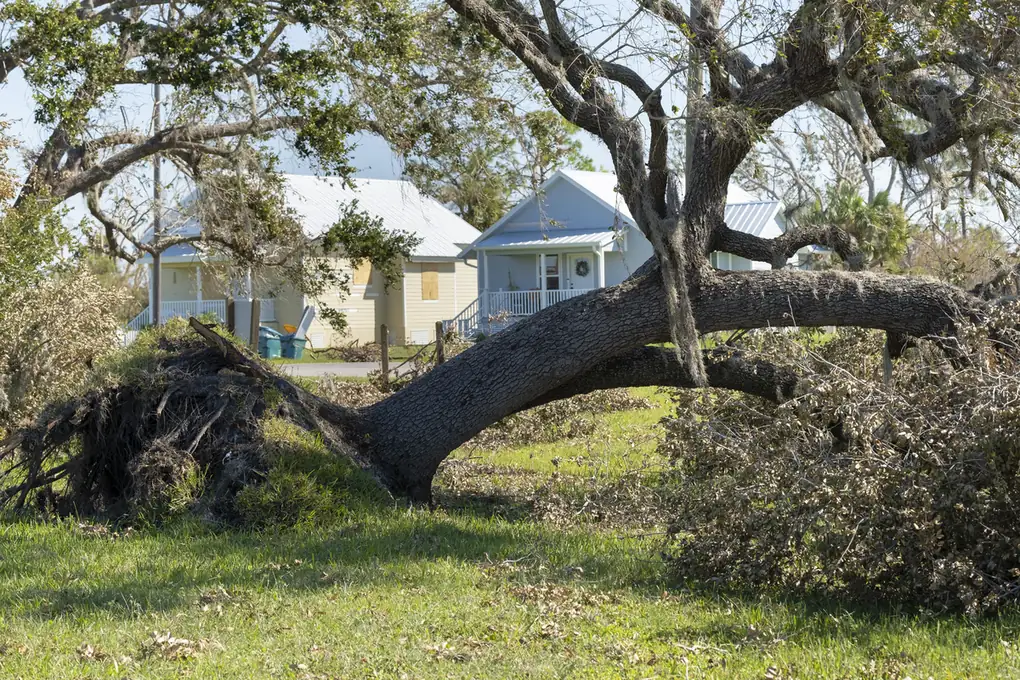
When a tree begins to fail, the root plate lifts. Soil mounds or buckles around the base. The ground rises on the side opposite the lean.
Watch for:
- Soil that’s raised or mounded on one side of the trunk
- A depression or settling on the opposite side
- Cracks in the soil around the base
- Lawn that’s uneven or buckling near the tree
Soil lifting is a late-stage warning sign. It means the root plate is actively moving. This tree is at high risk during storms.
If you see mounding or lifting soil around a tree’s base, treat it as urgent. The tree’s stability is compromised.
Soil mounding around the base of a tree is one of the clearest signs the root system is failing. This is a late-stage warning sign that requires immediate professional assessment.
Weak or Unstable Root Systems
Some trees have inherently weak root systems. Certain species are prone to poor anchorage. Soil conditions affect root strength. Trees planted in compacted soil, or where a high water table keeps roots shallow, can develop weak root systems. Heavy rain before a storm softens the soil and makes it easier for a root plate to pull loose.
Signs of weak roots include:
- A tree that rocks or sways excessively in mild wind
- Roots that are shallow or spread horizontally rather than deep
- A root plate that’s noticeably smaller than the crown above
- Trees in recently disturbed soil or fill areas
A weak root system can’t support a large crown. The tree is unstable even in moderate wind. These trees are candidates for removal or significant pruning to reduce crown weight.
How to Inspect Trees Before a Storm
You don’t need specialized equipment to spot obvious problems. But you do need to know what’s safe to assess yourself and when to bring in a professional.
What Homeowners Can Safely Assess Themselves
Start with a visual inspection from the ground. Walk around each tree. Look up into the canopy. Check the trunk and base. Take your time.
Safe things to check yourself:
- Dead or broken branches in the canopy
- Visible cracks or splits in the trunk
- Obvious lean or tilt
- Exposed roots or soil movement at the base
- Cavities or holes in the trunk
- Fungal growth on the trunk or base
Use binoculars for the upper canopy if needed. Don’t climb into trees or onto ladders to inspect limbs. Don’t use climbing equipment. Don’t dig around roots.
Document what you find. Take photos. Note the location and severity of any problems. This information helps an arborist prioritize work.
When to Call an ISA Certified Arborist
Some assessments require professional expertise. An ISA Certified Arborist has training in tree biology, structure, and risk assessment. They can diagnose problems you can’t see.
Call an arborist if you notice:
- Multiple dead branches or a sparse canopy
- Significant cracks or splits in the trunk
- A new or worsening lean
- Cavities or obvious decay
- Soil lifting or root movement
- Trees in a target area (near structures, power lines, or gathering spaces)
- Trees that have been damaged by previous storms
- Uncertainty about whether a tree is safe
UF/IFAS Extension recommends that large trees be inspected by a professional arborist every two years. Panorama Tree Care offers free estimates and a tree risk assessment service. Our ISA Certified Arborists evaluate tree structure, identify hazards, and recommend the safest course of action.
Which Tampa Bay Trees Are Most Likely to Fail
Species matters. UF/IFAS researchers surveyed trees after several Florida hurricanes and found big differences in how common Tampa Bay trees held up.
- Laurel oak and water oak: After Hurricane Ivan, 66% of laurel oaks and 65% of water oaks survived, compared with 81% of live oaks.
- Live oak and sand live oak: These did best among the oaks, with sand live oak at 98% survival after Ivan.
- Sabal (cabbage) palm: One of the strongest performers across the storms surveyed.
- Sand pine: Among the weakest. Only 43% survived Ivan, and many standing sand pines died in the months after.
Source: UF/IFAS, Selecting Coastal Plain Species for Wind Resistance. A large, older laurel or water oak near your house deserves a closer look before storm season. Our guide to laurel oak and water oak lifespan explains why these trees become risky as they age.
Storm Preparation Tree Trimming and Risk Reduction
Proactive pruning reduces risk, but only the right kind. UF/IFAS Extension puts it plainly: there is no such thing as “hurricane pruning.” Trees that are pruned correctly over time hold up best.
Work to consider before storm season:
- Remove dead, broken, and hanging branches
- Prune crossing or rubbing branches
- Reduce long, heavy limbs and competing trunks (codominant stems) with reduction cuts
- Reduce crown weight on trees with weak root systems
- Clear branches that overhang the roof (call your utility for limbs near power lines)
What not to do: stripping out inner branches so foliage is left only at the tips, called lion-tailing, increases the chance of storm damage. So does topping. We explain why in lion-tailing trees and is tree topping legal in Florida.
Professional pruning follows ANSI A300 standards. Don’t wait until a storm is forecast to start this work. Pruning takes time, and arborists get booked up once a storm is on the way. For a full storm-season checklist, see our hurricane tree preparation guide.
Prioritizing Risk by Target Area and Exposure
Not all unstable trees pose equal risk. A tree with structural defects far from any structure is less critical than one hanging over a house.
Prioritize based on:
- Target area: Is the tree near a house, garage, shed, power lines, or where people gather?
- Wind exposure: Is the tree in an open area or sheltered by other trees?
- Condition: How many warning signs does the tree show?
- Size: Larger trees cause more damage if they fail.
A hazard tree near your home is your highest priority. A tree with moderate defects in an open area away from structures is lower risk.
What to Do Immediately After Storm Damage
Safety comes first. Stay away from downed trees and hanging limbs, never touch power lines or branches resting on them, and keep people and pets back. Take photos of the damage before anything is moved.
Don’t climb into a damaged tree or run a chainsaw from a ladder. For who is responsible and what to do next, see our guides to fallen tree removal in Florida and tree damage and homeowners insurance.
If a tree is on your house or blocking your driveway, our emergency tree service handles fallen trees, hanging limbs, and hazard removal.
Frequently Asked Questions
What are the most reliable signs of unstable trees before storms?
The most telling signs include visible cracks or splits in the trunk, dead or hanging branches, a new or increasing lean, exposed or lifted roots, and hollow or decayed sections inside the trunk. Trees with weak branch forks or canopy damage are also at higher risk. If you spot multiple signs, contact an ISA Certified Arborist right away, because these defects compound during high winds and heavy rain.
How can you tell if a tree has root damage?
Look for exposed roots near the surface, soil mounding or lifting around the base, or areas where the root plate appears to be shifting. If the tree starts to lean suddenly, or the soil at the base lifts and cracks when it moves in the wind, the root system may be compromised. Saturated soil after heavy rain can also weaken root stability. These signs indicate the tree may fail during a storm.
When should you call an arborist to inspect a tree before a storm?
Call an arborist if you notice cracks, significant lean, dead limbs, exposed roots, or any combination of structural defects. Do not wait: professional assessment before storm season is far safer and cheaper than emergency removal after failure. Many arborists offer free estimates and can prioritize which trees pose the greatest risk to your home or property.
Can you safely trim trees yourself for storm preparation?
You can remove small dead branches within arm’s reach from the ground, but do not climb, use a ladder near power lines, or cut large branches. These tasks require professional equipment and training. Improper pruning can weaken the tree or cause injury. An ISA Certified Arborist will prune according to ANSI A300 standards, removing weak limbs and improving wind resistance without harming the tree’s structure.
Storms test every tree on your property. Identifying unstable trees before storms arrive gives you time to act. Panorama Tree Care has helped homeowners and property managers across Tampa Bay assess tree risk, reduce hazards, and protect their properties since 2000. Our ISA Certified Arborists provide professional evaluations, strategic pruning, and safe removal when needed. Get a free estimate and make sure your trees are ready for storm season.