Quick Summary
Safe tree removal near waterfront homes requires permits, professional assessment, and understanding local shoreline regulations before work begins. Waterfront trees stabilize soil and prevent erosion, so removal demands careful planning to protect your property and comply with environmental laws.
- Check with your city or county before removing a waterfront tree, and with the EPC (Hillsborough) or your county if wetlands or mangroves are involved.
- Hire a certified arborist with ISA credentials to assess whether the tree is genuinely hazardous or can be saved with maintenance.
- Florida law lets homeowners trim mangroves only within set limits; removing, defoliating, or killing a mangrove needs a permit.
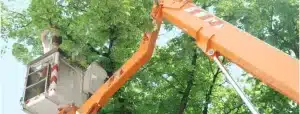
- Large trees near structures often require crane removal to safely lower sections away from your home, dock, or neighboring properties.
- Verify the removal crew carries liability insurance and has experience with waterfront projects in your area before hiring.
Table of Contents
- Why Safe Tree Removal Near Waterfront Homes Demands Professional Care
- Step 1: Assess Tree Health and Structural Risk Before Any Work Begins
- Step 2: Check Florida and Local Permits for Waterfront Trees
- Step 3: Know Florida’s Mangrove Trimming Rules
- Step 4: Plan Removal Strategy and Protect Your Property During Work
- Step 5: Evaluate Crane Tree Removal Near Waterfront Homes
- Step 6: Understand Tree Removal Cost Near a House and Budget Realistically
- Choosing a Qualified Arborist for Your Waterfront Project
- Frequently Asked Questions
Why Safe Tree Removal Near Waterfront Homes Demands Professional Care
Waterfront properties face unique tree-management challenges that inland homes never encounter. Shoreline trees stabilize soil, filter runoff, and protect your foundation from erosion.
Safe tree removal near waterfront homes isn’t just about cutting down a hazard. It’s about understanding shoreline regulations, protecting your property during work, and making sure what remains, or what you plant next, actually serves your long-term interests.
At Panorama Tree Care, we understand the unique challenges of waterfront tree projects. The stakes are higher near water. The regulations are stricter. The consequences of a mistake are permanent.
This guide walks you through six critical steps to get it right. Whether you’re dealing with a dead tree, storm damage, or planned removal, these steps will help you protect your property, stay compliant with local ordinances, and avoid costly mistakes.
Step 1: Assess Tree Health and Structural Risk Before Any Work Begins
Before you call a removal crew, determine whether the tree actually needs to come down. A dying tree and a hazardous tree are not the same thing.
A dead tree shows no green foliage, no new growth, and brittle branches that snap easily.
The key question: Is the tree a genuine hazard, or does it just need maintenance?
Signs a tree is genuinely hazardous:
- Major branches are already dead or broken
- The trunk leans severely toward your home or dock
- Large cracks or cavities run through the trunk
- Roots are visibly rotting or pulling away from the soil
- The tree failed in the last storm and hasn’t recovered
Signs a tree can be saved:
- It has green foliage on most branches
- The lean is gradual and stable (not worsening)
- Damage is limited to outer bark or small branches
- The root collar is intact and the tree is still anchored firmly
If you’re uncertain, hire a certified arborist to perform a formal tree risk assessment. Our guide to the signs of a dying tree covers what to look for first.
This assessment protects you legally. If the tree fails later and causes injury or property damage, documentation that a professional evaluated it first strengthens your liability position.
Step 2: Check Florida and Local Permits for Waterfront Trees
Waterfront properties in Tampa Bay can fall under more than one set of rules: your city or county tree ordinance, wetland rules, and Florida’s mangrove law. Check each before work starts.
- City or county tree rules. Hillsborough County, Tampa, Pinellas County, and each city set their own tree removal rules. Our Florida tree permit guide covers the local requirements.
- Florida’s arborist documentation law. Under Florida Statute 163.045, a local government cannot require a permit, fee, or replanting to prune or remove a tree on a single-family residential property if the owner has documentation from an ISA Certified Arborist or Florida-licensed landscape architect that the tree poses an unacceptable risk to persons or property. This law does not apply to mangroves.
- Wetlands and shoreline work. If the work involves wetlands or other surface waters, you may need state or local authorization. In Hillsborough County, the Environmental Protection Commission (EPC) regulates wetlands.
Questions to ask your city or county:
- Do I need a permit to remove this tree? To trim it?
- Are there protected tree species or wetland areas on my property?
- Do you need an arborist report, and what will it need to show?
- How long does the review take?
The permit process can take time, so start early. A storm does not suspend the rules, so check before cleanup work goes beyond what is needed for immediate safety.
Step 3: Know Florida’s Mangrove Trimming Rules
If your waterfront property includes mangroves, the rules change. Florida’s 1996 Mangrove Trimming and Preservation Act regulates trimming and alteration of mangroves statewide. Hillsborough and Pinellas counties are among the local governments that administer the law themselves, so in those counties you work with the county program rather than the state.
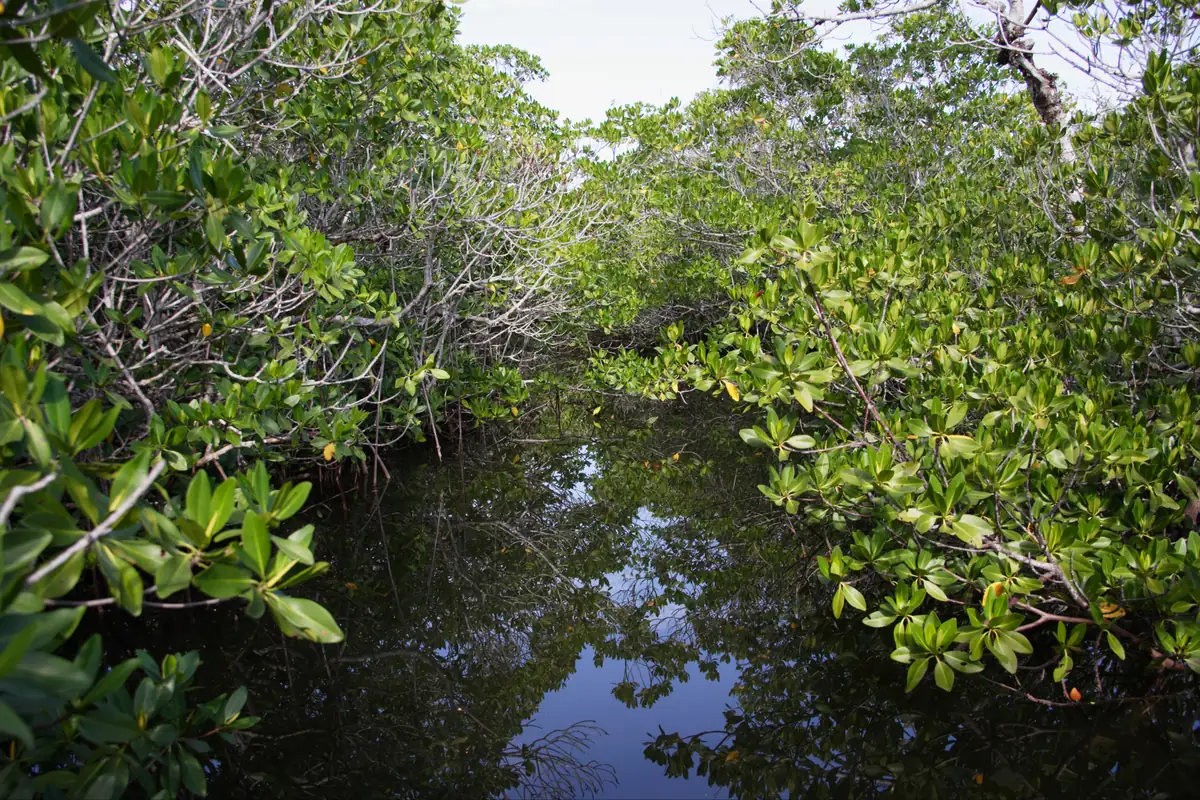
According to the Florida DEP homeowner guide:
- In most cases, mangroves may not be trimmed lower than 6 feet above the ground.
- Homeowners may trim mangroves in a riparian fringe without a professional when they are taller than 6 feet but not taller than 10 feet.
- Mangroves taller than 10 feet need a Professional Mangrove Trimmer. ISA Certified Arborists qualify.
- Trimming may never defoliate, kill, or remove a mangrove. That counts as alteration and needs a permit.
Rules depend on species, height, and how your shoreline was trimmed before, so check with your county before anyone cuts. Take dated photos before and after every trimming. Our mangrove trimming rules guide and mangrove trimming service cover the details.
Step 4: Plan Removal Strategy and Protect Your Property During Work
Once permits are approved, the removal crew’s strategy determines whether your property survives intact or suffers hidden damage.
Waterfront removals are constrained: limited space to fell trees, proximity to structures, and the need to protect soil and water quality during work. A crew that works on inland lots may not understand these constraints.
Your removal plan should address:
- Site access: Where will the crew stage equipment? How will they remove debris without crossing landscaping or compacting soil near the water?
- Directional felling: Can the tree be felled away from your home, dock, and property lines? Or does it require sectional removal with a crane?
- Root removal: Will the crew grind the stump and remove roots, or leave them in place? Ask what will happen to the roots, especially near a seawall, dock, or foundation.
- Erosion control: Will the crew install silt fencing or erosion matting to prevent exposed soil from washing into the water during rain?
- Debris management: Will large branches be chipped on-site, or removed for disposal? Where will the chipper and trucks sit?
A professional crew will walk the site, identify hazards, and present a written plan before starting work. If they skip this step, find a different crew.
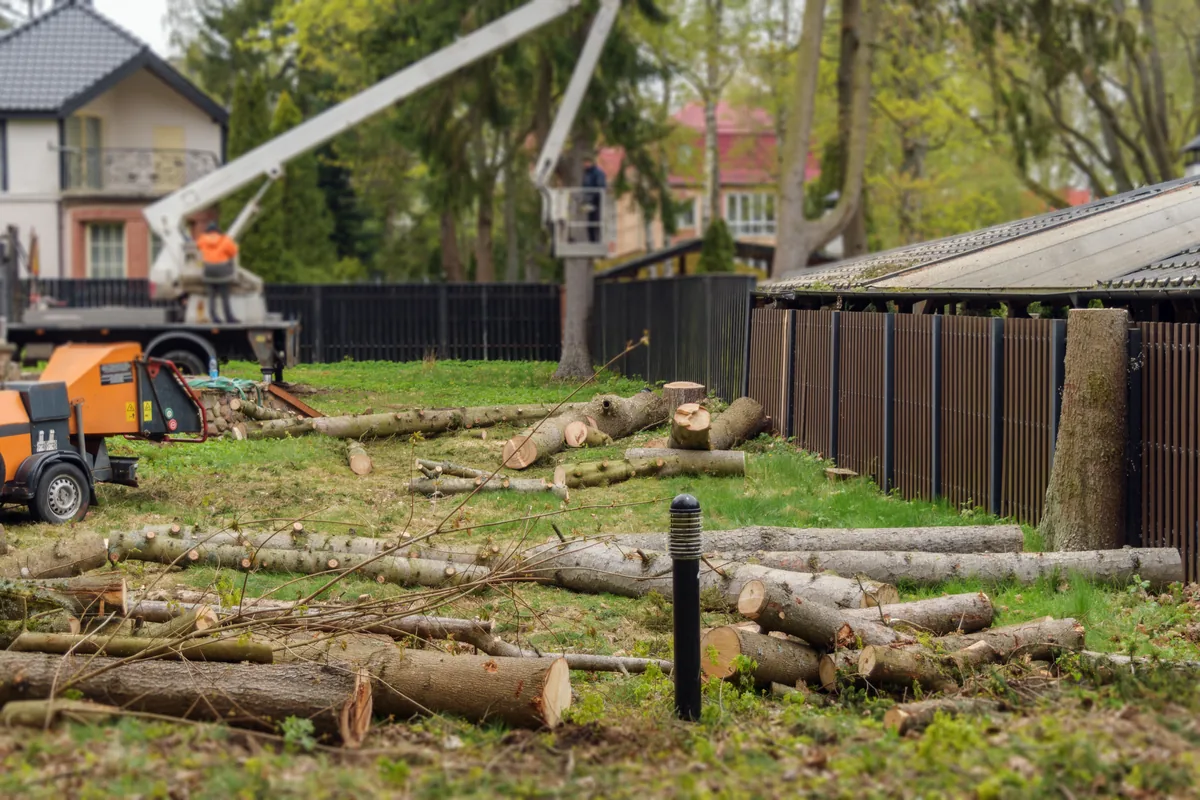
During removal, the crew should:
- Protect your home, dock, and seawall with tarps, mats, or barriers, and keep heavy equipment off the seawall cap
- Avoid driving heavy equipment over root systems of trees you’re keeping
- Install erosion controls before digging
- Keep debris away from storm drains and water’s edge
- Restore grading so water drains away from your foundation
Step 5: Evaluate Crane Tree Removal Near Waterfront Homes
Large trees near waterfront structures often require crane removal. A crane lifts sections of the tree away from your home, dock, or neighboring properties, avoiding the risk of a falling branch.
When crane removal is necessary:
- The tree is large and close to structures
- The site lacks space for directional felling
- The tree is over water or a dock
- Surrounding trees or power lines block safe felling in any direction
Crane removal costs more than traditional felling. The crane operator, the rigging crew, and site setup add expense. But the alternative, a tree section landing on your roof or dock, is far more costly.
What to expect with crane removal:
- A site survey to confirm the crane can access the property and reach all sections
- Rigging points established high in the tree to distribute weight evenly
- The tree cut into sections sized for the crane’s capacity and lowered to the ground
- Ground crew stacking or chipping sections as they arrive
Crane removal requires a qualified operator and liability insurance. Verify that the crew carries liability insurance before work begins. Our guide to crane vs. rigging vs. felling explains when each method makes sense.
Step 6: Understand Tree Removal Cost Near a House and Budget Realistically
Tree removal cost near a house varies wildly based on size, location, hazard level, and removal method.
Cost drivers include:
Tree size: Small trees typically run less than large trees. Height and trunk diameter determine how many cuts are needed and how much equipment is required.
Site access: A tree in the middle of an open yard is faster to remove than one surrounded by structures, fences, or other trees.
Hazard level: A dead tree that can be felled in one direction costs less than a hazardous tree requiring sectional removal or crane work.
Removal method: Standard felling is least expensive. Sectional removal (cutting the tree into pieces) is more labor-intensive.
Debris disposal: Chipping on-site is included in most quotes. Hauling large sections off-site may incur additional fees.
Because pricing depends on the specific site and tree, we recommend getting written estimates from qualified crews. Our tree removal cost guide shows typical ranges, and our tree removal service page explains how we quote.
Choosing a Qualified Arborist for Your Waterfront Project
Your waterfront removal succeeds or fails based on who you hire. An experienced crew understands shoreline constraints, knows local regulations, and protects your property during work. An inexperienced crew creates problems that cost thousands to fix.
Verify credentials:
- ISA Certified Arborist: The International Society of Arboriculture credential means the person has passed a rigorous exam and follows ANSI A300 standards. Ask for the certification number and verify it at the ISA credential verification system.
- Insured: Florida has no state license for tree work, so confirm the crew carries general liability insurance and workers’ compensation. Request a certificate of insurance naming your property.
- Local experience: Ask how many waterfront removals they’ve completed in your area. They should understand local permitting and shoreline regulations.
Red flags to avoid:
- No written estimate or plan
- Unwilling to pull permits
- No liability insurance or workers’ compensation
- Pressure to start work immediately without assessment
- Quotes significantly lower than others (usually means shortcuts)
Ask for references from recent waterfront projects. Call them. Ask whether the crew was respectful of the property, whether work was completed on schedule, and whether they handled permitting properly.
The right crew costs more upfront but delivers a safe removal, protects your property, and ensures you stay compliant with regulations. That peace of mind is worth the investment.
Safe tree removal near waterfront homes requires planning, professional expertise, and attention to regulations that don’t apply inland.
Frequently Asked Questions
Do I need a permit to remove a tree near the water?
Often, yes. Most Tampa Bay cities and counties regulate tree removal, and wetland or mangrove work has its own rules. On a single-family lot, Florida Statute 163.045 removes the local permit requirement when an ISA Certified Arborist documents that the tree poses an unacceptable risk, but that law does not cover mangroves. Contact your county environmental or planning department before any work begins. Failing to obtain permits can result in fines and orders to restore the area. A certified arborist can help navigate the permitting process.
How much does it cost to remove a tree next to a house?
Tree removal cost near a house varies based on tree size, species, location, accessibility, and removal method. Waterfront removals typically cost more due to permit requirements, erosion controls, and specialized equipment like cranes. Get free estimates from insured, qualified professionals to compare pricing. Ask what is included: stump removal, debris hauling, and site restoration affect the final cost.
Can mangroves be trimmed or removed near a waterfront home?
Mangrove trimming laws in Florida strictly regulate work on mangroves. Homeowners may trim mangroves between 6 and 10 feet tall without a professional, but not below 6 feet. Taller mangroves need a Professional Mangrove Trimmer, and removing or defoliating a mangrove needs a permit. Hillsborough and Pinellas counties run their own mangrove programs. Hire a professional familiar with mangrove regulations to ensure compliance and protect water quality.
What should I ask a tree removal company before hiring them?
Ask if they are ISA Certified Arborists and fully insured. Request references and proof of experience with waterfront removals. Confirm they understand local shoreline regulations and permitting. Ask about their safety protocols, equipment (including crane availability), debris removal, stump grinding, and post-removal site restoration. Get a detailed written estimate that lists all services included and any potential additional costs.