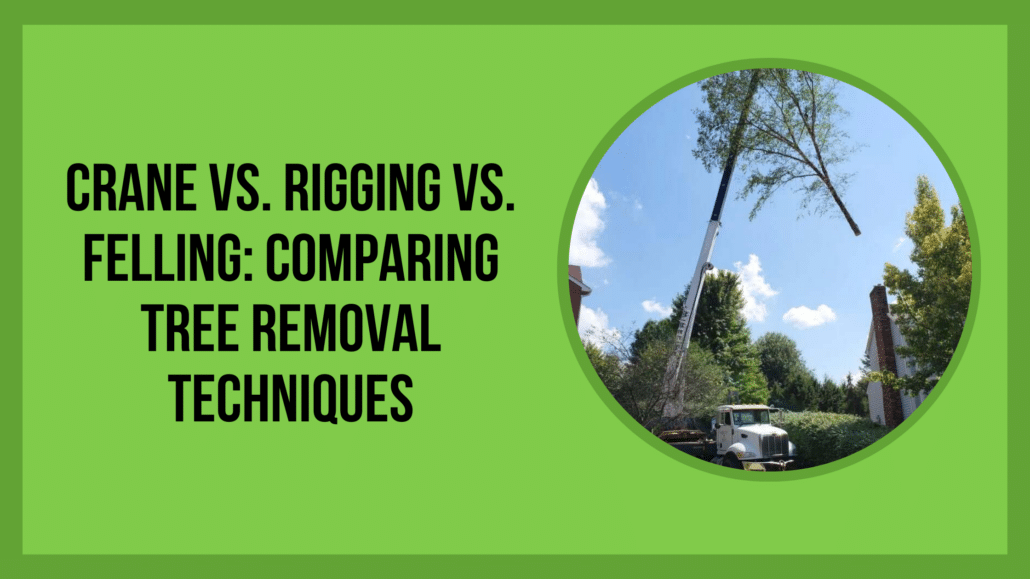
TL;DR: in Florida, safe tree removal usually comes down to one of three approaches: directional felling (drop the whole tree into an open space), rigging (cut it apart in sections and lower each piece on ropes), or crane removal (lift pieces out with a hydraulic crane).
Which one you actually need depends on room to work, nearby targets, the tree’s health, and what makes sense for your budget and risk level. On most Florida lots, our tree removal team picks the approach on site based on access, drop-zone clearance, and proximity to structures.
Key Takeaways
- Directional felling is usually the fastest and least expensive option, but it only works if you have a clear drop zone that’s at least about 1.5× the tree’s height in the direction of fall.
- Rigging leans on ropes, an arborist rigging block, and controlled lowering devices so crews can dismantle trees in tight spaces without bringing in heavy machinery.
- Crane-assisted tree removal is the go-to for oversized trees, trees hanging directly over structures, or dead hazard trees that are too weak and risky to climb or rig.
- in Florida 2026, rough ranges look like this: felling $300–$1,500, rigging $800–$3,500, and crane $2,000–$10,000+, depending heavily on tree size, difficulty, and property access.
- On Tampa lots with narrow yards, tight setbacks, and overhead utilities, simple felling usually isn’t realistic, so jobs often shift to rigging or crane-assisted removal.
- Panorama Tree Care’s crane crew works under ANSI Z133 and OSHA tree felling safety standards, from climbing and rigging practices to load control and PPE.
- Permits, including a possible Hillsborough County road closure permit, can affect which method is allowed on your street and how much the project ultimately costs.
- A quick on-site visit is the only honest way to know if your situation calls for crane, rigging, or felling. Photos alone don’t always tell the full story.
Quick Definitions: What Is Crane, Rigging, and Felling?
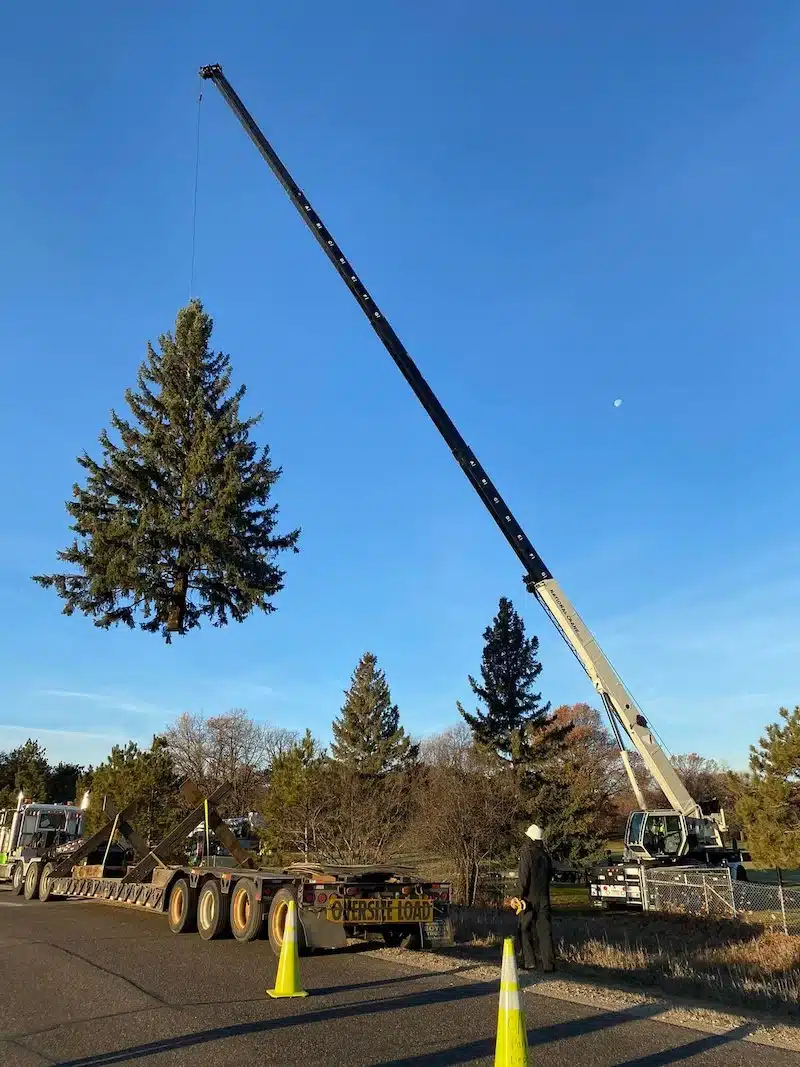

Crane-assisted tree removal: A hydraulic crane service in Florida sets up close enough that the boom can reach the tree, then lifts whole trees or big sections and swings them to a safe landing area or straight into a truck. This is the tool of choice for very heavy, over-structure, or hard-to-access trees where you can’t safely drop or rig pieces.
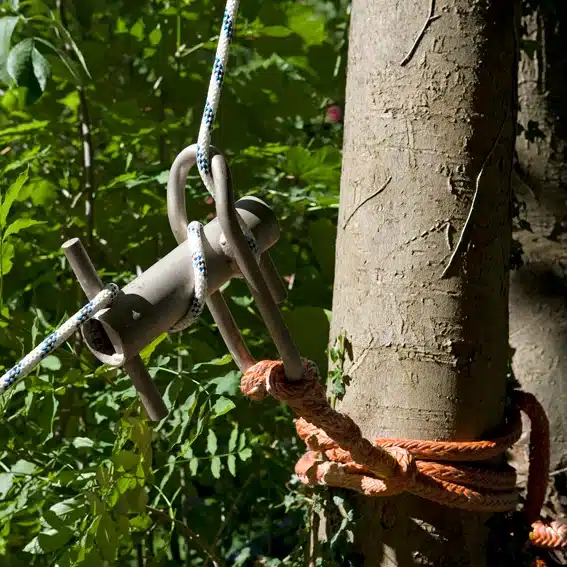
Tree rigging: Arborist rigging systems use strong ropes, a rigging block high in the tree, friction or mechanical lowering devices, and sometimes a speed line system. The crew cuts the tree into pieces and uses the rope system to lower each one in a controlled way instead of letting anything free fall.
Tree felling: Directional felling means cutting a notch and hinge so the entire tree falls where you want it. After it hits the ground, the crew bucks and limbs it out in the open. This only works where there’s enough unobstructed room.
Three Tree Removal Methods Compared (Crane, Rigging, Felling)
Most professional tree work in Florida boils down to three options: crane-assisted removal, rigging-based sectional dismantling, and directional felling. Directional felling drops the full tree in one controlled shot into an open space.
Rigging breaks the tree down into small, manageable parts and lowers each on ropes when space is tight. Crane removal uses a hydraulic crane to pick up large sections and move them away from hazards when the risk is too high for rope work alone.
Crane-Assisted Tree Removal: High Reach, High Control
With crane work, a hydraulic crane service in Florida brings in a crane sized to the job, then sets it up so the boom can safely reach the tree without maxing out the crane’s chart.
The operator and the Panorama Tree Care crane crew work in sync: the climber or bucket operator rigs a sling around the tree section, sets the cut, and the crane lifts and swings that piece clear of your house, pool, or driveway.
Key characteristics:
- Best for: Huge or very tall trees, trees hanging directly over houses or pools, dead or brittle hazard trees, and backyards with no machine or ground access for traditional removals.
- Equipment: Hydraulic crane or boom truck sized for the job, crane mats for stabilization on lawns or soft ground, a qualified signal person on the ground, and a certified crane operator familiar with tree work.
- Advantages: Very little impact on lawns and landscaping, far less time that climbers need to spend in a dangerous tree, and precise control over how each section moves away from structures.
- Limits: Needs a flat, solid pad to set outriggers, room to open the boom, and often clear overhead of power lines. In tight streets or busy roads, you might need a Hillsborough County road closure permit and traffic control to set up legally.
Tree Rigging: Rope-Based Sectional Dismantling
Tree rigging techniques are what most people picture when they think of a climber up in a tree with ropes. With a solid rigging rope system, the climber cuts branches and trunk sections into sizes the system can safely manage, then the ground crew uses friction and timing to lower each piece smoothly.
Common elements:
- Arborist rigging block near the top or mid-canopy to redirect the rope and keep loads away from the climber and trunk.
- Lowering device such as a friction bollard or mechanical descender at the base of the tree so the ground crew can control speed, stop pieces midair, or hold weight while repositioning.
- Techniques like butt-hitching for vertical drops, speed line rigging for sliding pieces sideways across a yard, and sectional dismantling to keep each cut within safe weight limits.
Rigging is the everyday workhorse on most Tampa residential lots. Yards are small, fences are close, and neighbors are right on the other side of that hedge. In those situations you can’t just drop wood everywhere, but you also may not have the access or budget for a crane, so rope work becomes the practical solution.
Directional Felling: Whole-Tree Drop in an Open Area
Tree felling methods come out when there’s plenty of room and the tree is sound. This shows up a lot on larger rural parcels, big commercial sites, or deep backyards where there’s nothing nearby you care about hitting.
With directional felling, everything is based on the notch and hinge felling setup. The notch opens the direction of fall, the hinge guides the tree like a set of steering cables, and the back cut releases it. You still need enough drop zone clearance, and in the real world that usually means at least 1.5× tree height out front plus space on both sides for any roll, bounce, or crown spread.
Crane vs Rigging vs Felling: Quick Comparison Table
This table gives you a side-by-side view of how each method usually shakes out in Florida. Think of it as a rough guide, not a quote sheet, because every property has its own headaches and advantages.
| Method | Typical Cost (Florida 2026) | Time on Site | Lot / Space Needs | Best For |
|---|---|---|---|---|
| Directional Felling | $300–$1,500 | 1–4 hours | Clear drop zone ≥1.5× tree height, minimal targets | Open yards, rural lots, non-hazard trees |
| Rigging (Rope-Based) | $800–$3,500 | Half day–2 days | Tree climbable, room for lowering area, limited drop zone | Tight residential lots, near structures, moderate risk |
| Crane-Assisted Removal | $2,000–$10,000+ | 4 hours–1 day (often fastest for very large trees) | Crane setup space, road/driveway access, sometimes permit | Over houses/pools, huge or dead trees, no safe rigging options |
If you want to dig into how size, difficulty, cleanup, and stump work change the bill, head over to our guide on tree removal cost by method.
When Crane Removal Is the Only Safe Option
There are situations where using anything other than a crane is asking for trouble. If climbing is unsafe, rigging forces would overload weak wood, or there’s no place to land anything without risking real damage, crane removal stops being a luxury and turns into the only responsible path.
Over-Structure Removal
One of the most obvious times you need a crane is when the tree is right over a structure. Think of a live oak with half its canopy over the house, or a pine growing beside the pool enclosure and leaning across the cage.
- No drop zone: There’s simply nowhere to let branches or trunk chunks fall or swing on ropes without clipping roofs, screen cages, or neighboring yards.
- High-value targets: Tile roofing, glass pool enclosures, AC units, pergolas, outdoor kitchens, and solar panels raise the stakes. A single bad swing could erase any savings from picking a cheaper method.
- Crane reach capacity: The crane’s reach distance (feet) and lift capacity (tons) have to line up with how far it needs to reach and how heavy those sections will be. You don’t guess here. The operator runs the load chart before the first cut is made.
On these jobs, the crane usually takes full tops or large trunk sections in one pick, then sets them down in a safe staging zone or directly onto a trailer. The crew keeps the time that wood spends above your home as short as possible and avoids any unnecessary swinging over structures.
Hazard Trees Too Dangerous to Climb
Some trees are called unclimbable hazards under the ANSI Z133 safety standard and OSHA tree felling safety standards. I see this a lot after hurricanes or long-term neglect. These are trees you don’t put a climber into, no matter how eager someone is to “save money.”
- Serious decay or hollow spots in the trunk where sound wood is too thin to trust with a worker or heavy rigging loads.
- Large amounts of deadwood high in the crown that can break off while a climber is moving or cutting.
- Strong hazard lean over a house, power line, or road where any misstep could send the tree the wrong way fast.
- Root plate damage or movement after storms, erosion, or long-term soil saturation that leaves the tree ready to uproot unexpectedly.
On trees like this, a crane is often rigged as high as possible, and cuts are made from a bucket or from safer positions near the ground. Every movement is handled mechanically, which means the crew stays out of the danger zone and the tree is never asked to hold more weight than its failing structure can manage.
Tight Lot Access in Tampa
Tampa residential lots come with their own brand of headaches. Older neighborhoods especially were never designed with crane access or big equipment in mind.
- Average lot width: Many lots run 50 feet or less, with narrow side yards that barely fit a person, let alone a machine.
- Utility line proximity: Power, cable, and service drops often run right through the canopy or within 5–10 feet of where branches need to move.
- Structure setbacks: Houses, block walls, fences, garages, and sheds often sit only 5–15 feet from the tree trunk.
Sometimes you can solve that puzzle with an arborist climbing rigging setup and very patient rope work. But some yards are boxed in so tight that there’s simply no place to swing or lower pieces without clipping something important. That’s when a crane parked in the driveway or street, reaching up and over the problem, becomes the only good answer.
If part of the crane’s footprint ends up taking over part of the road, you may be looking at a Hillsborough County road closure permit along with cones, signs, and flaggers. Panorama’s estimator will sort through those details ahead of time so you know about any extra steps or fees before you sign anything.
Tree Rigging Techniques: How Arborists Lower Sections Safely
Rigging is the “middle ground” method for a lot of removals around Florida. It balances risk, cost, and control. You don’t need to bring in a crane for every tricky tree, but you also shouldn’t be dropping big limbs onto roofs or lawns. Proper rigging hits that sweet spot.
Modern rigging systems pull together an arborist rigging block, strong ropes, rated hardware, and reliable lowering devices. The goal is simple: every piece comes down where and how the crew wants, not where gravity decides.
Core Components of an Arborist Rigging System
A typical arborist rigging system that Panorama Tree Care uses is built around a few critical parts, all sized for the loads we expect to handle on that specific tree, not just whatever was lying around on the truck.
- Rigging block capacity: Professional blocks are often rated at 10,000–20,000 lbs or more, but under ANSI Z133 the actual working load is kept to a fraction of that rating to handle shock loads and swings.
- Rope diameter: Rigging lines usually run in the 1/2″–3/4″ range. Thinner ropes handle less weight but run smoother through blocks, thicker ropes give more margin for heavier wood. The size is matched to both expected piece weight and the devices it runs through.
- Lowering device type: Crews use either friction devices like bollards and port-a-wraps or mechanical tools such as winches or a GRCS for extra lifting, hauling, or tensioning when they need it.
- Section weight limit: In most tight residential yards, piece weights are kept conservative, often well under a few hundred pounds. That keeps loads predictable and avoids hammering the tree with big dynamic hits.
ANSI Z133 compliance (yes) is not just a nice idea for paperwork. It dictates how many times that rope can be bent, what angle forces are allowed on the anchor point, and how much dynamic load you can put on a given piece of gear before you’re out of bounds.
Key Tree Rigging Techniques
The tools are important, but how the crew uses them matters even more. Here are some core tree rigging techniques that separate pros from risky weekend attempts.
- Butt-hitching: The rope is tied near the cut end or “butt” of the piece so it can drop more or less straight down under control. This is crucial when working above roofs, fences, AC units, or tight patios, where a swinging top would do damage.
- Speed line rigging: A speed line system is stretched from the tree over to a landing area. Cut branches are clipped onto this line and slide along it to a distant zone, which lets crews bypass flowerbeds, pools, or steep slopes.
- Sectional dismantling: The crew cuts the tree into shorter, lighter sections based on diameter, species, and expected weight, then lowers each one on a lowering line. This keeps loads small and easy to steer around landscaping.
- Controlled descent: On the ground, an operator works the lowering device to bleed off friction, easing each piece down instead of letting it free fall. Done right, you barely hear the wood touch down.
Climbing, Calculations, and Safety Standards
Good rigging is closer to real-time engineering than it is to brute-force labor. Anyone can throw a rope in a tree. Very few people can safely move a thousand pounds of wood over a glass pool cage in a tight alley.
- Arborist climbing certification: Climbers should be formally trained and ideally ISA-certified, comfortable with rope access, work positioning, and aerial rescue. If someone can’t explain their rescue plan, that’s a red flag.
- Load calculations per section: Panorama’s crew estimates weight from species, log length, and diameter using standardized tables and experience. Those numbers get compared against the rope, block, and anchor ratings before a cut is made.
- ANSI Z133 rigging limits: Even if a rope is rated to thousands of pounds, in practice loads are kept around 10–20% or so of that under tree work conditions. Dynamic forces, swing angles, and shock loads stack quickly if you’re careless.
- PPE and fall protection: Helmets with face shields, hearing protection, chainsaw pants or chaps, and full-body harnesses with climbing lines and lanyards whenever work happens above the ground, often triggered at around 10–15 feet or higher.
All of this ties directly back to the ANSI Z133 safety standard and OSHA tree felling safety standards. Those rules exist because too many crews learned the hard way what happens if you ignore them.
If you want to see how all this gear and decision-making fits into a full workday, take a look at our removal process overview.
Directional Felling: When Open Space Allows It
If you’ve got plenty of room and the tree is healthy enough to act predictably, directional felling is usually the cleanest, least expensive option. The tree hits the ground in one shot, and the crew can do the messy part of cutting and chipping where everything is already flat.
This approach still takes real skill. The sawyer has to read lean, crown weight, ground conditions, and wind, then match that to precise saw cuts while following OSHA tree felling safety standards.
Clearance and Planning for Directional Felling
Before any saw touches bark, the crew walks the area and checks three big items.
- Clearance zone required: The team looks for at least 1.5× tree height in the intended fall direction, then adds margin for crown spread and any twist that might show up as the tree goes.
- Drop zone clearance: The landing area needs to be free of vehicles, sheds, swing sets, irrigation equipment, and major landscape features. If the tree will crush something valuable, you don’t fell it in that direction.
- Escape routes: The saw operator sets at least two clear paths at roughly 45-degree angles back from the expected fall line so they can retreat quickly once the tree starts moving.
If a lot fails those checks, you can’t just “send it and hope.” That’s when a good crew shifts to rigging or crane even if, on paper, the property looked “pretty open.”
Notch, Hinge, and Back Cut Basics
Standard tree felling methods follow a pretty consistent cutting sequence, adjusted for species and situation.
- Face notch:
- The face cut opens on the side you want the tree to fall into, usually with a notch angle in the 70–90 degree range so the hinge can work longer before breaking.
- Notch depth is typically 20–30% of the trunk diameter to give enough holding wood without weakening the stem too much.
- Hinge creation:
- The hinge is a strip of wood between the notch and the back cut. It acts like a set of hinges on a door, guiding the fall.
- Hinge width is often around 10% of trunk diameter. On a 24-inch trunk, that usually means 2–3 inches of hinge wood, tuned for specific species and conditions.
- Back cut:
- The back cut goes on the opposite side of the notch and slightly above the notch’s bottom. A typical back cut height offset is around 1–2 inches, which encourages the tree to fall toward the notch instead of back over the stump.
- Wedges are tapped into the back cut as it’s made to prevent the bar from getting pinched and to help nudge the tree in the right direction when needed.
Bore Cut Technique and Back-Lean Correction
Plenty of trees in Florida have a little back lean toward a house or toward the street. Those aren’t trees you just notch and hope. That is where more advanced techniques step in.
- Bore cut technique: The sawyer plunges the bar through the trunk behind the notch to set the hinge thickness first, then leaves a small “strap” of holding wood at the back. Once wedges are seated and tensioned, that strap is cut to start the fall, giving far more control over the hinge than a straight back cut.
- Back lean correction: Plastic or aluminum wedges are driven firmly into the back cut. For heavier trees or more serious lean, a mechanical pull line or winch is set in the crown and tensioned to help overcome that lean.
These methods have very little margin for error, especially on big stems. ANSI Z133 and OSHA guidelines spell out how they should be done. On large or risky trees near structures, this is not a DIY learning project.
Stump Height Control
Where the stump ends up is not an accident. The crew decides stump height control (inches) while they’re planning the notch and back cut.
- For most residential work in Florida, stumps are cut off at around 6–12 inches above grade. That gives enough height for a stump grinder to work efficiently later.
- On bigger removals or building sites, the crew may intentionally leave higher stumps so excavators or skid steers can grab and push them over during site prep.
Cost Comparison: Crane vs Rigging vs Felling in Florida 2026
in Florida’s 2026 market, the method you use affects price just as much as tree size. Directional felling is usually on the lower end, around $300–$1,500 for typical jobs. Rigging-heavy removals fall in the $800–$3,500 zone because they soak up more time and labor.
Crane-assisted tree removal starts higher and can push into the $2,000–$10,000+ range once you factor in crane rental, crew, and permits for big or high-risk trees.
Typical Florida Price Ranges by Method
- Directional felling: Around $300–$1,500 for average trees in open spaces where the crew can drop and process wood quickly.
- Rigging (rope-based): Roughly $800–$3,500 for sectional dismantling near homes, fences, or utilities. More rope work and cleanup time means a higher bill.
- Crane-assisted tree removal: From about $2,000 for smaller crane days up to $10,000+ on large, complex, or multiple-tree removals that need a full crane crew and bigger equipment.
Crane Tree Removal Cost Drivers
A few specific items push crane tree removal cost higher or lower. These are the knobs we’re turning when we write up a crane bid.
- Crane type: Smaller boom trucks cost less to run but can’t reach as far or lift as much. Larger hydraulic cranes with serious lift capacity (tons) and reach distance (feet) handle tougher jobs but carry a higher daily rate.
- Mobilization cost in Florida: Getting the crane to your property, setting outriggers, breaking down, and moving to the next job all take time. If the crane has to reset or be moved to reach different parts of the tree, that adds up.
- Crane mat stabilization: On soft lawns, pavers, or older driveways, the crew may need heavy crane mat stabilization to spread the load and avoid cracking or sinking. That’s extra logistics and materials.
- Road closure permit: If the crane has to sit in the road or block a lane, a Hillsborough County road closure permit, traffic cones, signs, and possibly flaggers or a police detail get factored into the quote.
- Crew size: Crane work usually calls for more people: a certified crane operator, at least one climber or bucket operator, a signal person, and several ground workers cutting, dragging, chipping, and handling rigging.
Rigging and Felling Cost Factors
For rigging and felling jobs, you’re mainly paying for how long it takes and how tough the site is, not for specialty equipment like a crane.
- Tree size and species: Dense hardwoods and big spreading canopies mean heavier pieces and more cuts. A massive live oak costs more to rig down than a skinny pine of the same height.
- Access and cleanup: If everything has to be hand-carried a long way to the street or chipper, or if machines can’t get close, expect extra labor hours. Tight gates and backyard-only access add time.
- Risk level: Trees close to power lines, glass, or roofs slow the crew down. Extra rigging, smaller pieces, and more planning time show up in the final price.
- Disposal: Heavy wood often needs to be trucked off-site. Dump fees, fuel, and the number of loads have a noticeable impact on what you pay.
For a more detailed breakdown that looks at size, species, and exactly what’s included, check our full guide to tree removal cost by method.
How Panorama Tree Care Selects the Right Removal Method
Panorama Tree Care doesn’t just throw a crane at every job or default to the cheapest path. The crew uses a step-by-step on-site evaluation to decide whether crane, rigging, or felling makes the most sense for each tree on your property.
On-Site Lot and Access Evaluation
During your estimate, an ISA-certified arborist walks the property and looks at more than just the tree. The layout around it matters just as much.
- Lot layout: On a Tampa residential lot, the arborist looks at total lot width, distance from the tree to both houses, and how tight those side yards are. A big tree wedged between two homes is a different animal than one in an open front yard.
- Crane access feasibility: They check whether a crane can safely sit on the driveway, street, or a nearby pad, and whether overhead service lines or tree canopies block the boom’s path.
- Road closure requirement: If the only safe crane position means occupying a driving lane or shoulder, a Hillsborough County road closure permit may be part of the equation.
- Drop zone availability: The arborist identifies any spots where pieces can be safely dropped or lowered, even if they are small. If none exist, the job leans harder toward crane-assisted work.
Target Zone and Risk Analysis
Next comes the “what happens if something goes wrong” part of the assessment. That’s where a lot of cheap estimates cut corners.
- Targets: The crew notes nearby roofs, patios, pools, driveways, sheds, fences, playsets, parked cars, and anything else you care about. Neighbors’ yards and buildings count here too.
- Utilities: Overhead lines, service drops, water meters, irrigation heads, and any marked underground utilities are all mapped into the plan.
- Tree condition: They inspect for decay pockets, cracks, fungus at the base, root issues, dead or hanging branches, and any noticeable lean.
That hazard tree assessment informs whether the tree is safe to climb and rig or if crane-assisted tree removal is the smarter, safer option. If you want more detail on warning signs, check our hazard tree assessment guide.
Species-Specific Method Selection
Different trees behave differently once you start cutting and loading them. Ignoring that is a good way to break gear or worse.
- Live oak and laurel oak: Common in Florida and usually very heavy with sprawling limbs. Those wide canopies often stretch over houses and streets, so they often call for careful rigging or crane work rather than straight felling.
- Pines and eucalyptus: These tend to be taller, straighter, and narrower. If you’ve got enough open space, they can be strong candidates for directional felling. If not, they still rig down nicely.
- Palms: Palms are lighter and grow like giant grass stalks. They’re usually easy to dismantle piece by piece, but tall palms right up against structures sometimes benefit from crane or precise rigging.
Panorama weighs wood density, structure, and limb spread before choosing between sectional dismantling with ropes, crane picks, or directional felling when the area is wide open.
Panorama’s Crane Capability and Certified Crew
When a job clearly calls for crane work, the Panorama Tree Care crane crew shows up with more than just big iron. They bring the right mix of gear and qualifications so the job is done as safely and efficiently as possible.
- Hydraulic crane service in Florida sized with enough lift capacity (tons) and reach distance (feet) to handle the tree without pushing the crane to its limits.
- Certified crane operators who know how tree work loads behave, and qualified signal persons who keep communication tight between operator and crew.
- ISA-certified arborists on site directing how pieces are tied, where cuts are made, and how the tree is broken down.
- Strict adherence to ANSI Z133 safety standards and OSHA rules for rigging, crane setup, and fall protection.
Our certified arborist crew focuses on doing the right job for your property, not just the fastest or easiest method for us.
If you’re trying to picture the full process from first walkthrough to final rake-out, our removal process overview breaks it down in plain language.
Common Mistakes Homeowners Make (and How to Avoid Them)
Choosing between crane, rigging, and felling isn’t a guess-and-go decision. Here are some of the missteps I see homeowners make all the time, and what to do instead.
- Mistake 1: Assuming every tree can be felled in one piece.On the ground, a yard can look “pretty open,” but tree height, crown spread, and lean often say otherwise. People eyeball it and think they have room when they don’t.Fix: Measure real tree height and true clearance, not just rough guesses. If you’re not looking at a clear 1.5× height of open, obstacle-free space in the fall direction, let a pro handle it with rigging or a crane.
- Mistake 2: Hiring based only on the lowest quote.Rock-bottom bids often skip ANSI Z133 and OSHA tree felling safety standard practices, underinsure, use cheap gear, or ignore needed permits. That might save you money until something goes wrong.Fix: Ask each company about insurance, certifications, and exactly which method they plan to use. Make them explain why that method is safe for your specific setup.
- Mistake 3: DIY rigging with hardware-store ropes.Big box store ropes and improvised anchors aren’t designed to handle the shock loads from swinging logs. They break, and when they do, wood goes wherever it wants.Fix: Only use professional, rated arborist rigging systems with proper hardware and known load ratings. And if you’re not comfortable doing the math on loads, don’t be the one tying knots in the tree.
- Mistake 4: Ignoring the condition of dead or storm-damaged trees.Dead trees can look stiff and solid but behave like dry chalk once you load them. Storm damage hides cracks and root failure that only show up when the tree starts to move.Fix: Have a professional assess whether the tree is safe to climb and rig or whether a crane-assisted tree removal is the safer call.
- Mistake 5: Overlooking road and neighbor impacts.Parking a crane, chipper, or log truck in the street without planning can cause traffic fights, HOA complaints, or even fines if you’re blocking a lane without permission.Fix: Work with a company that knows how to handle Hillsborough County road closure permits and notify neighbors about planned work windows.
- Mistake 6: Not asking about cleanup and yard protection.Even careful crews can scar lawns, ruts can appear where equipment crosses, and chips can get blown into beds. If you don’t talk about it upfront, you may be left with more mess than you expected.Fix: Ask how the crew plans to protect surfaces. Good outfits bring crane mat stabilization or plywood for machine paths and spell out what “cleaned up” means at the end of the job.
FAQ: Crane vs Rigging vs Felling in Florida
Here are straight answers to questions homeowners ask most about crane, rigging, and felling choices.
Is crane tree removal really worth the higher cost?
Answer: For huge, over-structure, or severely compromised trees, yes, it usually is. Crane work shortens the time climbers spend in a risky tree, greatly reduces the chance of hitting your house or pool, and lets us safely remove trees that just can’t be climbed or felled. If failure could land directly on your home, a crane-assisted tree removal is often the smartest money you can spend.
Are rigging-based removals safe in tight Tampa neighborhoods?
Answer: Done by a trained crew working under ANSI Z133 and OSHA tree felling safety standards, rigging is very safe. Controlled descent of each section, proper gear, and conservative loads let crews work safely inches from houses, fences, and wires. The risk jumps when people use non-rated gear or climbers who are in over their heads.
Can I legally fell a tree in one piece in residential Florida?
Answer: Sometimes, but not always. Local tree regulations, HOA rules, and protection ordinances may limit how trees can be removed. Even if felling is allowed, many residential lots simply don’t have the required 1.5× tree height in clear space. In practice, that makes one-piece felling a bad idea on a lot of properties.
When is a Hillsborough County road closure permit required?
Answer: If the crane, chipper, or any other heavy equipment has to sit in a travel lane or significantly affect traffic, a Hillsborough County road closure permit and traffic control plan are often mandatory. Panorama handles that permitting and scheduling on your behalf and folds any related costs into your quote.
How should I prepare my property for a crane or rigging removal?
Answer: Move vehicles out of the driveway and clear the curb in front of your house so trucks and the crane can position easily. Unlock gates, secure pets, and remove fragile items like potted plants, grills, and patio furniture from the work zone. Your crew will handle crane mat stabilization, cones, and any required traffic control.
How do you decide between crane, rigging, and felling?
Answer: We look at tree size, structural condition, lean, what’s underneath or around it, and how equipment can access the site. If the tree is sound, climbable, and there’s room to lower pieces, rigging is often best. If there’s enough clear ground and no serious targets, we may fell it. If neither is safe or practical, especially for big over-structure trees, we move to a crane.
Does insurance treat crane removals differently than other methods?
Answer: Policies differ, but adjusters mainly care that the removal method was reasonable and safe for the situation. In many storm damage or high-risk cases, a crane-assisted tree removal is considered the standard of care to prevent further damage and protect people on site.
Are there extra risks with DIY back cuts and bore cuts?
Answer: Absolutely. Misusing the bore cut technique, wedges, or directional felling basics can cause barber-chairing (where the trunk splits violently), kickback, or total loss of control over the tree’s path. Large trees, back-leaners, and trees near homes are not where you want to learn advanced cuts.
Final Summary: Which Method Is Right for Your Florida Tree?
For properties, the right choice between crane, rigging, or felling is all about space, tree condition, and the consequences if something goes sideways. Directional felling is perfect for strong trees with plenty of open ground. Rigging fits tight but climbable situations where you need precision. Crane-assisted tree removal is reserved for the big, bad, or boxed-in trees where human climbers or simple rope systems would be pushing their luck.
If you’re looking at a tree and not sure what category it falls into, Panorama Tree Care’s ISA-certified crew can walk your Tampa residential lot, evaluate the risk, and spell out exactly which method makes sense and why.
Ready to find out if your tree needs crane, rigging, or felling? Contact Panorama Tree Care for a professional on-site assessment and a clear, straightforward plan tailored to your property and budget.
Contact Panorama Tree Care Florida for a free assessment and estimate.