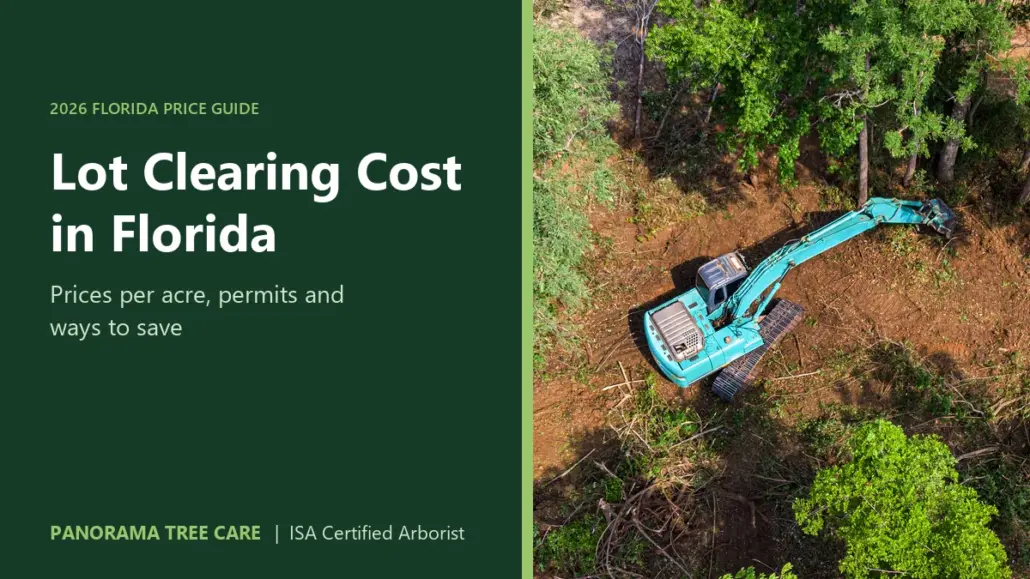
Typical national lot clearing cost ranges from $1,200 to $8,000 per acre, according to HomeGuide. A quarter-acre lot typically runs $800 to $3,000, while a half-acre lot is typically $1,000 to $5,000. HomeGuide land clearing cost guide
Those are national ranges, not fixed Tampa Bay prices. Florida lots vary widely based on trees, brush, stumps, access, disposal needs and permit limits, so Panorama provides the final price only after a site visit and a written quote.
What Lot Clearing Includes (and What It Does Not)
Lot clearing prepares a property for construction, landscaping or another planned use. On a wooded Tampa Bay property, that can mean removing selected trees, cutting brush and undergrowth, dealing with stumps and processing the debris.
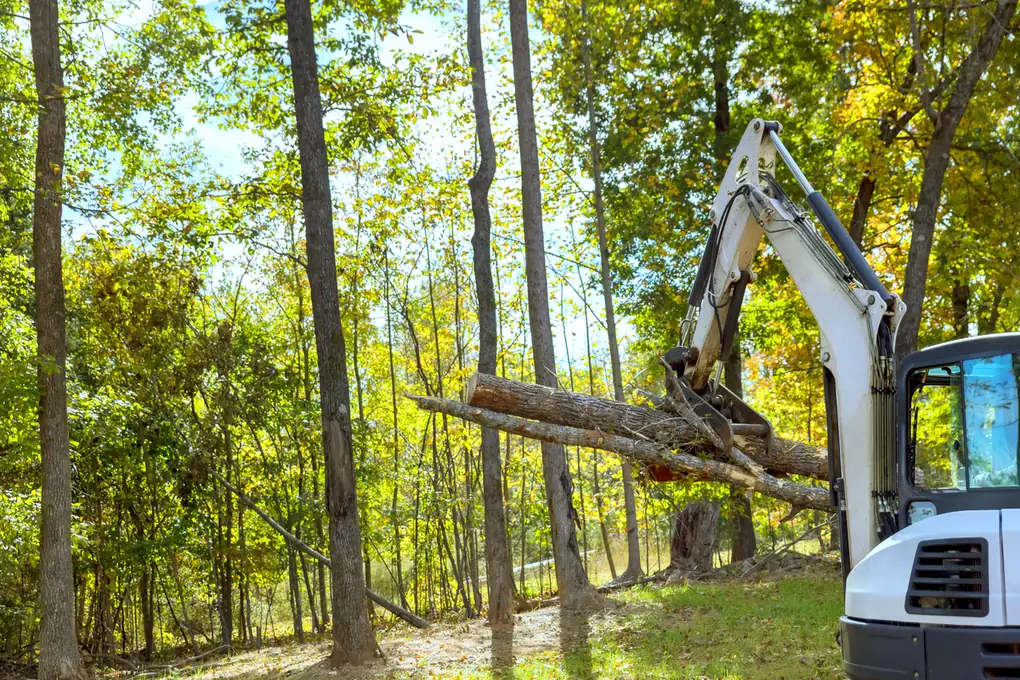
A clearing plan may include:
- Tree removal
- Brush and undergrowth removal
- Stump grinding or removal
- Chipping branches and brush
- Hauling wood and vegetation off site
- Selective clearing around trees that will remain
The exact scope matters when comparing estimates. One contractor may include debris hauling, while another may leave logs or chips on the property.
Some work is normally separate from basic clearing. This can include grading, imported fill, surveying and soil testing. HomeGuide lists a typical national land survey range of $500 to $1,500+, while grading a small, mostly level home site is typically $2,000 to $5,000 and can be much more on difficult sites. HomeGuide land clearing cost guide
Forestry mulching is another option for some properties. HomeGuide gives a typical national range of $500 to $1,000+ per acre for forestry mulching and $800 to $3,000 per acre for brush removal. These ranges do not mean either method is right for every Florida building site.
Before comparing prices, make sure each quote covers the same work. A low clearing number can look attractive until stump work, debris hauling or site preparation is added later. Ask whether the quote is per acre, per machine day or a fixed project total, and what equipment, operator time and disposal it includes.
What Affects Lot Clearing Cost
Lot size
A larger property usually requires more equipment time, labor and debris handling. However, HomeGuide notes that the land clearing cost per acre usually drops slightly as the property gets bigger because equipment and crews are already mobilized on the site.
That does not mean two lots of the same size will cost the same. A lightly overgrown acre and a heavily wooded acre can require very different amounts of work.
Tree size and density
Vegetation density is one of the biggest cost drivers. Scattered brush and small trees can often be handled much faster than a lot filled with mature trees and thick understory. Tell the estimator whether the lot has saw palmetto, pine with heavy underbrush, hardwood hammock or Brazilian pepper so the clearing method and disposal plan can account for the vegetation present.
Large oaks can change the equipment and removal plan, especially when they stand close to a neighboring home, road, fence or tree that must remain. Our crews may use different tree removal methods depending on the tree and available space.
Panorama’s published pricing for most residential tree removals is $800 to $3,500 per tree. Large trees from 60 to 80 feet typically range from $2,500 to $5,000. These single-tree ranges are useful when a lot has one or two major trees, but they should not be used as a substitute for a complete clearing quote.
Stumps and roots
Cutting down vegetation is only part of preparing a building area. Stumps can interfere with foundations, driveways, utilities and future grading. Mulching cuts vegetation into surface material; grubbing removes stumps and roots, while root raking gathers roots and debris from the soil. Confirm the required building-pad finish with the builder or site engineer before choosing a method.
Panorama’s published range for stump grinding and haul-off is $150 to $1,000+ per tree. Whether every stump needs attention depends on what will be built and where.
For more information about that work, see stump grinding.
Access for equipment
Good equipment access can make clearing simpler. A wide, firm entry gives loaders, chippers and other equipment more room to work without repeated repositioning.
Tight access can change the plan. Fences, neighboring properties, existing structures, soft ground and trees marked for preservation may limit which machines can reach the work area.
Tampa Bay’s summer rain can also leave some sites wet or soft. On sandy Florida soil, the crew still needs to look at actual ground conditions rather than assume every dry-looking lot can support heavy equipment.
Debris disposal
A wooded property can produce a large amount of logs, brush, chips and stump material. Where that material goes affects both the work plan and the final quote.
Some material may be chipped on site if the owner has a useful place for it. On other projects, logs, brush and other debris must be loaded and hauled away. Permitted burning may be another disposal option where the site can meet Florida Forest Service requirements.
Ask whether disposal is included when reviewing a clearing estimate. That makes it easier to compare one written quote with another.
Protected trees and permits
Tree rules can affect which trees may be removed and when clearing can start. This is especially important around protected trees, including Grand Oaks in unincorporated Hillsborough County, which have stricter requirements. Hillsborough County Tree Resources
Do not clear first and ask about permits afterward. Confirm whether the property is in unincorporated Hillsborough County, the City of Tampa, Pinellas County, Pasco County or another local jurisdiction before equipment arrives.
Typical Lot Clearing Prices
The tables below use typical national ranges from HomeGuide, updated in November 2025. Florida properties can fall in different parts of these ranges based on vegetation, access, terrain, disposal and permit requirements. Panorama gives the actual project price after a site visit and written quote. HomeGuide land clearing cost guide
| Lot size | Typical national clearing cost |
|---|---|
| 1/8 acre | $600 to $2,000 |
| 1/4 acre | $800 to $3,000 |
| 1/2 acre | $1,000 to $5,000 |
| 1 acre | $1,200 to $8,000 |
| 2 acres | $1,900 to $15,000 |
HomeGuide also breaks the land clearing cost per acre down by vegetation density:
| Clearing density | Typical national cost per acre |
|---|---|
| Light clearing, shrubs, underbrush and small trees | $1,200 to $2,500 |
| Moderate clearing | $2,500 to $4,500 |
| Heavy clearing, dense vegetation and large trees | $4,500 to $8,000 |
These numbers show why acreage alone does not set the price. A small lot packed with large trees, roots and brush may involve more difficult work than a larger property with light vegetation and open equipment access.
For lots with a few major trees rather than full woodland, Panorama’s typical residential tree removal range is $800 to $3,500 per tree. Large trees from 60 to 80 feet typically run $2,500 to $5,000, while stump grinding and haul-off can add $150 to $1,000+ per tree.
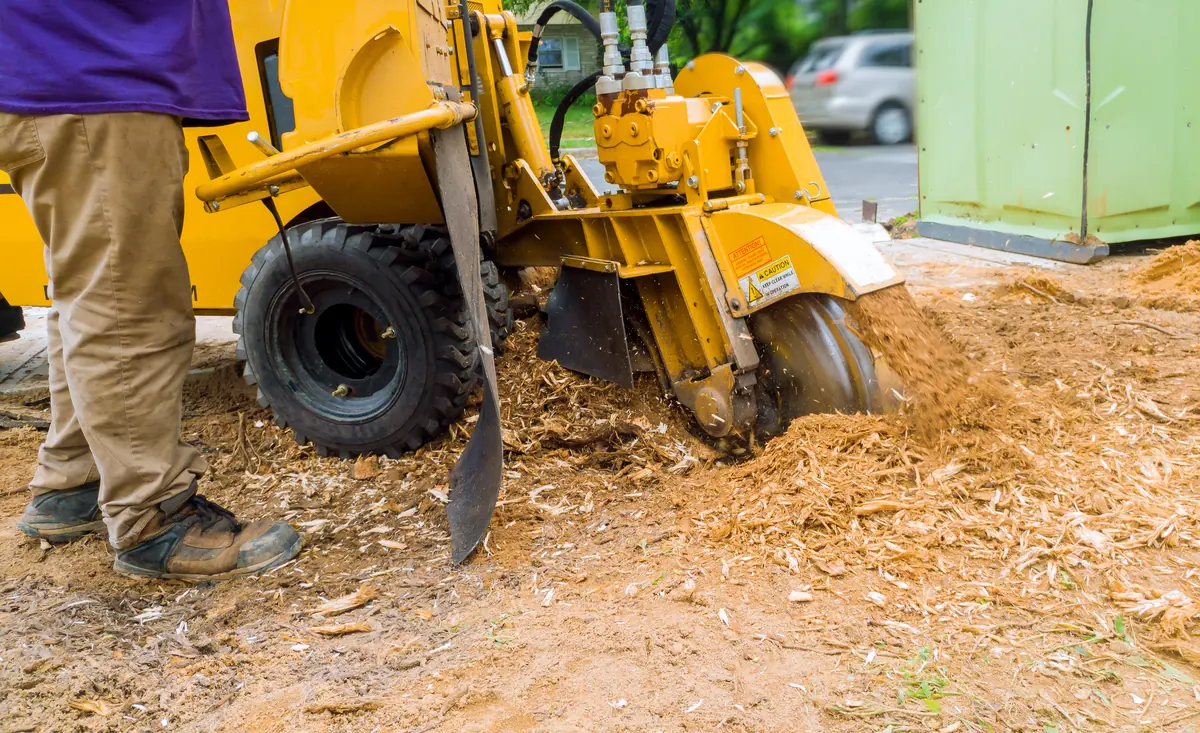
Those tree and stump prices are Panorama’s published ranges, while the lot-clearing tables are national HomeGuide ranges. The written site quote is what sets the actual cost to clear land in Florida for a specific Tampa Bay property.
Permits Before You Clear a Lot in Hillsborough County
If your property is in unincorporated Hillsborough County and you are clearing land to build a home, the County requires a Land Alteration and Landscaping permit, commonly called an LAL permit. You apply for it when you submit the building permit application, and the property cannot be cleared before the LAL permit has been applied for and secured. Hillsborough County Tree Resources
Grand Oaks have stricter rules. That makes it important to identify trees that may affect the clearing plan before deciding what equipment should enter the property.
Commercial and subdivision projects have additional requirements. Hillsborough County states that trees over 24 inches in diameter that are in fair or good condition and are removed require additional plantings and/or a contribution to the tree restoration fund. Hillsborough County Tree Resources
The City of Tampa, Pinellas County and Pasco County use different rules, so first confirm which jurisdiction controls the property. See our tree permit guide before planning the clearing schedule.
Pasco County Tree Removal Requirements
In unincorporated Pasco County, a Tree Removal Permit is generally required for trees 5 inches DBH or larger. Pasco says it has no “lot clearing permit”; on a vacant parcel, trees are reviewed through the site development and building permit. Wetlands and grand trees get additional review. Pasco County Tree Removal Requirements
Florida Permits and Rules Beyond Tree Permits
Gopher tortoises: Gopher tortoises are a state-listed threatened species. If clearing, grading or equipment staging will happen within 25 feet of a potentially occupied burrow, an FWC relocation permit is required before work starts. If clearing starts too early, FWC may require a Disturbed Site permit and stop work until tortoises are relocated. Florida Fish and Wildlife Conservation Commission
Wetlands: If the lot has or borders wetlands, the Southwest Florida Water Management District requires an Environmental Resource Permit before any construction activity that would affect wetlands, alter surface water flows or contribute to water pollution. Southwest Florida Water Management District
Burning debris: Burning land clearing debris requires prior authorization from the Florida Forest Service. The debris must have been generated on site and the fire attended at all times. Residential home-site piles must be at least 300 feet from occupied buildings other than the landowner’s, 100 feet from paved public roads and 50 feet from wildlands or brush. Non-residential clearing piles generally require 1,000 feet from occupied buildings, or 300 feet when using a DEP-permitted air curtain incinerator. Florida Forest Service
Commercial sites: Commercial or subdivision properties in unincorporated Hillsborough County must receive a natural resource permit from Site & Subdivision Development before clearing. Hillsborough County Tree Resources
Protecting the Trees You Want to Keep
Lot clearing does not always mean stripping the property bare. Selective clearing can preserve healthy trees that fit the building plan while removing vegetation from the actual construction area.
Keeping suitable trees can preserve shade and character on the finished property. On regulated projects, preserving healthy trees can also reduce the number of trees that have to be removed and later replaced.
Trees marked to stay need protection during construction. Heavy equipment, repeated vehicle traffic, stored materials and changes to soil around major roots can damage a tree even when the trunk itself is never touched.
Set the trees to keep before full clearing begins. A clear protection area around their roots gives equipment operators a visible boundary and reduces accidental damage.
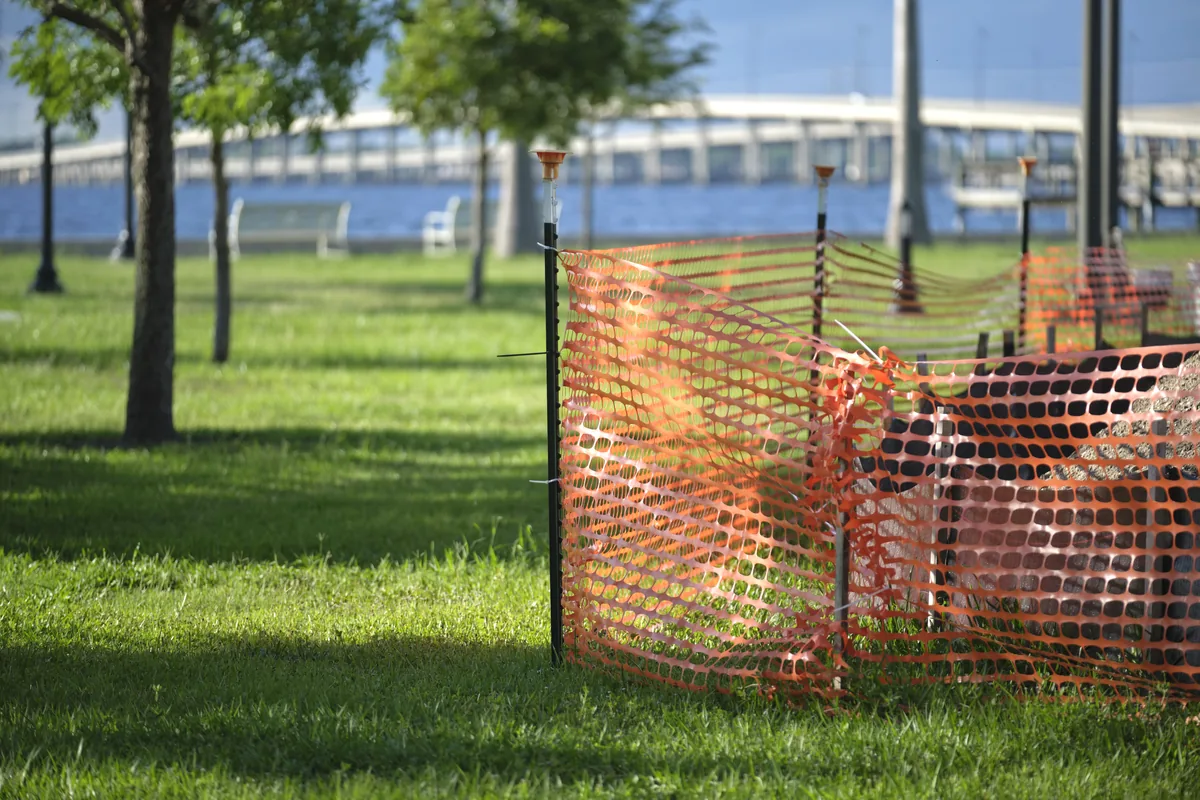
For a mature oak or another important tree close to the proposed building area, an arborist can check its health and structure before the site plan is finalized. Use a tree assessment to decide whether a tree is a good candidate to preserve.
How to Lower Your Lot Clearing Cost
The cheapest approach is not always to clear everything. Selective clearing can reduce tree work, stump work and debris handling when the building plan allows some vegetation to remain.
Decide what must stay before equipment arrives. Mark property access, trees to protect and the main work area so the crew is not stopping repeatedly for decisions.
If wood chips can be used safely on the property, keeping some processed material on site can reduce hauling. That choice should fit the finished site plan rather than simply creating a pile that must be moved again later.
Combining planned tree removal and stump grinding can also simplify scheduling. It allows the crew to plan equipment and debris handling around the whole clearing scope instead of treating each stage as an unrelated visit.
Good access helps as well. Clearing vehicles, stored materials and other obstacles from the equipment route before work starts can make the site easier to manage.
When the project schedule allows, clearing during drier site conditions can reduce problems caused by saturated soil and mud. Tampa Bay weather can change quickly, so the actual ground condition matters more than the calendar.
Most importantly, get a site visit before setting the budget. National ranges are useful for planning, but the final lot clearing cost depends on what is actually growing on the property and what has to remain.
Lot Clearing FAQs
How long does it take to clear a lot?
There is no single timeline that fits every lot. The schedule depends on acreage, vegetation density, tree size, stumps, equipment access, disposal needs, weather and permit requirements.
A small open property may be much simpler than a heavily wooded lot with large oaks and limited access. We determine the work plan after seeing the site rather than promising a schedule from acreage alone.
Do I need a survey before clearing?
A survey can be important when property lines, easements, building areas or trees near a boundary are unclear. It helps the clearing crew understand exactly where work is allowed.
HomeGuide lists a typical national survey cost of $500 to $1,500+. Check the project and permit requirements before clearing so you know whether a current survey is needed.
Can you clear around a septic system or utilities?
Clearing can be planned around known septic components and utility areas, but their locations need to be identified before heavy equipment works nearby. The crew needs to know what must be protected and where access is safe.
For a vacant lot, make those site limits part of the clearing plan instead of discovering them after work begins.
Do you grind the stumps?
Stump grinding can be included when the project requires it. Panorama’s published range for stump grinding and haul-off is $150 to $1,000+ per tree, depending on the stump and site.
Whether every stump should be ground depends on the building footprint, grading plan and future use of that part of the property. See stump grinding for more information.
If you are preparing a vacant lot in Hillsborough, Pinellas or another Tampa Bay community, start with a site visit instead of relying on an online per-acre number. Panorama can review the trees, brush, access, stumps and clearing limits, then provide a written quote for the work.
Request a site visit and written quote or call (813) 234-9842. Property owners in Riverview can also contact our Riverview tree service team. For larger jobs, see our commercial and lot clearing services.