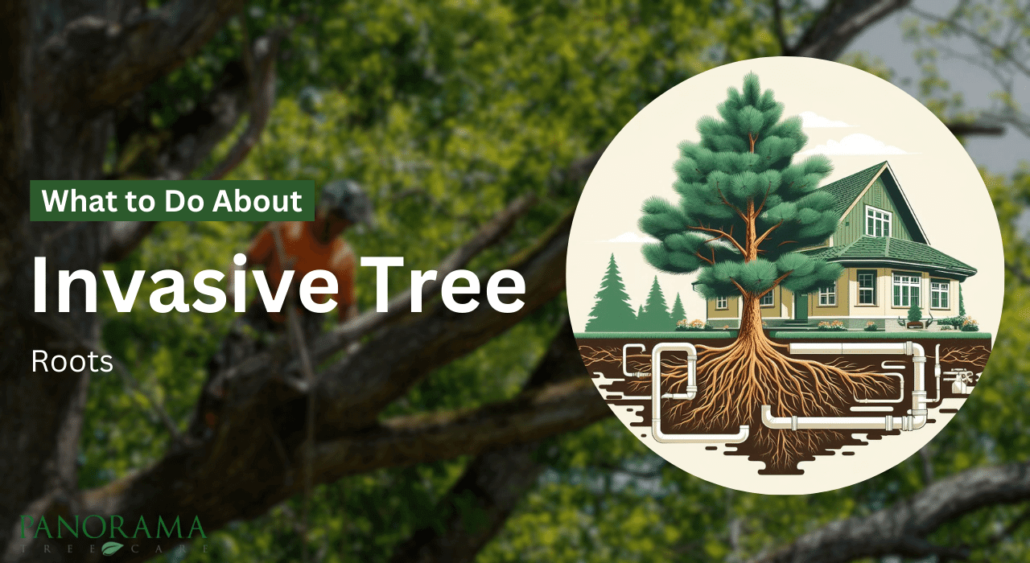
TL;DR: Around Florida, a small group of tree species with fast-spreading, shallow, lateral root systems are responsible for most of the cracked slabs, clogged sewer lines, and lifted sidewalks you see in older neighborhoods. Our sandy soil lets those roots run wide and close to the surface.
Choosing the right species, installing root barriers for sandy soil before things get ugly, and using careful, professional root pruning or removal when needed will stop the damage before it becomes a foundation or sewer rebuild.
Key Takeaways
- Worst invasive root offenders in Florida include Ficus species, Camphor trees, Silver Maples, Willows, and Australian Pines. All of them push aggressive lateral roots that stay shallow and spread fast through sand.
- Florida’s sandy soil speeds up lateral root spread, so sewer pipe root infiltration, foundation undermining, and surface root heaving show up sooner and often hit harder than in heavier soils.
- Root barriers (HDPE membrane, copper-impregnated fabric, and concrete trench systems) can redirect roots and protect structures, but only if the barrier is deep enough, long enough, and installed before the damage gets severe.
- Root pruning can work as part of a plan, but it’s not a casual DIY job. Cutting more than about 25% of the root system or pruning closer than 6× trunk diameter to the trunk without ISA-level input can turn your tree into a storm hazard.
- Removal is the only safe fix once roots have seriously compromised foundations or utilities, or if there’s no way to place a barrier without making the tree unstable.
- Panorama Tree Care root services use air spade investigations, selective root pruning, and barrier installation methods tuned to Florida’s sandy soil and typical Hillsborough County infrastructure layout.
- Prevention is far cheaper than structural repair. A well-designed root barrier usually runs less than a single sewer line dig-up or a slab stabilization project caused by invasive roots.
- For help choosing safer species, see .
Quick Definitions: What Are Invasive Tree Roots?

Invasive tree roots are root systems that don’t stay politely under the tree’s canopy. They spread aggressively in all directions, chasing water and oxygen, often far beyond where most homeowners expect. Around Florida, they tend to stay shallow and grow laterally through sandy soil, where they can easily:
- Undermine and crack foundations and slabs by drying and shifting the soil beneath them
- Invade sewer and water lines through weak joints, tiny gaps, or hairline cracks
- Lift sidewalks, driveways, patios, and pool decks, creating trip hazards and broken concrete
- Disrupt underground utilities, irrigation systems, and even small retaining walls
Big trees don’t automatically mean tree root problems Florida. The trouble comes from the specific species, the way they root in our sand, and how close they were planted to houses, septic or sewer lines, and hardscapes.
Florida Trees with the Most Invasive Root Systems (Problem Species List)
in Florida, the same names pop up over and over on root damage to property calls. Ficus species are usually the worst, with Camphor, Silver Maple, Willow, and Australian Pine right behind them. All have wide root spread ratios, shallow rooting patterns, and the strength to move concrete and pipes if planted too close to anything man made.
Here’s a Florida-focused breakdown of the main trees with invasive roots Florida that keep showing up in cases of root damage to property around our area. Learn more about trees for yards.
| Species | Root Spread Ratio (× canopy width) |
Typical Root Depth in Florida Sandy Soil |
Common Damage Types | Recommended Setback from Structures (min.) |
Removal Difficulty |
|---|---|---|---|---|---|
| Ficus species (e.g., Indian Laurel, Rubber Fig) | 2–3× canopy | Very shallow (top 12–18″) | Foundation undermining, sewer pipe root infiltration, sidewalk lifting root, root girdling of nearby plants | 35–50 ft | High (dense, extensive root mass) |
| Camphor tree (Cinnamomum camphora) | 1.5–2× canopy | Shallow–moderate (top 18–24″) | Driveway cracking, foundation heave, lateral spread into sewer laterals | 30–40 ft | High (tough roots, prolific) |
| Silver Maple | 2× canopy | Shallow (top 18″) | Severe surface root heaving, sidewalk and slab lifting, foundation cracking | 30–40 ft | Moderate–high |
| Willow (esp. Weeping Willow) | 2–3× canopy, highly water-seeking | Shallow–moderate (top 24″) | Water line and sewer infiltration, pond/retention wall undermining | 40–60 ft from pipes/water bodies | Moderate |
| Australian Pine (Casuarina spp.) | 1.5–2× canopy | Shallow with some deeper sinker roots | Soil drying, slab and seawall stress, infrastructure disruption near coasts | 30+ ft from seawalls & structures | Moderate–high (large size, brittle) |
Why Ficus Species Are Florida’s Worst Root Offenders
The Ficus root system is the one that makes most pros groan when we walk onto a tight city lot. In Florida’s sandy soil, Ficus throws out thick, ropey lateral roots that hug the surface and can easily reach two to three times the canopy width. I’ve seen them surf just below the grass line, straight under a slab, without dropping more than a few inches.
- They slip under foundations and pool decks, stripping moisture and support until the concrete cracks or sags.
- They push into tiny flaws in older clay or PVC sewer lines, then expand into big, fibrous clumps that catch everything you flush.
- They create fast, ugly surface root heaving in lawns, sidewalks, driveways, and even brick edging.
With that kind of root spread and density, Ficus has no place in a small yard or anywhere near a pool, driveway, or house. If one’s already there, your realistic long-term options are usually a properly designed root barrier or full removal. Anything less is just kicking the can down the road.
Camphor Tree Root Damage in Florida
The Camphor tree looked like a smart shade tree years ago, so builders planted a ton of them. In practice, its roots in Florida usually outgrow the space they’re given. Those lateral roots fatten up and act like slow-moving hydraulic jacks under concrete.
- Driveways and walks within 15–25 feet start to lift and crack, often with visible root ridges right next to the slab edge.
- Roots twist tightly around nearby shrubs and small trees, choking them off. That root girdling steals water and nutrients from plants you actually want.
- Water-hungry roots run straight toward sewer laterals, irrigation lines, and AC condensate drains, then hug them like a roadmap.
On paper, Camphor is just another shade tree. On a Florida lot with a short setback and a driveway hard up against the house, it’s usually a slow-burn problem.
Silver Maple and Willow: Water-Seeking Problem Trees
Silver Maples and Willows cause trouble for a different reason. They grow fast and light up any spot that stays even slightly damp, which is why they hunt down older pipes and soggy corners of a yard.
- Roots zero in on the wet soil along Hillsborough County sewer laterals and water service lines, especially the older ones.
- They push into weak spots in clay joints, thin cast iron, and even small cracks in PVC, then fill the pipe like a mop head.
- In yards, they creep toward irrigation heads, low-lying spots that hold water, and the downslope side of foundations where moisture collects.
If you’ve got constant slow drains and a Silver Maple or Willow anywhere near the line, that’s usually not a coincidence. Those roots are doing exactly what those species are wired to do.
Australian Pine Near Coasts and Canals
Australian Pines show up most often on coastal lots, along canals, and near seawalls, but enough of them turn up inland to keep them on the watch list. Their roots aren’t always as visible at the surface as a Ficus, but they can be every bit as disruptive.
- They cluster along seawalls, canal banks, and retaining walls, prying at cracks and stressing structures that are already handling tidal and soil movement.
- They drink hard from sandy soils, which can dry and settle the ground next to slabs, driveways, and decks.
On top of the rooting issues, Australian Pines are tall and brittle in wind. Pair that with root stress along a seawall and you can have both structural and storm problems baked into one tree.
If any of these trees are sitting close to your house, pool, or sewer lateral and you’re seeing cracks, clogs, or lifted slabs, take a look at our page on for repair options and structural fixes. The rest of this guide stays zeroed in on invasive root species, causes, and prevention so you can stop the damage before it grows.
How Invasive Roots Damage Florida Properties
Across Florida, invasive roots tend to show up as four big headaches: foundation and slab movement, sewer and water line infiltration, lifted sidewalks and driveways, and interference with underground utilities. Sandy soil makes all of these show up faster because roots can move sideways easily and stay active more months of the year.
Why Florida’s Sandy Soil Makes Root Damage Worse
Florida sandy soil root behavior doesn’t look like what you read in textbooks written for clay or loam regions. Here’s how it plays out in real yards:
- Lateral spread rate: In loose, aerated sand, roots move sideways quickly and with very little resistance. It’s common to see them 2–3× the canopy radius out from the trunk.
- Depth distribution: The bulk of the structural roots stay in the top 12–24 inches, right where oxygen and intermittent moisture sit. Below that, roots thin out or only send down a few “sinker” roots.
- Water-seeking behavior: Since sand drains fast, any consistent leak or damp line is a magnet. Roots chase leaky irrigation pipes, broken hose bibs, AC condensate discharge, and sewer lines that sweat or seep.
- Seasonal root activity: With our mild winters, roots can be active nearly year round. You don’t always get that slow season that northern trees do.
Once a root figures out a path toward your slab or sewer lateral in Florida, you’re not looking at a decade before you see damage. You can get noticeable changes in a couple of growing seasons, sometimes faster on younger, aggressive trees.
Foundation & Structural Damage
Tree roots damaging foundation around Florida usually do it in two main ways. They either hollow and dry the soil so the slab drops, or they physically push the slab up from underneath.
Foundation undermining shows up when roots change the soil support under your slab:
- Wide lateral roots from species like Ficus or Camphor snake under the footing or slab edge.
- They displace soil as they grow and pull moisture out of the area, which lets the ground settle unevenly.
- Parts of the slab lose even support, then crack or tilt as the concrete tries to span the void.
Foundation heave and surface root heaving are easier to spot but just as serious if they involve walls or load-bearing areas:
- Each year, structural roots gain diameter. That yearly ring growth has to go somewhere.
- When a big root hits a stiff slab, driveway, or pool deck, it pushes upward rather than going deeper.
- Over time you see concrete panels step up, doors stick, windows crack, and diagonal cracks above where the root is growing.
Our Florida soils often sit shallow over limestone, fill, or compacted base material. Roots don’t have much depth to work with, so they spend their effort right under the slab. That’s why planting distance and correctly engineered root barriers are so important here compared to places with deep, heavy soils.
Sewer & Water Line Infiltration
Tree roots in sewer line are easily one of the most expensive root-related problems homeowners deal with in Florida. You don’t see it happening until you’re paying a plumber on a holiday weekend.
Sewer root infiltration in Florida tends to follow the same pattern over and over:
- Most common pipe type affected: older clay sewer laterals with joints, aging cast iron that’s starting to flake, and PVC that has shifted or cracked.
- Root entry method: Fine, hairlike roots find weak joints, gasket gaps, offsets, or hairline cracks. Once they find moisture, they follow it straight into the pipe.
- Growth inside pipe: Inside, those fine roots branch, thicken, and catch toilet paper, grease, and every bit of debris. That’s where recurring clogs and sewer backups start.
Typical local cost ranges you might see (these are ballparks, not quotes):
- Camera inspection cost: usually around $250–$450 depending on how easy the clean out is to access and how long the run is.
- Hydro-jetting cost: often $350–$600 for a thorough root cutting and flush, sometimes more if access is tough.
- Permanent fix: often means pipe replacement or lining plus a root barrier between the main offender tree and the sewer lateral so you’re not paying for jetting every year.
Water lines and irrigation lines don’t get as much attention, but roots absolutely target them too. Willows, Silver Maples, and Ficus are very good at tracking the constant wet halo around even a pinhole leak, then pressing on the pipe or growing around fittings until something gives.
Sidewalk & Driveway Damage
Sidewalk lifting roots are the thing most homeowners notice first. You walk to the mailbox and one slab has crept up half an inch compared to the next one.
- Concrete squares get pushed up at one edge, often with a bulge or ridge in the turf where the main root is running.
- Pavers crack or separate near mature Ficus, Camphor, and Silver Maple trees as the bedding sand gets displaced by roots.
- Asphalt driveways sag in some places and hump up in others where shallow roots are growing and shrinking with moisture cycles.
Because most of these species keep the bulk of their roots in the top 6–12 inches, those roots have nowhere to go when they hit a rigid surface. Year by year, radial growth exerts enough force to fracture concrete, lift entire sidewalk panels, or tilt the corner of a pool deck.
The same root pressure can deform pool decks, patios, steps, and small retaining walls. For specific repair and slab stabilization strategies, check our dedicated guide: . Here we’ll stay focused on how to prevent those cracks from coming back once you fix them.
Root Barrier Solutions for Florida’s Sandy Soil
Root barriers around properties are basically underground fences for roots. They don’t kill the tree. They change the direction roots grow so they head down and away instead of sideways into your slab, sewer, or driveway.
Materials like HDPE membranes, copper-impregnated fabrics, and concrete trenches all work, as long as they’re installed at the right depth and distance for our sandy soil and the species you’re dealing with.
Think of root barriers as prevention and control tools, not miracle cures. They work best before you’ve got major structural damage. Used correctly, they let you keep a tree that you like while protecting the stuff you can’t replace easily, like your foundation and underground utilities.
Main Types of Root Barriers
Around Florida, the three main approaches for a barrier for invasive roots are shown below. Each one has a sweet spot where it makes the most sense.
| Barrier Type | Typical Thickness / Material | Installation Depth in Florida | Approx. Cost per Linear Foot | Best Uses |
|---|---|---|---|---|
| HDPE Root Barrier Membrane | 40–80 mils HDPE (high-density polyethylene) | 24–36 inches (deeper for aggressive species) | $25–$60+ (installed, depending on depth/obstacles) | Foundations, driveways, pool decks, property lines |
| Copper-Impregnated Fabric | Permeable geotextile with copper root inhibitor | 18–30 inches (depends on target species) | $20–$45+ (installed) | Garden beds, near sidewalks, around utilities |
| Concrete or Masonry Trench | 6–8″ wide poured concrete or block wall | 24–36+ inches | $40–$80+ (installed, excavation dependent) | Severe cases, property lines, near seawalls |
HDPE Root Barrier Membrane: The Workhorse Option
The root barrier HDPE membrane is what I’d call the workhorse setup on most Florida residential jobs. It’s a solid sheet of thick plastic that roots physically can’t grow through, so they’re forced to deflect downward or sideways along the barrier.
- Thickness: Most jobs use 40–60 mil, but for very aggressive roots like big Ficus or mature Camphor, 60–80 mil products hold up better if roots push hard on them.
- Installation depth in Florida: We usually look at 24–36 inches, sometimes more in problem spots. That’s deeper than what you’ll see recommended in regions with heavier soils, because our roots stay shallow but powerful.
- Lifespan: Properly buried and kept out of the sun, a good HDPE barrier often gives you 25–50+ years of service.
- Effectiveness vs aggressive roots: In real world installs, a continuous, deep enough barrier can block or deflect the bulk of root pressure. Failures usually come from short runs, shallow trenches, or gaps, not from the material itself.
In practice, depth and continuity are everything on Florida installs. If you leave breaks for roots to slip through or stop the membrane too close to the tree, those roots will find the weak spots and you’ll think the barrier “didn’t work.”
Copper-Impregnated Fabric Barriers
Copper root inhibitor fabrics work differently. They don’t form a solid wall. Instead, they use low levels of copper embedded in a geotextile to discourage root tips from extending once they touch the fabric. Water can pass through, but root growth tends to stall or divert.
They make sense in a few scenarios:
- Wrapping around or weaving between utilities and existing roots where a rigid sheet would be hard to fit.
- Lining the back side of narrow planting strips along sidewalks or driveways, where excavation depth is limited.
- Separating foundation beds from house slabs when you’re redoing landscaping and have a clean trench to work with.
On extremely aggressive root systems like a mature Ficus sitting close to a structure, copper fabric alone can be outgunned. In those cases, I like it paired with selective root pruning or used as a secondary line of defense behind an HDPE barrier.
Concrete Trench Barriers
Concrete trench barriers act more like an underground retaining wall that also stops roots. They’re not overkill in some tough setups. I tend to look at them when:
- The tree is tight to a property line or seawall and you want both root control and soil retention.
- You’re already opening a trench for utility replacement or structural work and can pour while the trench is exposed.
- There’s an ongoing pattern of ongoing infrastructure destruction from roots where lighter barriers have failed or can’t be installed correctly.
They cost more up front and make a bigger mess during installation, but in spots like coastal lots with big Australian Pines leaning over seawalls, a properly designed concrete barrier can be the most permanent fix you’ll get.
How Florida’s Sandy Soil Affects Barrier Design
Because of Florida sandy soil root behavior, you can’t just copy a barrier spec from a northern clay soil article and hope for the best. There are a few adjustments we nearly always make here:
- Deeper than standard barriers: We usually target 24–36 inches of depth. That catches more of the structural root zone and leaves fewer opportunities for roots to sneak under the barrier.
- Extended horizontal coverage: The barrier should reach well past the current drip line in both directions. Roots don’t stop where the canopy does, especially with Ficus and Willow.
- Secure trench backfilling: Backfilling with sand needs to be compacted properly. Loose, uncompacted fill leaves voids that collapse later and create cracks or tiny paths that roots can exploit.
For layouts, depth choices by species, and L- or U-shaped barrier patterns, see our specialized page: . The right pattern depends heavily on tree location, utilities, and grade changes.
When to Consider Chemical Root Treatment
Chemical root treatment products, often foams or liquids applied inside sewer pipes, have their place, but they’re tools, not miracles.
- They can slow regrowth inside sewer pipes after hydro-jetting, giving you breathing room before a more permanent fix.
- They’re handy when excavation or pipe replacement has to be delayed because of budgets or permitting.
But you need to keep your expectations realistic:
- They do not change the fact that you’ve got a thirsty, invasive tree planted on top of a leaky line.
- They usually need repeat applications on a schedule if the tree stays and the pipe isn’t replaced or lined.
- If used carelessly, some products can affect nearby plant roots, turf, or even the tree you’re trying to keep.
On most Florida residential jobs, chemical root treatments are a stopgap while you line or replace the pipe and put in a physical barrier or consider whether the offending tree should stay. They’re rarely the full answer by themselves.
Panorama Tree Care can work with your plumber or contractor, handle root investigations, and design barrier setups that work with your lot layout and species mix. If you want a plan that actually fits your property instead of generic advice, reach out and we’ll walk it with you.
Can You Prune Invasive Roots Without Killing the Tree?
You can prune invasive roots in Florida without killing the tree, but only if you treat it like surgery, not hacking. Respect the safe limits, keep your distance from the trunk, and expose the roots properly before you cut. Otherwise, you can easily destabilize the tree and turn it into a hurricane hazard.
Safe Root Pruning Limits
Root pruning safety limits exist for a reason. Those big roots you’re tempted to cut are what keep the tree standing when a storm comes roaring in from the Gulf.
- Maximum root removal: For most species, keep total root removal to around 25% of the root system or less in a single pruning event. More than that and you start gambling with stability and tree health.
- Minimum distance from trunk: A solid rule of thumb is to stay at least 6× the trunk diameter away from the trunk when cutting large roots. So a tree with a 20 inch diameter trunk shouldn’t have major roots cut closer than 10 feet from the base.
- Assessment method: Use an air spade or similar tool to blow soil off the roots with compressed air. That lets you see which roots are structural and which are smaller feeder roots before you start cutting.
- Stability impact: After any significant root work, you want an ISA Certified Arborist to evaluate how much anchoring you’ve taken away and how the tree will behave in wind.
- Recovery timeline: Expect 6–24 months for meaningful new root growth, depending on species, site moisture, and overall tree vigor.
More than one “fixed” root problem has turned into a tree on a roof after a storm because somebody cut big anchor roots right up against the trunk. Take the limits seriously, especially on taller trees and high-risk species.
Using Air Spade Investigation for Selective Root Removal
An air spade investigation is how you do root pruning like a pro instead of guessing with a shovel. It’s a bit like pulling the carpet back before you cut the floor.
- Compressed air blows the sand away from the root system without slicing roots blindly, so you get a clean view of what’s underground.
- The arborist can tell which roots are major load-bearing anchors and which ones are smaller structural or feeder roots that can be reduced safely.
- Targeted root pruning focuses on the specific root sections lifting a slab or heading for a sewer line while leaving the key anchors intact.
This kind of precision is especially critical with Ficus and Camphor trees near homes, or anywhere Hillsborough County sewer laterals run close to big trees. Those setups have almost no margin for error if you start cutting blindly.
Post-Pruning Care and Monitoring
Once you’ve pruned invasive roots, you’re not done. You’ve changed how the tree is anchored and how it takes up water, so you need a follow-up plan.
- Water management: Keep soil moisture consistent but not soggy. That encourages new root growth deeper and away from the structure instead of right back into the same spot.
- Canopy balance: Sometimes a light crown reduction or thinning is recommended to balance how much top weight the remaining root system has to hold.
- Stability checks: Watch the tree in windy conditions. New lean, soil cracking around the trunk, or heaving on the opposite side of the cuts are red flags.
- Professional follow-up: Plan a re-inspection 6–12 months later so your arborist can confirm the tree is re-establishing safely and not shifting toward failure.
Panorama Tree Care often combines air spade work, selective pruning, and root barrier installation as a package. That way you’re not just reacting to roots, you’re guiding how they grow from that point forward.
When Invasive Roots Mean the Tree Must Go
Sometimes you reach a point where no amount of root pruning or barrier work is going to make things truly safe. In Florida, that’s usually when the roots have already done major structural damage, or when the only way to stop them would leave the tree too unstable to keep around during storm season.
Removal Triggers to Watch For
Here are the kinds of situations where removal usually ends up on the table:
- Severe foundation compromise: Slabs that have cracked and settled, or shifting that engineers say root management alone won’t fix or stabilize.
- Repeated sewer backups: Ongoing root regrowth in sewer lines even after hydro-jetting and treatments, especially where Ficus or Willows are planted right over or along the lateral.
- Insufficient setback: Large invasive species sitting within 10–15 feet of the house, pool shell, or main utilities, where putting a barrier at the right distance would mean cutting too close to the trunk.
- Unacceptable stability risk: An ISA-level assessment shows that the root cutting required to protect structures would leave the tree structurally unsafe.
- Cost comparison: When the math shows that ongoing barriers, plumbing repairs, and concrete work will outrun the one-time cost of removal and replanting a better species.
Balancing Tree Benefits vs. Root Risks
Trees give you shade, privacy, cooler interiors, and even a bit of wind buffering in storms. But aggressive lateral root systems that are cracking your slab or invading your sewer line are also draining your budget and adding risk.
The smart move is to have a structured tree removal decision talk with a professional rather than acting on gut feeling alone. A good assessment looks at:
- Species identity and behavior, like Ficus versus a live oak or a smaller ornamental
- Tree age, health, and any existing decay or structural defects
- Distance from structures, driveways, pools, and known utility lines
- Available space for realistic barriers that won’t destabilize the tree
For a broader breakdown of pros, cons, and timing on taking out a tree. That can help you line up the tree removal decision with other projects, like driveway replacement or sewer upgrades.
After Removal: Replanting Smart
Once an invasive tree is out, you’ve got a clean slate. That’s the perfect time to think ahead so you never fight the same battle again.
- Install barriers during stump grinding or excavation to shield nearby sewer lines, slabs, or seawalls while the ground is already open.
- Replant with trees with non-invasive roots that fit the mature size and root spread your lot can actually handle.
Visit our guide on for ideas on safer species that handle Florida’s heat, storms, and sandy soils without wrecking your foundation or pipes.
Step-by-Step: What to Do If You Suspect Invasive Root Problems
- Identify the tree species. Get photos of leaves, bark, and the full tree profile, or have an arborist take a look. Pay special attention to high-risk names like Ficus, Camphor, Silver Maple, Willow, and Australian Pine.
- Look for surface and structural signs. Walk the property. Check for lifted or cracked sidewalks, heaving driveways and pool decks, cracks radiating from walls facing a tree, and any pattern of slow-draining toilets, gurgling drains, or frequent clogs.
- Map utilities and sewers. Dig out your survey or call for utility locates. Mark where your water line, irrigation main, and Hillsborough County sewer lateral run. Measure how close they pass to suspect trees.
- Schedule professional inspections. Have a plumber perform a camera inspection if you suspect sewer issues, and book Panorama Tree Care for an on-site root and stability assessment, which may include air spade work in key areas.
- Review management options. Once you have the data, compare root pruning, root barrier installation, chemical pipe treatments, or full removal. Look at each option’s cost and the long-term risk if you delay.
- Implement a long-term plan. Address immediate risks first, like sewer clogs or trip hazards, then put in preventative measures. That might mean new barriers, replanting safer species, or coordinating tree work with upcoming slab or utility repairs.
Root Management Options Compared
Deciding how to stop invasive tree roots is easier when you see the main approaches side by side. Here’s how the common strategies stack up around Florida.
| Solution | Best For | Typical Cost Range (Florida) | Pros | Cons |
|---|---|---|---|---|
| Root Pruning | Localized slab/sidewalk pressure, early-stage issues | Few hundred to low thousands (depends on scope) | Preserves tree, immediate relief at problem spots | Risk to stability, may need repeating, not a full barrier |
| HDPE Root Barrier | Protecting foundations, driveways, pool decks | $25–$60+ per linear foot installed | Long lifespan, high effectiveness when properly installed | Requires trenching, best installed before severe damage |
| Copper Fabric Barrier | Garden edges, around smaller trees or sidewalks | $20–$45+ per linear foot | Flexible, allows water movement, less invasive install | Less robust vs. very aggressive root systems |
| Chemical Root Treatment | Short-term sewer line root control | $200–$600 per treatment (often in addition to jetting) | Non-excavation, can slow regrowth | Temporary, does not stop roots outside pipes |
| Tree Removal | Severe damage, unsafe trees, no barrier space | $800–$3,000+ depending on tree size/complexity | Eliminates ongoing risk, allows replanting better species | Loss of shade/habitat, one-time higher cost |
Common Mistakes Florida Homeowners Make with Invasive Roots (and How to Fix Them)
Mistake 1: Planting High-Risk Species Too Close to the House
The problem: Sticking Ficus, Camphor, Silver Maple, Willow, or Australian Pine within 10–20 feet of your house, pool, driveway, or sewer path is asking for trouble. It might look fine for a few years, but those roots are already moving while the trunk still looks “small.”
Fix: When you’re planning or redoing a landscape, keep invasive root species Florida out of the tight zones near structures and utilities. Use our safer species list: to pick trees with more manageable root systems. For existing offenders, bring in a pro to look at barrier options or talk seriously about removal.
Mistake 2: Cutting Major Roots Right Next to the Trunk
The problem: A common DIY move is to dig right beside the slab or wall, hit a huge root a couple feet from the trunk, and chop it to “relieve pressure.” That often severs a main structural root closer than 6× trunk diameter, which is exactly how you turn a healthy tree into a blow-over risk.
Fix: Hand this type of job to someone who does root pruning regularly and uses air spade excavation. Respect the root pruning safety limits for both distance and percentage of roots removed, and have an ISA Certified Arborist check the tree’s stability afterward.
Mistake 3: Only Clearing Roots Inside Sewer Pipes
The problem: A lot of homeowners think that once the plumber hydro-jets the line and throws some chemical down, the issue is solved. But all that root mass outside the pipe is still alive and still chasing moisture, so regrowth is almost guaranteed.
Fix: Treat sewer line root problems as both a plumbing and a tree issue. Combine pipe repairs or lining with root barrier installation between the tree and the pipe. If the tree is sitting right over the lateral and causing repeated backups, removal may be the more honest solution.
Mistake 4: Installing Shallow or Short Root Barriers
The problem: Shallow barriers or ones that only cover a small stretch in front of the slab just train roots to dive under or detour around the end. You spend the money and the tree simply changes path.
Fix: in Florida’s sandy soils, design barriers with proper depth and length for the species. They should reach 24–36 inches deep in most cases and extend well beyond the active root zone. For layout details by species and site, see .
Mistake 5: Ignoring Early Warning Signs
The problem: People live with a modest sidewalk bump, a small crack across the driveway, or a “quirky” toilet that clogs too often, and chalk it up to old construction. By the time they call someone, the roots have already done serious structural damage.
Fix: Treat those early signs as an early warning system, not just annoyances. Lifted slabs, repeating clogs, and fresh cracks near big trees mean the roots are already working. Getting Panorama Tree Care involved early is almost always cheaper than paying for foundation piers or a full sewer line replacement later.
FAQ: Invasive Tree Roots in Florida
Here are straight answers to the questions homeowners ask most often about invasive tree roots, problem species, neighbors, and costs.
How do I know if my Florida tree has invasive roots?
Start by figuring out what species you’ve got. If it’s a Ficus, Camphor, Silver Maple, Willow, or Australian Pine, assume you’re in a higher-risk category. After that, look for surface clues like exposed roots, lifted sidewalks, cracked driveways, and nearby sewer or drainage issues. For a real answer, have an arborist walk the property and, if needed, expose key areas with an air spade to see exactly how the root system is behaving.
Which trees in Florida are most likely to damage foundations?
Across Florida’s cities, the most common culprits for foundation problems are those with big, shallow, fast-spreading root systems. Ficus species, Camphor trees, Silver Maples, and some Willows show up at the top of that list. The combination of their size, aggressive root spread ratio, and shallow rooting in sandy soil means tree roots damaging foundation is far more common with those species than with deep-rooted or smaller trees.
Can tree roots really break my sewer line?
Healthy, intact pipes are harder for roots to break by sheer force than most people think. What actually happens is roots find a weak joint, a small offset, or a hairline crack, slip inside, then grow and thicken. That growth catches debris and makes the crack larger over time. Eventually, the pipe can fail or collapse, but roots are exploiting the weakness that’s already there, not starting from a perfect pipe.
What if the invasive roots come from my neighbor’s tree?
In Florida, you usually have the right to prune roots that cross onto your side of the property line, as long as you don’t unreasonably damage or kill the tree. That said, things can get messy fast if the neighbor feels you’ve harmed their tree. Document the damage, get an ISA Certified Arborist’s written opinion, and then talk with your neighbor about shared solutions like barriers along the property line or splitting the cost of tree removal if it makes sense.
Does homeowners insurance cover invasive root damage?
Most standard homeowners policies exclude slow, progressive damage from tree roots. That includes chronic sewer blockages, long-term slab settlement, or sidewalks gradually lifting. Sudden events, like a pipe bursting, might be handled differently, but root issues are usually treated as a maintenance and site planning problem. Check your policy language and talk with your agent so you know where you stand before a big repair bill lands in your lap.
How long do root barriers last in Florida’s sandy soil?
Quality HDPE root barriers generally give you 25–50+ years if they’re buried at the right depth and not exposed to sunlight. Copper-impregnated fabrics can have similar service lives, though some products may break down sooner depending on soil conditions and installation. Concrete trench barriers, when engineered and poured correctly, can last as long as the surrounding foundation or seawall.
Is a root barrier cheaper than removing the tree?
Often it is, especially for mid-sized trees and when you catch the problem early. But for very large, high-risk species that are already damaging foundations and sewers in several places, the total cost of barriers, repeated plumbing work, and concrete repairs can easily exceed a one-time removal plus replanting. A site-specific estimate from Panorama Tree Care will spell out which path is more economical for your particular setup.
Can I just cut all the problem roots and see what happens?
You can, but you’re rolling the dice. Cutting too many roots, or cutting large roots too close to the trunk, is a common way to make a tree structurally unsound. In a Florida storm, that can mean a tree on your roof or your neighbor’s. It’s safer to involve an ISA Certified Arborist who understands root pruning safety limits and can design cuts that relieve pressure without gutting the tree’s anchoring system.
What’s the best long-term way to avoid invasive root problems?
Plan ahead. Pick the right tree for the right spot, with root behavior that fits your lot and your utilities. Give trees plenty of setback from sewer lines, slabs, and driveways. Install barriers where needed during new construction or major landscaping projects. Keep an eye on early warning signs instead of ignoring them. Avoid high-risk species near homes and instead choose trees that work with Florida’s sandy soils instead of fighting them.
Final Summary: Take Control of Invasive Roots Before They Control Your Property
in Florida, aggressive species like Ficus and Camphor paired with fast-draining sandy soils make a perfect setup for invasive roots to run wild. Left on their own, they can hollow out soil under slabs, punch into sewer lines, and lift sidewalks and driveways until “minor” issues turn into structural repairs and plumbing overhauls.
You don’t have to wait for that point. With a solid diagnosis, careful root pruning where it’s actually safe, and properly designed HDPE or copper barriers, you can protect your house and utilities and still keep many of your trees. In situations where the tree is simply in the wrong place or the damage is already extensive, a planned removal and replanting with non-invasive species is usually the safest and most cost-effective route.
Need help understanding what your tree roots are doing underground? Contact Panorama Tree Care for a Florida-specific root assessment. We can handle air spade investigation, root mapping, barrier design, and give you straight advice on whether preservation or removal is the smarter move for your property.
Contact our certified arborists in Florida for a free assessment and estimate.