Quick Summary
Tree trimming quotes vary widely because companies often price different jobs, not the same job. Height, species, dead limbs, site access, and cleanup all change the labor and equipment needed, so the real comparison is whether each quote covers the same scope.
- Get at least three written estimates before deciding on a tree service.
- Price is only comparable once the scope matches: same trees, same cuts, same cleanup.
- Some estimates include full cleanup, while others leave raking and blowing out of the price.
- Confirm the pruning technique each company plans to use, since trimming can mean different work.
- Ask for an itemized, line-by-line estimate so you can compare the scope, not just the total.
Table of Contents
- Why Two Tree Trimming Quotes Rarely Match
- Tree Trimming Cost Factors That Move the Price
- Tree Pruning Techniques and What They Mean for Scope
- How Many Tree Service Quotes to Get Before Deciding
- How to Read a Tree Trimming Estimate Line by Line
- Scheduling, Season, and Emergency Work Changes the Number
- How Panorama Tree Care Prices Trimming
- Frequently Asked Questions
Why Two Tree Trimming Quotes Rarely Match
Gather several tree trimming quotes for the same tree and you may see a gap of several hundred dollars.
The reasons are usually practical. Two companies can look at the same tree and see two different jobs. One sees a quick cut.
The real question is not “Who is cheapest?” It is “Do these two quotes cover the same work?”
Tree Trimming Cost Factors That Move the Price
Tree trimming prices depend on the job, not a single fixed rate. Several factors push the number up or down, and each one shows up somewhere on a written estimate.
- Tree height and size
- Species and wood type
- Condition, including dead or damaged limbs
- Access and proximity to structures or power lines
Each factor changes the labor, equipment, and time needed. A small tree in an open yard is a very different job from a tall tree over a roofline.
Tree Height, Size, and Species
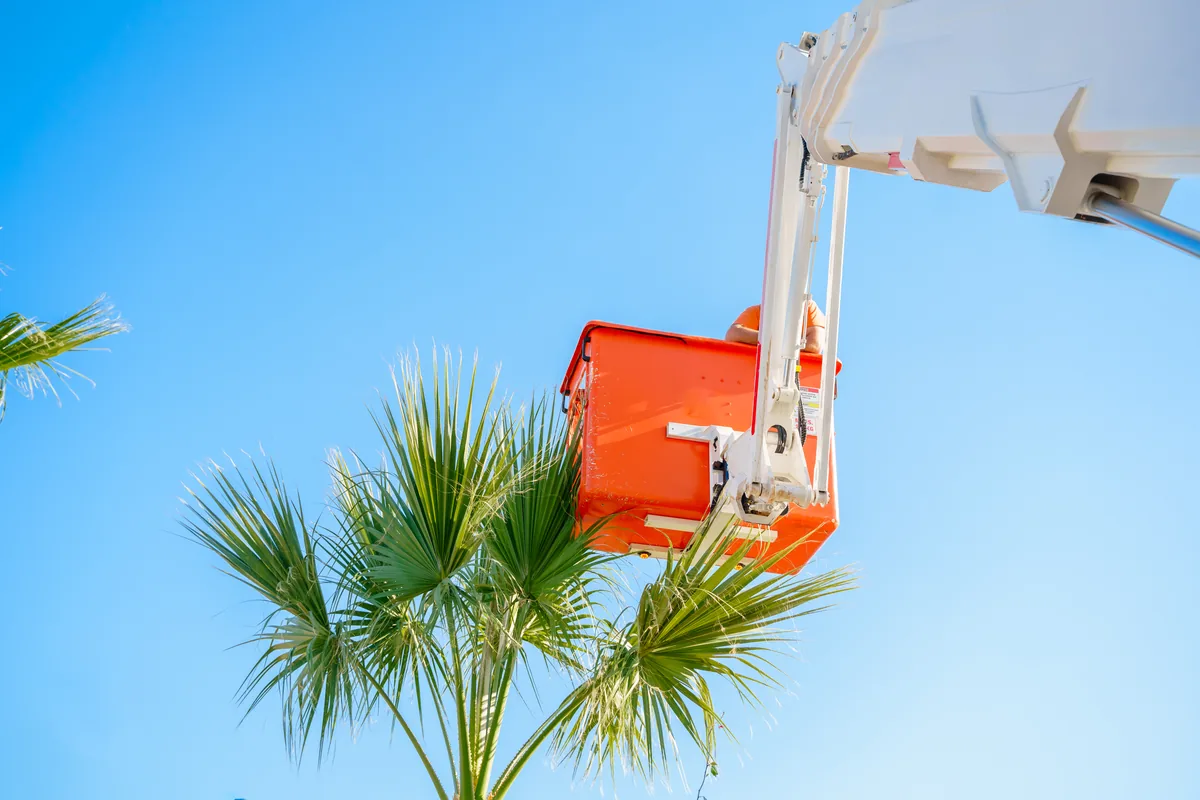
Height matters because it changes the equipment and the crew. A small tree can often be pruned from the ground or a ladder. A tall oak over a roof may need a climber with rigging or a bucket truck, plus more ground crew to lower and haul the limbs. That is why a quote for a tall tree can look far higher than one for a small tree.
Species matters too. In Tampa Bay, palms are usually priced per palm, while oaks and other hardwoods are quoted per tree because no two crowns are alike. Some wood is harder to cut, and some trees grow faster and need more frequent work.
Tree Condition, Dead Limbs, and Hazards
A tree with dead or weak limbs takes more care. Those limbs can fall without warning, so the crew works more slowly and with more safety gear. A hazardous tree can add time, labor, and risk to the job.
Watch out: a low quote on a tree with visible dead limbs may leave out the removal work. Ask the company to name each hazard it plans to address.
Site Access, Proximity to Structures, and Power Lines
Access can be the biggest hidden cost. A crew that can drive a truck to the base of a tree works faster than one that must carry every branch through a narrow side yard.
Here is how the main factors show up on a written estimate:
| Factor | What it changes | Where it appears |
|---|---|---|
| Tree height and size | Equipment and crew needed | Quote per tree |
| Species and wood type | Cutting difficulty and growth rate | Scope of work |
| Dead or damaged limbs | Extra care and slower crew work | Hazard line items |
| Access and proximity | Labor time and utility coordination | Site notes |
| Cleanup and debris removal | Hauling and labor | Cleanup line item |
Tree Pruning Techniques and What They Mean for Scope
Not all pruning is the same. A light thinning cut takes less time than a full crown reduction, and removing a large limb is more work than trimming small branches.
Before you compare numbers, confirm which technique each company plans to use. A quote for “trimming” can mean very different things across companies. Our guide to types of tree pruning explains the terms you will see, and crown reduction covers one of the most common.
A cheaper quote sometimes means more cutting, not less. UF/IFAS Extension warns homeowners to be wary of services willing to “hurricane prune” trees and palms, and says proper pruning does not include topping or lion-tailing. For palms, it advises removing only completely brown fronds and never pruning above the 9 and 3 o’clock positions. If one quote promises to strip a palm down to a few green fronds, it is not the same job as one that removes only dead fronds. See how often palms should be trimmed.
How Many Tree Service Quotes to Get Before Deciding
Most homeowners should get at least three written estimates. Three quotes give you a reasonable sense of the market for your specific tree and job.
Panorama Tree Care recommends this approach: compare the scope first, then the price. Some estimates include full cleanup, such as raking and blowing the yard, while others do not. For what else to check before you hire, see how to choose a tree service.
How to Read a Tree Trimming Estimate Line by Line
A total on a page tells you almost nothing. Two quotes for the same tree can differ by hundreds of dollars because one includes debris hauling and the other leaves the brush piled at the curb, or because one prices a bucket truck and the other prices a climber.
Use the checklist below on every written quote you receive. If a line is missing, that is your cue to ask the company to add it in writing before you sign anything.
The quote comparison checklist
- Tree identification. Each tree should be listed separately with its species (or “unknown”), its approximate height and trunk diameter, and its location on the property. A quote that says “trim trees” with no count is impossible to compare.
- Scope of work per tree. Look for the specific pruning method (crown cleaning, thinning, raising, reduction, or deadwood removal) and the size of the cuts (for example, “removal of limbs 2 inches and larger” or “deadwood 1 inch and up”). “Trim” alone is not a scope.
- Crew size and equipment. Note how many workers are assigned and whether the quote assumes a bucket truck, a climber, a chipper, or a crane. A crane-assisted removal and a climb-and-rig job are different products with different risk profiles and prices.
- Cleanup and debris. Specify whether the price includes chipping, hauling, raking, and blowing off the yard, driveway, and roof. Ask where the debris goes and whether the disposal fee is built in.
An annotated example
A vague estimate might read: “Trim palms in back yard, $400.” That line hides everything that matters.
A comparable, itemized estimate reads more like this. It uses our published palm rate of $100 per palm with a $300 minimum:
- Palms 1 to 4, rear yard, about 20 ft: remove only completely brown fronds; no green fronds cut; chip and haul all fronds; blow off lawn and patio, 4 x $100 = $400
- Minimum service charge: $300 (met by this job)
- Stump grinding not requested, $0
- Permits: company confirms none are needed for this pruning scope
- Exclusions: no work within 10 ft of energized lines; utility coordination, if needed, billed separately
Same palms, same yard, and yet the second quote tells you exactly what you are buying. When you line up two itemized estimates side by side, the price gap usually turns out to be a scope gap: one bid includes hauling and the other does not, one strips green fronds and the other removes only dead ones, or one carries higher liability limits. Oaks and other hardwoods are quoted per tree, so ask for the same level of detail on those.
Ask every company to email the itemized estimate rather than quote a number over the phone. A written, line-item bid is the only version you can compare, and it is the version that protects you if the scope is disputed later.
Red flags in the line items
- A single lump sum with no tree count or scope description.
- “Cleanup included” with no mention of hauling or disposal.
- No insurance certificate attached or offered.
- A price that is dramatically lower than every other bid with no explanation in the scope. That usually means hauling, stump work, or hazard removal is excluded.
- Pressure to sign on the spot or pay a large cash deposit before any work is scheduled.
When a line is missing, do not assume it is included. Ask, get the answer in writing, and re-compare the revised quotes. That single habit closes most of the gap between a suspiciously cheap bid and a fair one.
Scheduling, Season, and Emergency Work Changes the Number
Two companies can quote the same tree on the same day and still land apart because of when the work happens. Timing is one of the most overlooked line items on a tree care estimate, and it is one of the few you can often negotiate.
How scheduling flexibility moves the price
A crew’s day has fixed costs: the truck, the chipper, the climber, the ground crew, and the drive time between jobs.
Quotes often differ between work scheduled in advance and work needed immediately. If your tree is not an immediate hazard, ask each company for both a standard-schedule price and a priority price. The difference tells you what convenience is costing you.
Season and demand
Demand for tree work is not flat across the year. In Tampa Bay, demand tends to rise ahead of hurricane season (June 1 to November 30) and after any storm that brings down limbs. Booking routine pruning outside those rushes is usually easier.
Species timing matters too. A company that follows best practice may schedule your work for a specific window rather than whenever you call. Our Florida pruning calendar shows the best months by tree type.
Emergency and after-hours work
Emergency calls (a split limb over a roof, a tree on a fence, a blocked driveway) carry real premiums. Crews are pulled off scheduled work, overtime and after-hours rates apply, and the company absorbs higher risk. Emergency quotes can run higher than the same job scheduled in advance, and any premium should appear as a separate line item rather than buried in the total.
After a major storm, demand surges and door-to-door “storm chasers” appear. Get the same itemized written estimate you would request any other time, verify insurance, and be wary of anyone who demands full payment upfront or cannot produce a local business address and references.
How to use timing to your advantage
- Ask for the standard-schedule price. If the tree is not a hazard, you can usually save by being flexible on the date.
- Ask about neighborhood routing. If a company is already working nearby, the drive time is lower and some of that can come off the quote.
- Book non-urgent work outside the storm rush. Scheduling before the pre-hurricane rush, or well after a storm, gives you more choice of dates.
- Ask for any emergency premium in writing. If you must schedule urgent work, ask what the after-hours or priority charge is so you can compare it to waiting.
- Confirm the pruning window. For species with a best season, a quote scheduled for the right time is worth more than a cheaper quote scheduled at the wrong time.
Timing will not explain every gap between quotes, but it explains more of them than most homeowners expect. When you compare bids, note the proposed date, the scheduling flexibility, and whether any emergency or priority charge is included, then compare the totals on equal timing.
How Panorama Tree Care Prices Trimming
We publish our palm trimming rate so you have a fixed point to compare against: $100 per palm with a $300 minimum. Oaks and other hardwoods are quoted per tree after an on-site look, because height, access, and the cuts needed vary so much.
Every estimate is itemized and given in writing before work starts, with cleanup and haul-off spelled out. See our tree trimming service for what is included, or request a free estimate.
Frequently Asked Questions
Why do tree trimming quotes vary so much?
Tree trimming quotes vary because each job has different conditions. Final costs are tied to size, species, and accessibility. Two companies can also quote the same tree differently based on crew size, equipment, and whether cleanup is included. A lower number is not automatically a better deal.
What factors affect the cost of tree trimming?
The main cost drivers are tree height and size, species, the amount of work required, tree health and any dead or damaged limbs, and how easily crews can reach the canopy. Proximity to houses, fences, and power lines adds risk and time. Debris removal, hauling, and stump grinding are often priced separately. Ask each provider to state which of these items are included in its price so the quotes can be compared fairly.
How many tree trimming quotes should I get?
Getting at least three written estimates gives you a realistic range for the work. Be sure each company inspects the tree in person and describes the same scope: the same pruning goals, the same cleanup, and the same timeline. If one quote is far below the others, check whether it leaves out cleanup, insurance coverage, or equipment. Comparing only prices, without matching scope, usually leads to a poor decision.
How can I tell whether a tree trimming quote is fair?
A fair quote is specific. It names the trees, the work to be done, the cleanup and hauling, and the expected completion date. Ask for proof of liability and workers’ compensation insurance and whether its arborists hold ISA certification (Florida has no state license for tree work). Be cautious of quotes that are vague, pressure you to sign immediately, or are much lower than every other estimate. Panorama Tree Care offers free estimates so you can compare a detailed written scope before you commit.
Trying to compare tree trimming quotes? Panorama Tree Care provides free estimates for residential and commercial properties across the Tampa Bay area. Our ISA Certified Arborists are fully insured, and we explain each line of the estimate so you know exactly what you are paying for. Get a free estimate today.