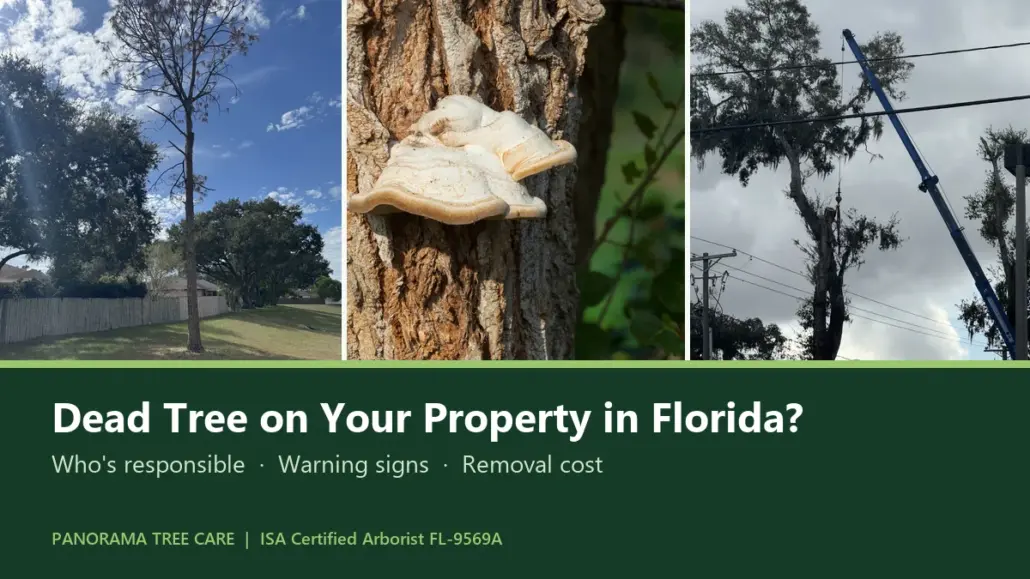
By Tony Padgett, ISA Certified Arborist FL-9569A
In Florida, the owner of the land where a dead tree stands is usually responsible for it. If that owner knows, or reasonably should know, that the tree is dead or dangerous and does nothing, that knowledge can strengthen a negligence claim if the tree later causes damage. Florida does not have a statute that automatically makes every tree owner liable, so the facts and proof of notice matter. In Tampa Bay, most residential tree removals typically cost $800 to $3,500 per tree. Dead trees often land at the higher end because crews cannot safely climb or rig from dead wood. The final price comes from an on-site inspection with a written quote. (Florida Senate)
A dead tree deserves faster attention before storm season because weakened wood and roots can make it less predictable in wind and harder to remove safely.
If you are not sure it is truly dead, start with an arborist inspection.
How to tell a tree is actually dead, not just stressed
A brown or thin canopy does not always mean a tree is dead. Heat, drought, flooding, insects, disease and root problems can make a living Tampa Bay tree look rough.
Here are a few quick checks:
- Scratch a small twig lightly. On a broadleaf tree, green and moist tissue just under the bark means that spot is still alive. Brown, dry tissue can mean that twig is dead. The scratch test is only a rough check, not a full safety assessment.
- Look at the canopy in the normal growing season. A canopy that stays completely bare while similar trees nearby have normal foliage is a warning sign.
- Check the bark. Large areas of peeling, loose or missing bark with dry wood beneath can point to serious decline.
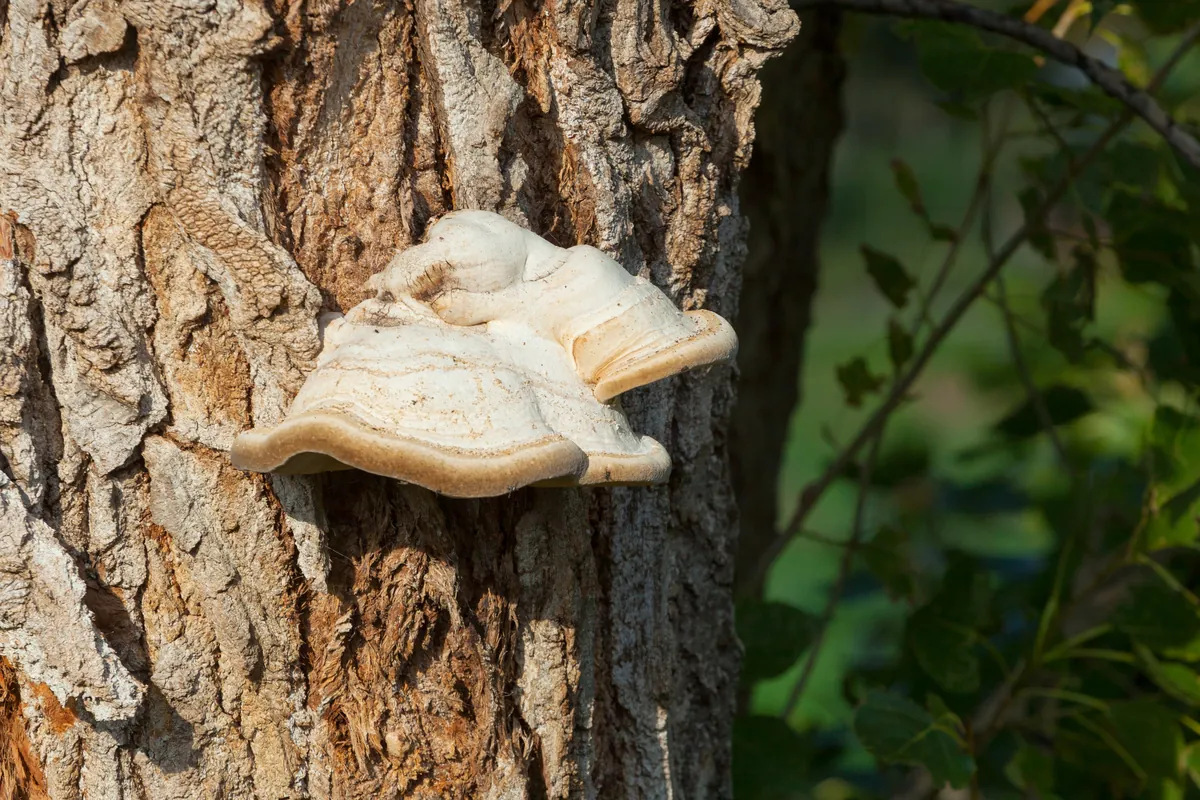
- Look around the trunk base and major roots. Fungal conks or mushrooms growing directly from the trunk or root flare can be signs of internal decay.
- Do not use the scratch test on palms as if they were oaks or other broadleaf trees. Palms grow differently, and their condition is judged by the crown, growing point, trunk and disease symptoms. (UF/IFAS)
For a fuller diagnosis, see signs of a dying tree. If the tree is close to a house, driveway, pool cage, sidewalk or power line, a professional assessment is safer than relying on one symptom.
Who is responsible for a dead tree in Florida?
Your own tree
If the trunk is on your property, you are generally the person responsible for deciding how to manage that standing tree. The harder legal question is who pays if it later causes damage.
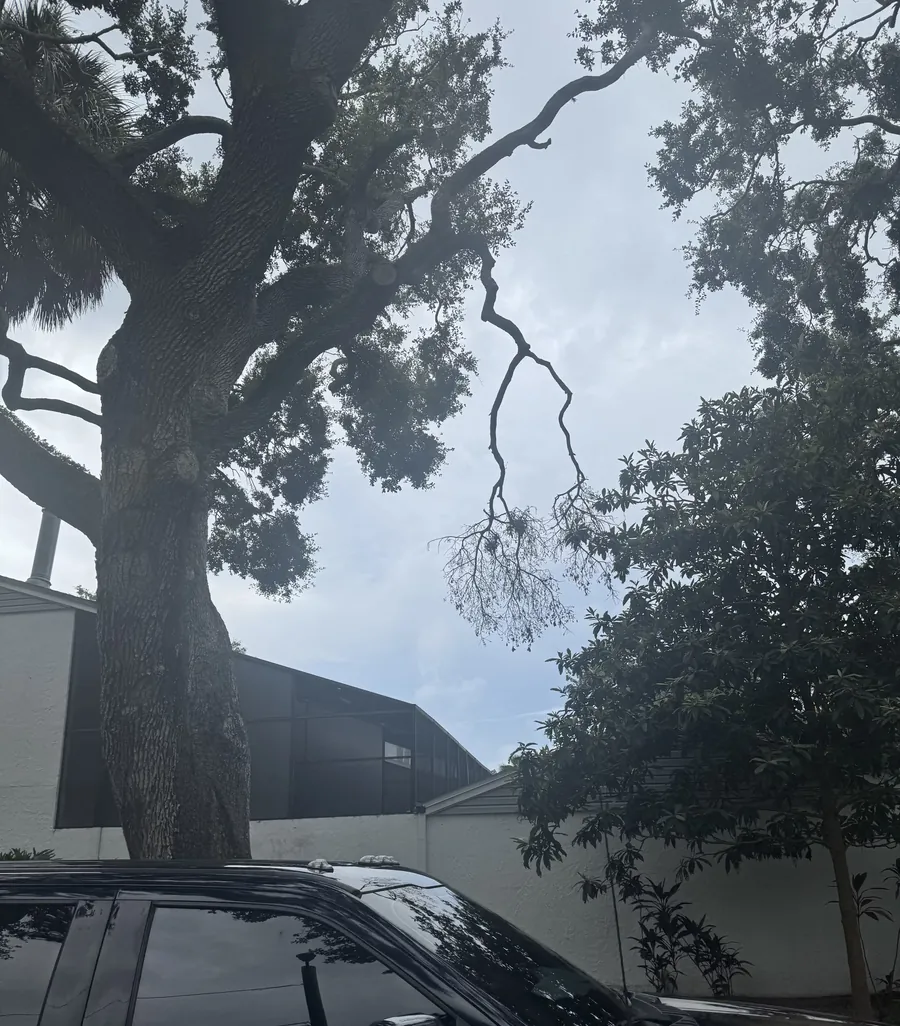
Florida statutes do not create a simple rule that makes the tree owner automatically liable for every loss. A Florida Senate legal analysis of existing law states that ordinary negligence principles appear to apply, and that an injured property owner would generally need to show that the tree owner knew or should have known the tree was dead, dying or otherwise in danger of falling. (Florida Senate)
A 2025 bill, SB 724, the “Fallen Tree Act,” would have made property owners liable for damage caused by trees or shrubs on their property regardless of whether the vegetation appeared healthy. The bill did not pass, so the negligence standard still applies.
That is why visible condition and documentation matter. If removal is the right option, see Tree Removal.
A neighbor’s dead tree
If the dead tree is rooted entirely on your neighbor’s property, do not enter their property or remove the whole tree without permission. Florida law gives neighboring owners some self-help rights for encroaching vegetation, but that does not give you a general right to cut down a tree located on someone else’s land. (UF/IFAS)
The important issue is notice. If you are worried that a neighbor’s standing dead tree could reach your house, fence, driveway or another occupied area, tell the owner in writing and keep proof that the warning was delivered.
Written notice does not automatically transfer liability. It can, however, help prove that the owner knew about the condition before any later loss. That matters because Florida negligence analysis focuses heavily on what the owner knew or reasonably should have known. (Florida Senate)
If you are dealing with damage that has already happened, see the separate guide on when a neighbor’s tree fell.
Renters and landlords
For a rental property, start with the lease and the person who owns or controls the land where the tree stands. Florida Statutes 83.51 sets maintenance duties for landlords and allows some duties for a single-family home or duplex to be changed in writing. It does not create a special statewide rule that says every tree problem belongs automatically to either the tenant or landlord.
A renter who notices a dead or hazardous tree should report it to the landlord or property manager in writing and keep a copy. A yard-maintenance clause does not mean a tenant should attempt a dangerous removal without checking the lease and local rules.
Trees on the property line
If the trunk itself straddles the property line, Florida guidance treats it as a boundary tree with shared ownership. One owner should not remove the whole tree without the other owner’s consent. (UF/IFAS Hillsborough County)
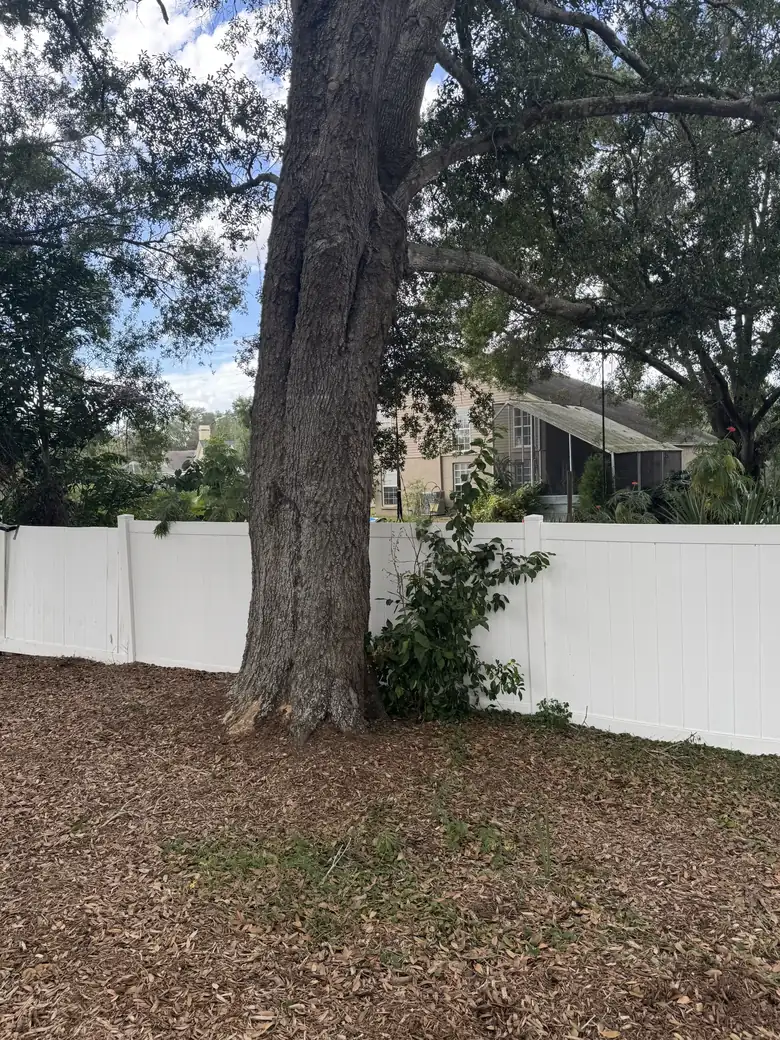
For a dead boundary tree, get the property line confirmed if there is any doubt, then document the condition and agree in writing on the removal plan. A survey may be useful when the trunk location is disputed.
HOA common areas and city right-of-way trees
If the tree is in an HOA common area, begin with the association or management company and check the HOA documents or ask the association who owns or maintains the specific common area or street tree.
For City of Tampa street trees and trees in public rights-of-way, the City’s Urban Forestry program handles care and removal of hazardous public trees. Tampa directs residents to its Forestry Division for right-of-way tree concerns. (City of Tampa)
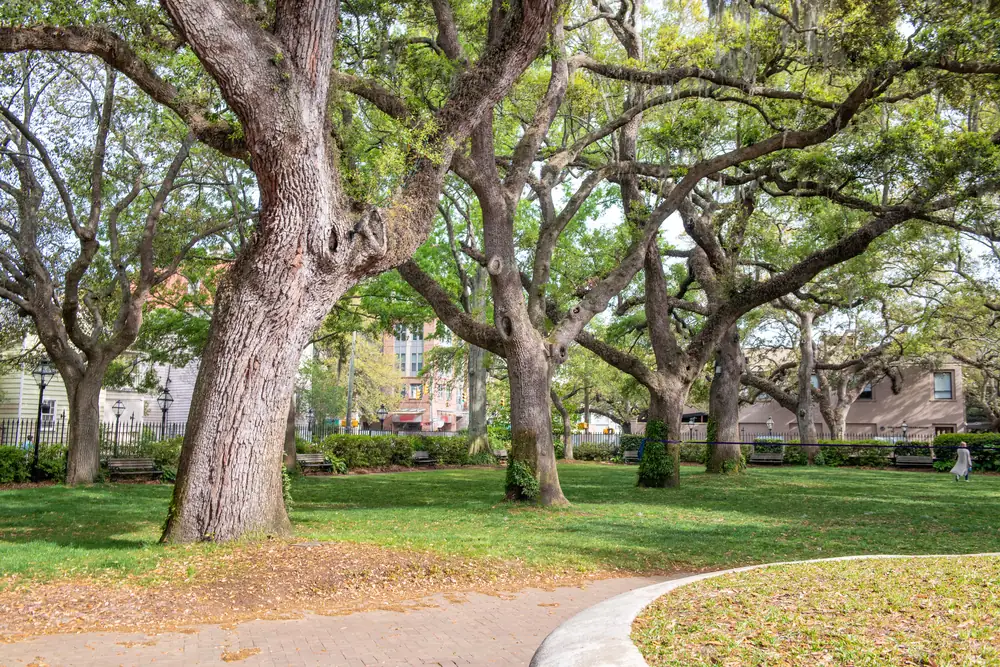
Do not assume a tree near the curb belongs to the homeowner. Right-of-way limits, easements and HOA agreements can change who has authority to act.
How to put a neighbor on notice (step by step)
If a neighbor’s standing dead tree can reach your property, the goal is to create a clear record of what you observed and when you raised the concern.
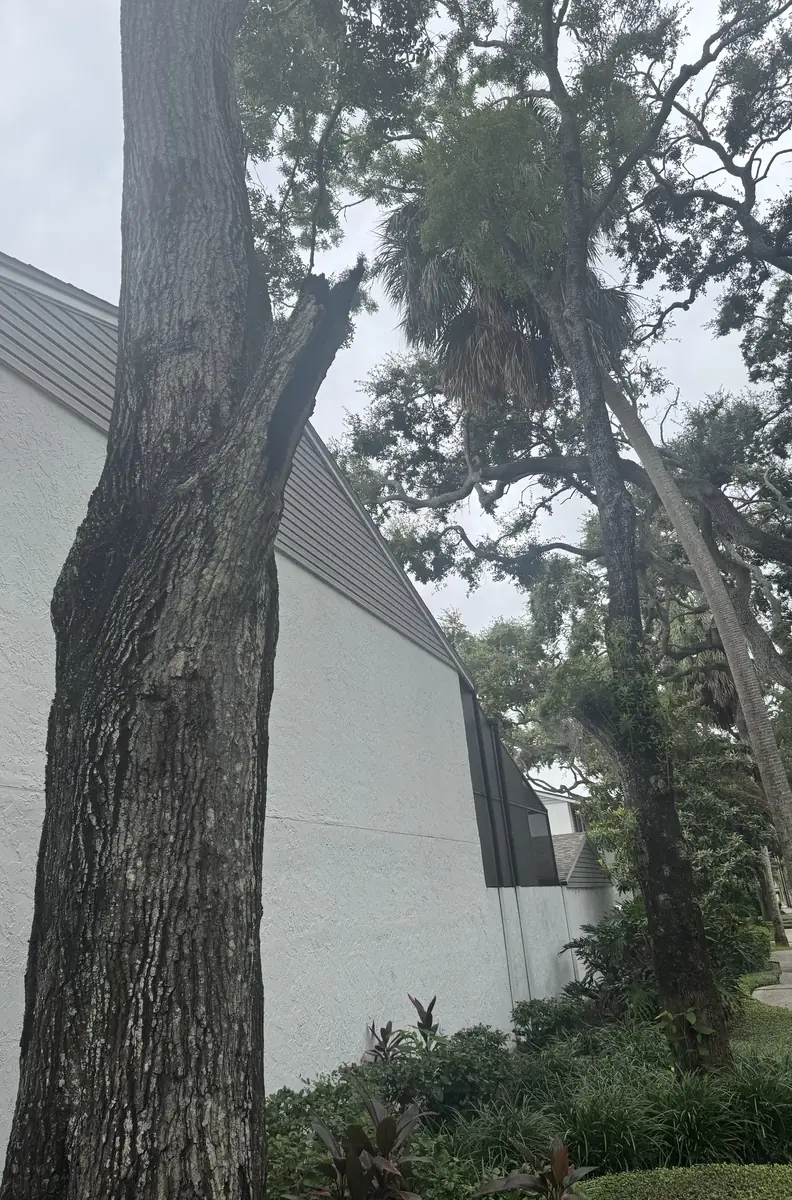
- Take dated photos. Photograph the whole tree, its location, the trunk base, canopy and any visible decay, cavities, fungal growth or severe lean. Take wider photos showing what the tree could reach.
- Get an arborist’s written opinion. For a serious dispute, ask for a Level 2 written risk assessment. A Level 2 assessment is a detailed visual inspection with written findings, photographs, risk information and recommended action. It documents, and can help prove, the tree’s observed condition on the assessment date.
- Send written notice to the owner. Keep the wording factual. Identify the tree, attach the arborist report or photos, explain the concern and ask the owner to have the tree evaluated and addressed. Use a delivery method that gives you a record of sending or receipt.
- Keep copies of everything. Save the photos, report, notice, delivery record and any reply. Do not rely only on a verbal conversation across the fence.
A written risk assessment is not a court judgment or guarantee of liability. It gives you professional evidence of the tree’s condition and a dated record for a later insurance or legal dispute.
For that service, see written risk assessment.
Do you need a permit to remove a dead tree in Tampa?
Inside the City of Tampa, do not assume that a dead tree is automatically permit-free. The City says protected tree removals generally require approval, and Florida Statute 163.045 creates a residential exemption when the owner has signed documentation from an ISA Certified Arborist or Florida licensed landscape architect showing that the tree poses an unacceptable risk and that removal is the only practical way to reduce the risk below moderate.
In unincorporated Hillsborough County, the County says a completely dead tree with zero living tissue generally does not require a permit unless it is in an environmentally sensitive area. A sick or dying tree generally does require a permit unless an ISA Certified Arborist has declared it dangerous. A dead tree may still require a replacement tree, and if the tree has any leaves, the County does not consider it dead. (Hillsborough County)
Because the City and County rules are different, confirm which jurisdiction the property is in before work starts. For the detailed process, see permits.
What dead tree removal costs in Tampa Bay
There is no honest flat price for a standing dead tree. Most residential tree removals in Tampa Bay typically cost $800 to $3,500 per tree, but the final number depends on the tree and the work area.
Typical Panorama price ranges by tree size are:
| Tree size or service | Typical range |
|---|---|
| Small, under 30 ft | $200 to $800 |
| Medium, 30 to 60 ft | $800 to $2,500 |
| Large, 60 to 80 ft | $2,500 to $5,000 |
| Very large or complex, 80+ ft | $5,000 to $15,000+ |
| Crane-assisted removal | About $2,000 to $10,000+ |
| Stump grinding and haul-off | Can add $150 to $1,000+ per tree |
These are typical ranges, not fixed quotes. Dead trees often land at the higher end because crews cannot safely climb or rig from dead wood. The final price comes from an on-site inspection with a written quote.
The main cost factors are:
- Height and trunk size. Taller, heavier trees take more labor, equipment and controlled cutting.
- Lean. A tree leaning toward a house, pool cage, fence or neighboring property limits the safe work zone.
- How brittle the wood is. Dead limbs and decayed trunks may not safely hold a climber, rope system or rigging point.
- Distance to structures and utility lines. Tight Tampa and Pinellas County lots often leave very little room for pieces to be lowered.
- Crane or bucket access. A crane may be the safer choice when a dead tree is too weak to climb or rig from.
- Access for trucks and cleanup equipment. Narrow gates, soft ground and long carry distances can add labor.
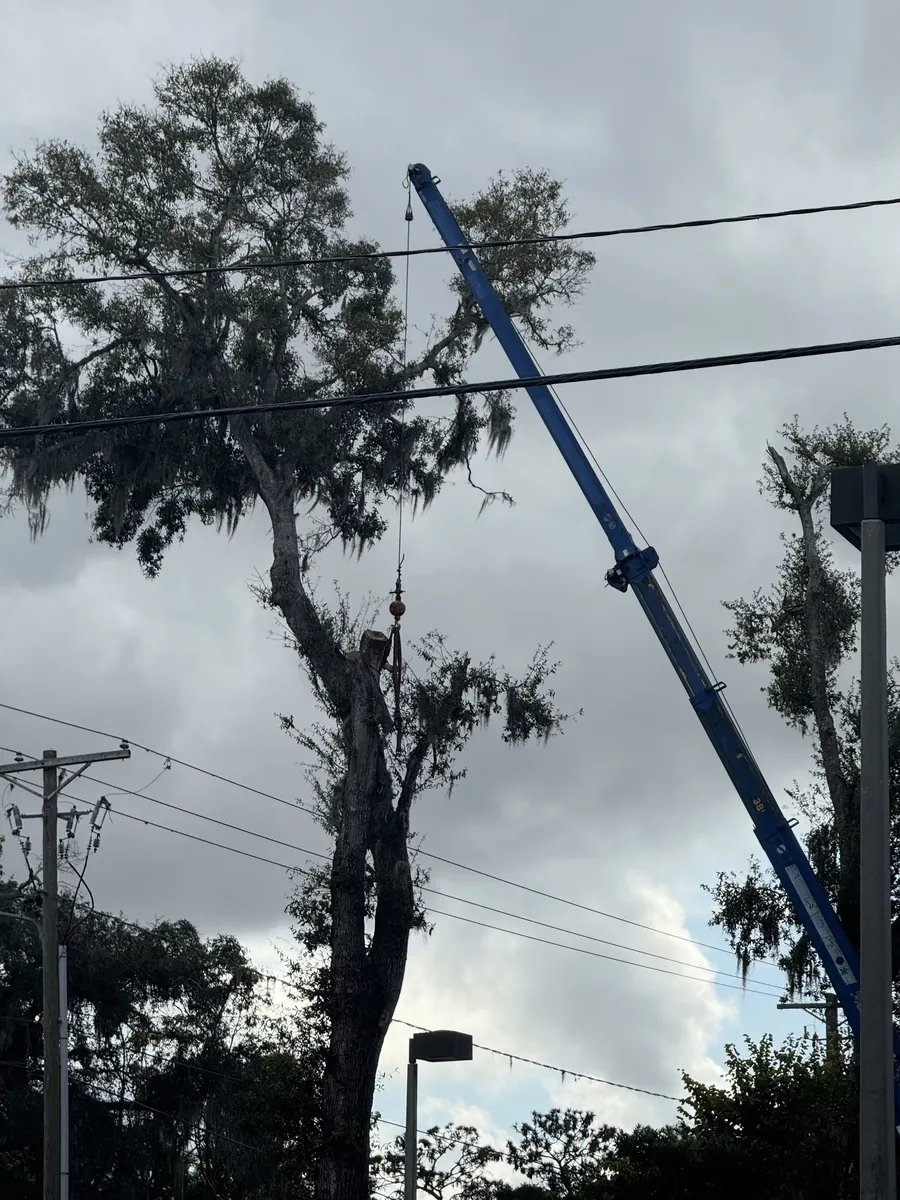
This is one reason a dead tree can cost more than a similar-sized sound tree. On a healthy tree, a climber may be able to trust suitable limbs and attachment points. On a dead or badly decayed tree, our arborists may need to keep workers out of the canopy and use a lift, crane or more controlled setup instead.
The price should follow the risk and method, not just height. An on-site inspection shows whether the wood is climbable, equipment can reach the tree and what must be protected below. The final price is provided in a written quote after that inspection.
Does homeowners insurance pay to remove a dead tree?
Homeowners insurance usually does not function as a maintenance plan for a standing dead tree. Policies vary, and tree or debris removal coverage is usually tied to covered property damage rather than routine removal from the yard.
For a fuller explanation, see insurance.
FAQ
Can I cut down my neighbor’s dead tree?
Not just because it looks dead. If the trunk is on your neighbor’s property, do not remove the whole tree without permission. If you believe it is dangerous, document the condition, notify the owner and consider a written arborist assessment. (UF/IFAS)
What if the city owns it?
Report the tree to the public agency that controls the land or right-of-way. In Tampa, the Urban Forestry program handles public street and park trees, including hazardous tree removal. (City of Tampa) Do not hire a private crew to remove a City tree without authorization.
How long do I have after being notified?
Florida law does not set one general number of days for every private dead-tree notice. Act promptly, especially when the tree can reach a home, road, parking area or other occupied target before storm season.
Is a dead palm treated the same way?
For responsibility, the same basic question still applies: who owns or controls the land where the standing palm is located, and who knew about the hazard. But palms are biologically different from broadleaf trees. UF/IFAS notes that palms have a single growing point at the top of each trunk, so diagnosis is based on the bud, crown, trunk and disease symptoms rather than a simple cambium scratch test. (UF/IFAS)
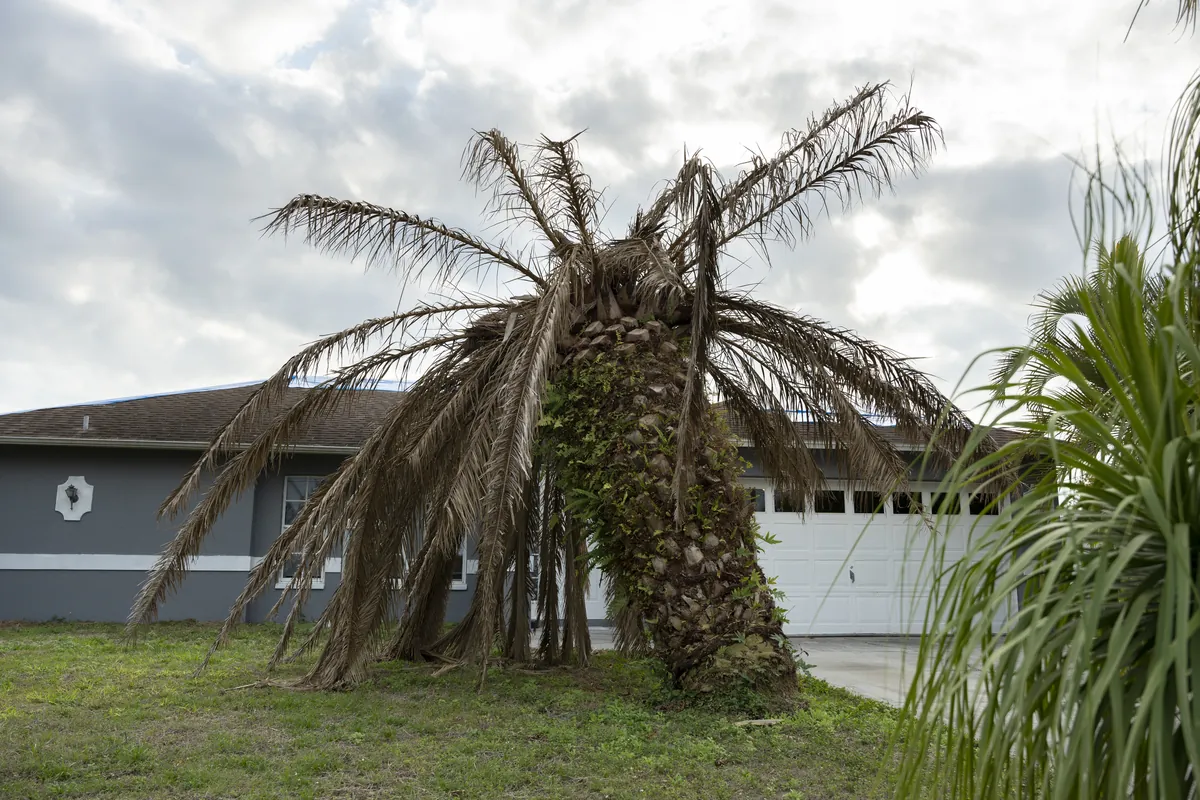
Permit treatment can also depend on the local jurisdiction and species, so check the Tampa or Hillsborough rules before removal.
If you have a standing dead tree in Tampa Bay, Hillsborough County or Pinellas County, we can inspect the tree and explain the safest next step. Homeowners looking for tree service in Brandon can also contact our arborists for an inspection. Book an arborist inspection for a straightforward condition check, or request a written risk assessment when you need documented findings for a neighbor, HOA, insurer or permit file.